
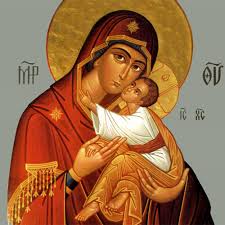
Caroline Kózka, A Beacon for Young People
“Blessed are the clean of heart, for they will see God.” (Matthew 5: 8)
Reading numerous accounts of our contemporary canonized or beatified teenage brothers and sisters I get the impression that some writers trying to make them more accessible to the readership intentionally underline human qualities, as though “loving to make videos of his dogs” or “listening to pop music” might bring anyone closer to God. On the contrary it stands in stark contrast to the teaching of Jesus ”I tell you, unless your righteousness surpasses that of the scribes and Pharisees, you will not enter into the kingdom of heaven.” (Matthew 5:20)
Regrettably the state of Catholicism in the Land Down Under seems woeful. Polls reveal that a majority of Catholics support gay marriage, and a whopping 75% of Catholics approve of euthanasia and the fairly common use of birth control. This means that only an uncompromising Christian attitude can stand up to the ever pervading culture of death. Dear young friends in Australia and across the world: “Never forget that only dead fish swim with the stream.”

Blessed Caroline Kózka (Karolina Kózkówna) was a Polish Roman Catholic, born in 1898 to a poor family of peasants in the village of Wał-Ruda of the Diocese of Tarnów; without a shadow of doubt she was not a run-of-the mill young adolescent. From her early childhood she loved to pray, especially to say the Rosary which accompanied her wherever she went. Discussing religious topics with her proved beneficial even to her parish priest. She was a catechist for her brothers and children of neighboring houses. Caroline could be heard speaking to her friends “I do not want to dress up so as not to swell with pride, then I would be unable to pray.” With an almost unbounded sense of duty, Kózka carried out farm work and school duties, never bemoaning life’s adversities; instead she radiated calmness and prudence. The peer group to which she belonged frequently spotted her sensitivity to any form of ambiguity in behaviour and language. For this reason Caroline would never tolerate any indecent conversation or bawdy jokes. It is very rare to find someone who combines such qualities.
November 18th of 1914 was a time when the First World War was in full swing. On that fateful day, at around 9:00 am, an armed Russian soldier came to her house asking questions about the Austrian forces. Caroline’s father had not properly understood the query so the enraged soldier grabbed his throat and started to strangle him. Meanwhile, behind the net-curtain, a terrified Carolina was standing and watching the violent scene. She tried to sneak away but to little avail. Finally, the stalwart intruder swearing viciously demanded that they should go with him to the commanding officer. At the edge of the forest, all of a sudden, the Russian pointed his weapon at man’s chest ordering him to return home in spite of dramatic pleas. Sadly, father’s last-ditch attempts to save daughter ended in failure.
Coincidentally two men observing from behind the bushes witnessed the soldier’s attack on Kózka; the girl was adamantly opposed to his sexual advances. The resistance infuriated the assailant so much that he seized the sabre and began to blindly cut the fleeing Caroline who sustained several wounds in her head, hand, leg, collarbone and in the neck – the fatal wound which severed carotid artery. Yet, the victim managed to escape 800 meters in the direction of the swamps where she bled to death between 9:30 and 9:40am.
The people of the area, upon hearing of the horrible crime, immediately pronounced Carolina a martyr. It was not until 4 December 1914 that her body was found and buried two days later. The funeral was attended by over three thousand of people; paradoxically there was a group of Russian soldiers too. After eleven months her mortal remains were moved to an altar at the parish church in Zabawa at the behest of the local bishop.
On 10 June 1986, 1.5 million of people had the joy of taking part in her Beatification in Tarnów. Among the massive crowd there were present two living sisters of Caroline: Katarzyna and Maria. The following is a short excerpt from Pope John Paul II’s homily addressed during the Mass.
“We all need it, old and young alike, although that young daughter of the Tarnów Church, whom we shall call blessed from today on, speaks with her life first of all to the young. To boys and girls. To men and women. She speaks of the great dignity of the woman, of the human being; of the dignity of the body which in this world is indeed susceptible to dying and is destructible, in the same way as her young body met death at the hands of a murderer; yet this human body has in itself the sign of immortality that man is to attain in the eternal and living God, attain it through Christ.”
The story of Caroline Kozka – an innocent, simple farm girl who died a modern martyr – captivated the hearts of the faithful in a powerful way. It is proved by the fact that the relics of blessed virgin martyr can be found in over 171 places, mainly in Poland but also in such remote countries as the Congo, Kazakhstan, Peru, the Philippines, and the USA. Only parish priests or superiors of religious communities may ask the Bishop of Tarnów for them, mentioning always “for pastoral work and public veneration by the faithful”; requests by lay people are not taken into consideration. Kózka has not been canonized yet, but there have been a few miracles, which is the next step to declaring her a saint. She is considered the “Maria Goretti” of Poland.
Imitating the virgin martyr, every year, at the end of retreat for the Movement of Pure Hearts, about 300 young people take vow to abstain from premarital sex. As the Bishop of Tarnów stated she had a particular attraction and significance for us, especially for the contemporary youth “vulnerable to the crisis of morality and enticed by the omnipresent culture of use and consumerism.” Moreover, for the last two years more than 2000 people have decided to wear the ring of Blessed Caroline as a sign of their desire to remain virgins until marriage.
I dream that Caroline Kózka will be present in the Antipodes by her holy relics – intercede for all Australians before the Face of God. This may be arranged, ultimately, one day Covid travel restrictions will come to an end. Blessed Caroline, ora pro nobis!
This blessed virgin, despising herself and bearing her cross, became like the Lord, the Bride of virgins and King of martyrs. (Hymn of the Common of Virgins)

Saint Kateri , Canada’s Protectress
This was the title given to Saint Kateri Tekakwitha, by Pope Benedict XVI, when he canonized her on October 28th, 2012, along with six others, in Saint Peter’ Square (she had been beatified by Pope John Paul II back in 1980). With Saint Joseph as our protector, along with the Canadian martyrs, we seem to[…]Continue reading→

Remembering Father Alphonse de Valk
(Today marks the sixth anniversary of the death of Father Alphonse de Valk, C.S.B., a faithful, courageous and indefatigable Basilian priest, pro-life-and-family apostle, and the founder of Catholic Insight magazine. Here is what we wrote those on his entering into eternity five years ago, as we continue to remember him in our prayers and thoughts)[…]Continue reading→

My Name is Bernadette
April 16th is a propitious day, for besides the anniversary of Father de Valk’s death, who founded Catholic Insight in its print form decades ago, and the commemoration of the ‘two Benedicts’, mentioned in accompanying posts, today we also recall Saint Bernadette Soubirous, the young visionary to whom the Virgin Mary appeared numerous times at[…]Continue reading→

Canonizing Sister Faustina and Divine Mercy
HOMILY OF THE HOLY FATHER MASS IN ST PETER’S SQUARE FOR THE CANONIZATION OF SR MARY FAUSTINA KOWALSKA Sunday, 30 April 2000 1. “Confitemini Domino quoniam bonus, quoniam in saeculum misericordia eius”; “Give thanks to the Lord for he is good; his steadfast love endures for ever” (Ps 118: 1). So the Church sings on the Octave of[…]Continue reading→
Divine Mercy Sunday – An Echo of Every Mass
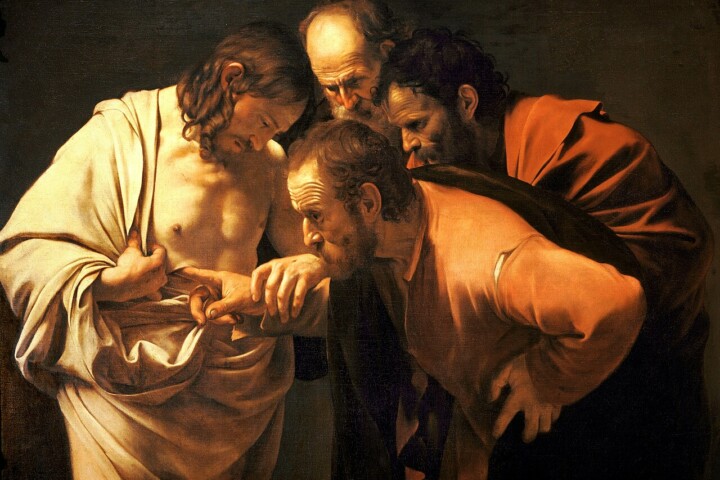
Reach out your hand and put it in my side. Do not doubt but believe’… ‘My Lord and my God!’ (Jn. 20:18)). Today is Divine Mercy Sunday, and as we celebrate the end of the Easter Octave, we contemplate the wounded side of our Saviour, the Church’s source of life. On Good Friday in the[…]Continue reading→

Saint Stanislaus of Szczepanów
We celebrate Saint Stanislaus today (+ April 11, 1079), in light of this Easter Octave, a bishop and martyr who accepted the episcopacy only at the direct order of Pope Alexander II. He proved a wise and courageous leader of his flock, put to death by his own king, Boleslaus, for rebuking the monarch’s ‘immoral[…]Continue reading→
First Holy Communion: Sermon from May 16, 1943
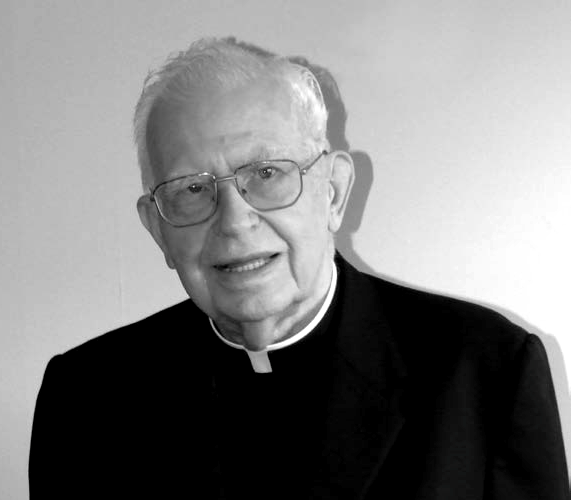
Here is a sermon from the good old days by +Rev. Msgr. Vincent Nicholas Foy (August 14, 1915 – March 13, 2017), from 1943. Readers may recall that Pope Saint Pius X, by the decree Quam Singulari in 1910, lowered the customary age of reception of Holy Communion – after the rigours of the plague[…]Continue reading→
Weronika Krawczyk and Injustice in Poland
Catholic Action in Poland has issued a formal statement appealing to the President of the Republic of Poland to pardon Weronika Krawczyk—convicted for warning other women against an abortion-performing gynaecologist. Catholic Action (AK) emphasizes that no apology is owed to a doctor who has performed numerous abortions and proposed others; furthermore, the organization considers the[…]Continue reading→
In the Glorious Light of Easter, Alleluia!
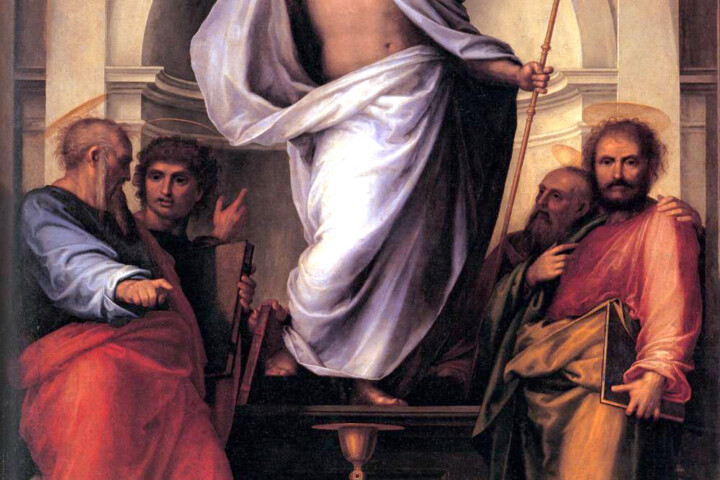
Set your minds on things that are above, not on things that are on earth, for you have died, and your life is hidden with Christ in God. When Christ who is your life is revealed, then you also will be revealed with him in glory (Col. 3:3-4). The Resurrection of Our Lord and Saviour[…]Continue reading→
An Ancient Homily for Holy Saturday
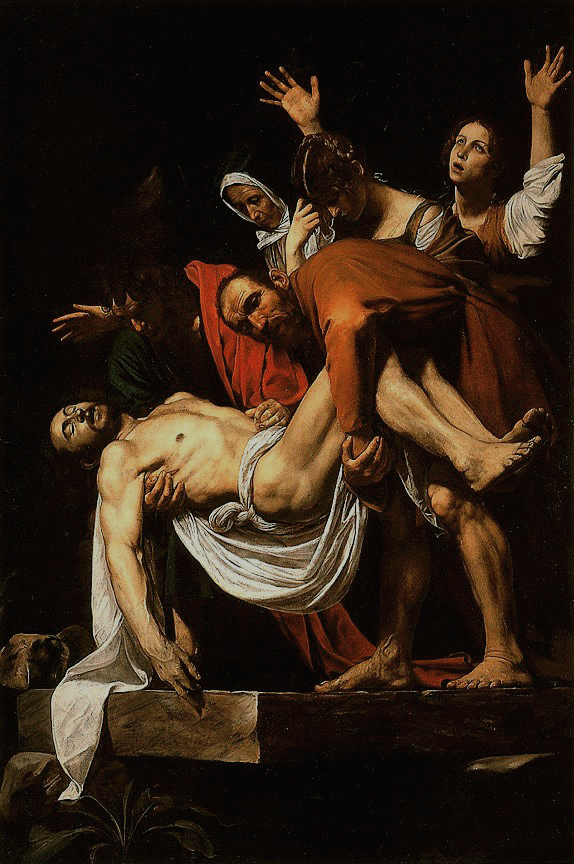
The time between Good Friday and Easter Sunday is one of waiting, in silence, as the world wonders – anticipates – what will happen, after the death of Christ. We re-live this time each year in the anamnesis of our liturgy, and in turn look forward to the glorious re-creation of all things at the[…]Continue reading→