

When I Die, Do I Want to Be a…Tree?
This phrase recently appeared in the Ottawa Citizen in an article on the greening of death, a quote from Susan Koswan, a Waterloo writer and environmental activist. It is not my intention here to judge anyone’s particular religious beliefs, but to point out how far we have drifted from the Christian belief in the resurrection of the body, and to explore some of the consequences of different views of the after-life that seem to be resurging in our culture, such as materialism, re-incarnation, and dualism.
The above citation reduces the hope of eternal life to pure materialism. All that will be left of us is ashes, which, as the writer exhorts, can be put in the ground, mixed with soil and fertilizer, to help give rise to a tree. So we – or at least our molecules – would continue to exist in the form of a maple or an oak tree. For people with beliefs in materialism, I don’t know if we can convince them otherwise with a top-down approach, trying to persuade them to accept Christian revelation on the resurrection of the body. But we can experiment with a bottom-up approach, exploring the deepest desires of the human heart. Let us ask them, “If you could be and have anything you wanted in the next life, what would it be?” I find it hard to believe that one’s greatest ambition would be to be a tree. It is an extreme case for settling for less, out of a lack of hope and belief in something better.
The Vatican II Pastoral Constitution on the Church, Gaudium et Spes, touches on the mystery of death, observing that in the face of death, people can be tormented by the dread of perpetual extinction. However, “(Man) rightly follows the intuition of his heart when he abhors and repudiates the utter ruin and total disappearance of his own person. He rebels against death because he bears in himself an eternal seed which cannot be reduced to sheer matter.” We rightly follow the intuitions of our heart when we believe in eternal life. We all have a desire to live forever — for our being, consciousness and personality to continue to exist. Accordingly, at some level, those who believe in materialism are denying the inspirations of their own heart.
When I Die, I Want to Become Someone Else in Another Lifetime
Faith in reincarnation may seem strange or absurd, but it is surprising that some people in our culture hold to this belief. A 2003 poll by Reginald Bibby found that 11% of Canadians believe in reincarnation. (Interestingly, a Pew study in the States in 2017 discovered that 33% of American adults believe in reincarnation!). I was recently speaking with a Catholic friend who tried to explain to me the appeal of this belief. He felt it would be fascinating to experience other lives in different times in various places on earth. As a thought experiment, we might entertain this idea, but it has absolutely no basis in fact, nor is there any evidence that people have memories of previous lifetimes. I find it baffling that some people will choose to believe in reincarnation, but not the Resurrection. We actually have evidence of Christ’s Resurrection based on eye witness accounts recorded in the Gospels. (It reminds me of a comment attributed to Chesterton, that when men cease to believe in God, they don’t believe in nothing; they believe in anything).
When I Die, I Will Be a Pure Spirit
Many Christians, without even thinking about it, lean toward a dualistic view of soul and body – the idea that the body is a prison for the soul, and in the next life, we will be pure spirits unencumbered by the constraints of the body. At least Christians with this belief hold to the other teachings of the Bible and the Church on eternal life. They believe we will live forever in heaven in the presence of God, in perfect love and happiness. Furthermore, we will be reunited with our loved ones who have preceded us into glory. Yet if we were to remain forever in heaven as pure spirits, we would not be ourselves; we would not be fully human. To be an incorporeal spirit is to be an angel, not a human being.
Here we must touch briefly on the resurrection of the body. When Christ rose from the dead, His Body could appear out of nowhere; at the same time, the disciples could see and touch His Body. Christ’s Resurrection is the pattern for our own future glorified bodies. In his letter to the Corinthians, Paul attempts to explain the nature of the resurrected body, but it still remains a mystery that none of us has yet experienced. For our purposes, it is simply necessary to point out that in eternal life we will possess resurrected bodies; we will be fully human, body and soul.
In our post-Christian culture, people lack faith in Revelation concerning the nature of eternal life, and succumb to various fallacies such as beliefs in materialism, reincarnation or dualism. It might not be possible for us to persuade them to believe by appealing to the veracity of Scripture or by employing other intellectual arguments. It could be more effective to invite them to explore the desires of their own hearts. They might just discover that the upward yearnings of the human heart, and the Revelation of God descending from heaven, actually correspond to each other. Again, if we were to ask people if they could have anything they wanted in the next life, they would want to be themselves – body and soul — and to live forever in perfect love and happiness, in communion with God and all the saints.
For people without strong faith, the reality of heaven can seem abstract. We can ask them to remember the times in their lives when they felt most loved and experienced the most happiness. Then imagine this “feeling” being perfect, limitless, and everlasting. This is the truth about eternal life revealed to us through Scripture and the Church. This is something worth hoping for. This is something worth believing in. Especially because it is true.

Remembering Father Alphonse de Valk
(Today marks the sixth anniversary of the death of Father Alphonse de Valk, C.S.B., a faithful, courageous and indefatigable Basilian priest, pro-life-and-family apostle, and the founder of Catholic Insight magazine. Here is what we wrote those on his entering into eternity five years ago, as we continue to remember him in our prayers and thoughts)[…]Continue reading→

Divine Mercy Sunday – An Echo of Every Mass
Reach out your hand and put it in my side. Do not doubt but believe’… ‘My Lord and my God!’ (Jn. 20:18)). Today is Divine Mercy Sunday, and as we celebrate the end of the Easter Octave, we contemplate the wounded side of our Saviour, the Church’s source of life. On Good Friday in the[…]Continue reading→

Saint Stanislaus of Szczepanów
We celebrate Saint Stanislaus today (+ April 11, 1079), in light of this Easter Octave, a bishop and martyr who accepted the episcopacy only at the direct order of Pope Alexander II. He proved a wise and courageous leader of his flock, put to death by his own king, Boleslaus, for rebuking the monarch’s ‘immoral[…]Continue reading→

First Holy Communion: Sermon from May 16, 1943
Here is a sermon from the good old days by +Rev. Msgr. Vincent Nicholas Foy (August 14, 1915 – March 13, 2017), from 1943. Readers may recall that Pope Saint Pius X, by the decree Quam Singulari in 1910, lowered the customary age of reception of Holy Communion – after the rigours of the plague[…]Continue reading→

In the Glorious Light of Easter, Alleluia!
Set your minds on things that are above, not on things that are on earth, for you have died, and your life is hidden with Christ in God. When Christ who is your life is revealed, then you also will be revealed with him in glory (Col. 3:3-4). The Resurrection of Our Lord and Saviour[…]Continue reading→

An Ancient Homily for Holy Saturday
The time between Good Friday and Easter Sunday is one of waiting, in silence, as the world wonders – anticipates – what will happen, after the death of Christ. We re-live this time each year in the anamnesis of our liturgy, and in turn look forward to the glorious re-creation of all things at the[…]Continue reading→

Europe’s Long Descent
(As we meditate on this day on Christ’s burial, and His descent into hell, it is fitting to ponder here with contributor Peter Marcus how the world seems to be heading there as well. The difference is that, although God cannot ‘redeem’ hell, nor those therein, He can and did redeem the world. There is[…]Continue reading→
Pope Saint John Paul II’s First Good Friday Homily
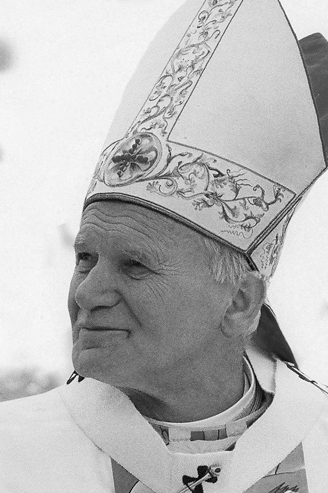
ADDRESS OF HIS HOLINESS JOHN PAUL II AT THE CONCLUSION OF THE STATIONS OF THE CROSS AT THE COLOSSEUM Good Friday, 13 April 1979 When we make the Way of the Cross from one station to the next, in spirit we are always at the spot wherethis journey had its “historical” place: where it[…]Continue reading→
A Meditation for Good Friday: How To Undo the Effects of Sin?
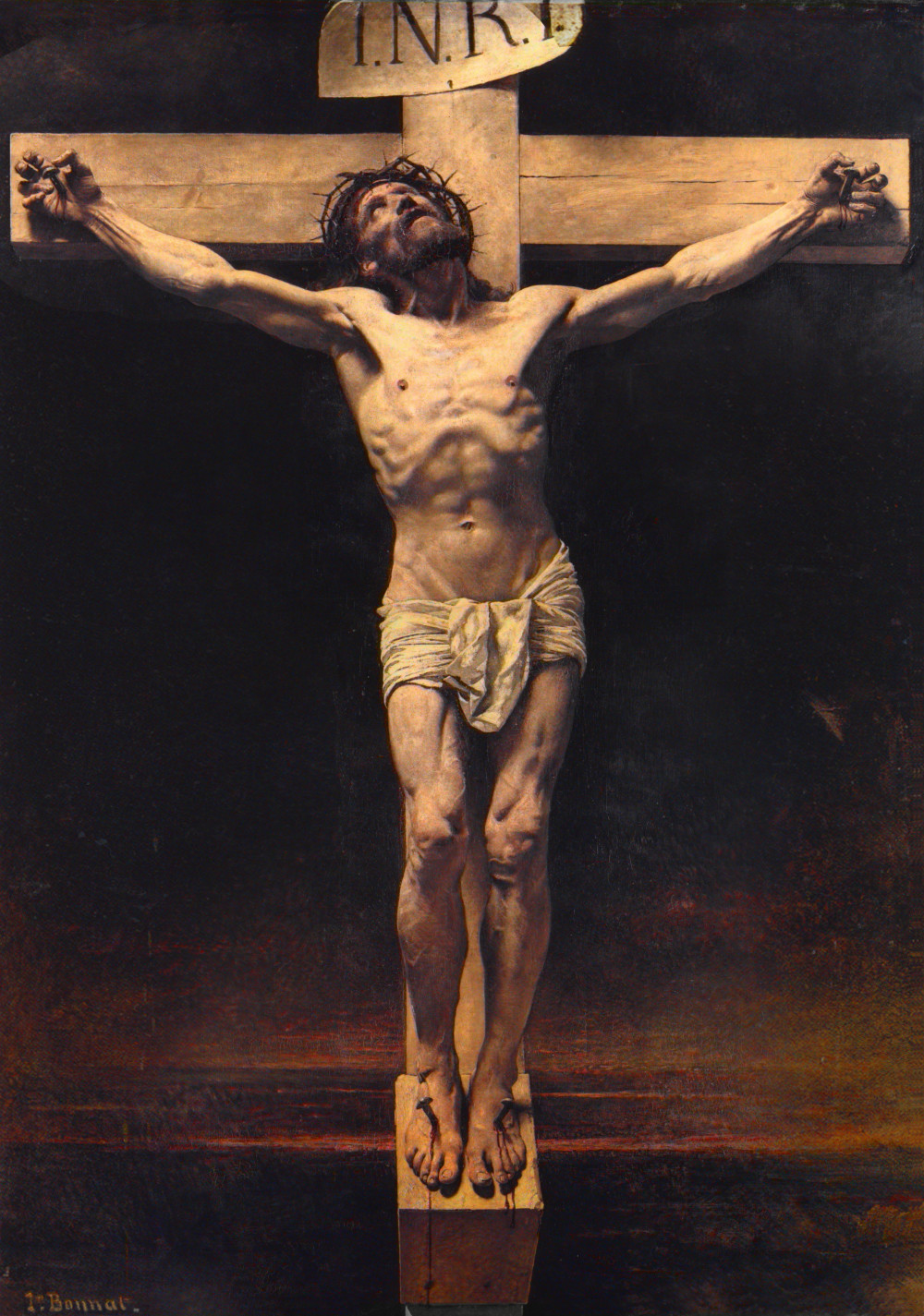
Cardinal Newman, now Saint John Henry Newman, was a towering figure of nineteenth-century Catholicism who is almost universally admired. I say “almost” because not everyone likes him. I knew a priest once, Arthur Caulkins, who has become disenchanted with Newman. As an undergraduate Arthur had been enamoured of Newman, and this interest continued when he[…]Continue reading→
Pope Benedict’s Last Holy Thursday Homily
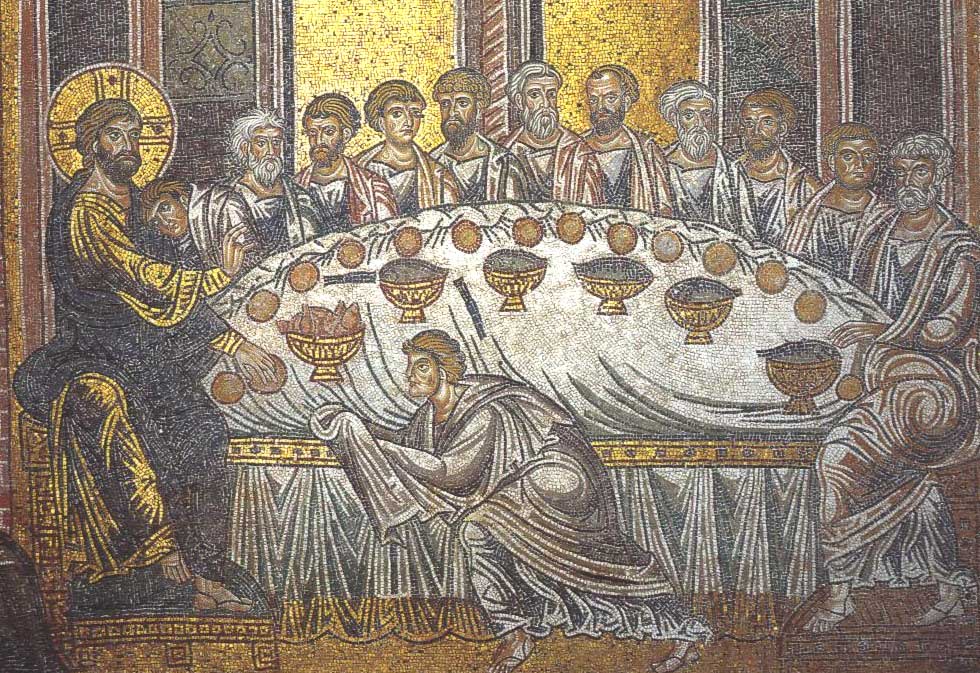
MASS OF THE LORD’S SUPPER HOMILY OF HIS HOLINESS BENEDICT XVI Basilica of St John Lateran Holy Thursday, 5 April 2012 Photo Gallery (Video) Dear Brothers and Sisters! Holy Thursday is not only the day of the institution of the Most Holy Eucharist, whose splendour bathes all else and in some ways draws it to[…]Continue reading→