
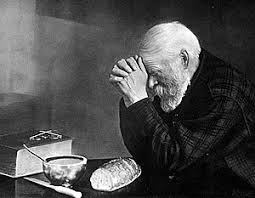
How Busy People Pray
“Pray always.” (1 Thessalonians 5.17)
If we are to take Saint Paul’s words seriously, we see that there must be different forms of prayer; we can’t be on our knees or in church all the time. And given that fact, we are immediately invited to put these forms in some sort of order, starting with the method of prayer that is appropriate for beginners and progressing to contemplation, which mystics talk about. There is something else to note about prayer. Not only is there an ordering in the various ways in which we pray, but as one rises to higher forms he does not abandon the simpler ones. Consequently, the prayers of the proficient will include the same sort of prayer as beginners but now, of course, enriched by his fuller experience.
The most elementary form of prayer is vocal prayer, i.e., repeating set forms such as the Our Father or the prayers at Mass. And these, obviously, are the sorts of prayer that busy people can use. How long does it take to say an Our Father or a Hail Mary? And as Catholics we attend Mass every Sunday. All we have to do is be attentive to what the priest and the congregation are saying. You can see now what I meant when I said that the first level of prayer continues in use at all the other levels. No saint, however high he ascends towards God, ever abandons the Our Father or stops attending Mass. Properly used vocal prayer can leads the devotee to the sublime heights of union with God, but the best reason for using set prayers is that they have been given to us by God. This statement is most obviously valid with regard to Mass in its use of traditional prayers and the Bible, as in the readings and the responsorial Psalm. The last of these is a neglected part of the liturgy, but upon examination the Psalter can be recognized as a manual of piety and of prayer.
To begin with, Psalms are poetry and consequently use highly charged, dramatic language. Consider Psalm 128/129:
Sorely have they afflicted me from my youth,
yet they have not prevailed against me.
The ploughers ploughed upon my back;
they made their furrows long.
Can you imagine a more vivid way of describing the misery of oppression? It’s a powerful metaphor, and we need a variety of metaphors to represent the unfathomable richness of the divine reality. That is why the Bible abounds in them. Further, the conventions of Hebrew poetry are different from ours. Instead of rhythm and rhyme, it uses repetition with variation. Psalm 128/129 begins, “The ploughers ploughed upon my back,” and then it repeats the idea in different words: “they made their furrows long.” You could open the Psalter almost at random to find other instances of this device, as in, e.g., Psalm 94/95. It begins, “O come, let us sing to the Lord!” and then varies the exhortation: “Let us make a joyful noise to the rock of our salvation!”
Using the Psalms teaches us a fundamental principle of all prayer, viz., repetition. It also shows us that there are two ways of repeating. The first is what I have called repetition with variation, i.e., saying the same thing with different words. The second is to use the same words, but varying our attitude each time we repeat them. If you think about it, you can see that to say a phrase two or three times is not the same as saying it once. “I love you”—or “I hate you”—if repeated gains tremendously in intensity: I hate you; I hate you; I HATE YOU! That is why we say “Lord have mercy” over and over again at the beginning of Mass. We really mean it or, at least, we should. Similarly, we repeat, “Lamb of God, who takes away the sins of the world, have mercy on us” at Holy Communion because we want that forgiveness before daring to receive the host. There are also many prayers that are the same in every Mass: “Lord have mercy,” “Holy, holy, holy,” the “Our Father,” and so on. To pray with the Church is to accept that these are sentiments that we can repeat over and over again without exhausting their meaning. Each time I attend Mass I bring a new way of understanding their significance for the Christian life, just as each year, at Christmas or Easter, say, I am a different person responding to the announcement of Christ’s coming or of his saving death and resurrection.
During Lent we are expected to commit ourselves to more frequent prayer. A habit of prayer thus formed will lead one to spend more time in prayer, combined with a personalizing of, especially, the Psalms. People who pray will find themselves moving beyond repeating prayers into other, highly personal forms of prayer., such as the habitual awareness of the presence of God—clearly a form of “praying always.” The culmination of this spiritual journey, reached for some mystics here on earth and by everyone who enters heaven, is the prayer of union. Saint Teresa of Avila and Saint John of the Cross remain the honoured guides into these exalted regions.

Saint Kateri , Canada’s Protectress
This was the title given to Saint Kateri Tekakwitha, by Pope Benedict XVI, when he canonized her on October 28th, 2012, along with six others, in Saint Peter’ Square (she had been beatified by Pope John Paul II back in 1980). With Saint Joseph as our protector, along with the Canadian martyrs, we seem to[…]Continue reading→

Remembering Father Alphonse de Valk
(Today marks the sixth anniversary of the death of Father Alphonse de Valk, C.S.B., a faithful, courageous and indefatigable Basilian priest, pro-life-and-family apostle, and the founder of Catholic Insight magazine. Here is what we wrote those on his entering into eternity five years ago, as we continue to remember him in our prayers and thoughts)[…]Continue reading→

My Name is Bernadette
April 16th is a propitious day, for besides the anniversary of Father de Valk’s death, who founded Catholic Insight in its print form decades ago, and the commemoration of the ‘two Benedicts’, mentioned in accompanying posts, today we also recall Saint Bernadette Soubirous, the young visionary to whom the Virgin Mary appeared numerous times at[…]Continue reading→

Canonizing Sister Faustina and Divine Mercy
HOMILY OF THE HOLY FATHER MASS IN ST PETER’S SQUARE FOR THE CANONIZATION OF SR MARY FAUSTINA KOWALSKA Sunday, 30 April 2000 1. “Confitemini Domino quoniam bonus, quoniam in saeculum misericordia eius”; “Give thanks to the Lord for he is good; his steadfast love endures for ever” (Ps 118: 1). So the Church sings on the Octave of[…]Continue reading→

Divine Mercy Sunday – An Echo of Every Mass
Reach out your hand and put it in my side. Do not doubt but believe’… ‘My Lord and my God!’ (Jn. 20:18)). Today is Divine Mercy Sunday, and as we celebrate the end of the Easter Octave, we contemplate the wounded side of our Saviour, the Church’s source of life. On Good Friday in the[…]Continue reading→

Saint Stanislaus of Szczepanów
We celebrate Saint Stanislaus today (+ April 11, 1079), in light of this Easter Octave, a bishop and martyr who accepted the episcopacy only at the direct order of Pope Alexander II. He proved a wise and courageous leader of his flock, put to death by his own king, Boleslaus, for rebuking the monarch’s ‘immoral[…]Continue reading→
First Holy Communion: Sermon from May 16, 1943
Here is a sermon from the good old days by +Rev. Msgr. Vincent Nicholas Foy (August 14, 1915 – March 13, 2017), from 1943. Readers may recall that Pope Saint Pius X, by the decree Quam Singulari in 1910, lowered the customary age of reception of Holy Communion – after the rigours of the plague[…]Continue reading→
In the Glorious Light of Easter, Alleluia!
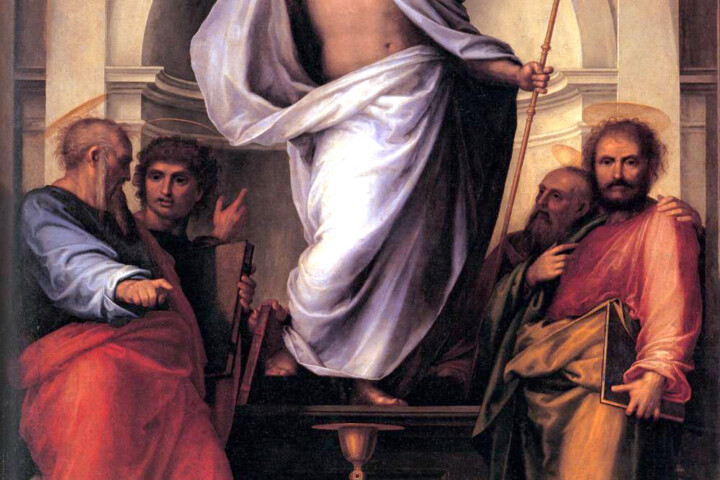
Set your minds on things that are above, not on things that are on earth, for you have died, and your life is hidden with Christ in God. When Christ who is your life is revealed, then you also will be revealed with him in glory (Col. 3:3-4). The Resurrection of Our Lord and Saviour[…]Continue reading→
An Ancient Homily for Holy Saturday
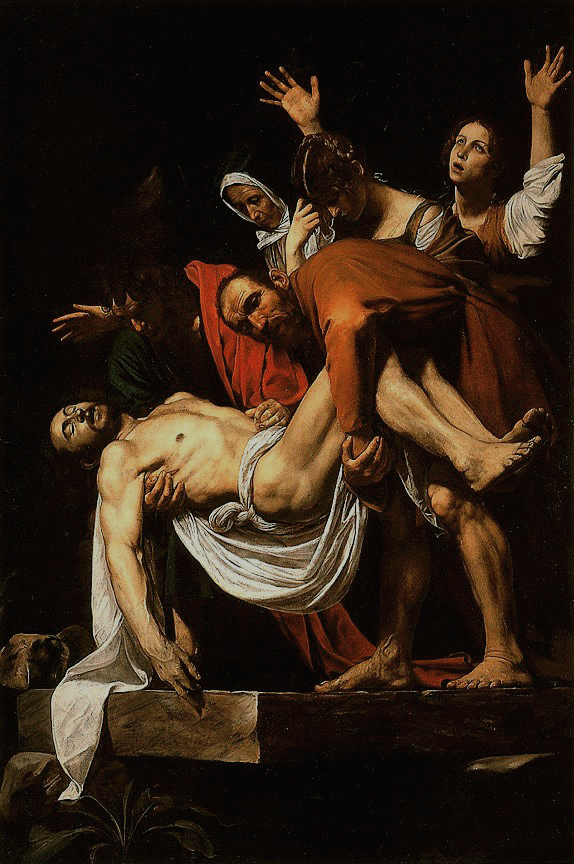
The time between Good Friday and Easter Sunday is one of waiting, in silence, as the world wonders – anticipates – what will happen, after the death of Christ. We re-live this time each year in the anamnesis of our liturgy, and in turn look forward to the glorious re-creation of all things at the[…]Continue reading→
Europe’s Long Descent
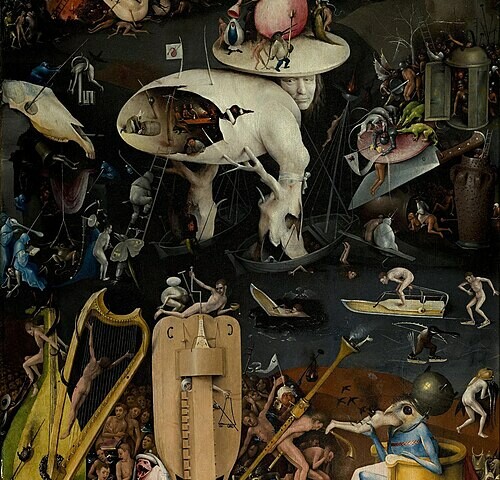
(As we meditate on this day on Christ’s burial, and His descent into hell, it is fitting to ponder here with contributor Peter Marcus how the world seems to be heading there as well. The difference is that, although God cannot ‘redeem’ hell, nor those therein, He can and did redeem the world. There is[…]Continue reading→