
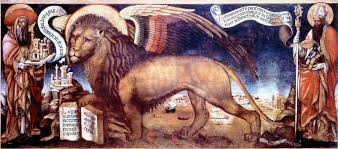
The Year of Mark: Who Was Jesus?
(In this year that we follow the Gospel of Saint Mark, Father Callam offers us a four-part series on the Evangelist and his perspective on the life of Christ.)
If I were to characterize the Gospel of Matthew in a phrase, I would say that it describes Jesus as the new Moses, replacing with his new law the earlier one. Luke’s portrait of Jesus reveals him as combining “intolerable severity and irresistible tenderness.”[1] As for John, a single word will do: “mystical.” And Mark? “Mystery.” To establish this fact, consider the ending of the Gospel, chapter 16. No doubt your Bible will have a footnote at verse 9. Mine reads, “verses 9 – 20 cannot have been part of the original text of Mark. . . . They were appended to the Gospel by the middle of the second century.” If we then take verse 8 as the final verse of the Gospel, we are certainly in the realm of mystery: “They [the women] fled from the tomb, for trembling and astonishment had come upon them; and they said nothing to anyone, for they were afraid.” Similar reactions are found throughout Mark, as when the miracles of Jesus astound and perplex people,[2] including his own disciples.[3] “Who is he?” they ask, when Jesus had calmed the storm at sea (4.35-41): “Who then is this, that even wind and sea obey him?” Their incomprehension continues, and Jesus rebukes them for it: “Do you not yet perceive or understand? Are your hearts hardened? Having eyes do you not see, and having ears do you not hear?” (8.17-18). The disciples and the crowds may have been mystified, but others, others who should have recognized and honoured Jesus went further by rejecting him. His relatives thought he was mad (3.21); his fellow townsmen refused to hear him (6.1-6); and the scribes were even worse: “He is possessed by Beelzebul, and by the prince of demons he casts out the demons” (3.22). This failure to comprehend who Jesus was reached a climax in the final chapters when Judas, one of the twelve, betrayed him to the religious authorities, and then, at the trial, the people, who earlier had gathered in great crowds to hear him, shouted for his death: “Crucify him!” (15.13).
On the other hand, Mark surprises us, because certain people do recognize who Jesus is—and always the least likely. Devils know who he is, crying out as he approaches a possessed person: “I know who you are, the holy one of God!” (1.24). Peter, surprisingly, given his general lack of comprehension, in an inspired moment identifies Jesus as the Christ (8.29). More unexpected is the question that the high priest posed when Jesus was being tried before the Sanhedrin: “Are you the Christ, the Son of the Blessed?” (14.16). Even Pilate, the Roman governor, repeatedly refers to Jesus as “the King of the Jews” (15.2, ff), a title the soldiers took up as they mocked him and that was the inscription attached to the cross.
There is another unlikely person who knows the true identity of Jesus, namely each one of us, the readers, for Mark presents in a remarkable way the true identity of Jesus: at the beginning, at the end and at the centre of the Gospel we are told that Jesus is the Son of God.
- the opening verse: “The beginning of the Gospel of Jesus Christ, the Son of God” (1.1).
- at the crucifixion: “And when the centurion, who stood facing him, saw that he thus breathed his last, he said, ‘Truly this man was the Son of God!’” (15.39).
- at the centre, the Transfiguration: “And a cloud overshadowed them, and a voice came out of the cloud, ‘This is my beloved Son; listen to him’” (9.7).
The importance of the last of these statements can be confirmed in a simple way. For if you begin counting words forward from the beginning and backwards from the end, you discover that the account of the Transfiguration in chapter 9 is equidistant from each of then. There’s more to be said, for the passage contains two hundred and one words, and again moving from each end, one comes to a phrase that is at the centre of this section, and consequently at the dead centre of the entire Gospel. And what do you find? “This is my beloved Son; listen to him.” In this way, Mark provides the reader with the key that unlocks the mystery around the person of Jesus. It is ours to respond, “Yes Lord, I believe.”
[1] The phrase comes from C.S. Lewis, Fern Seeds and Elephants. Available at https://orthodox-web.tripod.com/papers/fern_seed.html. Accessed on 14 January 2021.
[2] Jesus, it seems, intended purposely prevented the people from understanding: “. . . for those outside everything is in parables; so that they may indeed see but not perceive, and may indeed hear but not understand; lest they should turn again, and be forgiven.” (4.11-12).
[3] “. . . for they did not understand about the loaves, but their hearts were hardened” (6.52).

Remembering Father Alphonse de Valk
(Today marks the sixth anniversary of the death of Father Alphonse de Valk, C.S.B., a faithful, courageous and indefatigable Basilian priest, pro-life-and-family apostle, and the founder of Catholic Insight magazine. Here is what we wrote those on his entering into eternity five years ago, as we continue to remember him in our prayers and thoughts)[…]Continue reading→

Divine Mercy Sunday – An Echo of Every Mass
Reach out your hand and put it in my side. Do not doubt but believe’… ‘My Lord and my God!’ (Jn. 20:18)). Today is Divine Mercy Sunday, and as we celebrate the end of the Easter Octave, we contemplate the wounded side of our Saviour, the Church’s source of life. On Good Friday in the[…]Continue reading→

Saint Stanislaus of Szczepanów
We celebrate Saint Stanislaus today (+ April 11, 1079), in light of this Easter Octave, a bishop and martyr who accepted the episcopacy only at the direct order of Pope Alexander II. He proved a wise and courageous leader of his flock, put to death by his own king, Boleslaus, for rebuking the monarch’s ‘immoral[…]Continue reading→

First Holy Communion: Sermon from May 16, 1943
Here is a sermon from the good old days by +Rev. Msgr. Vincent Nicholas Foy (August 14, 1915 – March 13, 2017), from 1943. Readers may recall that Pope Saint Pius X, by the decree Quam Singulari in 1910, lowered the customary age of reception of Holy Communion – after the rigours of the plague[…]Continue reading→

In the Glorious Light of Easter, Alleluia!
Set your minds on things that are above, not on things that are on earth, for you have died, and your life is hidden with Christ in God. When Christ who is your life is revealed, then you also will be revealed with him in glory (Col. 3:3-4). The Resurrection of Our Lord and Saviour[…]Continue reading→

An Ancient Homily for Holy Saturday
The time between Good Friday and Easter Sunday is one of waiting, in silence, as the world wonders – anticipates – what will happen, after the death of Christ. We re-live this time each year in the anamnesis of our liturgy, and in turn look forward to the glorious re-creation of all things at the[…]Continue reading→

Europe’s Long Descent
(As we meditate on this day on Christ’s burial, and His descent into hell, it is fitting to ponder here with contributor Peter Marcus how the world seems to be heading there as well. The difference is that, although God cannot ‘redeem’ hell, nor those therein, He can and did redeem the world. There is[…]Continue reading→
Pope Saint John Paul II’s First Good Friday Homily
ADDRESS OF HIS HOLINESS JOHN PAUL II AT THE CONCLUSION OF THE STATIONS OF THE CROSS AT THE COLOSSEUM Good Friday, 13 April 1979 When we make the Way of the Cross from one station to the next, in spirit we are always at the spot wherethis journey had its “historical” place: where it[…]Continue reading→
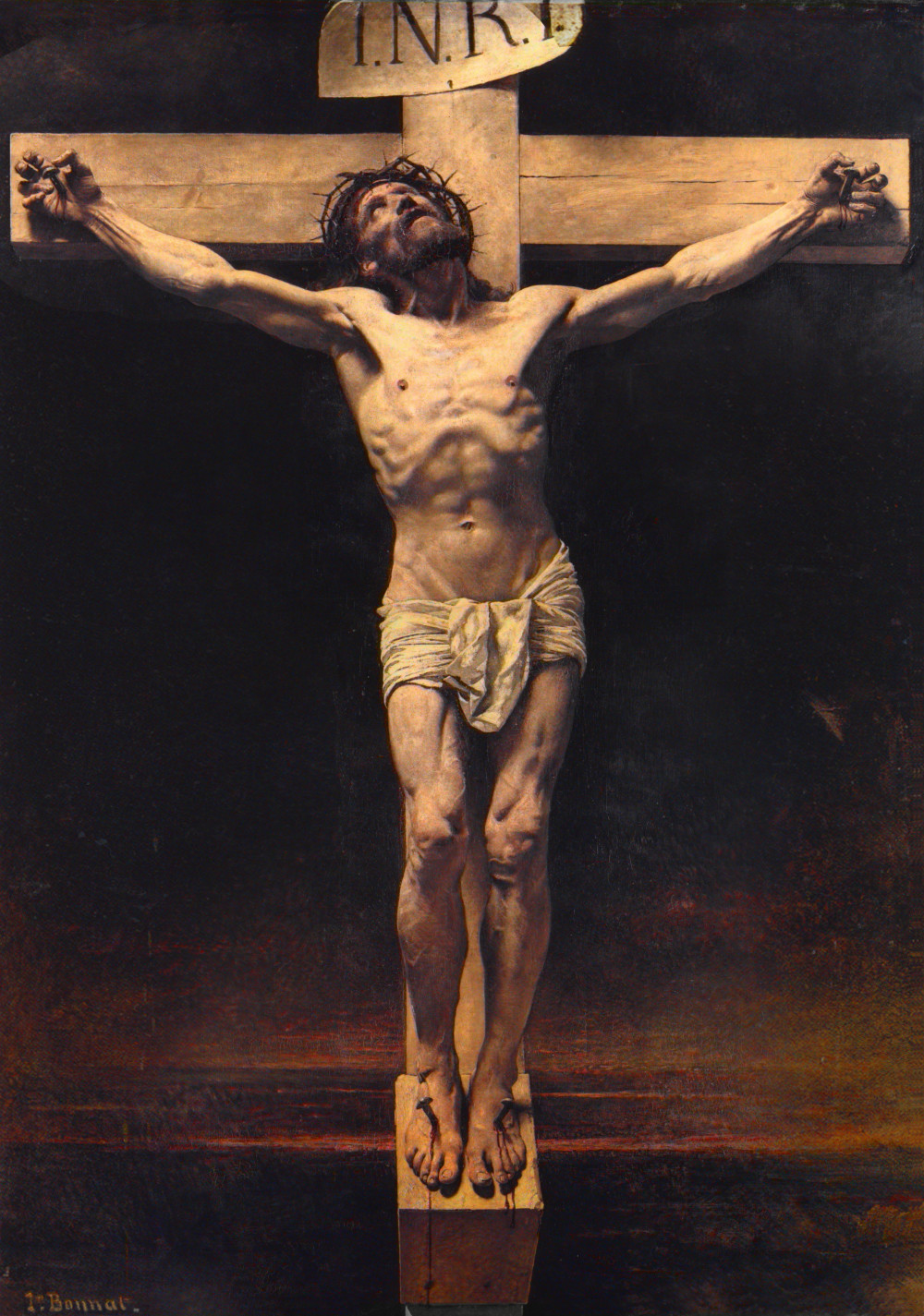
A Meditation for Good Friday: How To Undo the Effects of Sin?
Cardinal Newman, now Saint John Henry Newman, was a towering figure of nineteenth-century Catholicism who is almost universally admired. I say “almost” because not everyone likes him. I knew a priest once, Arthur Caulkins, who has become disenchanted with Newman. As an undergraduate Arthur had been enamoured of Newman, and this interest continued when he[…]Continue reading→
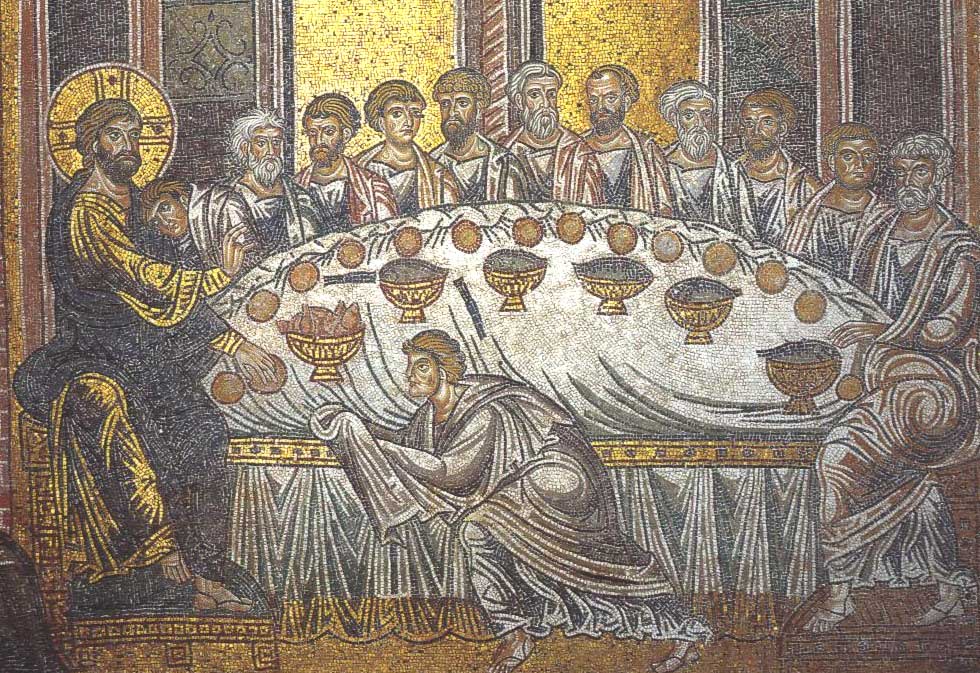
Pope Benedict’s Last Holy Thursday Homily
MASS OF THE LORD’S SUPPER HOMILY OF HIS HOLINESS BENEDICT XVI Basilica of St John Lateran Holy Thursday, 5 April 2012 Photo Gallery (Video) Dear Brothers and Sisters! Holy Thursday is not only the day of the institution of the Most Holy Eucharist, whose splendour bathes all else and in some ways draws it to[…]Continue reading→