
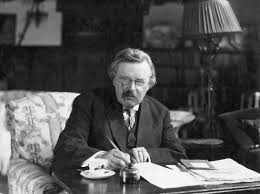
Chesterton and Light in the New Dark Ages
Certain critics tell us that we wish to return to the Dark Ages about which they themselves are entirely in the dark. They are in the dark, not only about what the phrase ought to mean, but even about what they mean by it. At the best it is an abusive term for the Middle Ages. More often it is a jumble of everything and anything from the Stone Age to the Victorian Age. A man spoke the other day of the mediaeval idea that our own nation must be supported against any other nation; evidently unaware that when Europe was mediaeval it was far less national. Somebody else spoke of the mediaeval notion of a different morality for men and women; the mediaeval morality being one of the few that applied almost equally to both.
If they talk thus ignorantly of the Middle Ages, of which even historians are beginning to know something, they naturally know even less about the Dark Ages, of which nobody knows very much. The Dark Ages, properly understood, were that period during which cultural continuity is almost broken between the fall of Rome and the rise of mediaeval society; the time of the barbarian wars and the first beginnings of feudalism. Naturally these critics know very little about the period; they know so little about it as to say that we want to bring it back. And yet the strangest thing, in all the strange things they say, is the fact that there is some truth in what they say. In a sense quite different from what they intend, there really is a parallel between our position and that of people in the Dark Ages.
One way of putting it is that both are faced with a possible triumph of the barbarians. As in their time a new and disproportionate military power arose among provincials, so in our case a new and disproportionate money power has arisen among colonials. Then Rome was sometimes weaker than the Transalpine legions; now Europe is sometimes weaker than the Transatlantic banks. The streets of London are altered, if not destroyed, by tribes that may legitimately be called the Vandals; and for the anarchy beyond the Roman Wall we have the anarchy of Wall Street. But though we might work some such fanciful parallel for the fun of the thing, it would really be very unfair to America, which has inherited some Roman traditions more clearly than we; for instance, the tradition of the Republic. A much truer way of stating the parallel is this; that history is here repeating itself, for once in a way, in connection with a certain idea, which can best be described as the idea of Sanctuary. In the Dark Ages the arts and sciences went into sanctuary. This was true then in a special and technical sense; because they went into the monastery. Because we praise the only thing that saved anything from the wreck, we are actually accused of praising the wreck. We are charged with desiring the Dark Ages, because we praise the few scattered candles that were lit to dispel the darkness. We are charged with desiring the deluge, because we are grateful to the Ark. But the immediate question here is historical rather than religious; and it is a fact attested by all historians that what culture could be found in that barbarous transition was mostly to be found in the shelter of the monastic institutions. We may regret or admire the form which that culture took in that shelter; but nobody denies the storm from which it was sheltered. Nobody denies that St. Dunstan was more cultivated than a Danish pirate or that there is more art in Gothic arches than in Gothic raids. And it is in this sense, of science and art going into sanctuary, that there seems to me to be a real parallel between the barbarian anarchy and the progress that we are enjoying just now.
Some, even of my own moral and religious atmosphere, have asked why I give such importance to Property, which if it be a human appetite may also easily be a human lust. I confess that my chief impulse is not so much to prevent it from being idealistically denounced as to prevent it being cynically defended. I can listen patiently to a Communist repeating for hours at a time that Property is unnecessary, because men must surrender selfish interests to social ideals. I only begin to break the furniture when somebody starts to prove that Property is necessary, because men are all selfish and every man must look after himself. The case for Property is not that a man must look after himself; but, on the contrary, that a normal man has to look after other people, if it be simply a wife and family. It is that this unit should have an economic basis for its social independence. If he were considering only himself, he might be more independent as a vagabond; he might be more secure as a serf. But the point at the moment is that I like Property because it is a noble thing. I can respect the revolutionist who dislikes it because it is an ignoble thing. But I have no truck with the cynic who likes it because it is ignoble. But I believe that at this historic crisis it has become not only a just, but in a rather special sense, a sacred thing. Real property will be all the more sacred because it will be rather rare. It will be an island of Christian culture in seas of senseless drifting and mutable social moods.
In short, I believe we have reached the time when the family will be called upon to play the part once played by the Monastery. That is to say, there will retire into it not merely the peculiar virtues that are its own, but the crafts and creative habits which once belonged to all sorts of other people. In the old Dark Ages, it was impossible to persuade the feudal chiefs that it was more worth while to grow medicinal herbs in a small garden than to lay waste the province of an empire; that it was better to decorate the corner of a manuscript with gold-leaf than to heap up treasuries and wear crowns of gold. These men were men of action; they were hustlers; they were full of vim and pep and snap and zip. In other words, they were deaf and blind and partly mad, and rather like American millionaires. And because they were men of action, and men of the moment, all that they did has vanished from the earth like a vapour; and nothing remains out of all that period but the little pictures and the little gardens made by the pottering little monks. As nothing would convince one of the old barbarians that an herbal or a missal could be more important than a triumph and a train of slaves, so nothing could convince one of the new barbarians that a game of hide and seek can be more educative than a tennis tournament at Wimbledon, or a local tradition told by an old nurse more historic than an imperial speech at Wembley. The real national tone will have to remain for a time as a domestic tone. As religion once went into retreat, so patriotism must retire into private life. This does not mean that it will be less powerful; ultimately it may be more powerful, just as the monasteries became enormously powerful.
But it is by retiring into these forts that we can outlast and wear down the invasion; it is by camping upon these islands that we can await the sinking of the flood. Just as in the Dark Ages, the world without was given up to the vainglory of mere rivalry and violence, so in this passing age the world will be given up to vulgarity and gregarious fashions and every sort of futility. It is very like the Flood; and not least in being unstable as water. Noah had a house boat which seems to have contained many other things besides the obvious household pets. And many wild birds of exotic plumage and many wild beasts of almost fabulous fantasy, many arts counted pagan and sciences counted rationalistic may come to roost or burrow in such stormy seasons in the shelter of the convent or the home.

Saint Kateri , Canada’s Protectress
This was the title given to Saint Kateri Tekakwitha, by Pope Benedict XVI, when he canonized her on October 28th, 2012, along with six others, in Saint Peter’ Square (she had been beatified by Pope John Paul II back in 1980). With Saint Joseph as our protector, along with the Canadian martyrs, we seem to[…]Continue reading→

Remembering Father Alphonse de Valk
(Today marks the sixth anniversary of the death of Father Alphonse de Valk, C.S.B., a faithful, courageous and indefatigable Basilian priest, pro-life-and-family apostle, and the founder of Catholic Insight magazine. Here is what we wrote those on his entering into eternity five years ago, as we continue to remember him in our prayers and thoughts)[…]Continue reading→

My Name is Bernadette
April 16th is a propitious day, for besides the anniversary of Father de Valk’s death, who founded Catholic Insight in its print form decades ago, and the commemoration of the ‘two Benedicts’, mentioned in accompanying posts, today we also recall Saint Bernadette Soubirous, the young visionary to whom the Virgin Mary appeared numerous times at[…]Continue reading→
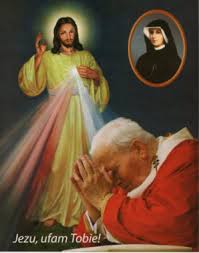
Canonizing Sister Faustina and Divine Mercy
HOMILY OF THE HOLY FATHER MASS IN ST PETER’S SQUARE FOR THE CANONIZATION OF SR MARY FAUSTINA KOWALSKA Sunday, 30 April 2000 1. “Confitemini Domino quoniam bonus, quoniam in saeculum misericordia eius”; “Give thanks to the Lord for he is good; his steadfast love endures for ever” (Ps 118: 1). So the Church sings on the Octave of[…]Continue reading→

Divine Mercy Sunday – An Echo of Every Mass
Reach out your hand and put it in my side. Do not doubt but believe’… ‘My Lord and my God!’ (Jn. 20:18)). Today is Divine Mercy Sunday, and as we celebrate the end of the Easter Octave, we contemplate the wounded side of our Saviour, the Church’s source of life. On Good Friday in the[…]Continue reading→

Saint Stanislaus of Szczepanów
We celebrate Saint Stanislaus today (+ April 11, 1079), in light of this Easter Octave, a bishop and martyr who accepted the episcopacy only at the direct order of Pope Alexander II. He proved a wise and courageous leader of his flock, put to death by his own king, Boleslaus, for rebuking the monarch’s ‘immoral[…]Continue reading→
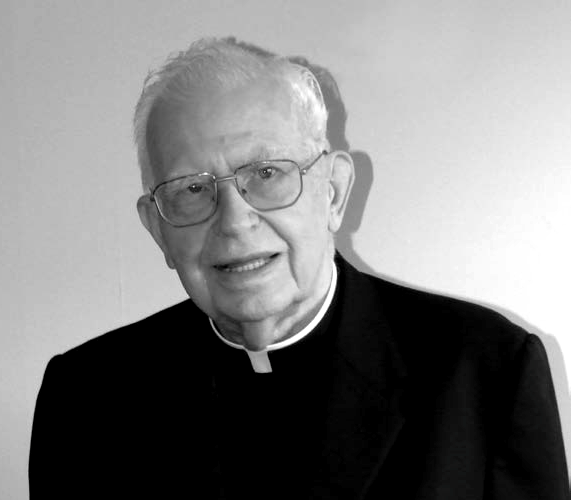
First Holy Communion: Sermon from May 16, 1943
Here is a sermon from the good old days by +Rev. Msgr. Vincent Nicholas Foy (August 14, 1915 – March 13, 2017), from 1943. Readers may recall that Pope Saint Pius X, by the decree Quam Singulari in 1910, lowered the customary age of reception of Holy Communion – after the rigours of the plague[…]Continue reading→
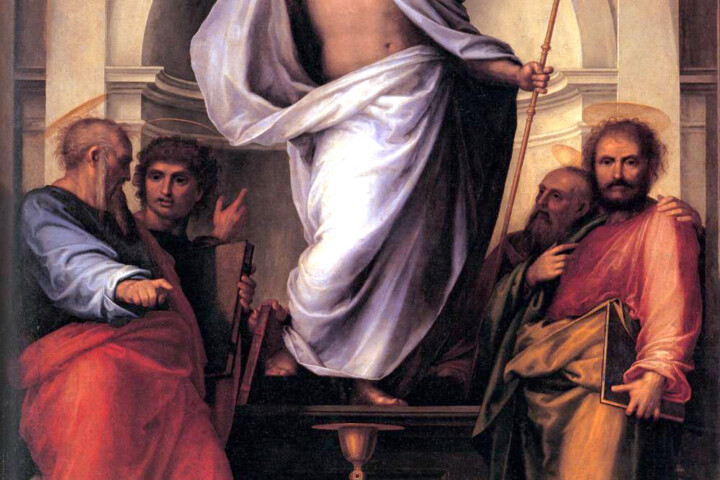
In the Glorious Light of Easter, Alleluia!
Set your minds on things that are above, not on things that are on earth, for you have died, and your life is hidden with Christ in God. When Christ who is your life is revealed, then you also will be revealed with him in glory (Col. 3:3-4). The Resurrection of Our Lord and Saviour[…]Continue reading→

An Ancient Homily for Holy Saturday
The time between Good Friday and Easter Sunday is one of waiting, in silence, as the world wonders – anticipates – what will happen, after the death of Christ. We re-live this time each year in the anamnesis of our liturgy, and in turn look forward to the glorious re-creation of all things at the[…]Continue reading→
Europe’s Long Descent
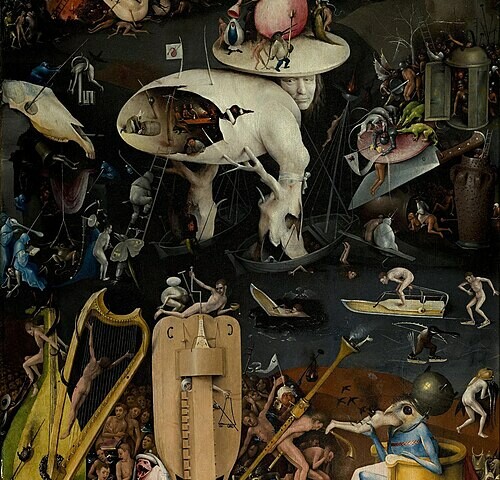
(As we meditate on this day on Christ’s burial, and His descent into hell, it is fitting to ponder here with contributor Peter Marcus how the world seems to be heading there as well. The difference is that, although God cannot ‘redeem’ hell, nor those therein, He can and did redeem the world. There is[…]Continue reading→