

Christmas, 2020
What is God like? The Bible itself answers the question if we examine it carefully. The first thing that struck me as I reflected on the sacred text was the surprising fact that God has made himself known at all, that we can say anything about him. After all, he is by definition transcendent, i.e., outside the categories of ordinary thought, literally ineffable. And we would, in fact, be speechless if he had not himself provided us with terms that can be used, with caution, to speak of the divine reality. One word that expresses a fundamental characteristic of God in the Old Testament is, it seems, “justice.” “For the Lord is a God of justice.”[1] Over and over again God promises a reward to those who follow his law . . . and distress for those who do not.
If you obey the voice of the Lord your God . . . Blessed shall you be in the city, and blessed shall you be in the field. Blessed shall be the fruit of your body, and the fruit of your ground, and the fruit of your beasts.[2]
Inevitably, where there is the possibility of a blessing there will also be the possibility of a curse:
But if you will not obey the voice of the Lord your God . . . the Lord will send upon you curses, confusion, and frustration . . . until you are destroyed and perish quickly.[3]
So essential is the Bible’s understanding of God’s absolute righteousness that it was the basis of the Hebrew interpretation even of natural and political events. Noah’s flood, for instance, is presented as the consequence of widespread immorality, just as the destruction of Pharaoh’s army in the Red Sea was the result of his intransigent refusal to accept the message of Moses, God’s agent.
What, then, are we to do? Who among us would dare approach the throne of perfect righteousness? “If you, O Lord, should mark iniquities, Lord, who could stand?” Who indeed? Scripture again comes to the rescue: “But with you there is forgiveness.”[4] More than God’s justice, the Old Testament of God’s mercy. In Psalm 135, for instance, a refrain is repeated and repeated again, after every line: “For the mercy of the Lord endures forever.”[5] In summary, God does not ignore what is genuinely evil in vicious behaviour, but he is always ready to forgive when a sinner repents. One may go further and discover that punishment is sent in order to bring the sinner to recognize his guilt and turn to God for forgiveness. “Where sin increased, grace abounded all the more.”[6]
Clearly, it is no simple task to determine, even from Scripture, how God can be absolutely just and perfectly merciful at the same time. Perhaps some light can be shed on the mystery if we consider another divine attribute, one has an immediate appeal and a reassuring familiarity to it: to employ a bit of jargon, one could say that “God is a social being.” He likes people; he enjoys being with his creatures, all of them. Even the physical cosmos, it seems pleases him. It’s as if he were delighted with its ingenuity and complexity. When man appeared—that maverick element of natural order—God was even more immediately involved, as we know from the book of Genesis. The patriarchs, Moses, the Judges, Kings and prophets all march across the stage of history as God formed and reformed a special nation: “For you are a people holy to the Lord your God [who] has chosen you to be a people for his own possession, out of all the peoples that are on the face of the earth.”[7] With the passage of time, God became closer, more intimately involved with his people. Consider, again, the moral principle behind God’s justice and mercy. A development can be discerned here, in that God created man with a conscience that, properly developed, can achieve an exquisite refinement in the moral order. Some pagan philosopher from antiquity, a Socrates or an Aristotle, for instance, can describe a remarkably subtle and compelling ideal of human behaviour. But conscience has never been completely adequate to its task. Obviously, a brigand or a gangster has dulled its refined dictates almost completely, but even a great mind will have some blind spot in the moral order. God therefore supplemented the inner voice of conscience with external revelation by giving Moses the Ten Commandments, and by continuing with a host of other directives throughout Scripture. “O Lord, who shall dwell on thy holy hill? He who speaks truth, who does not slander with his tongue, and does no evil to his friend.”[8]
God’s greater involvement with the human race is evident in other areas as well in morality. For instance, the initial exclusivity of his interaction with the Jews was to be one day extended to the entire human race. The choice of Abraham and his descendants was more a point of entry than a closing off to a single nation of God’s relationship with mankind. The prophets and the psalms come back again and again to this theme. We read in Isaiah, for instance, “It shall come to pass in that the mountain of the house of the Lord shall be established as the highest of the mountains, and all the nations shall flow to it.[9] Or consider Psalm 116/117, the shortest in the Psalter: “Praise the Lord, all nations! Extol him, all peoples!”
At this moment you must be feeling rather cheated. Here we are at Christmas day, and instead of angels, shepherds and an infant lying in a manger, you are being lectured to on abstruse biblical topics. Let me then, at this point, introduce the message of Christmas, for it is, in fact, what all the above talk has been leading to. I have laboured to convince you that God created us to be virtuous and that he makes himself more and more available to men and women in order to achieve this goal. Christmas is the climax of this process, and, while it could not have been predicted, it is seen as entirely right once it has occurred. And why? Because Christmas is the presence of God among us in the most accessible form imaginable, viz., as a fellow human being. God had been interacting with man for millennia with greater and greater familiarity; and now, in Jesus, he can speak to us as one person to another. Furthermore, through the agency of Christ Jesus, moral improvement moves to a higher plane. It is no longer merely the intellectual and practical development of a good conscience; rather it has become a reflection of the divine reality itself. This new height is possible because the death and resurrection of Jesus has delivered us from the bondage of sin and provided us with the presence of the Holy Spirit to direct from within our thoughts and decisions in godly fashion. +
[1] Is 30.18.
[2] Dt 28.2-4.
[3] Dt 28.15-20.
[4] Ps 129/130.3-4.
[5] Ps 135/136: “quoniam in æternum misericordia ejus.” The English translation reads “For his steadfast love endures forever.” The LXX however has, “oti eis ton aiwona to eleos autou.”
[6] Rom 5.20.
[7] Dt 7.6.
[8] Ps 14/15.1-3.
[9] Is 2.2.

Saint Kateri , Canada’s Protectress
This was the title given to Saint Kateri Tekakwitha, by Pope Benedict XVI, when he canonized her on October 28th, 2012, along with six others, in Saint Peter’ Square (she had been beatified by Pope John Paul II back in 1980). With Saint Joseph as our protector, along with the Canadian martyrs, we seem to[…]Continue reading→

Remembering Father Alphonse de Valk
(Today marks the sixth anniversary of the death of Father Alphonse de Valk, C.S.B., a faithful, courageous and indefatigable Basilian priest, pro-life-and-family apostle, and the founder of Catholic Insight magazine. Here is what we wrote those on his entering into eternity five years ago, as we continue to remember him in our prayers and thoughts)[…]Continue reading→

My Name is Bernadette
April 16th is a propitious day, for besides the anniversary of Father de Valk’s death, who founded Catholic Insight in its print form decades ago, and the commemoration of the ‘two Benedicts’, mentioned in accompanying posts, today we also recall Saint Bernadette Soubirous, the young visionary to whom the Virgin Mary appeared numerous times at[…]Continue reading→
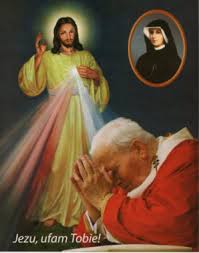
Canonizing Sister Faustina and Divine Mercy
HOMILY OF THE HOLY FATHER MASS IN ST PETER’S SQUARE FOR THE CANONIZATION OF SR MARY FAUSTINA KOWALSKA Sunday, 30 April 2000 1. “Confitemini Domino quoniam bonus, quoniam in saeculum misericordia eius”; “Give thanks to the Lord for he is good; his steadfast love endures for ever” (Ps 118: 1). So the Church sings on the Octave of[…]Continue reading→

Divine Mercy Sunday – An Echo of Every Mass
Reach out your hand and put it in my side. Do not doubt but believe’… ‘My Lord and my God!’ (Jn. 20:18)). Today is Divine Mercy Sunday, and as we celebrate the end of the Easter Octave, we contemplate the wounded side of our Saviour, the Church’s source of life. On Good Friday in the[…]Continue reading→

Saint Stanislaus of Szczepanów
We celebrate Saint Stanislaus today (+ April 11, 1079), in light of this Easter Octave, a bishop and martyr who accepted the episcopacy only at the direct order of Pope Alexander II. He proved a wise and courageous leader of his flock, put to death by his own king, Boleslaus, for rebuking the monarch’s ‘immoral[…]Continue reading→
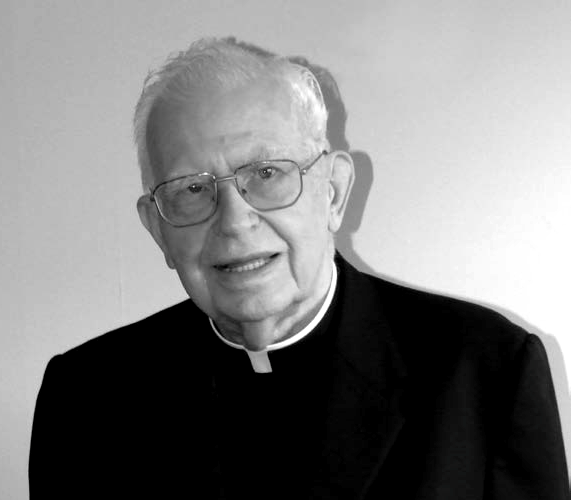
First Holy Communion: Sermon from May 16, 1943
Here is a sermon from the good old days by +Rev. Msgr. Vincent Nicholas Foy (August 14, 1915 – March 13, 2017), from 1943. Readers may recall that Pope Saint Pius X, by the decree Quam Singulari in 1910, lowered the customary age of reception of Holy Communion – after the rigours of the plague[…]Continue reading→
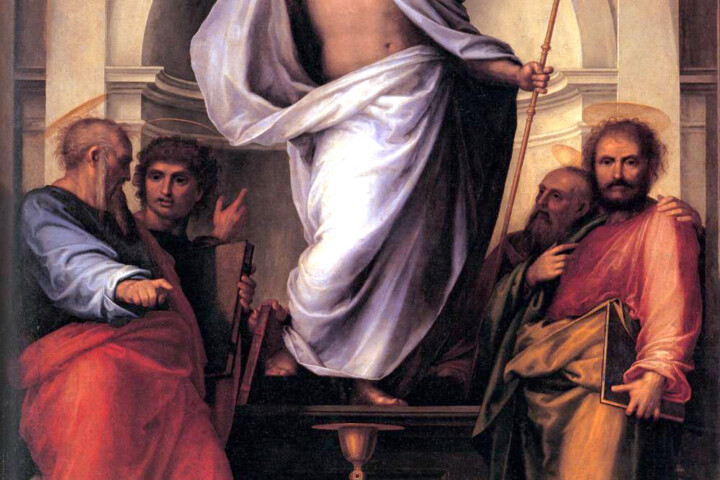
In the Glorious Light of Easter, Alleluia!
Set your minds on things that are above, not on things that are on earth, for you have died, and your life is hidden with Christ in God. When Christ who is your life is revealed, then you also will be revealed with him in glory (Col. 3:3-4). The Resurrection of Our Lord and Saviour[…]Continue reading→
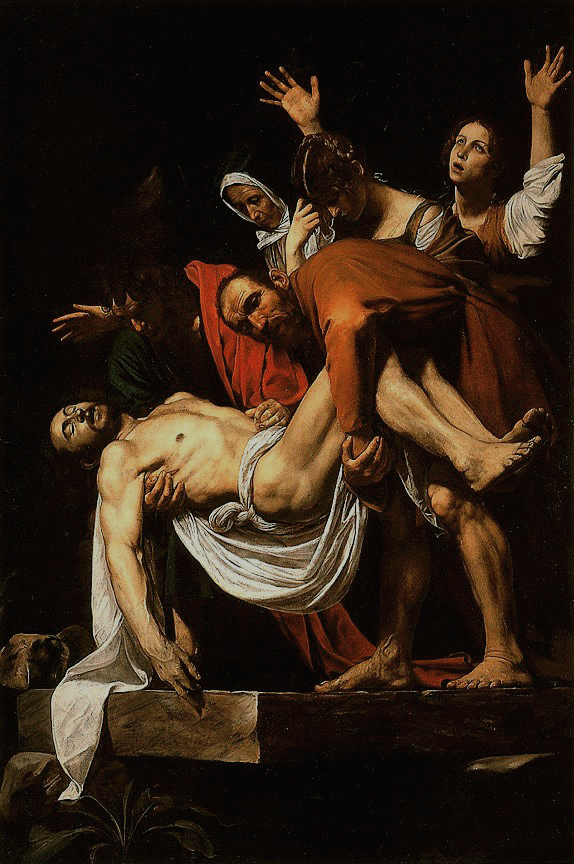
An Ancient Homily for Holy Saturday
The time between Good Friday and Easter Sunday is one of waiting, in silence, as the world wonders – anticipates – what will happen, after the death of Christ. We re-live this time each year in the anamnesis of our liturgy, and in turn look forward to the glorious re-creation of all things at the[…]Continue reading→

Europe’s Long Descent
(As we meditate on this day on Christ’s burial, and His descent into hell, it is fitting to ponder here with contributor Peter Marcus how the world seems to be heading there as well. The difference is that, although God cannot ‘redeem’ hell, nor those therein, He can and did redeem the world. There is[…]Continue reading→