
Ça va bien aller: Will All Indeed Be Well?
The following reflection from contributor Father Tim McCauley offers a perspective on the financial impact of the lockdowns, in our current times of controversy. Many of our readers have reservations about the proposed vaccine, and I share any number of those – I will offer more thoughts on that shortly – We’re each going to have to make up our own minds and consciences (if you are so inclined, see my article today in Catholic World Report).
Here at Catholic Insight, as befits a magazine in the truly ‘Catholic’ tradition, we should be open to differing points of view – within certain limits. As the saying goes, which I will quote repeatedly and perhaps write a reflection thereon, in necessariis unitas, in dubiis libertas, in omnibus caritas. (In necessary things, unity, in doubtful things, liberty, and in all things, charity). So peruse Father’s thoughts, and feel free to let us know your own thoughts. The truth is found often in vigorous debate (Editor)
‘Ça va bien aller’ has become a popular slogan in Quebec to encourage people in the midst of the coronavirus pandemic. It is always accompanied by a picture of a rainbow, which from a natural perspective we often associate with peace after a storm. It has gained some popularity in English Canada as well, with various translations such as ‘We will be OK.’ During these last months of doubt, fear, and uncertainty, a simple catchphrase like this can have a positive effect. Yet what is the basis of this slogan? Is it a statement of logic, an expression of natural optimism, faith in God, or a combination of these?
One could say with a reasonable amount of certainty that the coronavirus will not last forever. In our world’s history of epidemics, many of them were devastating, such as the black plague in the Middle Ages and the Spanish flu in the early 20th century, but they all ran their course and came to an end. The same should be true with Covid-19. Furthermore, there is hope that with the new vaccine being distributed, people will be immunized from the virus. Accordingly, when all is said and done, we should all be able to say with confidence, ‘Ça va bien aller or ‘We will be OK.’
But what about the economy and the long-term effects of coronavirus overspending among all western governments? With so many people out of work for months, no one would argue with the necessity of government intervention to assist people in need (i.e. ‘CERB’). But what does a country like Canada do with a projected $381 billon dollar deficit for this fiscal year? How could we ever pay off the resulting enormous and unprecedented debt? Usually if a country in an economic crisis responds by printing more money, the result is inflation, the devaluation of the currency, and a decrease in the value of people’s savings.
‘Ça va bien aller.’ ‘We will be OK.’ Truth be told, we are in uncharted waters, and no one can predict the future or the state of the economy once this pandemic passes and we return to ‘normal’ life. Nonetheless, it is worthwhile to explore this issue a little more deeply.
Occasionally we read reports in the media about government expenditures, but rarely do we hear of any serious economic analysis of the long-term effects of Covid over-spending. Perhaps because we are so focused on the present, and making it through this pandemic, that we are not concerned right now about the ‘distant’ future. A sense of solidarity can also produce a type of optimism, even if it is somewhat naïve. If one country prints too much money and hyper-inflation results, it could produce an economic meltdown for that country. But what if nearly every country in the world has been over-spending due to Covid? We are all in the same boat. Surely that must account for something? Ça va bien aller?
I wonder about the ultimate basis for our optimism. Are we ostriches with our heads in the sand? Do we trust that the government will take care of everything? Do we assume that the economy will naturally re-set itself? Or do we trust in God?
In the global south, the consequences of Covid have been somewhat different. The case in Kenya is a good example. The government received assistance from foreign countries to help with the Covid emergency. They promised food donations to the poor who were most in need. Unfortunately, many of these people received nothing. A large portion of the population was already living hand-to-mouth, without enough money today to pay for food for tomorrow. How could they possibly survive amidst the current crisis? We must not minimize the severe hardships faced by the poor in countries like Kenya. At the same time, we must also recognize that Africans possess qualities often lacking in the wealthy countries of the West: an extraordinary resilience, resourcefulness and trust in God.
The majority of Canadians have never been forced to trust God for our basic needs. We trust in ourselves, our work, the economy or the government to provide. That is not to say that all these forms of trust cannot also include trust in God, but for most Canadians it is has not been necessary for us to trust God to supply our daily bread. It has always been there. But what would happen if we don’t have a job, if the economy falters or shrinks, and the government can no longer fully provide as before? What shall we say then? ‘Ça va bien aller’? ‘We will be OK’? Yes, if we have faith in God. When everything else is stripped away, we will all be faced with this dilemma of whether we trust God or not.
The 14th century mystic Julian of Norwich lived her early life in the midst of the worst epidemic in human history – the aforementioned black plague. She is well-known for her own ‘slogan’: ‘All shall be well and all manner of things shall be well.’ She trusted all would be well because of her total confidence in the mercy and providence of God. She knew by faith that we human beings are dearly beloved children of our heavenly Father who takes care of all our needs. And if, in the mystery of His providence, He allows epidemics, evil and suffering, He will always bring good out of it. ‘All shall be well.’
In Canada and other countries, we may eventually have to face some sort of economic fallout from Covid over-spending. From the human perspective, the future is always uncertain, but we have God’s promise to give us a future full of hope. With good reason, therefore, we may continue to proclaim our statement of trust: ‘Ça va bien aller.’
.

Saint Kateri , Canada’s Protectress
This was the title given to Saint Kateri Tekakwitha, by Pope Benedict XVI, when he canonized her on October 28th, 2012, along with six others, in Saint Peter’ Square (she had been beatified by Pope John Paul II back in 1980). With Saint Joseph as our protector, along with the Canadian martyrs, we seem to[…]Continue reading→

Remembering Father Alphonse de Valk
(Today marks the sixth anniversary of the death of Father Alphonse de Valk, C.S.B., a faithful, courageous and indefatigable Basilian priest, pro-life-and-family apostle, and the founder of Catholic Insight magazine. Here is what we wrote those on his entering into eternity five years ago, as we continue to remember him in our prayers and thoughts)[…]Continue reading→

My Name is Bernadette
April 16th is a propitious day, for besides the anniversary of Father de Valk’s death, who founded Catholic Insight in its print form decades ago, and the commemoration of the ‘two Benedicts’, mentioned in accompanying posts, today we also recall Saint Bernadette Soubirous, the young visionary to whom the Virgin Mary appeared numerous times at[…]Continue reading→
Canonizing Sister Faustina and Divine Mercy
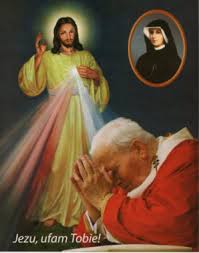
HOMILY OF THE HOLY FATHER MASS IN ST PETER’S SQUARE FOR THE CANONIZATION OF SR MARY FAUSTINA KOWALSKA Sunday, 30 April 2000 1. “Confitemini Domino quoniam bonus, quoniam in saeculum misericordia eius”; “Give thanks to the Lord for he is good; his steadfast love endures for ever” (Ps 118: 1). So the Church sings on the Octave of[…]Continue reading→
Divine Mercy Sunday – An Echo of Every Mass
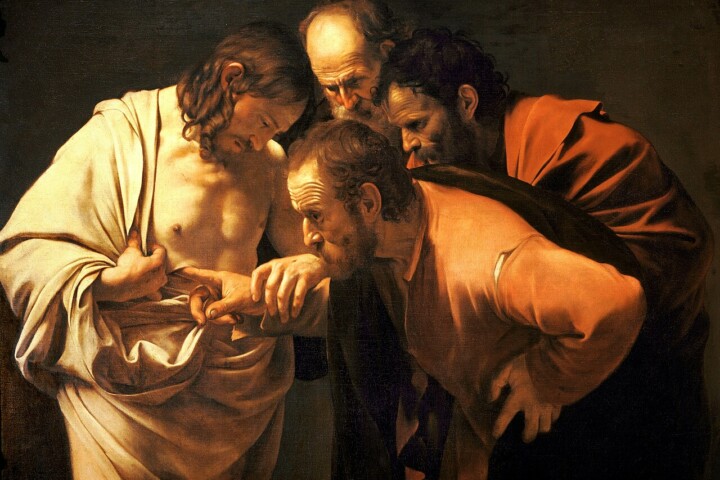
Reach out your hand and put it in my side. Do not doubt but believe’… ‘My Lord and my God!’ (Jn. 20:18)). Today is Divine Mercy Sunday, and as we celebrate the end of the Easter Octave, we contemplate the wounded side of our Saviour, the Church’s source of life. On Good Friday in the[…]Continue reading→

Saint Stanislaus of Szczepanów
We celebrate Saint Stanislaus today (+ April 11, 1079), in light of this Easter Octave, a bishop and martyr who accepted the episcopacy only at the direct order of Pope Alexander II. He proved a wise and courageous leader of his flock, put to death by his own king, Boleslaus, for rebuking the monarch’s ‘immoral[…]Continue reading→
First Holy Communion: Sermon from May 16, 1943
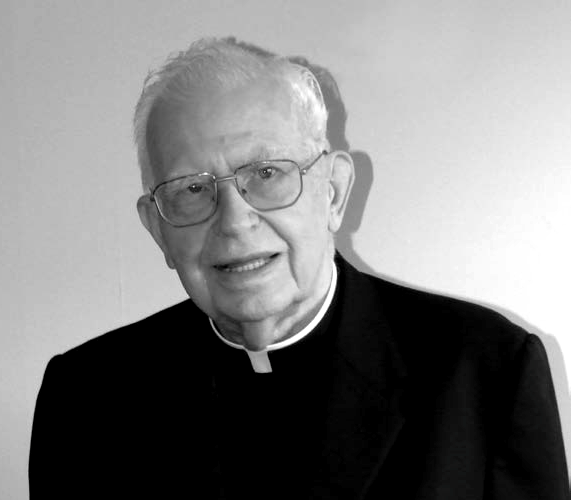
Here is a sermon from the good old days by +Rev. Msgr. Vincent Nicholas Foy (August 14, 1915 – March 13, 2017), from 1943. Readers may recall that Pope Saint Pius X, by the decree Quam Singulari in 1910, lowered the customary age of reception of Holy Communion – after the rigours of the plague[…]Continue reading→
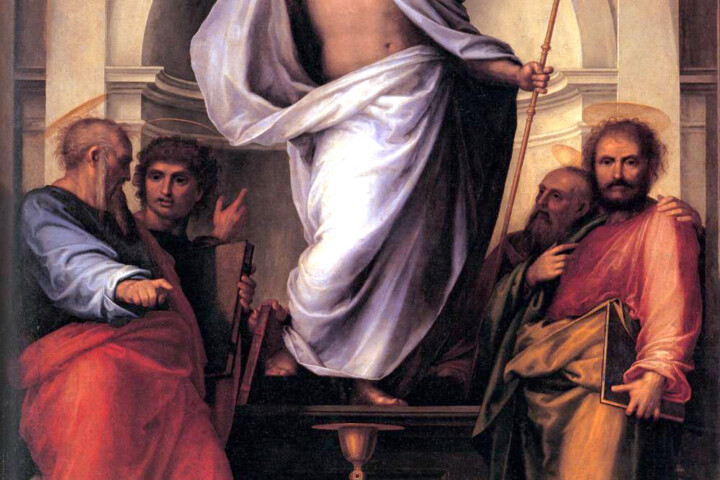
In the Glorious Light of Easter, Alleluia!
Set your minds on things that are above, not on things that are on earth, for you have died, and your life is hidden with Christ in God. When Christ who is your life is revealed, then you also will be revealed with him in glory (Col. 3:3-4). The Resurrection of Our Lord and Saviour[…]Continue reading→
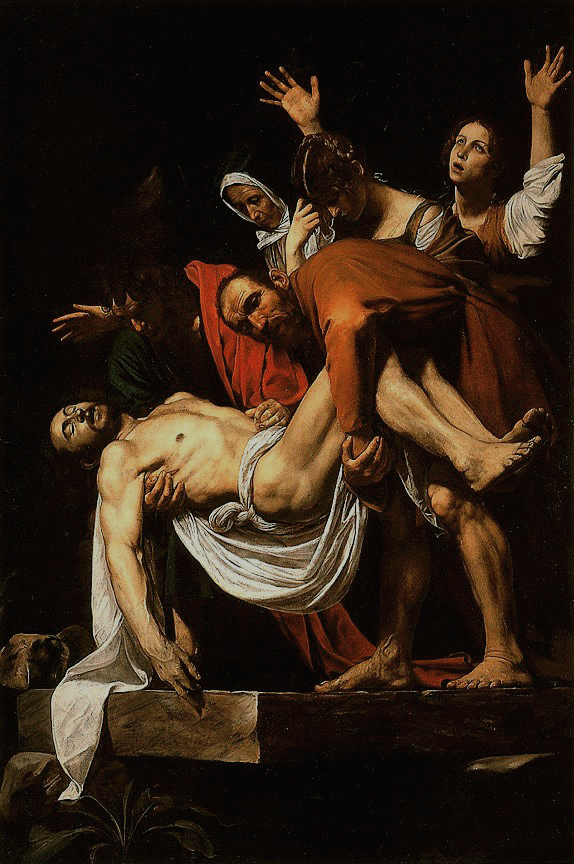
An Ancient Homily for Holy Saturday
The time between Good Friday and Easter Sunday is one of waiting, in silence, as the world wonders – anticipates – what will happen, after the death of Christ. We re-live this time each year in the anamnesis of our liturgy, and in turn look forward to the glorious re-creation of all things at the[…]Continue reading→
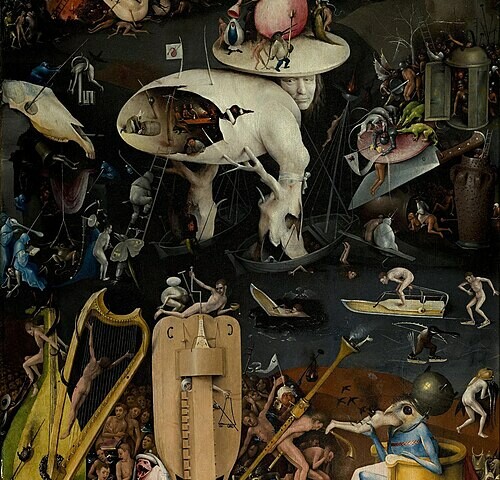
Europe’s Long Descent
(As we meditate on this day on Christ’s burial, and His descent into hell, it is fitting to ponder here with contributor Peter Marcus how the world seems to be heading there as well. The difference is that, although God cannot ‘redeem’ hell, nor those therein, He can and did redeem the world. There is[…]Continue reading→