
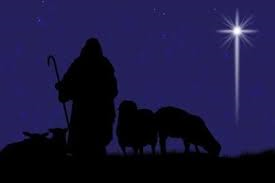
Longing in Advent: Fourth Sunday
I don’t know about you, but I’m tired of ‘Christmas’. Of course, I am not referring to the real Christmas—the birth of Jesus—but the ersatz, ephemeral sort that goes by the name of ‘Christmas’ in the stores and on television and the internet. Well, I’ve had my fill of Rudolf and Frosty, and I don’t care whether or not Santa Claus is coming to town, or an ‘essential worker’.
And yet, amid the gross commercialization of the feast, something worthwhile is to be found. I am thinking of a primitive, subconscious conviction that the gradual shortening of daylight in late autumn will result in a complete disappearance of daylight, leaving the world in darkness. The difference between secular society and us is our response to these sombre days of December. The former resorts to a frenzy of shopping, partying and over-eating. But we are Christians, and in our Sunday worship we are summoned to take note of another factor in the shadowy winter season, namely, the experience of those who, feeling anguish during the darkness of the night, look forward with longing towards dawn, a sentiment we find in Scripture:
My soul waits for the Lord
more than watchmen for the morning,
more than watchmen for the morning. [1]
and in poetry:
I wake and feel the fell of dark, not day.
What hours, O what black hours we have spent
This night! what sights you, heart, saw; ways you went!
And more must, in yet longer light’s delay.[2]
So, . . . instead of dispelling gloom with the artificial joy touted by advertising and the rest of it, we are invited to enter into a time of serious reflection on our need for light that its absence must engender. What I am describing is no easy matter, for it is only rarely that city folk like many of us encounter real darkness. Our streets are illumined all night long, and never more than at this time of year; even inside our houses there seems always to be something giving off light. Am I wrong to suspect that we have an aversion to being “left in the dark”? I’ve heard people complain, e.g., that something has to be done to improve the lighting in this church,[3] although it has been regarded as adequate for nearly a century and must have seemed dazzling back in 1927, when the church was built.
In any case, these reflections are designed to remind you of the importance of our liturgical observance of Advent. What seems, by and large, to be well-nigh impossible—the psychology of delay, of waiting, of the experience of pitch black—is made available at Sunday Mass, in the subdued purple vestments the priest wears, the solemn seasonal chants and the bare walls of the building itself: no fir trees here, no lights or wreaths, no crèche or carol, until the twenty-fifth. Saint Luke, in the canticle of Zechariah, describes it well: “. . . the tender mercy of our God, when the day shall dawn upon us from on high to give light to those who sit in darkness and in the shadow of death.”[4]
As everyone Catholic knows, light shining in the darkness is a theme repeatedly found in the New Testament. It’s a symbol of the manifestation of God to mankind as we find it in the prophecy of Baruch: “For God will lead Israel with joy in the light of his glory.”[5] That why hills will be “made low” and “valleys raised,” and it will be easy for all flesh “to see the salvation of God.”[6] Saint Paul, too, makes use of these images when he prays that the love of the Christians of Philippi—and of Canada—“may overflow . . . so that in the day of Christ you may be pure and blameless.”[7] The season of Advent, however, is insistent that the spiritual dawn that the Bible promises will come to those who not only want it, but who long for it, as a starving man desires food or a parched palate water. The larger-than-life personages from the Bible that dominate the liturgy of Advent all embody this sense of expectant waiting: the prophet Isaiah whose portrait of the long-expected Messiah is so vivid that Saint Jerome described him as an evangelist; Saint John the Baptist points exultantly to the bridegroom who is coming after him; Our Lady who is waiting for the fulfilment of the promise she had received from the Archangel Gabriel: “You will bear a son, and you shall call his name Jesus. He will be great and will be called the Son of the Most High.”[8] And each one of us, at this moment, is also looking forward to God’s revealing himself, first in the graces that we receive in the sacraments and prayer and then, at the end of time, in the coming—the advent—of Christ in glory to judge the living and the dead.
[1] Ps 129/130.
[2] Gerard Manley Hopkins, I Wake and Feel the Fell of Night; “fell” here means “fierceness, ruthlessness, brutality.”
[3] Holy Rosary Church, Toronto, where I was curate when this piece was written.
[4] Luke 1.78-79.
[5] Baruch 5.9.
[6] Luke 3.6.
[7] Phil 1.10-11
[8] Lk 1.31-32.

Remembering Father Alphonse de Valk
(Today marks the sixth anniversary of the death of Father Alphonse de Valk, C.S.B., a faithful, courageous and indefatigable Basilian priest, pro-life-and-family apostle, and the founder of Catholic Insight magazine. Here is what we wrote those on his entering into eternity five years ago, as we continue to remember him in our prayers and thoughts)[…]Continue reading→

Divine Mercy Sunday – An Echo of Every Mass
Reach out your hand and put it in my side. Do not doubt but believe’… ‘My Lord and my God!’ (Jn. 20:18)). Today is Divine Mercy Sunday, and as we celebrate the end of the Easter Octave, we contemplate the wounded side of our Saviour, the Church’s source of life. On Good Friday in the[…]Continue reading→

Saint Stanislaus of Szczepanów
We celebrate Saint Stanislaus today (+ April 11, 1079), in light of this Easter Octave, a bishop and martyr who accepted the episcopacy only at the direct order of Pope Alexander II. He proved a wise and courageous leader of his flock, put to death by his own king, Boleslaus, for rebuking the monarch’s ‘immoral[…]Continue reading→
First Holy Communion: Sermon from May 16, 1943
Here is a sermon from the good old days by +Rev. Msgr. Vincent Nicholas Foy (August 14, 1915 – March 13, 2017), from 1943. Readers may recall that Pope Saint Pius X, by the decree Quam Singulari in 1910, lowered the customary age of reception of Holy Communion – after the rigours of the plague[…]Continue reading→
In the Glorious Light of Easter, Alleluia!
Set your minds on things that are above, not on things that are on earth, for you have died, and your life is hidden with Christ in God. When Christ who is your life is revealed, then you also will be revealed with him in glory (Col. 3:3-4). The Resurrection of Our Lord and Saviour[…]Continue reading→
An Ancient Homily for Holy Saturday
The time between Good Friday and Easter Sunday is one of waiting, in silence, as the world wonders – anticipates – what will happen, after the death of Christ. We re-live this time each year in the anamnesis of our liturgy, and in turn look forward to the glorious re-creation of all things at the[…]Continue reading→
Europe’s Long Descent
(As we meditate on this day on Christ’s burial, and His descent into hell, it is fitting to ponder here with contributor Peter Marcus how the world seems to be heading there as well. The difference is that, although God cannot ‘redeem’ hell, nor those therein, He can and did redeem the world. There is[…]Continue reading→
Pope Saint John Paul II’s First Good Friday Homily
ADDRESS OF HIS HOLINESS JOHN PAUL II AT THE CONCLUSION OF THE STATIONS OF THE CROSS AT THE COLOSSEUM Good Friday, 13 April 1979 When we make the Way of the Cross from one station to the next, in spirit we are always at the spot wherethis journey had its “historical” place: where it[…]Continue reading→
A Meditation for Good Friday: How To Undo the Effects of Sin?
Cardinal Newman, now Saint John Henry Newman, was a towering figure of nineteenth-century Catholicism who is almost universally admired. I say “almost” because not everyone likes him. I knew a priest once, Arthur Caulkins, who has become disenchanted with Newman. As an undergraduate Arthur had been enamoured of Newman, and this interest continued when he[…]Continue reading→
Pope Benedict’s Last Holy Thursday Homily
MASS OF THE LORD’S SUPPER HOMILY OF HIS HOLINESS BENEDICT XVI Basilica of St John Lateran Holy Thursday, 5 April 2012 Photo Gallery (Video) Dear Brothers and Sisters! Holy Thursday is not only the day of the institution of the Most Holy Eucharist, whose splendour bathes all else and in some ways draws it to[…]Continue reading→