
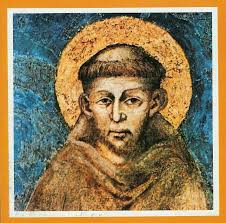
A Feast for All Franciscans
November 29th is the special day dedicated to all the Franciscans who are now born into eternal life. Every year our Franciscan Order reserves this special day to honour them and get the courage, once more, to let their holy example bring that much-needed renewal within it as it is also badly needed in any institute of consecrated life.
Bearing in mind what the post-synodal apostolic exhortation on the consecrated life and its mission in the Church and in the World Vita Consecrata says, namely that “the profession of the evangelical counsels indisputably belongs to the life and holiness of the Church, [since] … the consecrated life, present in the Church from the beginning, can never fail to be one of her essential and characteristic elements, for it expresses her very nature” (no.29), we Franciscans feel the responsibility of commemorating the dies natalis of our brothers and sisters in the heavenly glory purposely to affirm our intimate communion with the Church both as institution and mystery.
Thus, this day for us Franciscans is special because we joyously remember when the Rule of Life of St. Francis of Assisi was definitely and permanently approved by Pope Honorius III, thanks to the Bull Solet Annuere, issued precisely on 29 November 1223. On this holy day one needs to ask: What is the Franciscan legacy to the Church and the world? In what Franciscan holiness really consists of?
To put it succinctly, the Rule of St. Francis says it all in one breath, in its introductory line when it says: “The Rule and life of the Friars Minor is this, namely, to observe the Holy Gospel of Our Lord Jesus Christ, by living in obedience, without anything of one’s own, and in chastity”. Hence, the Gospel of Jesus Christ is the forma vitae of the Franciscan way of life.
But how can this Gospel be translated into everyday living? Let us start our journey by naming some points that, perhaps, can help us better the life and mission of the Franciscan charism for the Church and the world. The foundational context on which God’s holiness is weaved within the Franciscan movement is fraternity. St. Francis himself admits that his fraternity was not something of his own making but it was a great gift given to him by God. Towards the end of his earthly life, in his Testament, he wrote: “The Lord gave me brothers”.
The brothers were for Francis the tangible way of how much the Father really cared for him. Consequently, within the Franciscan way of life, fraternity is its very heart. Fraternity is also the concrete commitment of the members of this consecrated institute, spread as it is in different families of consecrated life. What this really shows is that the Gospel, from itself, demands caring for Christ as present in one another as Jesus tells us in the Johannine Gospel: A new commandment I give to you, that you love one another; even as I have loved you, that you also love one another (John 13:34).
Certainly fraternity opens us up for prayer. Therefore, within the Franciscan understanding, holiness can be achieved if there is a life of deep prayer. The exemplar for this is found in St. Francis’ life, whose biographer Thomas of Celano, referred to him as “a man became prayer”. God’s presence in Francis’ life was so powerful that made him alter Christus, “another Christ.” And for us, brothers and sisters, who are following Jesus Christ on the footsteps of St. Francis, it is all the more essential to dedicate ourselves to prayer first fraternally and then individually. In the eighth Franciscan Capuchin Plenary Council of the Order which tackled The Grace of Working, in proposal number 17, we have a duly emphasis on fraternal prayer. It says: “The first work of the friars is seeking union with God. The times of fraternal prayer are not a way to avoid our work and pastoral care or an escape from the human toil of work, but are a service that comes from our state of life as consecrated persons. Therefore no friar shall dispense himself from the primary task of liturgical and mental prayer, aware that when one prays he is interceding ‘on behalf of all humanity” (Const. 49,1). Prayer is the privileged place where we, as brothers and sisters in the Franciscan life, can really let the Holy Spirit form us much on the same lines as the clay in the potter’s hand (Jer 18:6). In other words, prayer is for me a moment where I truly realize that I am in the potter’s hand so as to give him my consent to fashion me the way He sees it fit for me to do, as he chose [me] in him before the foundation of the world, that [I] should be holy and blameless before him (Eph 1:4).
Prayer is pivotal because it inculcates in us the virtues which make us more docile to the Holy Spirit’s activity in and through us. In fact, the Angelic Doctor of the Church, St. Thomas Aquinas, writes that “through virtuous living man is further ordained to a higher end, which consists in the enjoyment of God”. And if consecrated life, which is its appropriate purpose to be a life totally committed to God, is not the visible expression of the enjoyment of God, then which any kind of life can truly manifest this complete availability to the Father’s will?
Virtues concretize this visible fruits of prayer. In his writings St. Francis has an impressive reflection on the efficacy of virtues called Praises of the Virtues:
“Hail, Queen Wisdom, may the Lord care for you with your holy sister Pure Simplicity. Holy Lady Poverty, may the Lord care for you with your holy sister Humility. Lady Holy Charity, may the Lord look after you with your sister Holy Obedience. All of you most holy virtues may the Lord protect, from whom you come forth and develop. Clearly, there is not a person in the whole world, who can possibly possess one of you without dying first. Whoever has one [virtue] and does not offend the others, has them all. And who offends one, has none and offends all. And each one of them overcomes vices and sins. Holy Wisdom conquers satan and all his evil cleverness. Pure Holy Simplicity overcomes all the wisdom of this world and the wisdom of the body. Holy Poverty conquers the thirst for riches and avarice and the cares of this world. Holy Humility conquers pride and all people who are in the world, and in the same way all things which are in the world. Holy Charity conquers all diabolical and carnal temptations and all worldly fears. Holy Obedience overcomes all personal preferences, corporal and carnal, and limits his mortified body to the obedience of the spirit and to the obedience of his brother; and he is subject and submissive to all people who are in the world; and not only to people, but also to all the beasts and wild animals, so that they might do to him whatever they should wish, as long as it is given to them from the Lord.”
But why virtues are important? In his twenty-second Admonition the Poverello talks about the frivolous and the talkative religious as opposed to the holy religious. He says: “Blessed is the servant who, when he speaks, does not reveal everything about himself in the hope of receiving a reward, and who is not quick to speak (cf. Prv. 29:20), but wisely weighs what he should say and how he should reply. Woe to that religious who does not keep in his heart the good things the Lord reveals to him (cf. Lk. 2:19, 51) and who does not manifest them to others by his actions, but rather seeks to make such good things known by his words. He thereby receives his reward (cf. Mt. 6:2, 16) while those who listen to him carry away but little fruit”. By itself, this admonition shows that it is by cultivating strong virtues within the ambience of silent listening, which is a sound prayer life, that one can be really formed by God’s Word, the Sacraments, the Liturgy of the Hours and all the other fraternal and personal prayer to lead a life worthy of the Lord, fully pleasing to him, bearing fruit in every good work and increasing in the knowledge of God (Col 1:10).
In order for prayer to be authentic it needs to be actuated or put into practice by serving others, especially the marginalized. Those at the society’s periphery are calling us to serve them by the virtues or holy dispositions the Holy Spirit infused within us in our prayer time. In the Seventh Plenary Council of the Franciscan Capuchin Order which spoke about Fraternal life in minority, we find:
“Minority and itinerancy are elements of the Franciscan vocation that always accompany our fraternal life. Therefore through ongoing formation we should be constantly deepening our grasp of these values, and, in addition to providing opportunities for educational updating, should promote concrete experiences of closeness to people and to the poor. It is therefore appropriate that each brother periodically renews his consecrated identity and his ministry, through experiences of service to the suffering, of life shared with the marginalized and of some pastoral ministry in a new field. These experiences can be had in other circumscriptions or in a mission” (no.30).
In this context, and as the Eight Plenary Council of the Franciscan Capuchin Order put it: “Work puts us in relationship with people. By consecration we are called not only to serve, but also to offer our lives to others, sharing a particular solidarity with the poor and those who work. Therefore the consecrated person appropriates to himself neither a work nor its fruits, but shares everything” (no. 4).
This has been the holy witness which Franciscan saints have always grafted in my heart whenever I commemorate them. And, it is definitely to this silent convincing testimony that the collect of the Mass for the feast of all Saints of the Franciscan Order is gently leading me to in order to draw my spiritual strength from it.
“Almighty and eternal God, who were pleased to adorn your Church with the varied splendor of the Saints of the Seraphic Order, grant that we, who keep their memory in one celebration, may imitate their shining example of virtue on earth, and so be worthy to receive the crown of justice in heaven.”

Saint Kateri , Canada’s Protectress
This was the title given to Saint Kateri Tekakwitha, by Pope Benedict XVI, when he canonized her on October 28th, 2012, along with six others, in Saint Peter’ Square (she had been beatified by Pope John Paul II back in 1980). With Saint Joseph as our protector, along with the Canadian martyrs, we seem to[…]Continue reading→

Remembering Father Alphonse de Valk
(Today marks the sixth anniversary of the death of Father Alphonse de Valk, C.S.B., a faithful, courageous and indefatigable Basilian priest, pro-life-and-family apostle, and the founder of Catholic Insight magazine. Here is what we wrote those on his entering into eternity five years ago, as we continue to remember him in our prayers and thoughts)[…]Continue reading→

My Name is Bernadette
April 16th is a propitious day, for besides the anniversary of Father de Valk’s death, who founded Catholic Insight in its print form decades ago, and the commemoration of the ‘two Benedicts’, mentioned in accompanying posts, today we also recall Saint Bernadette Soubirous, the young visionary to whom the Virgin Mary appeared numerous times at[…]Continue reading→

Canonizing Sister Faustina and Divine Mercy
HOMILY OF THE HOLY FATHER MASS IN ST PETER’S SQUARE FOR THE CANONIZATION OF SR MARY FAUSTINA KOWALSKA Sunday, 30 April 2000 1. “Confitemini Domino quoniam bonus, quoniam in saeculum misericordia eius”; “Give thanks to the Lord for he is good; his steadfast love endures for ever” (Ps 118: 1). So the Church sings on the Octave of[…]Continue reading→

Divine Mercy Sunday – An Echo of Every Mass
Reach out your hand and put it in my side. Do not doubt but believe’… ‘My Lord and my God!’ (Jn. 20:18)). Today is Divine Mercy Sunday, and as we celebrate the end of the Easter Octave, we contemplate the wounded side of our Saviour, the Church’s source of life. On Good Friday in the[…]Continue reading→

Saint Stanislaus of Szczepanów
We celebrate Saint Stanislaus today (+ April 11, 1079), in light of this Easter Octave, a bishop and martyr who accepted the episcopacy only at the direct order of Pope Alexander II. He proved a wise and courageous leader of his flock, put to death by his own king, Boleslaus, for rebuking the monarch’s ‘immoral[…]Continue reading→

First Holy Communion: Sermon from May 16, 1943
Here is a sermon from the good old days by +Rev. Msgr. Vincent Nicholas Foy (August 14, 1915 – March 13, 2017), from 1943. Readers may recall that Pope Saint Pius X, by the decree Quam Singulari in 1910, lowered the customary age of reception of Holy Communion – after the rigours of the plague[…]Continue reading→

In the Glorious Light of Easter, Alleluia!
Set your minds on things that are above, not on things that are on earth, for you have died, and your life is hidden with Christ in God. When Christ who is your life is revealed, then you also will be revealed with him in glory (Col. 3:3-4). The Resurrection of Our Lord and Saviour[…]Continue reading→

An Ancient Homily for Holy Saturday
The time between Good Friday and Easter Sunday is one of waiting, in silence, as the world wonders – anticipates – what will happen, after the death of Christ. We re-live this time each year in the anamnesis of our liturgy, and in turn look forward to the glorious re-creation of all things at the[…]Continue reading→

Europe’s Long Descent
(As we meditate on this day on Christ’s burial, and His descent into hell, it is fitting to ponder here with contributor Peter Marcus how the world seems to be heading there as well. The difference is that, although God cannot ‘redeem’ hell, nor those therein, He can and did redeem the world. There is[…]Continue reading→