
What’s Wrong with the World? Well, The Hatred of Words, and the Word
I suspect there are few people left who don’t think there’s something very wrong in the world today, whatever their political and moral leanings might be. It has always been so, more or less. Some epochs are better, others worse, but all are a mess. Ours, however, seems to be particularly messy: the culture is in the toilet, ready to be flushed; there are few if any unbiased news media to speak of, in our country or elsewhere; churches and other houses or worship are not consistently accessible, if they are open at all; people are terrified to go outside or see other human beings; politics are viciously antagonistic and politicians transparently dishonest; too many protests are now only “mostly peaceful”; our young people are being ideologized in school at least as much as they are actually learning something; and even sports, now serving as propaganda, have become almost unwatchable.
Every day seems to confirm anew that something is deeply wrong, and quite stupid, about the world. Our friends south of the border are presently embroiled in the most confused, confusing, and, almost certainly, scandalous election in an ostensibly free civil society in recent memory, if not ever. Our Pope keeps making statements that would clearly contradict Church doctrine if it weren’t for the ambiguity, weaponized or not, of his word salads. Our Prime Minster seems to want to set the Canadian record for ethics violations. And I still have to preregister to go to Mass. What, indeed, is wrong with the world?
Many great writers have considered this issue. I am particularly fond of G.K. Chesterton’s attempt in What’s Wrong with the World?, as good a critique of the modern world as any, and still relevant. The book begins with a criticism of the “modern madness for biological or bodily metaphors.” Chesterton observes that modern man, influenced by a kind of reductionistic sociologizing, tends to treat the social world on analogy with the body, approaching the shared human world and its problems as a doctor diagnosing a patient: observe the symptoms, analyze the anatomy of the patient to find the cause, and prescribe the cure accordingly.
On its face, the strategy has something to recommend it. If we know what’s wrong with the world and can locate the root of the problems in the basic framework of society – its anatomy, if you will – then we might discover the remedy, and if we know the remedy, we might successfully administer the cure. Sounds good, except that the analogy doesn’t quite work. “Because every man is a biped, fifty men are not a centipede”. Just because society – whatever that thing actually is – is made up of human persons, composites of body and soul, living together, it doesn’t follow that society is one giant body containing them all – nor a big soul, the aggregate of regular-sized souls, for that matter.
If shared human life were relevantly similar to a body, we could indeed go from observing symptoms to diagnosing diseases, and then finish with prescribing cures with some success. If society was like a body, political science and political practice would likely be as advanced and successful as medical science and medical practice. They aren’t. If my intuition is right, and the contemporary social and political world is as big a mess as it has ever been, if not much bigger, then the analogy quite simply fails.
But if the analogy is inadequate, then the strategy is wrong, too. If society isn’t like a body, then the typical diagnostic approach is wrongheaded, and will be unavoidably ineffective, if not dangerous. According to Chesterton, “it is the whole definition and dignity of man that in social matters we actually find the cure before we find the disease”. Humans aren’t just bodies, and they are decidedly not machines. Humans are persons, and the world they share, call it society if you wish, must reflect that. To cure a disease of our world, we need to know what we are and what makes us flourish as the beings we are. Only then can we target the things that seems to get in the way of living well.
For all true Christians – and a fortiori for all members of the one true Church – the cure is evident: Jesus Christ. Though Christ is the cure always, I wish to focus on one aspect of the cure, as it seems to me to point to the specific disease – or at least to one of the specific diseases – of the contemporary world: Christ as Logos, the Word. Put simply, our world hates words.
I don’t mean to imply that we are mute, literally or figuratively – though the increasing use of violence and shouting to replace arguments is undeniable. One only needs to glance at social media to know that we not only don’t suffer from a shortage of words, but possibly from a surplus. Indeed, we would do well to shut up a little bit. Nonetheless, the way that words are used betrays a deep hatred of the essence of words.
Words communicate, which is to say they express to other persons, something about the real world. Speakers might be wrong about the real world, and thus speak wrongly about it, but words, whether spoken or written, in their essence aim at a stable and knowable reality about which we can say something to each other, even if only imperfectly.
I can, of course, be mistaken about the world. I tell you something that is false. You might, if I’m fortunate, correct me, which correction makes it less likely that I will misspeak about that part of the real world in the future. I can also lie about the world. I can tell you something false in order to trick you about it, presumably to gain some advantage over you. In so doing, however, I don’t deny the real world about which I speak. Indeed, I can only lie to you if the real world is stable and knowable. A real world in flux is actually not one we can lie about. Lies depend on truth to operate, otherwise they could never be believed. Error is unfortunate, and deception, sinful. Thankfully, both can be corrected, one through learning and the other through punishment.
In contrast, to hate words is to sever the tie between them and reality by denying the things about which words communicate in the first place. I won’t say that the hatred of words is incorrigible, but it is decidedly more difficult to correct. The person who denies reality can’t learn and can’t be edified. Only a conversion back to reality will correct him.
Let me avoid the low-hanging fruit. My reader doesn’t need my analysis to see words hated and reality rejected in the most obvious and egregious of cases, ones where men are not necessarily men and babies not always babies – or where votes are not always votes. Let me consider, instead, something less obvious: the proliferation of vague slogans in everyday speech. Cant is not new, but its common usage appears to me to be fairly recent, and, I fear, increasing. What, for instance, is “lived experience” – an expression I first encountered decades ago in graduate level philosophy classes taught by post-modernists and relativists of various sorts, but which one hears everywhere now?
Strictly speaking, “lived” adds nothing to “experience”. I can’t experience without life. Rocks do not have experiences, lived or otherwise. That’s just how that works. But this empty jargon doesn’t add redundancy for effect. Rather it means experience that is not experience. It means what I feel, not what I experience of the world; it is the meaning I, my society, or my tribe impose on external reality, not the meaning that is given to me by it. Experience depends on stable and given reality. I experience the world, the one I live in with others. That’s why I can talk about my experience with others, and, if I have some misconception about that experience, can come to be corrected about it. Lived experience locks a person into his own conception of the world, a conception that may very well be delusional, but is in any case severed from the objective reality about which we have experiences that we can communicate to others or not.
Haters of words don’t use words to speak about the real world; they use words to get what they want, to gain power over others, to make them conform to their will rather than conforming their will to how things actually are. They reject reality and, as Josef Pieper puts it, abuse words.
This orientation isn’t wholly new. Indeed, it was expressed long ago by those infamous ancient Greek itinerant teachers of rhetoric, the sophists, and epitomized in the motto of one of their great practitioners, Gorgias: nothing is; if something is, it cannot be known; if it can be known, it cannot be communicated. Put simply, even if there is a real world, which is unlikely, we simply can’t say anything meaningful about it. Here is the hatred of words stated – dare I say, fully aware of the contradiction inherent in the claim, communicated – as succinctly and clearly as possible.
Nonetheless, and despite the ancient origin of this hatred, the prevalence of the hatred of words is, if not new to us, uniquely characteristic of the contemporary secular world. Is it any wonder that the Church is under threat? Make no mistake: the secular world no longer tolerates Catholicism, if it ever did. It does not consider Catholicism, and Christianity generally, to be a false doctrine that deserves no adherence, but which poses no great threat either. No, the hatred of words means that the Word is hated above all else. What could possibly scandalize a world that denies reality and misuses language to control rather than to communicate more than the truth of the Incarnation, the Word made flesh, the Word that subtends the whole of reality and makes words at all possible? Whom could a hater of words detest more than the origin and source of it all, the source of the goodness, truth, and the knowability of all there is? We should be on guard, but not surprised. After all, the Fall began with the original hater of the Word.
I imagine one is supposed to end a piece like this with advice, a prescription, a path to remedy what’s wrong with the world. Here, too, Chesterton helps: “what is wrong with the world is that we do not ask what is right.” What’s right in the world is clear: the Word, which guarantees for us, not that you or I will always be right about it, but that the world is at core beautiful, good, and true; it is, thus, knowable and meaningful, and it can be represented accurately, albeit imperfectly, by words. Should we protect our churches? Of course. Should be redouble our efforts to live faithfully and prayerfully? Very much. Should we use language more carefully, honestly, and without any hidden motive to control or manipulate? Should we critique others, always with charity of course, for failing to do so? Indeed. But let’s not forget that the victory of reality over delusion is sealed, that words work because the Word was, is, and always will be. Even in dark times, there is no shortage of ground for hope. Indeed, we have the ground of it all on our side.

Saint Kateri , Canada’s Protectress
This was the title given to Saint Kateri Tekakwitha, by Pope Benedict XVI, when he canonized her on October 28th, 2012, along with six others, in Saint Peter’ Square (she had been beatified by Pope John Paul II back in 1980). With Saint Joseph as our protector, along with the Canadian martyrs, we seem to[…]Continue reading→

Remembering Father Alphonse de Valk
(Today marks the sixth anniversary of the death of Father Alphonse de Valk, C.S.B., a faithful, courageous and indefatigable Basilian priest, pro-life-and-family apostle, and the founder of Catholic Insight magazine. Here is what we wrote those on his entering into eternity five years ago, as we continue to remember him in our prayers and thoughts)[…]Continue reading→

My Name is Bernadette
April 16th is a propitious day, for besides the anniversary of Father de Valk’s death, who founded Catholic Insight in its print form decades ago, and the commemoration of the ‘two Benedicts’, mentioned in accompanying posts, today we also recall Saint Bernadette Soubirous, the young visionary to whom the Virgin Mary appeared numerous times at[…]Continue reading→

Canonizing Sister Faustina and Divine Mercy
HOMILY OF THE HOLY FATHER MASS IN ST PETER’S SQUARE FOR THE CANONIZATION OF SR MARY FAUSTINA KOWALSKA Sunday, 30 April 2000 1. “Confitemini Domino quoniam bonus, quoniam in saeculum misericordia eius”; “Give thanks to the Lord for he is good; his steadfast love endures for ever” (Ps 118: 1). So the Church sings on the Octave of[…]Continue reading→

Divine Mercy Sunday – An Echo of Every Mass
Reach out your hand and put it in my side. Do not doubt but believe’… ‘My Lord and my God!’ (Jn. 20:18)). Today is Divine Mercy Sunday, and as we celebrate the end of the Easter Octave, we contemplate the wounded side of our Saviour, the Church’s source of life. On Good Friday in the[…]Continue reading→

Saint Stanislaus of Szczepanów
We celebrate Saint Stanislaus today (+ April 11, 1079), in light of this Easter Octave, a bishop and martyr who accepted the episcopacy only at the direct order of Pope Alexander II. He proved a wise and courageous leader of his flock, put to death by his own king, Boleslaus, for rebuking the monarch’s ‘immoral[…]Continue reading→
First Holy Communion: Sermon from May 16, 1943
Here is a sermon from the good old days by +Rev. Msgr. Vincent Nicholas Foy (August 14, 1915 – March 13, 2017), from 1943. Readers may recall that Pope Saint Pius X, by the decree Quam Singulari in 1910, lowered the customary age of reception of Holy Communion – after the rigours of the plague[…]Continue reading→
In the Glorious Light of Easter, Alleluia!
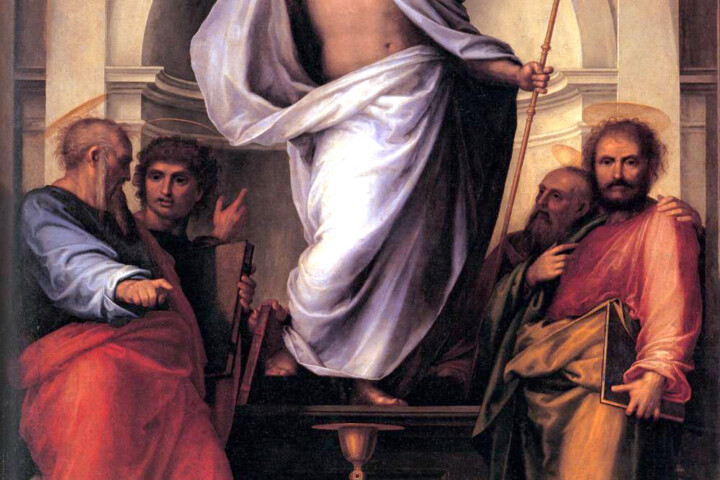
Set your minds on things that are above, not on things that are on earth, for you have died, and your life is hidden with Christ in God. When Christ who is your life is revealed, then you also will be revealed with him in glory (Col. 3:3-4). The Resurrection of Our Lord and Saviour[…]Continue reading→
An Ancient Homily for Holy Saturday
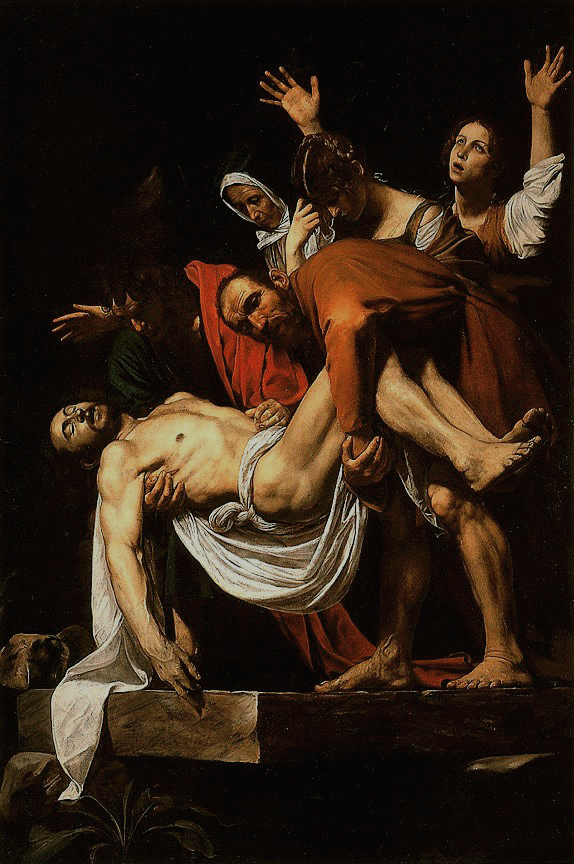
The time between Good Friday and Easter Sunday is one of waiting, in silence, as the world wonders – anticipates – what will happen, after the death of Christ. We re-live this time each year in the anamnesis of our liturgy, and in turn look forward to the glorious re-creation of all things at the[…]Continue reading→
Europe’s Long Descent
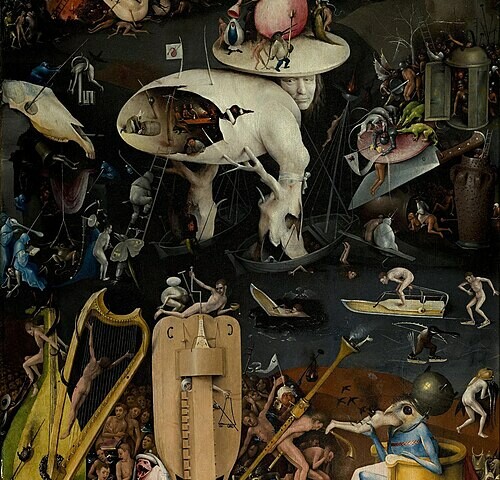
(As we meditate on this day on Christ’s burial, and His descent into hell, it is fitting to ponder here with contributor Peter Marcus how the world seems to be heading there as well. The difference is that, although God cannot ‘redeem’ hell, nor those therein, He can and did redeem the world. There is[…]Continue reading→