
Is University Worth It?
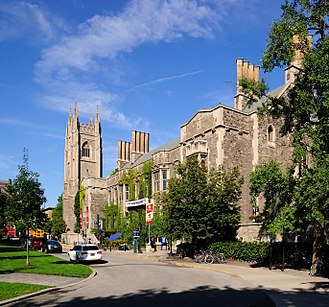
As cliché as it sounds, we are living in unprecedented times. This is no less true in colleges and universities than it is elsewhere. Most students wishing to continue their studies have been required to take classes, entirely or in part, online for months; this situation is likely to persist for the foreseeable future – potentially, I hear, into the 2021-22 academic year. Especially considering how old-fashioned and slow-moving post-secondary institutions tend to be, this is, indeed, unprecedented.
Is it worth it? Should students keep taking their classes online? A common answer, both inside and outside the academy, is that there are no good reasons why they shouldn’t. Having no direct experience with remote delivery myself (I was in a senior administrative position when this all unfolded last winter, and happen to be on sabbatical leave currently, thus saving me from having to learn how to teach online, all of a sudden), I can’t refute this contention, even if I have some doubts about the efficacy of online study. My reservations notwithstanding, it appears to me plausible that any student who enrolls in a course in which some truth is taught, even if the course is delivered online, with a professor who knows something meaningful about the course topic, will take a guided tour of something worth knowing. Even if doing that online is not ideal, it may do in unprecedented times.
This position, however, has tended to be undergirded by an attitude that is far worse than ideal and is not unprecedented, namely that there’s no sensible alternative. What else is there to do in the wake of a pandemic anyhow? Either take classes online or waste time. Even when deficient, schooling is better than anything else young people could be doing before receiving the credentials supposedly required to access the world of work. This sentiment repeats what young people have been told for decades now: “you have to go to college or university because you can’t succeed, in work or in life, without a degree.”
The falsity of this dichotomy is obvious to anyone with an ounce of sense. There are, of course, many other worthwhile activities anyone, including young people, could consider: working in a job that doesn’t require an advanced degree (if one can, to be fair, find the work these days), caring for loved ones in need, starting a family, helping to maintain the household, volunteering, praying, discerning a vocation, and, ironically enough, studying. These activities, not being mutually exclusive, can also be combined profitably. Students have options, and they would do well to consider them, always, but especially at this time.
I’m not saying young people shouldn’t take their classes online; I’m certainly not saying that they shouldn’t go to college or university. But they ought to ask some big questions before deciding that schooling of any sort is preferable to working, praying, or reading books at home. What is the fundamental purpose of education? By what means is this purpose realized? Are schools needed to realize it? And, if classes will continue to be delivered remotely, can online study realize it?
Although there are no simple answers to these questions, let alone ones I can flesh out fully here, I see a path forward in something Russel Kirk wrote early in his career: “the purpose of education is clear. That purpose is to develop the mental and moral faculties of the individual person, for the person’s own sake.” How much nonsense might be avoided if we only acknowledge this bit of common sense?
Let me unpack Kirk’s claim briefly. First, education develops something that exists, namely natural human capacities that can be actualized or not; it does not implant unnatural faculties that could never develop if not for the grace of the teacher. Second, education is intellectual, training the mind so that it can come to know the things that exist and are true; it does not fill heads with disjointed bits of information or, worse, with the supposedly learned opinions and ideologies of professors. Third, education helps students become better human beings; neither does it make them ideological activists nor is it morally indifferent. Fourth, education works on the person; it is not an instrument of social engineering. Fifth, perhaps above all, education does all this for the sake of the person, each person who undergoes it; it does not do it for the supposed good of the whole without regard to individual human flourishing. Surely, all of these goals could be achieved at home, with family, friends, and a small library of great books. Any school that rejects this basic purpose also rejects education. It does not do what it presumes to. I suspect my readers will agree: there are such schools – too many of them.
Not only must a school aim at the intellectual and moral improvement of its students; it must orient itself towards this goal in the right way. Once again stating what common sense teaches, Kirk adds: “schools cannot, wholly by themselves, make people intelligent and good; natural inclinations and disinclinations, the family, and the community have a great deal to do with whether young people are wise or foolish, good or bad. But schools can help in the process.” Schools don’t mould students like lumps of clay. When functioning well, they promote and encourage wisdom and goodness.
But, if schools can help, they can also hurt. This can happen in at least three ways.
First, schools may fail to develop intellectual and moral potential. Such schools aim to make students wiser and better, but miss the mark. A failed school of this kind squanders talent and resources, but it does little damage otherwise. Students are not made better, but they are not made worse, either. This failure hurts their development, but it doesn’t set them back.
Second, they may cultivate folly and vice by presenting falsehood as truth and evil as good. Presuming to improve, these places corrupt. The student who “learns” at these schools is worse off for it. It would be best for such schools to disappear altogether, but, if they exist, it is better that they be incompetent.
Third, they may usurp the roles of inclination, disinclination, family, and community in education. Such schools are ideological tools, designed to do nothing more than produce – and then reproduce – ideas and behaviors that conform to a political and ideological agenda, a five-year plan. By rejecting the moral centrality of the family and the limits of human nature, this endeavour is inescapably foolish and vicious. It rejects the right order of things: God, nature, and man. Students are made far worse by their exposure to such institutions. This third failure is, thus, even worse than the second, as it does more than convince students of falsehoods; it poisons students and undermines the foundation of just civil society by denying reality itself, including human nature and the proper end of education.
All schools fail in the first sense some of the time. Many schools fail in the second sense most of the time. Thankfully, some of the latter are also incompetent. Of course, schools can fail in both senses concurrently, with some teachers being merely bad while others are false. Online courses may fail in either or both of these ways. It is better to stay home and read a great book than to take a lousy course. It is better to stay home and count blades of grass on the front lawn than to take one that corrupts, even if that corruption happens to make the corrupted person employable.
What bothers me most about the attitude that says students should attend college and university, online or otherwise, because there’s nothing better to do, is that it betrays a commitment to the third and most noxious failure. If young people don’t go to school, they won’t learn and mature because that can only happen in school. Utter nonsense! I believe that the young people I meet improve for having encountered Plato, Aristotle, Aquinas, and Josef Pieper with me. But they are not made wise or good by the encounter, let alone by me. I only help them, if at all, to improve what God gave them and what their families have started to help them cultivate.
Any school that presumes that it serves a necessary, rather than complementary, function in improving young people is in grave error. It is an ideological factory that is a genuine waste of time when it does not wholly ruin the intellectual and moral wellbeing of students and their families, undermining civil society in the process. Even doing nothing is better than that.
There is no good reason to give schools anything, neither money, time, nor energy, if they reject or obscure the proper end of education. Young people should enroll in college or university only if their school of choice will help them become less foolish and less vicious; they should not, if not. If they are currently attending a school that promotes folly and vice, they would do well to leave immediately. Either way, young people should decidedly not accept the false narrative that there’s nothing better to do. There is. Plenty of it.

Remembering Father Alphonse de Valk
(Today marks the sixth anniversary of the death of Father Alphonse de Valk, C.S.B., a faithful, courageous and indefatigable Basilian priest, pro-life-and-family apostle, and the founder of Catholic Insight magazine. Here is what we wrote those on his entering into eternity five years ago, as we continue to remember him in our prayers and thoughts)[…]Continue reading→

Divine Mercy Sunday – An Echo of Every Mass
Reach out your hand and put it in my side. Do not doubt but believe’… ‘My Lord and my God!’ (Jn. 20:18)). Today is Divine Mercy Sunday, and as we celebrate the end of the Easter Octave, we contemplate the wounded side of our Saviour, the Church’s source of life. On Good Friday in the[…]Continue reading→

Saint Stanislaus of Szczepanów
We celebrate Saint Stanislaus today (+ April 11, 1079), in light of this Easter Octave, a bishop and martyr who accepted the episcopacy only at the direct order of Pope Alexander II. He proved a wise and courageous leader of his flock, put to death by his own king, Boleslaus, for rebuking the monarch’s ‘immoral[…]Continue reading→

First Holy Communion: Sermon from May 16, 1943
Here is a sermon from the good old days by +Rev. Msgr. Vincent Nicholas Foy (August 14, 1915 – March 13, 2017), from 1943. Readers may recall that Pope Saint Pius X, by the decree Quam Singulari in 1910, lowered the customary age of reception of Holy Communion – after the rigours of the plague[…]Continue reading→
In the Glorious Light of Easter, Alleluia!
Set your minds on things that are above, not on things that are on earth, for you have died, and your life is hidden with Christ in God. When Christ who is your life is revealed, then you also will be revealed with him in glory (Col. 3:3-4). The Resurrection of Our Lord and Saviour[…]Continue reading→
An Ancient Homily for Holy Saturday
The time between Good Friday and Easter Sunday is one of waiting, in silence, as the world wonders – anticipates – what will happen, after the death of Christ. We re-live this time each year in the anamnesis of our liturgy, and in turn look forward to the glorious re-creation of all things at the[…]Continue reading→

Europe’s Long Descent
(As we meditate on this day on Christ’s burial, and His descent into hell, it is fitting to ponder here with contributor Peter Marcus how the world seems to be heading there as well. The difference is that, although God cannot ‘redeem’ hell, nor those therein, He can and did redeem the world. There is[…]Continue reading→
Pope Saint John Paul II’s First Good Friday Homily
ADDRESS OF HIS HOLINESS JOHN PAUL II AT THE CONCLUSION OF THE STATIONS OF THE CROSS AT THE COLOSSEUM Good Friday, 13 April 1979 When we make the Way of the Cross from one station to the next, in spirit we are always at the spot wherethis journey had its “historical” place: where it[…]Continue reading→
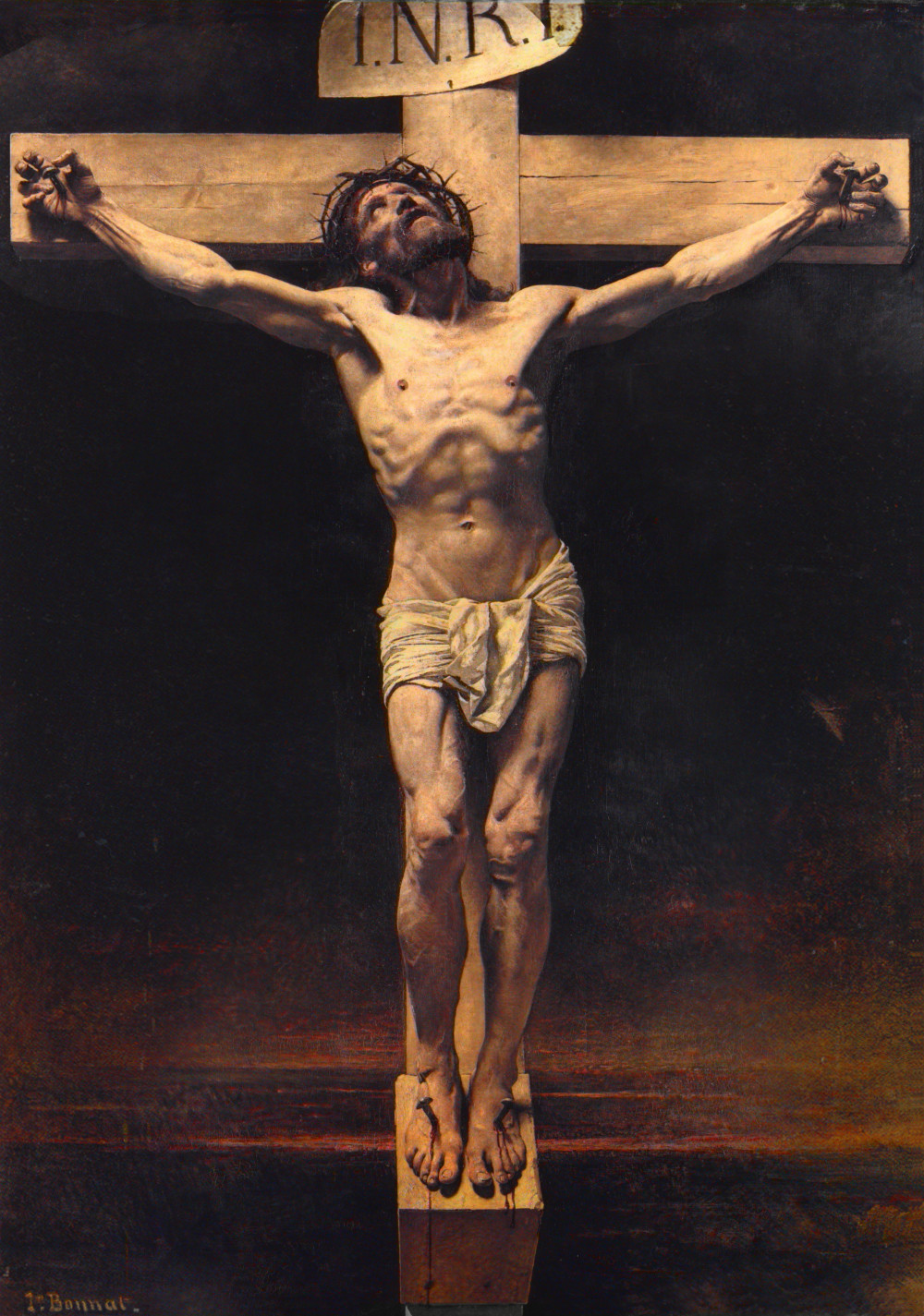
A Meditation for Good Friday: How To Undo the Effects of Sin?
Cardinal Newman, now Saint John Henry Newman, was a towering figure of nineteenth-century Catholicism who is almost universally admired. I say “almost” because not everyone likes him. I knew a priest once, Arthur Caulkins, who has become disenchanted with Newman. As an undergraduate Arthur had been enamoured of Newman, and this interest continued when he[…]Continue reading→
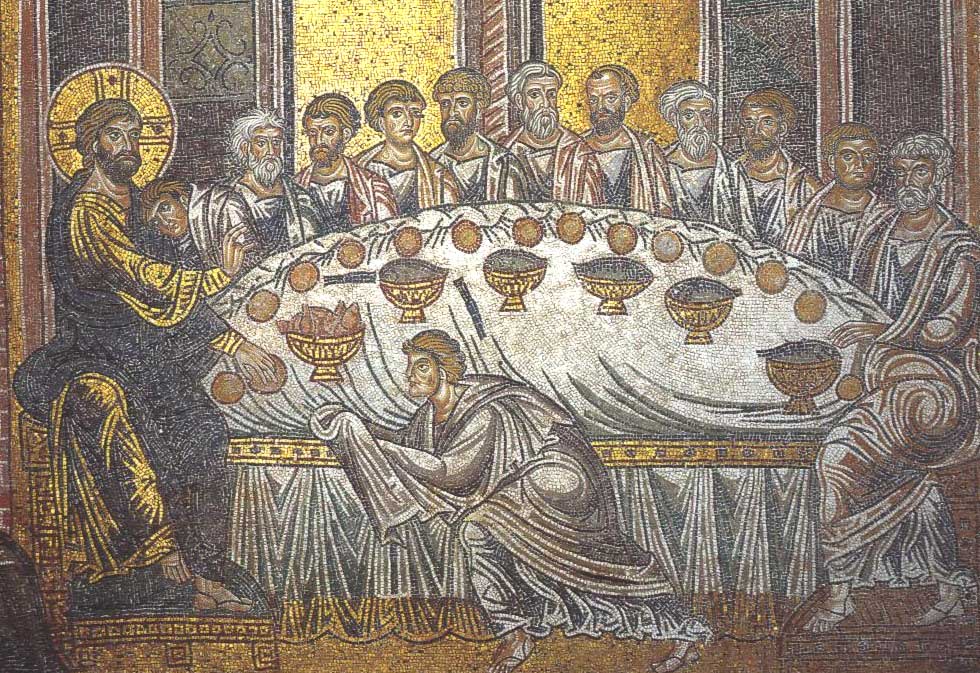
Pope Benedict’s Last Holy Thursday Homily
MASS OF THE LORD’S SUPPER HOMILY OF HIS HOLINESS BENEDICT XVI Basilica of St John Lateran Holy Thursday, 5 April 2012 Photo Gallery (Video) Dear Brothers and Sisters! Holy Thursday is not only the day of the institution of the Most Holy Eucharist, whose splendour bathes all else and in some ways draws it to[…]Continue reading→