
Of Westphalia and Waterfalls
October 24th marks several anniversaries: The Treaty of Westphalia was signed on this day in 1648, ending the 30-year war of ‘religion’, fought primarily between Catholics and Protestants, although sides got mixed with nationalistic ambitions clouding spiritual principles, and allegiance to the one, true Faith. The syncretic motto imposed after the war spoke of the secularist era that was dawning: Cuius regio, eius religio – literally, to whom the region, to him the religion. Or, more practically, the religion of the prince would be the religion of his domain, and of his people.
The Pope at the time saw through this insidious false irenicism, to seek peace at all costs, and called the Treaty null, void, invalid, iniquitous, unjust, damnable, reprobate, inane, and devoid of meaning for all time. People, including Pontiffs, did not mix words in that more blunt and bold era. For Innocent saw that the end result of this was the end of religion, first, as an influence upon society, and then, upon the individual person: In other words, religion would cease to matter, with secularism and atheism soon the order of the day. And speaking of religion not mattering, it is perhaps not a coincidence that this is also the anniversary of the official inauguration of the United Nations in 1945, as a means of keeping peace in the wake of World War II, whose connection to Westphalia’s fragile compromise is not difficult to trace in broad outline.
Peace, peace, when there is no peace. As Dostoyevsky rightly saw two centuries after Westphalia, without God, anything goes, and the nations and its people, thinking their houses swept clean of cobwebbed, mediaeval ‘superstition’, would be infested and possessed by legions of devils, who would wreak havoc. Damnable, indeed. Covidiocy is only a manifestation of our far deeper problems – a panicked fear of death and judgement looming large, at least over our subconscious. We must face those demons, and exorcise them. As Christ warns in today’s Gospel, unless we repent – undergo that deep metanoia – we will all likewise perish; and the Saviour is not talking only about the earthly and passing sort of death. Fear not him – or it – who can kill the body, but fear the one who can cast both soul and body into hell.
This is also the anniversary of the first barrel ride over Niagara Falls. In 1901, Annie Edson, a widow, survived the drop in a padded, wooden barrel. Since then, fifteen people have gone over the falls – either Niagara or Horseshoe – and ten have survived. Human beings do love risk – even though kayaking over the edge, as Jesse Sharp tried in 1990, or flying off on a jet ski, as did the ironically named Robert Overcracker in 1995, with a parachute on his back, which was, alas, not harnessed properly to his body, God rest their souls – may seem utterly foolhardy, we should reflect on what it is they were seeking in this odd adventure of life. Is it about staying safe, until something eventually takes us, hiding under our comforters? Or should we face life head-on, against all its dangers and pitfalls, with that parrhesia, that courage and boldness, that marked our forefathers, and should mark us?
For we always walking on a precipice between here and eternity – there is a fine line across that shimmering veil. Better, as I think someone once said, to die living, than to live dying.
And while on falls, we noticed also that this very same day – separated by eight decades – also marks the two biggest crises in the stock market, with sudden plummets in the double digits, billions, if not trillions, wiped out in an instant: Black Thursday, in 1929, whence began the Great Depression, and ‘Bloody Friday’ – if that is not somewhat irreligious, now that I write it – in 2008, which manifested the start of our current woes. A harbinger perhaps of further economic mayhem, as Paula Adamick writes, one that certain eugenic, population-control billionaire types may not want to let go to waste.
On a note of nostalgia, for better days past, and hopefully to come again: It was on this day that the Blue Jays won the World Series, back in 1992. I’m not much of one for professional sports, but it was good to know that we could beat the Americans at their own game, even if most players on the Toronto team were from the States and anywhere but Canada. Yet, still, we might hope for the time when we can gather again in crowds like that – it seems like a dream, but it was less than a year ago…
So hope, dear reader, even against hope, as has become almost my motto. God is in charge, and we will leave you for now with the opening words of the second psalm, which puts Trudeau and ilk in perspective, sub specie aeternitatis:
Why do the nations conspire,
and the peoples plot in vain?
The kings of the earth set themselves,
and the rulers take counsel together,
against the LORD and his anointed, saying,
“Let us burst their bonds asunder,
and cast their cords from us.”
He who sits in the heavens laughs;
the LORD has them in derision.
A Closed, Unsustainable, Descending Loop
As a follow-up to my thoughts on Payette’s payout, here be a stark image of where are here in Canada. As the graph shows in, well, graphic terms, since 2025, the public sector has contributed to 95.5% of economic growth. The private sector – which funds the public sector, or is supposed to – has[…]Continue reading→

Remembering Father Alphonse de Valk
(Today marks the sixth anniversary of the death of Father Alphonse de Valk, C.S.B., a faithful, courageous and indefatigable Basilian priest, pro-life-and-family apostle, and the founder of Catholic Insight magazine. Here is what we wrote those on his entering into eternity five years ago, as we continue to remember him in our prayers and thoughts)[…]Continue reading→
Presidential Pardon of Weronika Krawczyk
As a good news, follow-up to our story from Poland, of the persecution of Weronika Krawczyk for her pro-life views, we heard that she has been granted a presidential pardon. One might still wonder why one needs a presidential pardon for simply holding the long-held belief that the child within the womb is a child,[…]Continue reading→
Pope Leo and a Rosary for Peace
Pope Leo XIV has asked Catholics across the world to join him in a Rosary for peace today, at 18:00 Rome time (6 pm), which would be noon from where I write (EST). If you are able, whether at that time or another, and in whatever way you pray, to join in intercession with the[…]Continue reading→
Payette’s Payout
I was glancing through some headlines, and noticed a mention of Julie Payette – engineer and astronaut and sometime the Queen’s representative in Canada – which brought back vague memories. She was appointed Governor-General by Justin Trudeau in 2017. Ms. Payette resigned in 2021, amidst claims that she created a ‘toxic work environment’, with allegations[…]Continue reading→

Saint Stanislaus of Szczepanów
We celebrate Saint Stanislaus today (+ April 11, 1079), in light of this Easter Octave, a bishop and martyr who accepted the episcopacy only at the direct order of Pope Alexander II. He proved a wise and courageous leader of his flock, put to death by his own king, Boleslaus, for rebuking the monarch’s ‘immoral[…]Continue reading→
Weronika Krawczyk and Injustice in Poland
Catholic Action in Poland has issued a formal statement appealing to the President of the Republic of Poland to pardon Weronika Krawczyk—convicted for warning other women against an abortion-performing gynaecologist. Catholic Action (AK) emphasizes that no apology is owed to a doctor who has performed numerous abortions and proposed others; furthermore, the organization considers the[…]Continue reading→
Three Easter Musical Gems: Bach, Palestrina and Byrd
A very blessed and glorious Easter! Christus surrexit vere, alleluia! As we begin this Easter Octave with the great Solemnity of Easter, music to lift the soul would be one of Bach’s Easter cantatas, composed during his time at Leipzig in the early 1700’s, for the six Sundays of this festive season, leading up to[…]Continue reading→
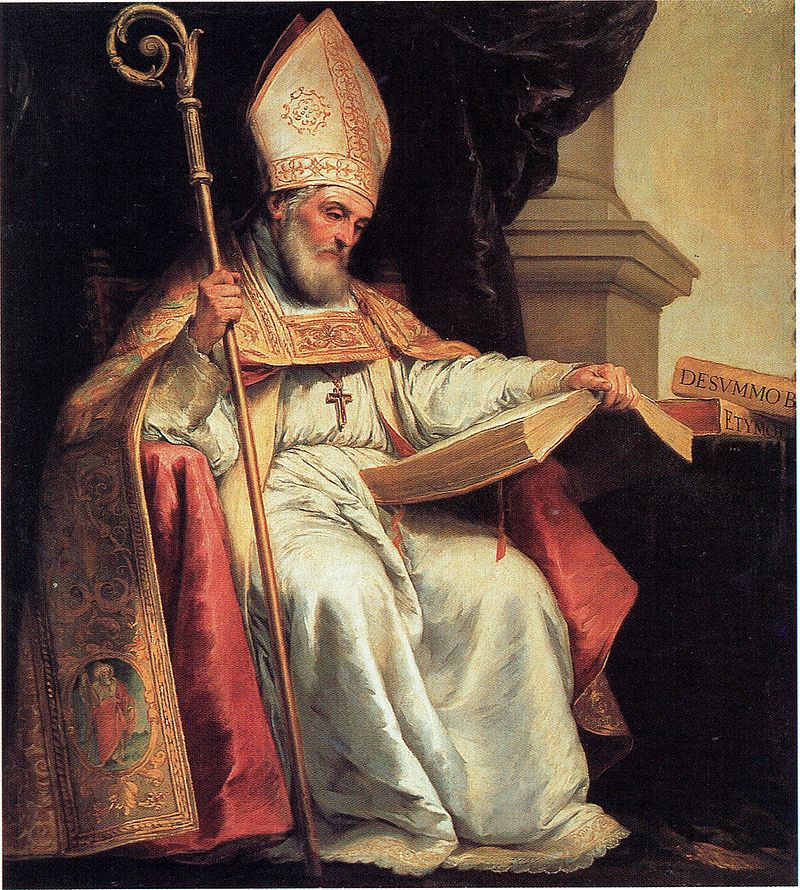
Saint Isidore of Seville, the Internet and Industriousness
Today, April 4th, muted this year by Holy Saturday, is the commemoration of Saint Isidore of Seville (560-636) a bishop and doctor of the Church during a tumultuous age, when civilization was crumbling, coming apart at its very seams, which may sound sort of au courant. Then again, the form of this world has always[…]Continue reading→

An Ancient Homily for Holy Saturday
The time between Good Friday and Easter Sunday is one of waiting, in silence, as the world wonders – anticipates – what will happen, after the death of Christ. We re-live this time each year in the anamnesis of our liturgy, and in turn look forward to the glorious re-creation of all things at the[…]Continue reading→