
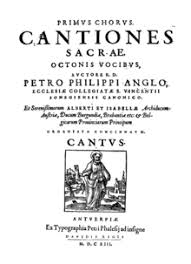
Peter Philips – Exiled English Composer
Last summer, I had the opportunity to attend the Canadian Renaissance Summer Music School in London, Ontario. The week was filled with an abundance of motets, as well as madrigals and different settings of the Mass Ordinary. The theme of this particular year was the connection between English sacred polyphony and the Italian madrigal. I was made aware of composers such as Walter Lambe (1450–1504), and John Sheppard (1515–1558), as well as Luca Marenzio (1553–1599) and others. Of course, Thomas Tallis (c. 1505–1585) and William Byrd (1543–1623) were also prominently featured. There was another composer whose music we sang only once, and without much context. That composer, who I am only really discovering now, was Peter Philips.
A Catholic in Protestant England, Peter Philips (c. 1560–1628) was likely a boy chorister at St. Paul’s Cathedral under Sebastian Westcote, whose will Philips appears in.[i] Though none of Westcote’s compositions survive, he was of considerable fame in his day, to the point that he was able to continue in his musical positions despite it being well known that he was a Catholic.[ii] Westcote died as a wealthy man in 1582, and it is in this same year that our young Philips leaves England, heading first for Rome, where he became organist for the English Jesuit College.[iii] From here, he moved to Antwerp in 1590. It is not precisely known when Philips was ordained, but by 1610 he was assigned to a canonry in Flanders.[iv] He died in Brussels, leaving behind a vast array of compositions.
While we today know him primarily as a composer, he was most highly regarded as an organist by his contemporaries. The inclusion of many of his compositions in the Fitzwilliam Virginal Book, an English collection of keyboard works, illustrates this point. His posthumous volume of Mass settings is lost, but his motets numbers in the hundreds. While his music is rather conservative for its time, especially when compared alongside the numerous innovations of a composer such as Claudio Monteverdi (1567–1643), Philips wrote out of a place of devotion, as his countless motets will attest.
We will look at two motets in this article. The first is his five-voice setting of the Salve Regina (Hail, Holy Queen). It begins serenely, opening up and growing ever broader. As he moves to “suspiramus,” (sighs), he sets the text in an almost madrigal-like fashion, with rests (musical gaps of silence) breaking up the text, almost as to depict how we sigh out of our tiresome state in this vale of tears. The music often seems to struggle against itself, mirroring the struggles of the our own human condition. It ultimately it slows on the words, “O clemens, O pia,” (O clement, O loving), to harmonic motion in four-beat durations, the slowest harmonic rhythm perhaps in the entire piece, highlighting these traits of Mary. As the text moves to “O dulcis Virgo Maria,” (O sweet Virgin Mary), it suddenly switches to a triple metre, as opposed to the quadruple time seen in the rest of the piece. To those in the Renaissance, triple time typically signifies a quicker, more buoyant tempo, and the above recording does just that. It is as if Philips is rejoicing in sweetness of Mary, and her great intercession for us poor sinners in our strife.
Ascendit Deus is another of Philips’ five-voice motets. The text is taken from Psalms 46:6 and 102:19, and reads, “God is gone up with a merry noise, and the Lord with the sound of the trumpet. He gave gifts to men. Alleluia. The Lord hath prepared his seat in heaven. Alleluia.” This is a jubilant text and is reflected as such in Philips’ use of word painting. From the start of the motet, the text, “ascendit deus” ascends upward with each voices’ entry. “In voce turbae,” describing the sound of trumpets, using lots of fifth and fourth intervals in the melodies, mimicking the notes available on a natural trumpet. The first alleluia section is almost frenetic in its use of short notes moving rapidly through various harmonies, giving it a feeling of being overjoyed. The last alleluia section switches to triple time, as seen at the end of Philips’ Salve Regina. This sudden shift into a quicker metre furthers this feeling of exultation, making this short motet one of most joyful pieces I have ever sang.
Peter Philips, though currently languishing in relative obscurity, was once one of the leading organists of his day, as well as a skilled composer in various genres. His commitment to the Catholic faith is evident through his plethora of sacred motets. He stands as a fascinating musician, an Englishman exiled for the Faith, who went on to compose some of the most magnificent choral works in the Church’s great musical patrimony.
[i] The Editors of Encyclopaedia Britannica. “Peter Philips.” Encyclopædia Britannica. January 1, 2020. https://www.britannica.com/biography/Peter-Philips.
[ii] Hughes, Charles. “Peter Philips: An English Musician in the Netherlands.” Papers of the American Musicological Society, 1940, 35-48. Accessed September 18, 2020. http://www.jstor.org/stable/43873086, 35.
[iii] Peter Philips – Bio, Albums, Pictures – Naxos Classical Music. Accessed September 18, 2020. https://www.naxos.com/person/Peter_Philips/23378.htm
[iv] Otten, Joseph. “Catholic Encyclopedia (1913)/Peter Philips.” Wikisource, November 5, 2013. https://en.wikisource.org/wiki/Catholic_Encyclopedia_(1913)/Peter_Philips.

Remembering Father Alphonse de Valk
(Today marks the sixth anniversary of the death of Father Alphonse de Valk, C.S.B., a faithful, courageous and indefatigable Basilian priest, pro-life-and-family apostle, and the founder of Catholic Insight magazine. Here is what we wrote those on his entering into eternity five years ago, as we continue to remember him in our prayers and thoughts)[…]Continue reading→
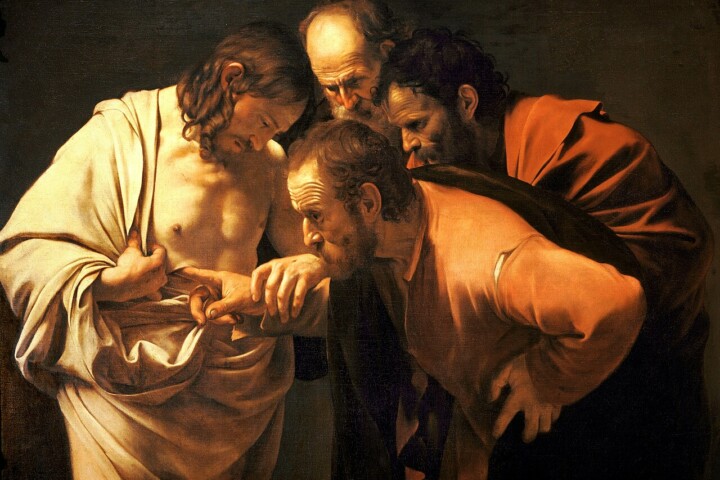
Divine Mercy Sunday – An Echo of Every Mass
Reach out your hand and put it in my side. Do not doubt but believe’… ‘My Lord and my God!’ (Jn. 20:18)). Today is Divine Mercy Sunday, and as we celebrate the end of the Easter Octave, we contemplate the wounded side of our Saviour, the Church’s source of life. On Good Friday in the[…]Continue reading→

Saint Stanislaus of Szczepanów
We celebrate Saint Stanislaus today (+ April 11, 1079), in light of this Easter Octave, a bishop and martyr who accepted the episcopacy only at the direct order of Pope Alexander II. He proved a wise and courageous leader of his flock, put to death by his own king, Boleslaus, for rebuking the monarch’s ‘immoral[…]Continue reading→
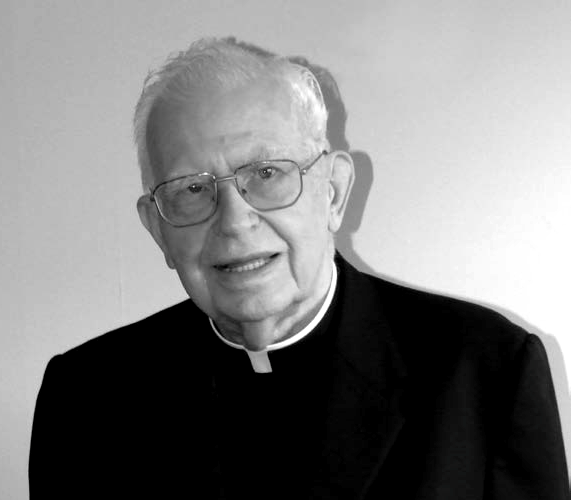
First Holy Communion: Sermon from May 16, 1943
Here is a sermon from the good old days by +Rev. Msgr. Vincent Nicholas Foy (August 14, 1915 – March 13, 2017), from 1943. Readers may recall that Pope Saint Pius X, by the decree Quam Singulari in 1910, lowered the customary age of reception of Holy Communion – after the rigours of the plague[…]Continue reading→
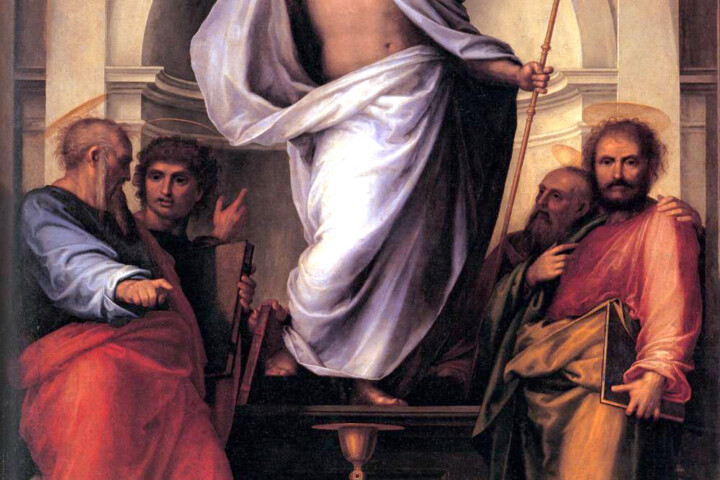
In the Glorious Light of Easter, Alleluia!
Set your minds on things that are above, not on things that are on earth, for you have died, and your life is hidden with Christ in God. When Christ who is your life is revealed, then you also will be revealed with him in glory (Col. 3:3-4). The Resurrection of Our Lord and Saviour[…]Continue reading→
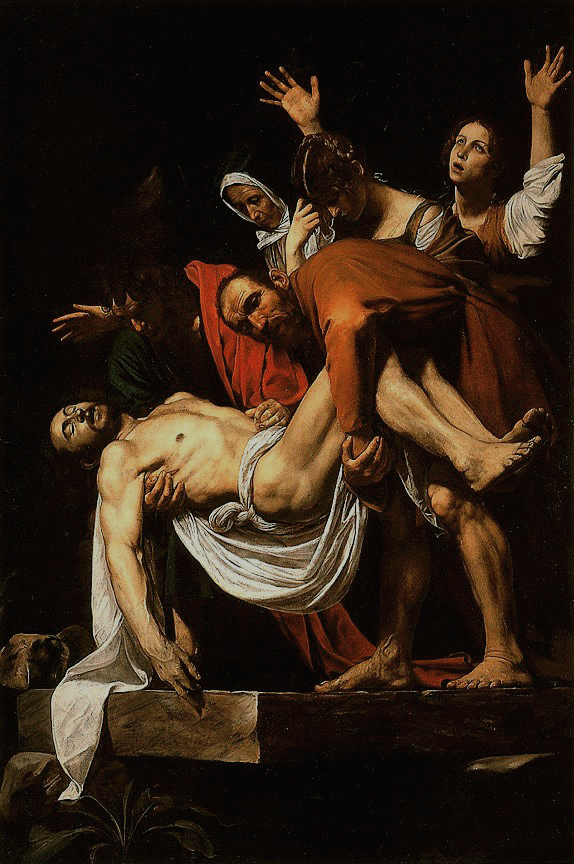
An Ancient Homily for Holy Saturday
The time between Good Friday and Easter Sunday is one of waiting, in silence, as the world wonders – anticipates – what will happen, after the death of Christ. We re-live this time each year in the anamnesis of our liturgy, and in turn look forward to the glorious re-creation of all things at the[…]Continue reading→
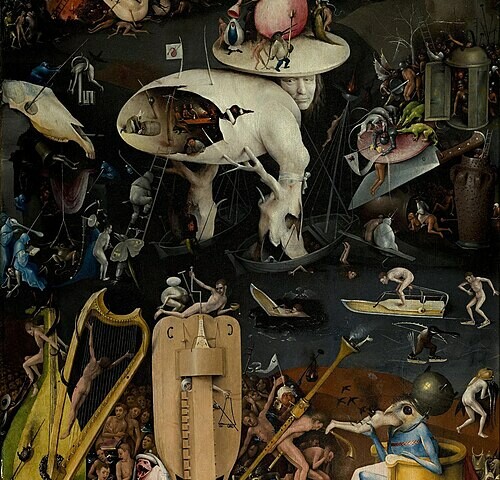
Europe’s Long Descent
(As we meditate on this day on Christ’s burial, and His descent into hell, it is fitting to ponder here with contributor Peter Marcus how the world seems to be heading there as well. The difference is that, although God cannot ‘redeem’ hell, nor those therein, He can and did redeem the world. There is[…]Continue reading→
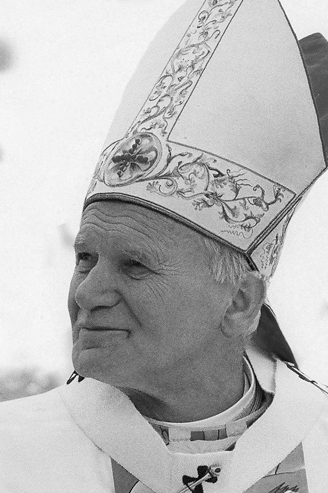
Pope Saint John Paul II’s First Good Friday Homily
ADDRESS OF HIS HOLINESS JOHN PAUL II AT THE CONCLUSION OF THE STATIONS OF THE CROSS AT THE COLOSSEUM Good Friday, 13 April 1979 When we make the Way of the Cross from one station to the next, in spirit we are always at the spot wherethis journey had its “historical” place: where it[…]Continue reading→
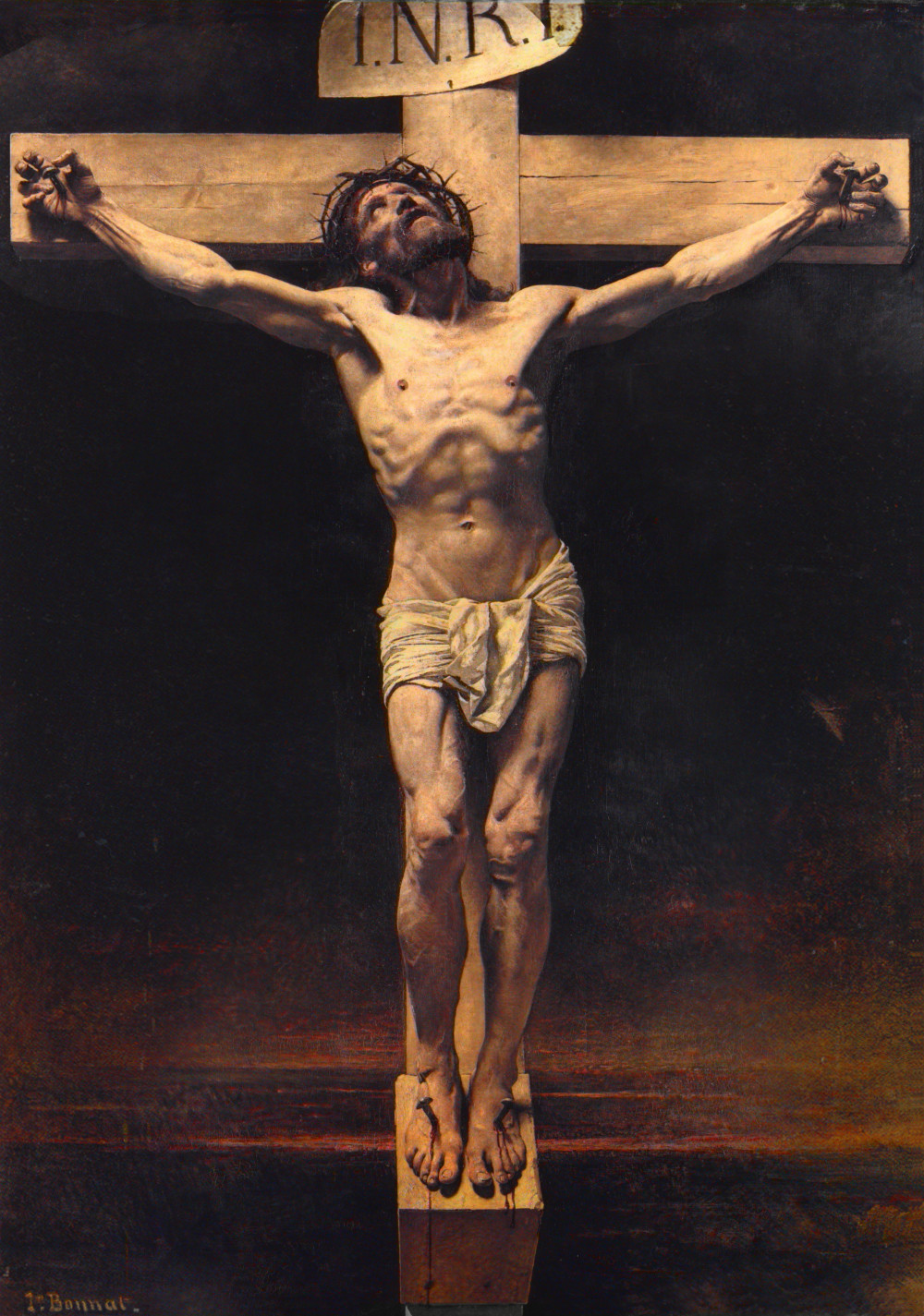
A Meditation for Good Friday: How To Undo the Effects of Sin?
Cardinal Newman, now Saint John Henry Newman, was a towering figure of nineteenth-century Catholicism who is almost universally admired. I say “almost” because not everyone likes him. I knew a priest once, Arthur Caulkins, who has become disenchanted with Newman. As an undergraduate Arthur had been enamoured of Newman, and this interest continued when he[…]Continue reading→
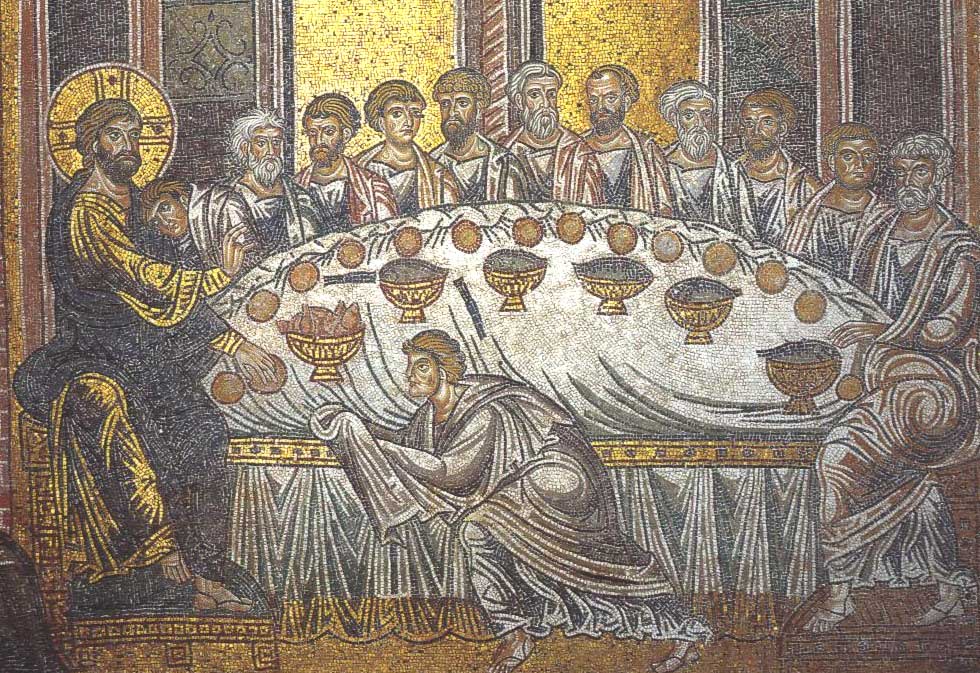
Pope Benedict’s Last Holy Thursday Homily
MASS OF THE LORD’S SUPPER HOMILY OF HIS HOLINESS BENEDICT XVI Basilica of St John Lateran Holy Thursday, 5 April 2012 Photo Gallery (Video) Dear Brothers and Sisters! Holy Thursday is not only the day of the institution of the Most Holy Eucharist, whose splendour bathes all else and in some ways draws it to[…]Continue reading→