

The Unjust Steward, Humility and the Libido Dominandi
Remember the commandments, and do not be angry with your neighbour; remember the covenant of the Most High, and overlook faults (Sir. 28:7). ⧾
The parable of the unjust steward that we have just heard evidently speaks to us of forgiveness. We know that parables were characteristic of Our Lord’s preaching and all of them help us who hear them and reflect on them to enter more deeply into the mystery of God’s Kingdom and indeed, the Mystery of God Himself. Our Lord’s preaching was such that His parables are meant to lead gradually to the hidden reality that can only be discovered through discipleship (Pope Benedict XVI). In so doing, He calls our attention to a reality not always immediately evident, a reality that is seen and perceived when we listen with what St. Benedict calls the ear of our heart. There is a difference between hearing and listening. Speak, Lord, for your servant is listening. The deeper reality that this parable communicates is a forgiveness born of empathy. All of us are very familiar with the word sympathy or compassion; different words to express the same reality: feelings of pity and sorrow for someone else’s misfortune. Empathy is the ability to experience the feelings of another person. It goes beyond sympathy.
If we reflect on this parable and consider it in greater detail we see the depth of meaning and understanding that Our Lord is communicating to us. St. Peter asks how often he should forgive a brother or sister. Our Lord responds with a parable that speaks of a king, and of slaves, people who at face value have no status and no rights. In a world where slavery was commonplace, the use of these metaphors is all the more significant. ‘You wicked slave! I forgave you all that debt because you pleaded with me. Should you not have had mercy on your fellow slave, as I had mercy on you?’ (Mt. 32:33). These words of condemnation express an all too common reality: there is always someone poorer or weaker to exploit. This is the law of the jungle or of those who have neither heard the Gospel nor heeded its word of truth. We are only capable of experiencing compassion or empathy if we acknowledge the dignity or humanity of the other. The Catholic Faith unambiguously teaches the inherent dignity of every human being. The world in which the Apostles first preached the Gospel was ignorant of this truth. In fact, in his Epistle to the Romans, St. Paul says of the Gentiles that among other things, they were heartless [and] ruthless (1:31). St. Bernard of Clairvaux, the great Cistercian Abbot observes in one his sermons that one of the greatest crimes of the Gentiles was that they were without love (The Liturgy of the Hours, Vol. IV, p.1402); and precisely because of this they were filled with all manner of wickedness (Rom.1:29).
I have repeatedly told you that the conviction that the human person is created in the image and likeness of God is a Judeo-Christian belief. It is not found in other religions or philosophies; and this is the foundation of a truly Christian civilization or culture. When this is denied or not vigorously upheld, the culture quickly becomes heartless and ruthless, filled with all manner of wickedness. Yet before it becomes a cultural phenomenon, we must appreciate that families, communities and institutions can and do become heartless. It can and does happen in businesses, school boards, even in Church institutions. No one is immune from the danger of the human flaw that can easily cause one to exploit and abuse those who are weaker or at face value bereft of power.
The ancient world was a ruthless place and our world is becoming exponentially cruel and heartless because we have failed to uphold the dignity and sanctity of human life as a truth divinely revealed. The famous Russian author Fyodor Dostoevsky observed that if God does not exist, then everything is permitted. The dehumanization of the weak and the vulnerable always leads to their extermination. Human life has intrinsic value and because of this we are capable of compassion and sympathy and empathy. Consequently, we do all that we can to protect, foster and cherish all human life from conception to natural death. We cannot and must not absent ourselves from this struggle to uphold the dignity of human life for the fate of our culture depends on our vigorous defence of this fundamental truth. As you well know, in the United States an election will soon take place. The Democratic presidential candidate, though a Catholic, is solidly anti-life or pro-abortion. Priests with a significant public profile have come out in favour of this candidate and against him. You already know the answer. Which of these priests has been censured by Church authorities? Yes, the priest who has rightly pointed out that to vote for a pro-abortion politician is to cooperate in evil. Where does this leave us in our country?
The world today is no less in need of the saving message of the Gospel than those who first heard it from the Apostles themselves; and keeping faith with the Apostles we must provide an apostolic witness no matter the cost; because the state of the world that we bequeath our children depends on our willingness to uphold Christian moral truths. We are currently experiencing a concerted effort to foment a social revolution inspired by cultural and political Marxism. The new world order that this revolution seeks to impose promises an egalitarian utopia governed by the undefined principles of social justice. What is evident both on account of what is happening and in the slogans of the agents of this revolution however, is what St. Ambrose calls greediness for power and what St. Augustine describes as the lust of domination (libido dominandi), the lust for power, advantage and glory, the lust to dominate and exploit others. Our Lord clearly taught us that this is the way of the world and not the way of the Christian: ‘You know that the rulers of the Gentiles lord it over them, and their great men exercise authority over them. It shall not be so among you; but whoever will be great among you must be your servant, and whoever would be first among you must be your slave; even as the Son of man came not to be served but to serve, and to give his life as a ransom for many’ (Mt. 20: 25-28). The whole of Divine Revelation is seen in the humility of the Creator in becoming incarnate and the humility of the creature in welcoming Him. Appropriating this humility is the work of a lifetime; yet as we engage in this work, we are transformed and so is the world around us. This is how we radiate Christ and make known His saving Word. St. Paul reminds us that we are the aroma of Christ to God among those who are being saved (2 Cor. 2:15) and through us, Our Lord spreads the fragrance of the knowledge of Him everywhere (2 Cor. 2:14).
All that we are and all that we do, especially in the practice of Christian charity is set before us here in the Eucharistic Mystery that defines us; and in the sacramental economy of the Church that governs us. At the Institution of the Eucharistic Mystery, Our Lord said plainly, I have given you an example, that you should also do as I have done to you (Jn. 13:15); and so with the charity of the Sacred Heart of Jesus, may each one of here so live and pray that we may serve the salvation of all (Prayer over the Offerings, Twenty-fourth Sunday Per Annum, The Roman Missal). ⧾

Remembering Father Alphonse de Valk
(Today marks the sixth anniversary of the death of Father Alphonse de Valk, C.S.B., a faithful, courageous and indefatigable Basilian priest, pro-life-and-family apostle, and the founder of Catholic Insight magazine. Here is what we wrote those on his entering into eternity five years ago, as we continue to remember him in our prayers and thoughts)[…]Continue reading→

Divine Mercy Sunday – An Echo of Every Mass
Reach out your hand and put it in my side. Do not doubt but believe’… ‘My Lord and my God!’ (Jn. 20:18)). Today is Divine Mercy Sunday, and as we celebrate the end of the Easter Octave, we contemplate the wounded side of our Saviour, the Church’s source of life. On Good Friday in the[…]Continue reading→

Saint Stanislaus of Szczepanów
We celebrate Saint Stanislaus today (+ April 11, 1079), in light of this Easter Octave, a bishop and martyr who accepted the episcopacy only at the direct order of Pope Alexander II. He proved a wise and courageous leader of his flock, put to death by his own king, Boleslaus, for rebuking the monarch’s ‘immoral[…]Continue reading→
First Holy Communion: Sermon from May 16, 1943
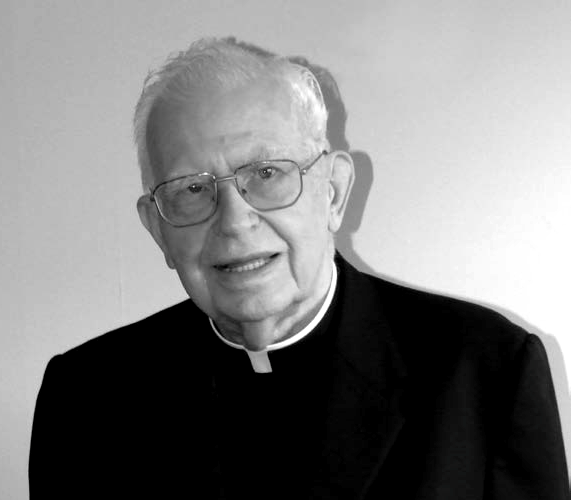
Here is a sermon from the good old days by +Rev. Msgr. Vincent Nicholas Foy (August 14, 1915 – March 13, 2017), from 1943. Readers may recall that Pope Saint Pius X, by the decree Quam Singulari in 1910, lowered the customary age of reception of Holy Communion – after the rigours of the plague[…]Continue reading→
In the Glorious Light of Easter, Alleluia!
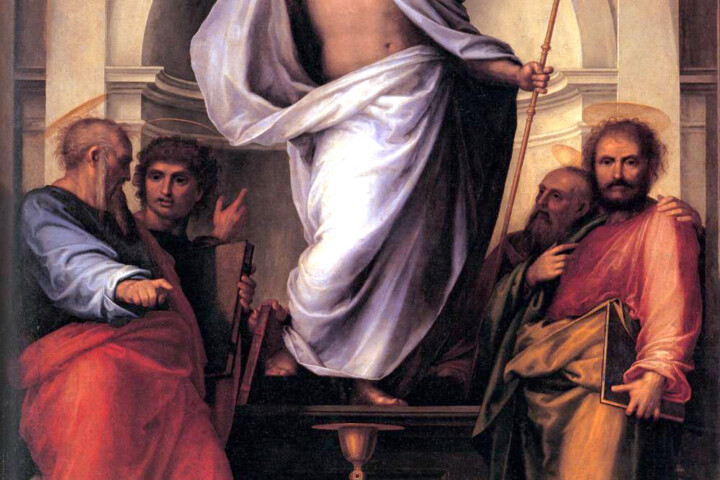
Set your minds on things that are above, not on things that are on earth, for you have died, and your life is hidden with Christ in God. When Christ who is your life is revealed, then you also will be revealed with him in glory (Col. 3:3-4). The Resurrection of Our Lord and Saviour[…]Continue reading→
An Ancient Homily for Holy Saturday
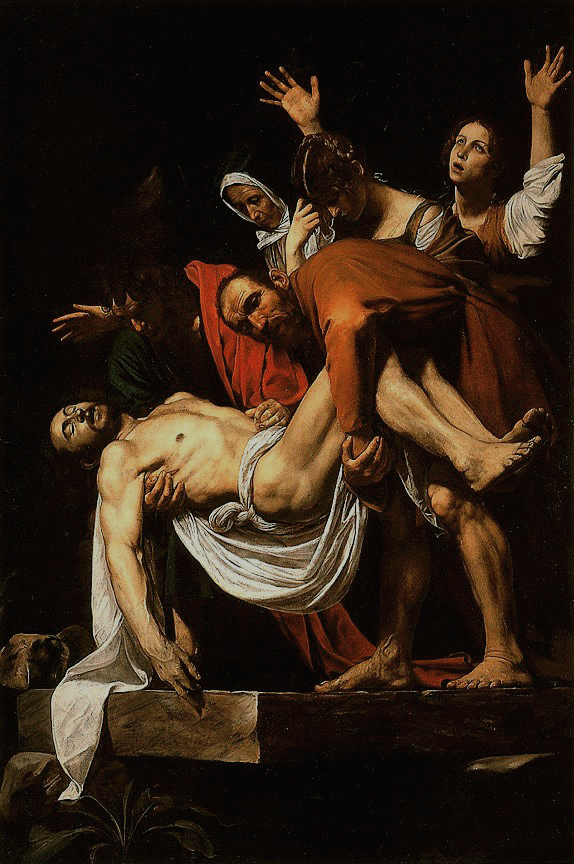
The time between Good Friday and Easter Sunday is one of waiting, in silence, as the world wonders – anticipates – what will happen, after the death of Christ. We re-live this time each year in the anamnesis of our liturgy, and in turn look forward to the glorious re-creation of all things at the[…]Continue reading→

Europe’s Long Descent
(As we meditate on this day on Christ’s burial, and His descent into hell, it is fitting to ponder here with contributor Peter Marcus how the world seems to be heading there as well. The difference is that, although God cannot ‘redeem’ hell, nor those therein, He can and did redeem the world. There is[…]Continue reading→
Pope Saint John Paul II’s First Good Friday Homily
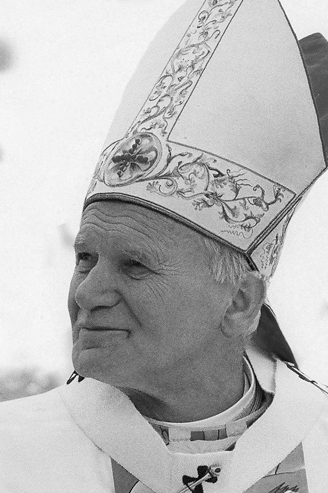
ADDRESS OF HIS HOLINESS JOHN PAUL II AT THE CONCLUSION OF THE STATIONS OF THE CROSS AT THE COLOSSEUM Good Friday, 13 April 1979 When we make the Way of the Cross from one station to the next, in spirit we are always at the spot wherethis journey had its “historical” place: where it[…]Continue reading→
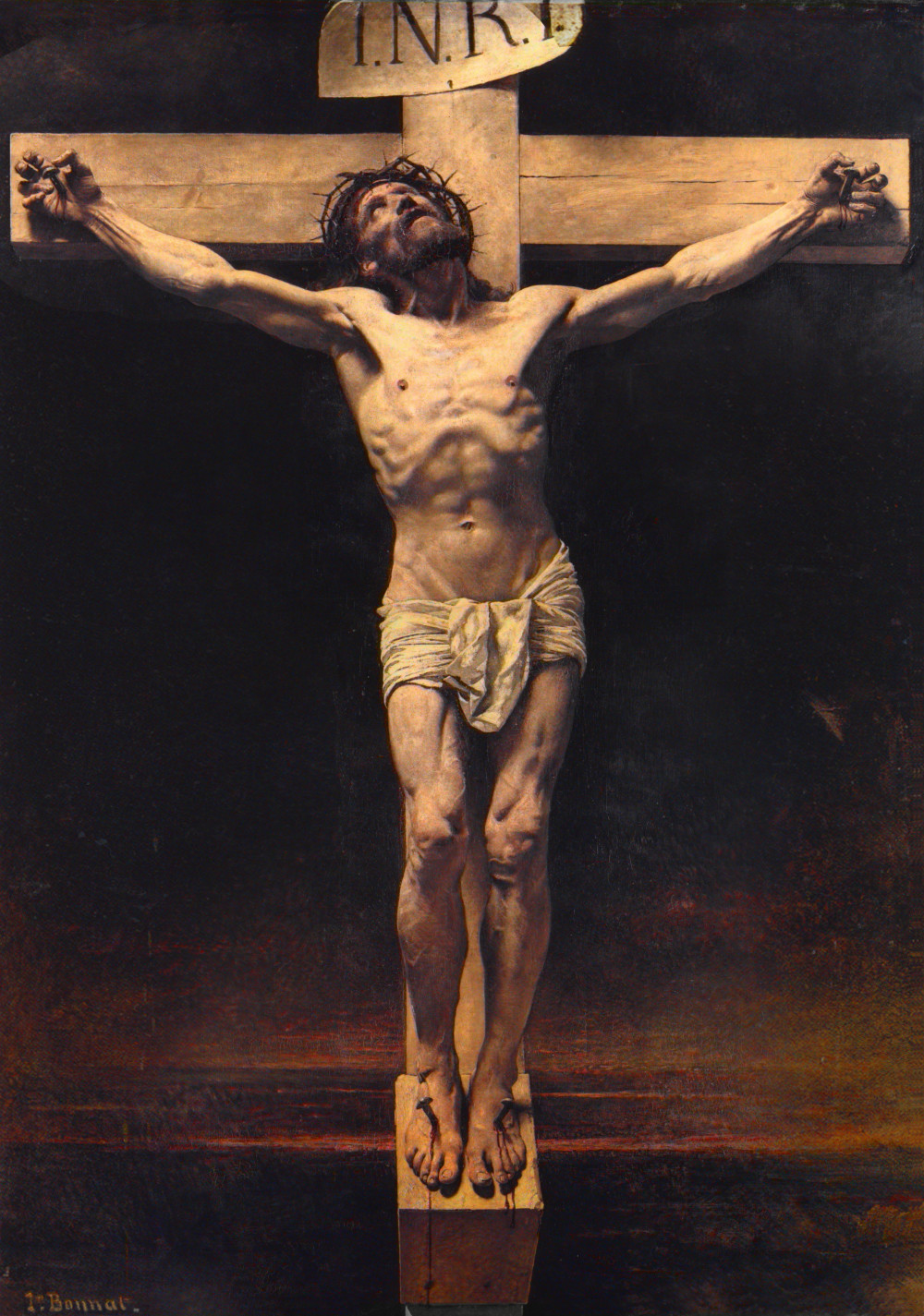
A Meditation for Good Friday: How To Undo the Effects of Sin?
Cardinal Newman, now Saint John Henry Newman, was a towering figure of nineteenth-century Catholicism who is almost universally admired. I say “almost” because not everyone likes him. I knew a priest once, Arthur Caulkins, who has become disenchanted with Newman. As an undergraduate Arthur had been enamoured of Newman, and this interest continued when he[…]Continue reading→
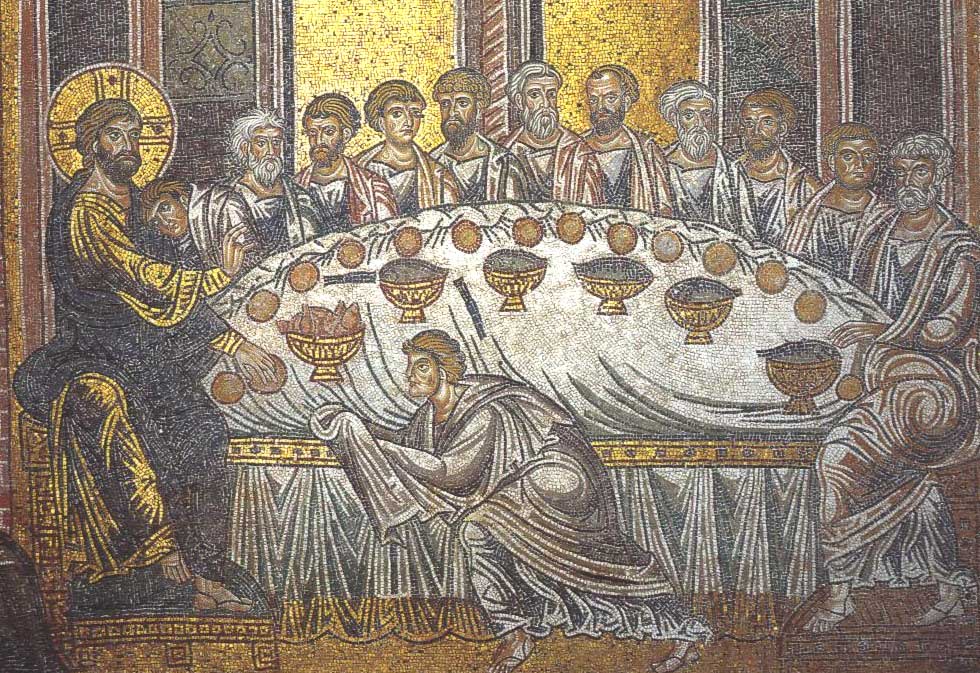
Pope Benedict’s Last Holy Thursday Homily
MASS OF THE LORD’S SUPPER HOMILY OF HIS HOLINESS BENEDICT XVI Basilica of St John Lateran Holy Thursday, 5 April 2012 Photo Gallery (Video) Dear Brothers and Sisters! Holy Thursday is not only the day of the institution of the Most Holy Eucharist, whose splendour bathes all else and in some ways draws it to[…]Continue reading→