
What of Married Saints?
Glance at any catalogue of saints and you will be struck, as I was, at how few of them were married. There are Mary and Joseph, of course, but their situation was hardly typical. Of the other saints who were married, women outnumber men. The Roman matron Perpetua and her slave Felicity were martyrs, but their husbands—like Mr. Clitherow whose wife, Margaret, was martyred by Elizabeth I in 1586—were not. Augustine’s mother, Monica, is a saint but not his father, Patricius. Then there are Melanie the elder, Paula, and Marcella of fourth-century Rome, all widows who, like Jane Frances de Chantel and Marguerite d’Youville, embraced the ascetical life when their familial obligations had come to an end. Married male saints who were not martyrs—or Apostles[1]—tend to be rulers: Good King Wenceslaus, Louis IX of France, the Emperor Henry II and, in the Eastern Church, Constantine the Great. Orthodoxy also honours the patriarchs: Saints Abraham and Sarah, Isaac and Rebecca, Jacob and Rachel. Most of the saints, however, have been either martyrs or ascetics. This historical fact accounts for the small number of married saints. To see why, one has to consider the meaning and form of sainthood in the early Church.
Martyrs were known to be already in heaven. Their imitation of Christ was so complete that they were believed to have achieved the fullness of what Jesus had implicitly promised to his heroic disciples when he told the good thief, “this day you will be with me in paradise.[2] With the end of persecution in the fourth century, another mode of “martyrdom” was recognized in asceticism. Jerome was typical of many in describing this austere and consecrated way of life as a new form of martyrdom, which could, in its protracted demands, equal or even surpass physical martyrdom. In his eulogy of Saint Paula he addresses her daughter Eustochium:
Your mother has now after a long martyrdom won her crown. It is not only the shedding of blood that is accounted a confession:[3] the spotless service of a devout mind is itself a daily martyrdom. Both alike are crowned—with roses and violets in the once case, with lilies in the other.[4]
A monk or a nun, having died symbolically, was regarded as living in heaven. Those who were spectacularly successful in meeting the demands of this radical from of Christian life—Saint Francis of Assisi, for instance—were canonized at first by being honoured by the people; later, during the Middle Ages a formal process of canonization was instituted by the Church.
This bit of history, then, makes clear why so few married people have been canonized. Family obligations made martyrdom, on the one hand, inadvisable, and monasticism, on the other, impossible. The conviction was that lay people lived in the temporal order where their vocations were tested, while martyrs and religious—in one way or another—followed the “angelic life.”[5] Canonization was simply the recognition of what had been achieved.
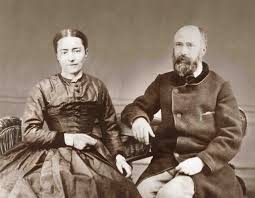
The time has come, however, for the Church to canonize married men and women and also single persons living in the world, for the paradox of our time is that being Catholic can now require a break with the world as absolute in its way as that made by any ascetic. To be faithful to the Gospel can demand of people in the world, and especially of those in the public eye, a heroic sacrifice of self, well beyond what is required in most current forms of religious life. Poverty, ridicule, ostracization: such are the lot of people in our society who try to follow Christ. The “poor of the Lord” now comprise many couples and single people in the world, who in loneliness and distress have learned to depend solely upon God. This dependence can be a harrowing school of sanctity, which should be recognized by the Church as a prophetic sign for our times. The example and prayers of such saints are needed, and canonization is the appropriate way to assure that they are available to the Church, as some already have been. Saint Gianna Beretta Molla, a wife and mother who in 1962 gave her life that her child might live, was canonized on 16 May 2004; Louis and Zélie Martin, the parents of St. Thérèse de Lisieux, were canonized on 18 October 2015. Frédéric Ozanam, the unmarried layman who founded the Saint Vincent de Paul Society, was beatified by Pope John Paul II on August 22, 1997.
[1] Cf. Mark 1.30.
[2] Luke 23.43.
[3] The word “martyrdom” literally means confessing—i.e., professing—one’s faith publicly.
[4] Letter 108.32.
[5] Cf. Matthew 22.30.
Remembering Father Alphonse de Valk
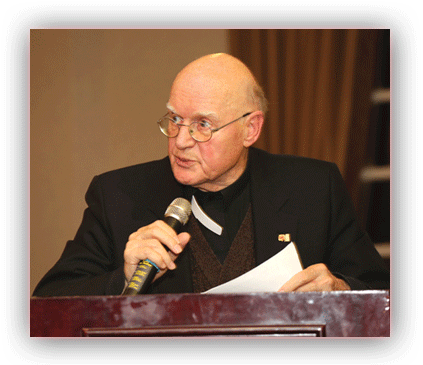
(Today marks the sixth anniversary of the death of Father Alphonse de Valk, C.S.B., a faithful, courageous and indefatigable Basilian priest, pro-life-and-family apostle, and the founder of Catholic Insight magazine. Here is what we wrote those on his entering into eternity five years ago, as we continue to remember him in our prayers and thoughts)[…]Continue reading→
Divine Mercy Sunday – An Echo of Every Mass
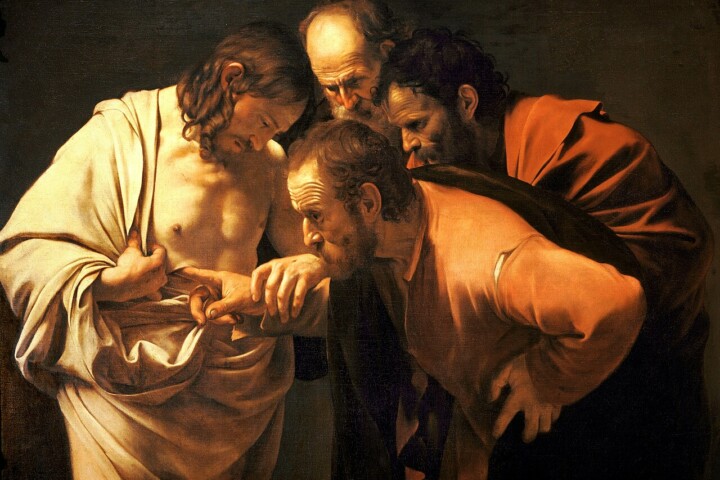
Reach out your hand and put it in my side. Do not doubt but believe’… ‘My Lord and my God!’ (Jn. 20:18)). Today is Divine Mercy Sunday, and as we celebrate the end of the Easter Octave, we contemplate the wounded side of our Saviour, the Church’s source of life. On Good Friday in the[…]Continue reading→

Saint Stanislaus of Szczepanów
We celebrate Saint Stanislaus today (+ April 11, 1079), in light of this Easter Octave, a bishop and martyr who accepted the episcopacy only at the direct order of Pope Alexander II. He proved a wise and courageous leader of his flock, put to death by his own king, Boleslaus, for rebuking the monarch’s ‘immoral[…]Continue reading→
First Holy Communion: Sermon from May 16, 1943
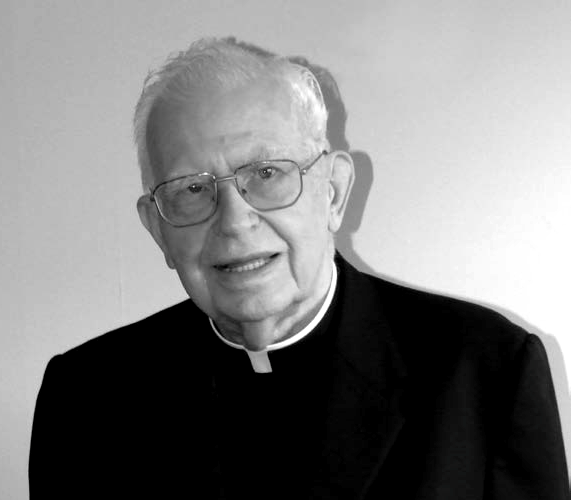
Here is a sermon from the good old days by +Rev. Msgr. Vincent Nicholas Foy (August 14, 1915 – March 13, 2017), from 1943. Readers may recall that Pope Saint Pius X, by the decree Quam Singulari in 1910, lowered the customary age of reception of Holy Communion – after the rigours of the plague[…]Continue reading→
In the Glorious Light of Easter, Alleluia!
Set your minds on things that are above, not on things that are on earth, for you have died, and your life is hidden with Christ in God. When Christ who is your life is revealed, then you also will be revealed with him in glory (Col. 3:3-4). The Resurrection of Our Lord and Saviour[…]Continue reading→
An Ancient Homily for Holy Saturday
The time between Good Friday and Easter Sunday is one of waiting, in silence, as the world wonders – anticipates – what will happen, after the death of Christ. We re-live this time each year in the anamnesis of our liturgy, and in turn look forward to the glorious re-creation of all things at the[…]Continue reading→
Europe’s Long Descent
(As we meditate on this day on Christ’s burial, and His descent into hell, it is fitting to ponder here with contributor Peter Marcus how the world seems to be heading there as well. The difference is that, although God cannot ‘redeem’ hell, nor those therein, He can and did redeem the world. There is[…]Continue reading→
Pope Saint John Paul II’s First Good Friday Homily
ADDRESS OF HIS HOLINESS JOHN PAUL II AT THE CONCLUSION OF THE STATIONS OF THE CROSS AT THE COLOSSEUM Good Friday, 13 April 1979 When we make the Way of the Cross from one station to the next, in spirit we are always at the spot wherethis journey had its “historical” place: where it[…]Continue reading→
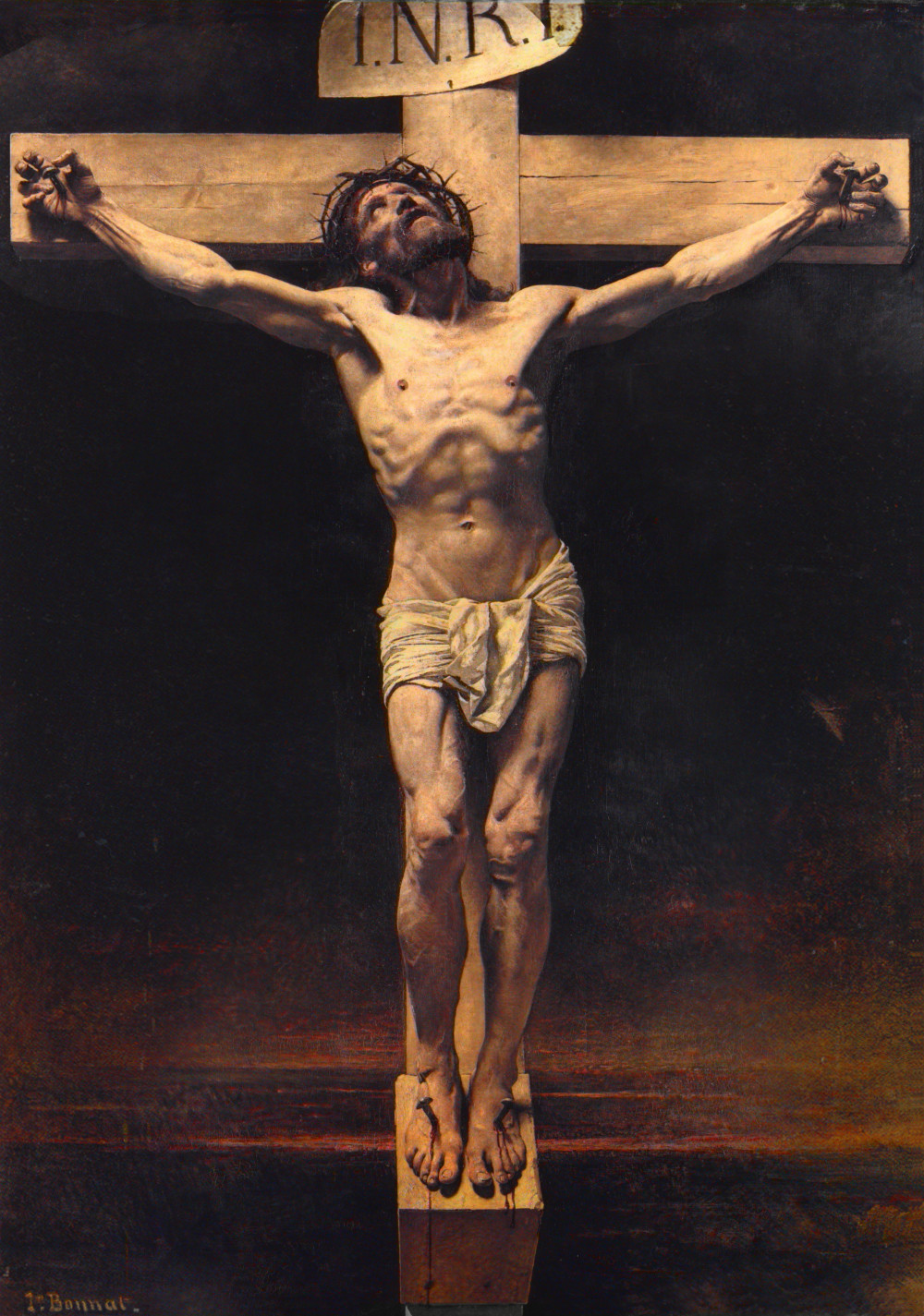
A Meditation for Good Friday: How To Undo the Effects of Sin?
Cardinal Newman, now Saint John Henry Newman, was a towering figure of nineteenth-century Catholicism who is almost universally admired. I say “almost” because not everyone likes him. I knew a priest once, Arthur Caulkins, who has become disenchanted with Newman. As an undergraduate Arthur had been enamoured of Newman, and this interest continued when he[…]Continue reading→
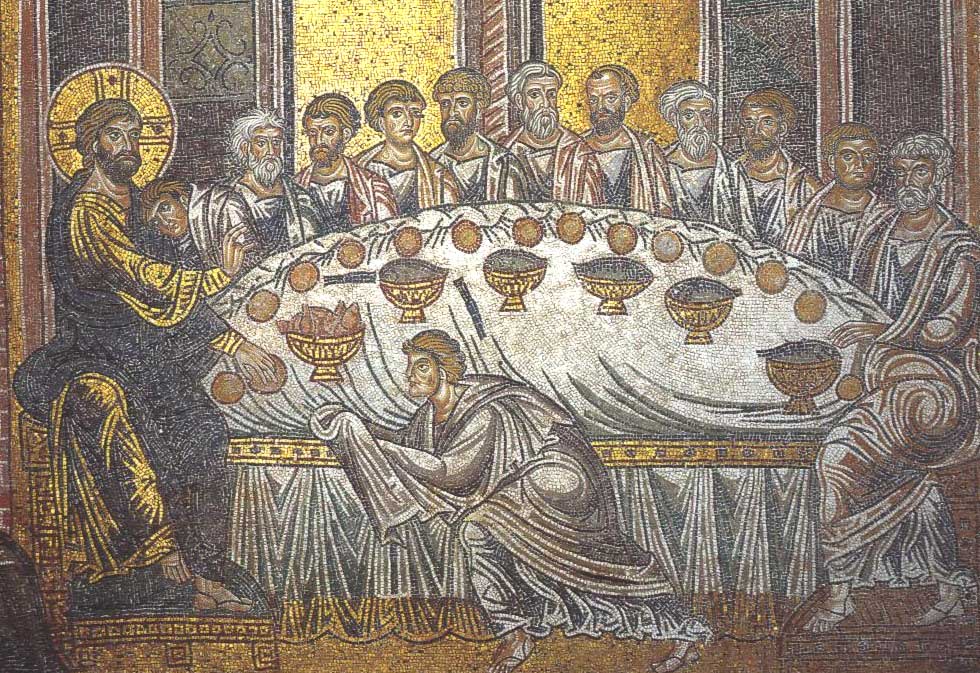
Pope Benedict’s Last Holy Thursday Homily
MASS OF THE LORD’S SUPPER HOMILY OF HIS HOLINESS BENEDICT XVI Basilica of St John Lateran Holy Thursday, 5 April 2012 Photo Gallery (Video) Dear Brothers and Sisters! Holy Thursday is not only the day of the institution of the Most Holy Eucharist, whose splendour bathes all else and in some ways draws it to[…]Continue reading→