
Miracle in “Hell”
MIRACLE IN “HELL”
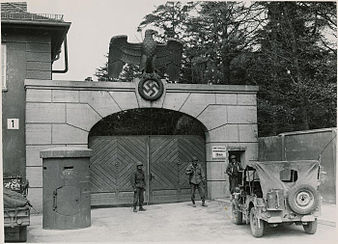
The 81st Anniversary of the outbreak of the Second World War on September 1st has just been celebrated in distant Europe. Nevertheless, a real hell on earth started as early as 1933 by the order of Heinrich Himmler. Near the German town of Dachau in Bavaria, the first concentration camp was established and became the prototype for all of the German camps that followed.
It is worth mentioning that Poles constituted the largest ethnic group in the camp and the largest proportion of those imprisoned in the Priest Barracks of Dachau. Of a total of 1,780 Polish Catholic clergy recorded as incarcerated at Dachau, 868 died. Yet, many of them, through their passionate belief in the powerful intercession of St. Joseph, obtained the grace of freedom. Calling out and praying to him, they avidly sought his help from Heaven in their desperate plight.
Fr. Leon Stępniak (1913-2013), who was interned at Dachau from 1940 to the end of WW II in 1945, remembered the following incident: The commandant of the camp and the guards came up with the idea of “Harassment Day of Polish Divines.” Carrying heavy stones on their shoulders, the prisoners were forced to run along a line of guards armed with sticks. That August day, 38 priests were brutally killed.
Many Poles met their deaths on the “invalid trains” sent out from the camp; others were liquidated in the camp and given bogus death certificates. Some died of cruel punishment for misdemeanors. According to Father Melchior Fryszkiewicz, “They were flogged and clubbed whenever an SS man would catch them praying or administering the Last Rites. A priest would be savagely beaten for such a crime as hiding a rosary or a scapular. I knew a priest in Sachsenhausen who was trampled to death, because a guard found a rosary in his bunk.”
In the chapel of the Sachsenhausen camp on December 8, 1940, a group of Polish priests of block number 18 entrusted themselves to the parental care of St. Joseph of Kalisz. They were hoping that other priests would follow their example; however, all of a sudden, on December 13, they were taken to the Dachau concentration camp. A few months later, on March 19, they renewed the act of entrustment, concurrently consecrating themselves to the Immaculate Heart of Mary and the Sacred Heart of Jesus.
During March and April of 1945, rumours about an impending extermination of all prisoners were rife. Hence, a large group of Polish priests and lay inmates joined in praying a nine-day novena to St. Joseph of Kalisz. Meaningfully, during two Masses on April 22, 1945, the last day of the novena, 800 of the prisoners solemnly entrusted themselves to St. Joseph. Not only did the priests pledge to spread devotion to St. Joseph of Kalisz if saved, but they also vowed to go there every year on a pilgrimage and to contribute to setting up a work of mercy, dedicated to St. Joseph.
On April 29, 1945, a small detachment of American soldiers were sent to the railway station of Dachau. There they found two trains filled with human corpses. Actually, they knew nothing about a proximate camp, but decided to inquire on their own. A few German farmers told them that there was a concentration camp nearby. Neglecting orders, they pushed forward and made a search. Finally, at 5:25 p.m., a unit of valiant American GI’s took over the camp and guarded it until the arrival of reinforcements. The very next day, a document that had been signed by Heinrich Himmler on April 14, 1945, was found in the offices of the camp, instructing that the camp be liquidated on the 29th of April at 9 p.m.–less than four hours after the American soldiers had taken over the camp!
General George Patton’s Seventh Army aimed to seize Dachau the very next day. When the American soldiers arrived, they were truly horrified at the sight of piles of dead bodies before the entrance of the crematorium. One of the commanding officers, listening to the poignant stories of the prisoners, dropped to his knees and loudly recited the “Our Father” in broken German. Then, he said: “We must thank God for this victory.”
Bishop Franciszek Korszyński called it a miracle that Dachau was liberated three hours before all remaining inmates, numbering 30,000, were to be executed by the Germans.
In 1948, the Polish press reported of the pilgrimage of former prisoners of the notorious German concentration camp to the St. Joseph Shrine in Kalisz.
In 1970, on the 25th Anniversary of the liberation of the camp, the clergy who survived, founded the Chapel of Martyrdom and Gratitude in the crypt of St. Joseph, which was blessed by the Primate of Poland, now Servant of God Cardinal Stefan Wyszyński, in the presence of Cardinal Karol Wojtyla. At the chapel entrance there is a representation of a barbed-wire fence and a plaque in thanksgiving to St. Joseph “for the liberation from the abyss of death.”
Pope John Paul II visited the town of Kalisz in 1997 and thanked all the assembled priests, former prisoners of Dachau, “for the initiative that originated in times of contempt (…) and for entrusting suffering and the fate of prisoners to him, who is the guardian of the Church (…) and for undying gratitude since they were released. And also for the fact that they annually make a pilgrimage to the St. Joseph Shrine in Kalisz….”
In 2002, as a way of continuing the survivors’ annual act of thanksgiving, Poland’s bishops established April 29 as the Day of Martyrdom of the Polish Clergy.
In celebration of the 75th Anniversary of Dachau’s liberation, a Mass was celebrated on April 29, 2020, in the Chapel of Martyrdom and Gratitude. At the very beginning of his homily, Archbishop Marian Gołębiewski recalled the miraculous liberation of priests through the merits of St. Joseph.
To commemorate this anniversary, Bishop of Kalisz Edward Janiak wrote in his pastoral letter: “Please, let us join together spiritually and adore God for the great miracles He performed in the lives of prisoners through the intercession of St. Joseph.”
Dachau will forever remain a symbol of European Golgotha, an ominous warning to future generations against a world without God, a world which becomes “a hell” filled with selfishness, broken families, and hatred between individuals and nations. A widespread consensus on Godless ideologies will sooner or later result in an oppressive form of government. As John Paul II wrote: “A democracy without values easily turns into open or thinly-disguised totalitarianism.”
In closing, reflect upon the beautiful words uttered by the Spanish Carmelite, St. Teresa of Avila, for whom devotion to St. Joseph was a hallmark of life:
I wish I could persuade everyone to be devoted to this glorious saint, for I have a great experience of the blessings which he can obtain from God. I have never known anyone to be truly devoted to him and render him particular services who did not notably advance in virtue, for he gives very real help to souls who commend themselves to him. For some years now, I think, I have made some request of him every year on his festival and I have always had it granted. If my petition is in any way ill directed, he directs it aright for my greater good.

Remembering Father Alphonse de Valk
(Today marks the sixth anniversary of the death of Father Alphonse de Valk, C.S.B., a faithful, courageous and indefatigable Basilian priest, pro-life-and-family apostle, and the founder of Catholic Insight magazine. Here is what we wrote those on his entering into eternity five years ago, as we continue to remember him in our prayers and thoughts)[…]Continue reading→

Divine Mercy Sunday – An Echo of Every Mass
Reach out your hand and put it in my side. Do not doubt but believe’… ‘My Lord and my God!’ (Jn. 20:18)). Today is Divine Mercy Sunday, and as we celebrate the end of the Easter Octave, we contemplate the wounded side of our Saviour, the Church’s source of life. On Good Friday in the[…]Continue reading→

Saint Stanislaus of Szczepanów
We celebrate Saint Stanislaus today (+ April 11, 1079), in light of this Easter Octave, a bishop and martyr who accepted the episcopacy only at the direct order of Pope Alexander II. He proved a wise and courageous leader of his flock, put to death by his own king, Boleslaus, for rebuking the monarch’s ‘immoral[…]Continue reading→
First Holy Communion: Sermon from May 16, 1943
Here is a sermon from the good old days by +Rev. Msgr. Vincent Nicholas Foy (August 14, 1915 – March 13, 2017), from 1943. Readers may recall that Pope Saint Pius X, by the decree Quam Singulari in 1910, lowered the customary age of reception of Holy Communion – after the rigours of the plague[…]Continue reading→
Weronika Krawczyk and Injustice in Poland
Catholic Action in Poland has issued a formal statement appealing to the President of the Republic of Poland to pardon Weronika Krawczyk—convicted for warning other women against an abortion-performing gynaecologist. Catholic Action (AK) emphasizes that no apology is owed to a doctor who has performed numerous abortions and proposed others; furthermore, the organization considers the[…]Continue reading→
In the Glorious Light of Easter, Alleluia!
Set your minds on things that are above, not on things that are on earth, for you have died, and your life is hidden with Christ in God. When Christ who is your life is revealed, then you also will be revealed with him in glory (Col. 3:3-4). The Resurrection of Our Lord and Saviour[…]Continue reading→
An Ancient Homily for Holy Saturday
The time between Good Friday and Easter Sunday is one of waiting, in silence, as the world wonders – anticipates – what will happen, after the death of Christ. We re-live this time each year in the anamnesis of our liturgy, and in turn look forward to the glorious re-creation of all things at the[…]Continue reading→
Europe’s Long Descent
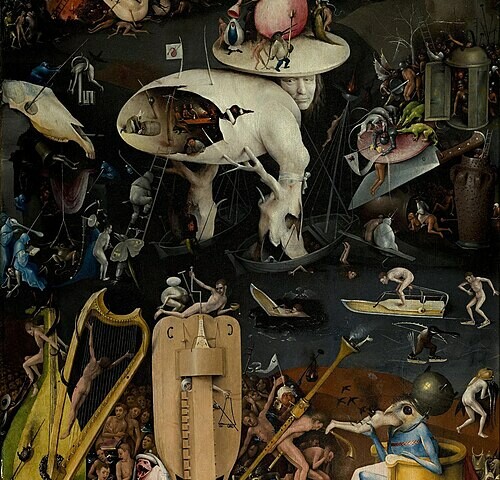
(As we meditate on this day on Christ’s burial, and His descent into hell, it is fitting to ponder here with contributor Peter Marcus how the world seems to be heading there as well. The difference is that, although God cannot ‘redeem’ hell, nor those therein, He can and did redeem the world. There is[…]Continue reading→
Pope Saint John Paul II’s First Good Friday Homily
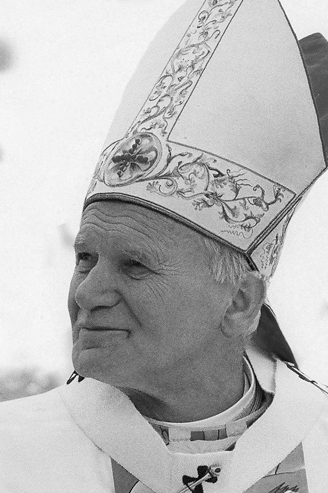
ADDRESS OF HIS HOLINESS JOHN PAUL II AT THE CONCLUSION OF THE STATIONS OF THE CROSS AT THE COLOSSEUM Good Friday, 13 April 1979 When we make the Way of the Cross from one station to the next, in spirit we are always at the spot wherethis journey had its “historical” place: where it[…]Continue reading→
A Meditation for Good Friday: How To Undo the Effects of Sin?
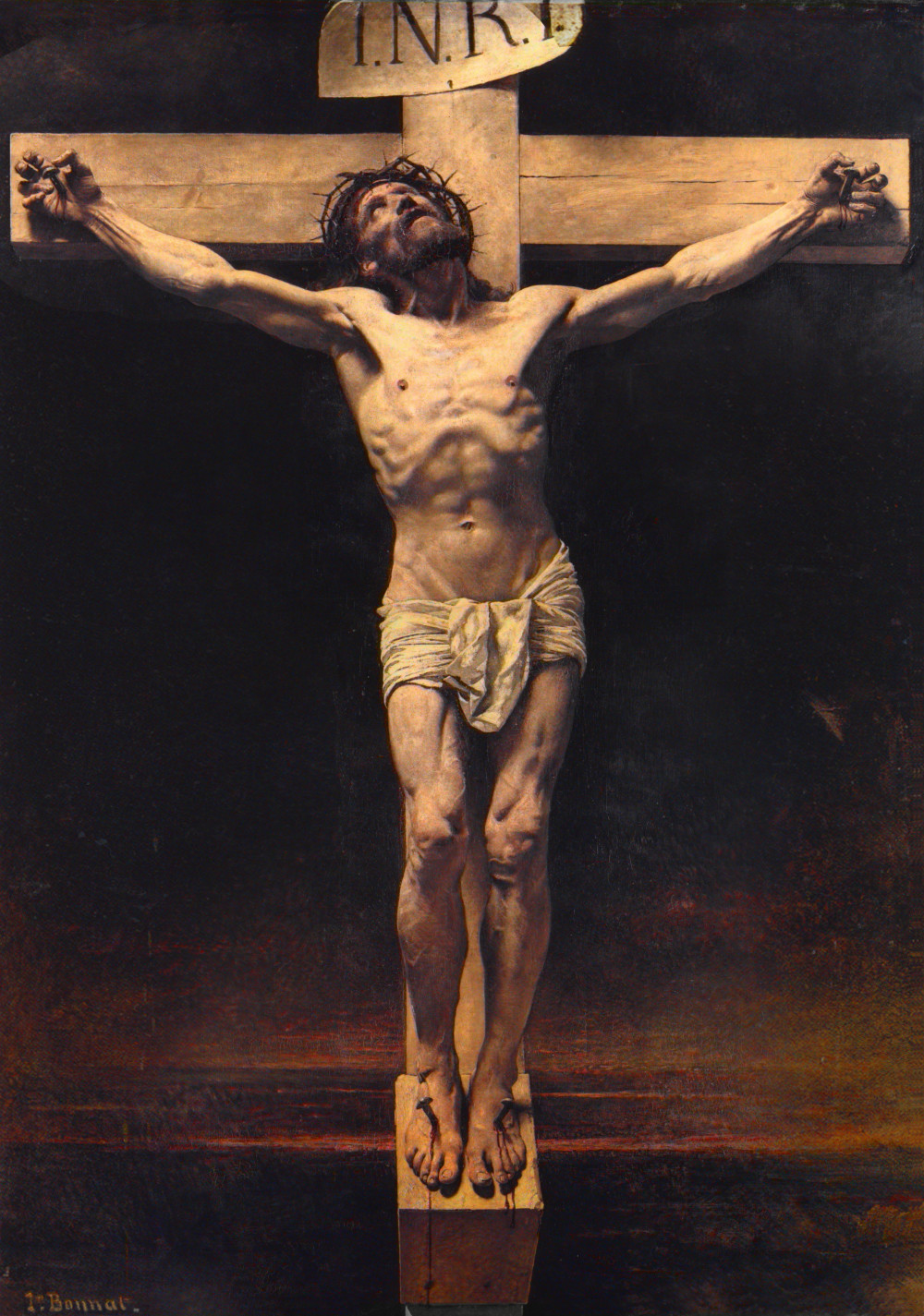
Cardinal Newman, now Saint John Henry Newman, was a towering figure of nineteenth-century Catholicism who is almost universally admired. I say “almost” because not everyone likes him. I knew a priest once, Arthur Caulkins, who has become disenchanted with Newman. As an undergraduate Arthur had been enamoured of Newman, and this interest continued when he[…]Continue reading→