
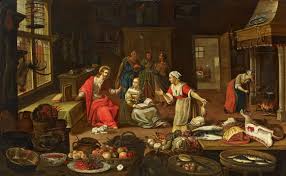
Martha and Mary: The Good Part
Mary has chosen the better part and it will not be taken from her (Lk. 10: 42).
⧾ In Christian tradition Martha and Mary have been seen as a personification of the active and contemplative life. In truth, both aspects are necessary in the life of every Christian; work and prayer. We need to pray, to listen and to welcome the Word of God and to enter into dialogue with this living Word; and in turn, having been enlightened by it, and formed by divine teaching, to serve God and to serve others for love of Him. This is summarized by the well-known phrase ora et labora, pray and work – a summary of sorts of Benedictine spirituality and of the proper order of any active apostolate.
Our Lord speaks of Mary having chosen the better part. This is not to say that what Martha does is bad; it is indeed good but Mary’s is better. St. Thomas Aquinas explains that mystically, by Martha’s receiving Our Lord into her house is represented the Church which now receives the Lord into her heart. Mary her sister, who sat at Jesus’ feet and heard His word, signifies the same Church, but in a future life, where ceasing from labour, and the ministering to her wants, she shall delight in Wisdom alone (Catena Aurea, In Lucam, p. 381). This future life however is already ours; for eternal life has already begun for those who receive His word with a generous heart. Truly, truly, I say to you, he who hears my word and believes him who sent me, has eternal life (Jn. 5:24).
The Prophet Samuel was instructed to say, ‘Speak Lord, for your servant is listening’ (1 Sam. 3:10). Our Lady said, ‘Be it done unto me according to your Word’ (Lk. 1:38). Perhaps more than anyone else Our Lady is the model of the contemplative element of Christian life. So too is Mary the sister of Martha and Lazarus. There must be a contemplative component to our life and our worship if we are ever to progress beyond a level of Christian commitment that can remain at best superficial. Prayer is life and develops gradually in pace with the growth of Christian life. As we worship so we become.
The primary work of the Church is the worship of God. It is here that we encounter Christ and it is our communion with Him that guides our life. Everything else flows from this. This is the better part, and as we grow in our ability to participate in the sacred mysteries we come to appreciate the absolute necessity for reverent silence (Sacrosanctum Concilium, 30). Without it we cannot possibly progress in the grace of prayer. Not long ago, within living memory, our churches everywhere were noted for their silence. People spoke in reverent whispers out of respect for the Real Presence of Our Lord and for the holiness of His dwelling. This is the Lord’s house, which He hath made. Profoundly sacred, it is beyond reproof (Locus iste a Deo factus est, inaestimabile sacramentum, irreprehensibilis est). This liturgical text helps us to appreciate the sacredness of our churches. It is the gradual for the anniversary of the dedication of a church; and it is based on the story of Jacob’s ladder and the account of Moses and the burning bush where Moses is told, ‘Do not come any closer. Take off your sandals, for the place where you are standing is holy ground (Ex. 3:5). We are on holy ground; profoundly sacred.
By means of sacred silence and prayer which is its fruit, we are led from a consideration of the divine mysteries as external spectators to active participation in the very Mystery of Christ and spiritual commitment, so that the mysteries of Christ are assimilated and lived in our own personal, concrete history. The beauty and silence of the liturgy, among its many other qualities, are where our Christian formation is truly brought about. This transformative aspect of Christian life and prayer is what makes us eager to worship, gradually coming to the understanding that there is only need of one thing; or as the Psalmist expresses it, Apart from you I want nothing on earth…. To be near God is my happiness (Ps. 73).
As Martha welcomed Our Lord into her home, so we welcome Him in ours; and as Mary sat beside Him and listened to Him, we endeavour to do the same in both our public and private prayer. St. John of the Cross, the great Carmelite mystic and teacher of prayer who in his writings charted the stages of the spiritual life, observed that this process of interiorization or appropriation of the Mystery of Christ is also accompanied by simplification. This is to say that we become capable of discerning the one thing necessary and we do everything to possess it. By means of simplification we are drawn into a deeper union with Our Lord with whom we initiate a dialogue of love; and through the grace of prayer we abide in Him who helps us in all things to choose the better part. In this manner we participate intimately in the primary work of the Church and so we do all things for God’s greater glory and the salvation of souls. May our worship deepen our spirit of prayer and strengthen our resolve to be evermore faithful to God’s Holy Will.⧾

Remembering Father Alphonse de Valk
(Today marks the sixth anniversary of the death of Father Alphonse de Valk, C.S.B., a faithful, courageous and indefatigable Basilian priest, pro-life-and-family apostle, and the founder of Catholic Insight magazine. Here is what we wrote those on his entering into eternity five years ago, as we continue to remember him in our prayers and thoughts)[…]Continue reading→

Divine Mercy Sunday – An Echo of Every Mass
Reach out your hand and put it in my side. Do not doubt but believe’… ‘My Lord and my God!’ (Jn. 20:18)). Today is Divine Mercy Sunday, and as we celebrate the end of the Easter Octave, we contemplate the wounded side of our Saviour, the Church’s source of life. On Good Friday in the[…]Continue reading→

Saint Stanislaus of Szczepanów
We celebrate Saint Stanislaus today (+ April 11, 1079), in light of this Easter Octave, a bishop and martyr who accepted the episcopacy only at the direct order of Pope Alexander II. He proved a wise and courageous leader of his flock, put to death by his own king, Boleslaus, for rebuking the monarch’s ‘immoral[…]Continue reading→

First Holy Communion: Sermon from May 16, 1943
Here is a sermon from the good old days by +Rev. Msgr. Vincent Nicholas Foy (August 14, 1915 – March 13, 2017), from 1943. Readers may recall that Pope Saint Pius X, by the decree Quam Singulari in 1910, lowered the customary age of reception of Holy Communion – after the rigours of the plague[…]Continue reading→

In the Glorious Light of Easter, Alleluia!
Set your minds on things that are above, not on things that are on earth, for you have died, and your life is hidden with Christ in God. When Christ who is your life is revealed, then you also will be revealed with him in glory (Col. 3:3-4). The Resurrection of Our Lord and Saviour[…]Continue reading→

An Ancient Homily for Holy Saturday
The time between Good Friday and Easter Sunday is one of waiting, in silence, as the world wonders – anticipates – what will happen, after the death of Christ. We re-live this time each year in the anamnesis of our liturgy, and in turn look forward to the glorious re-creation of all things at the[…]Continue reading→

Europe’s Long Descent
(As we meditate on this day on Christ’s burial, and His descent into hell, it is fitting to ponder here with contributor Peter Marcus how the world seems to be heading there as well. The difference is that, although God cannot ‘redeem’ hell, nor those therein, He can and did redeem the world. There is[…]Continue reading→
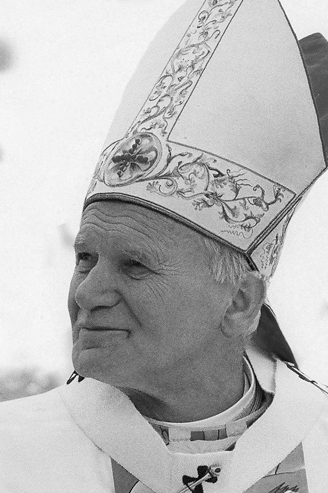
Pope Saint John Paul II’s First Good Friday Homily
ADDRESS OF HIS HOLINESS JOHN PAUL II AT THE CONCLUSION OF THE STATIONS OF THE CROSS AT THE COLOSSEUM Good Friday, 13 April 1979 When we make the Way of the Cross from one station to the next, in spirit we are always at the spot wherethis journey had its “historical” place: where it[…]Continue reading→
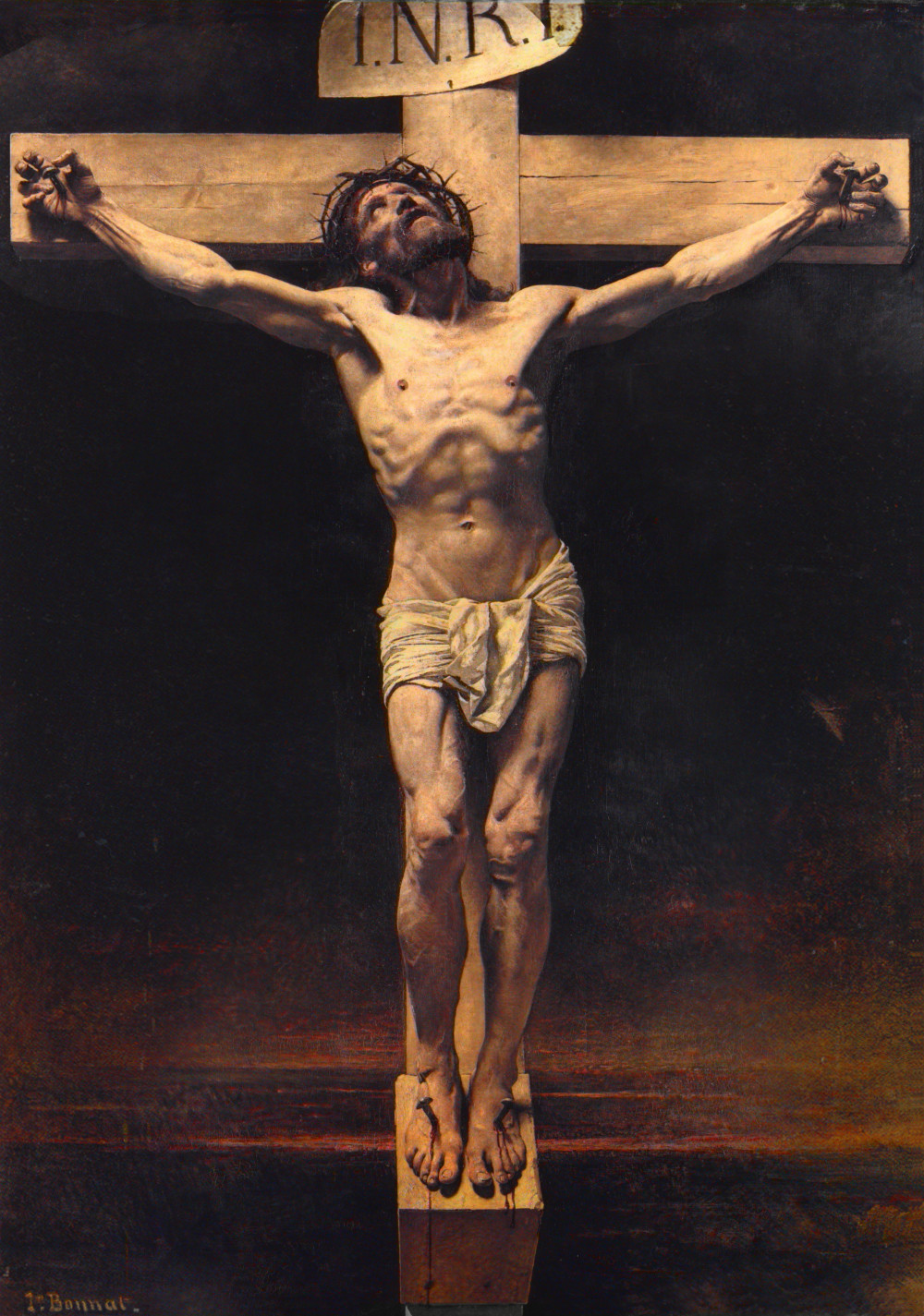
A Meditation for Good Friday: How To Undo the Effects of Sin?
Cardinal Newman, now Saint John Henry Newman, was a towering figure of nineteenth-century Catholicism who is almost universally admired. I say “almost” because not everyone likes him. I knew a priest once, Arthur Caulkins, who has become disenchanted with Newman. As an undergraduate Arthur had been enamoured of Newman, and this interest continued when he[…]Continue reading→
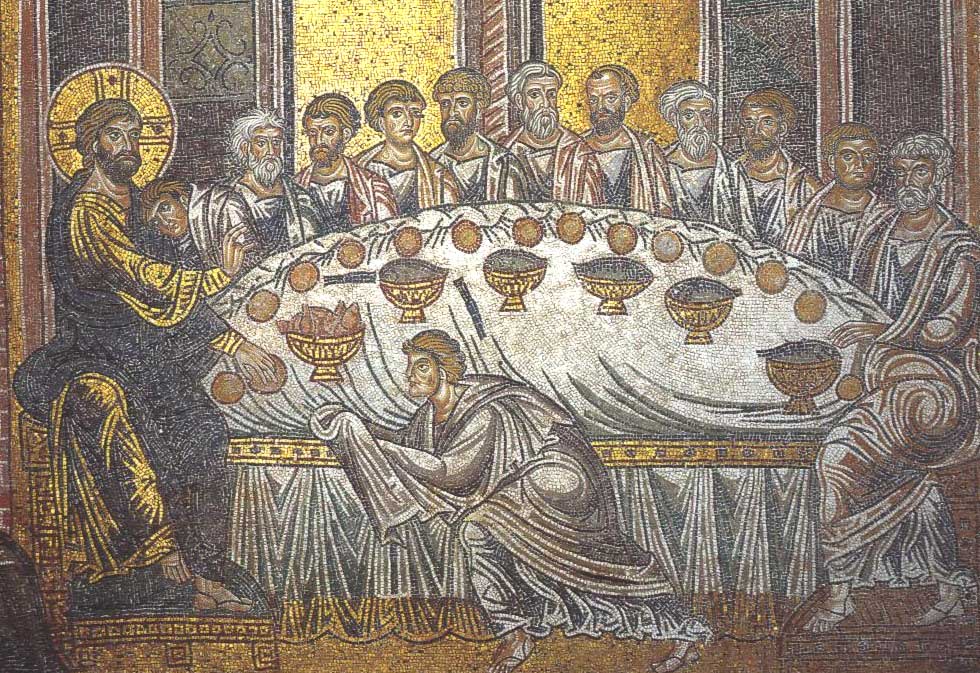
Pope Benedict’s Last Holy Thursday Homily
MASS OF THE LORD’S SUPPER HOMILY OF HIS HOLINESS BENEDICT XVI Basilica of St John Lateran Holy Thursday, 5 April 2012 Photo Gallery (Video) Dear Brothers and Sisters! Holy Thursday is not only the day of the institution of the Most Holy Eucharist, whose splendour bathes all else and in some ways draws it to[…]Continue reading→