
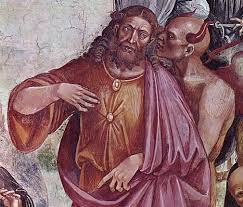
Sixteenth Sunday: Persevering in Faith in the Face of Evil
The one who sows the good seed is the Son of Man; the field is the world, and the good seed are the children of the kingdom (Mt. 13:37-38). ⧾
As we continue to listen to and reflect on the parables of Our Lord, we keep in the forefront of our minds our duty as disciples to dispose ourselves to learn from Our Saviour. Last Sunday, in our reflection on the parable of the sower we noted that God’s Word brings about an effect only when we are both hearers and doers of the Word. Our Lord spoke in parables to fulfill what had been spoken through the Prophet Isaiah: I will open my mouth to speak in parables; I will proclaim what has been hidden from the foundation of the world (Cf. Is. 78:2). The saving wisdom that Our Lord communicates cannot be grasped by those who refuse to listen
Though we have just heard a number of parables, the one that Our Lord explains, the parable of the sower provides us with what is needed generally speaking by everyone trying to make his or her way through life. The first is a worldview, an understanding of the world that informs how we look at the world. The field is the world. The second is an anthropology, an understanding of the human person. And the good seed are the children of the kingdom. Yet, the weeds are the children of the evil one, and the enemy who sowed them is the devil; the harvest is the end of the age, and the reapers are Angels (Mt. 13:38-39). Though He uses metaphors: field, seeds, weeds, the message is clear. God wills that we produce good fruits. Yet there is more. With these words Our Lord also addresses the question of evil. This is a universal question that all serious thinkers have grappled with and one that at some point or other each one of us also addresses as we struggle with the reality of evil which may touch us or those around us. Our tradition speaks of this as the mystery of iniquity (mysterium iniquitatis).
Those who grapple with evil in the world or more specifically, with evil in their own lives, will often pose this question: How could a loving God allow such evil to exist? Such a question could be described as Divine Providence and the existence of sin. When this question is personal, intimately so, the question is no longer theoretical but existential: How could God allow me to suffer like this? I did nothing to deserve this. Why me? These questions pose the connection between Divine Providence and the sins of other people who enter our lives and cause us great anguish and even agony. One cannot pose these questions, however, outside of a consideration of the reality of original sin.
It is impossible for us to exaggerate the importance of original sin in human history. The fall of our first parents occasioned the coming of God in human form to suffer and to die for the redemption of a sinful world. The sin of our first parents was the providential foundation for the Incarnation. God became man because man had sinned. Sin then, must have a most important place in the Providence of God. As Christians, we believe that when our first parents disobeyed God, they not only lost God’s friendship, but also the gift of integrity. And both losses they passed on to all their posterity, poor banished children of Eve.
When we come into the world we are deprived of sanctifying grace or friendship with God and we are deprived of the precious gift of the perfect control of our desires. Baptism restores sanctifying grace but it does not restore the gift of integrity. As a consequence, we all struggle with sinful tendencies. We are, sadly, naturally proud, lustful, greedy, impatient, envious and naturally slothful. We call these sinful tendencies, because they are not themselves sins, but because they come from sin; the sin of our first parents, and they may lead to sin. These are the weeds in our life that we need to eradicate, with the help of God’s grace. These sinful tendencies that are so embarrassingly part of our fallen human nature however, are also part of God’s Providence; for in our interior struggles, aided by the supernatural sanctifying grace of God, we become humble and gentle, generous and patient, pure of heart. Our struggles become blessed opportunities for growing in God’s merciful love. Yes, God wants us to benefit from the mysterious providential purpose He has in having allowed us to sin for where sin abounds grace abounds all the more (Rom. 5:20). Faith allows us to say that God has permitted us to offend Him so that we might be more generous in the future than, humanly speaking, we might have been had we not sinned. Those who have an extraordinary awareness of God’s goodness have a deep desire to love Him and grow in loving Him and to share this love with others. Our experiential knowledge of God’s mercy in our struggles enables us to comfort those who are in any affliction, with the comfort with which we ourselves are comforted by God (2 Cor. 1:4).
An enemy came and sowed weeds among the wheat, and then went away (Mt. 13:25). This could be said of other people’s sins that in some way touch our own lives. To a certain extent, sometimes very intimately, we suffer the effects of other people’s sins; and in some cases, tragically so. How, we ask, do these serve a divinely ordained purpose? People’s sins can touch our lives very painfully. They can scar, damage and even ruin a life. These are the most difficult manifestations of Divine Providence that faith urges us to use according to God’s divine plan. This is when we come face to face with the mystery of iniquity. What does God expect of us in these terribly difficult circumstances? He expects first that we pray. Never give up you prayer for any reason. The Spirit helps us in our weakness…that very
Spirit intercedes with sighs too deep for words…because the Spirit intercedes for the saints according to the will of God (Rom. 8:26-27).
Without the help of His grace it is impossible for us to accept and to use these most difficult manifestations of Divine Providence. It is truly a blind act of faith to believe that no one has ever done me any wrong without God’s mysterious, providential will. God does not want people to sin but He most assuredly wants me to be merciful whenever people sin against me and to remain steadfast in my faith. In moments of great suffering, unmerited suffering, our faith may seem to be weak, feeble; perhaps like a mustard seed, the smallest of all the seeds, but with the help of God’s grace and the example, consolation and encouragement that we give one another, this feeble faith of ours can become strong and great, a source of consolation and strength for others, especially in this time of trial.
The Catechism reminds us: Before Christ’s second coming the Church must pass through a final trial that will shake the faith of many believers. The persecution that accompanies her pilgrimage on earth will unveil the “mystery of iniquity” in the form of a religious deception offering men an apparent solution to their problems at the price of apostasy from the truth. The supreme religious deception is that of the Antichrist, a pseudo-messianism by which man glorifies himself in place of God and of his Messiah come in the flesh (575). As the spectre of persecution looms over us and the Church continues to undergo a great trial let us pray for the grace to persevere and by our prayer to win all souls over to the truth and charity of Christ Our Saviour. ⧾

Remembering Father Alphonse de Valk
(Today marks the sixth anniversary of the death of Father Alphonse de Valk, C.S.B., a faithful, courageous and indefatigable Basilian priest, pro-life-and-family apostle, and the founder of Catholic Insight magazine. Here is what we wrote those on his entering into eternity five years ago, as we continue to remember him in our prayers and thoughts)[…]Continue reading→

Divine Mercy Sunday – An Echo of Every Mass
Reach out your hand and put it in my side. Do not doubt but believe’… ‘My Lord and my God!’ (Jn. 20:18)). Today is Divine Mercy Sunday, and as we celebrate the end of the Easter Octave, we contemplate the wounded side of our Saviour, the Church’s source of life. On Good Friday in the[…]Continue reading→

Saint Stanislaus of Szczepanów
We celebrate Saint Stanislaus today (+ April 11, 1079), in light of this Easter Octave, a bishop and martyr who accepted the episcopacy only at the direct order of Pope Alexander II. He proved a wise and courageous leader of his flock, put to death by his own king, Boleslaus, for rebuking the monarch’s ‘immoral[…]Continue reading→
First Holy Communion: Sermon from May 16, 1943
Here is a sermon from the good old days by +Rev. Msgr. Vincent Nicholas Foy (August 14, 1915 – March 13, 2017), from 1943. Readers may recall that Pope Saint Pius X, by the decree Quam Singulari in 1910, lowered the customary age of reception of Holy Communion – after the rigours of the plague[…]Continue reading→
In the Glorious Light of Easter, Alleluia!
Set your minds on things that are above, not on things that are on earth, for you have died, and your life is hidden with Christ in God. When Christ who is your life is revealed, then you also will be revealed with him in glory (Col. 3:3-4). The Resurrection of Our Lord and Saviour[…]Continue reading→
An Ancient Homily for Holy Saturday
The time between Good Friday and Easter Sunday is one of waiting, in silence, as the world wonders – anticipates – what will happen, after the death of Christ. We re-live this time each year in the anamnesis of our liturgy, and in turn look forward to the glorious re-creation of all things at the[…]Continue reading→

Europe’s Long Descent
(As we meditate on this day on Christ’s burial, and His descent into hell, it is fitting to ponder here with contributor Peter Marcus how the world seems to be heading there as well. The difference is that, although God cannot ‘redeem’ hell, nor those therein, He can and did redeem the world. There is[…]Continue reading→
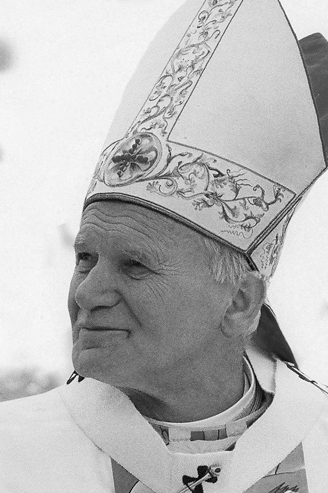
Pope Saint John Paul II’s First Good Friday Homily
ADDRESS OF HIS HOLINESS JOHN PAUL II AT THE CONCLUSION OF THE STATIONS OF THE CROSS AT THE COLOSSEUM Good Friday, 13 April 1979 When we make the Way of the Cross from one station to the next, in spirit we are always at the spot wherethis journey had its “historical” place: where it[…]Continue reading→
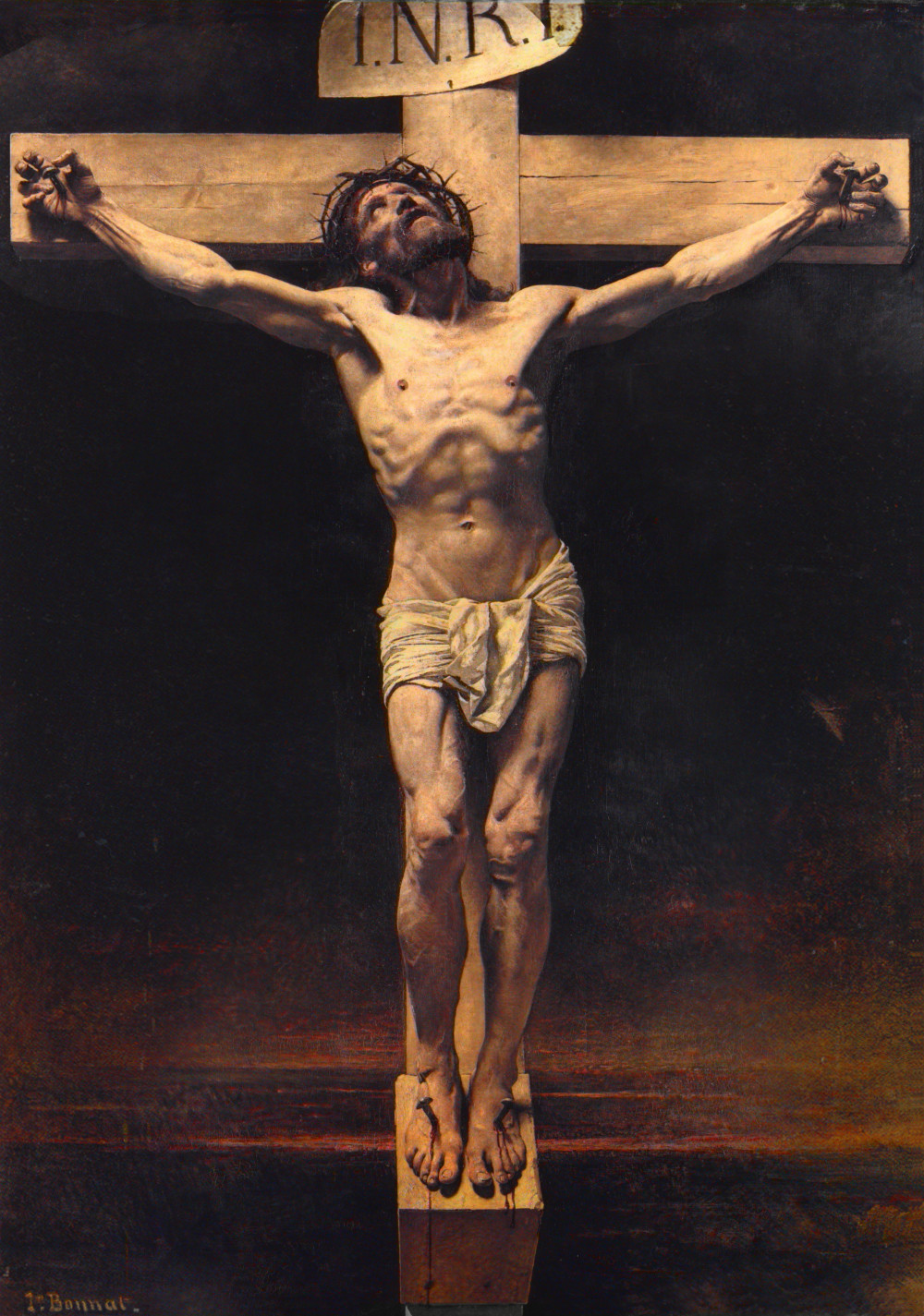
A Meditation for Good Friday: How To Undo the Effects of Sin?
Cardinal Newman, now Saint John Henry Newman, was a towering figure of nineteenth-century Catholicism who is almost universally admired. I say “almost” because not everyone likes him. I knew a priest once, Arthur Caulkins, who has become disenchanted with Newman. As an undergraduate Arthur had been enamoured of Newman, and this interest continued when he[…]Continue reading→
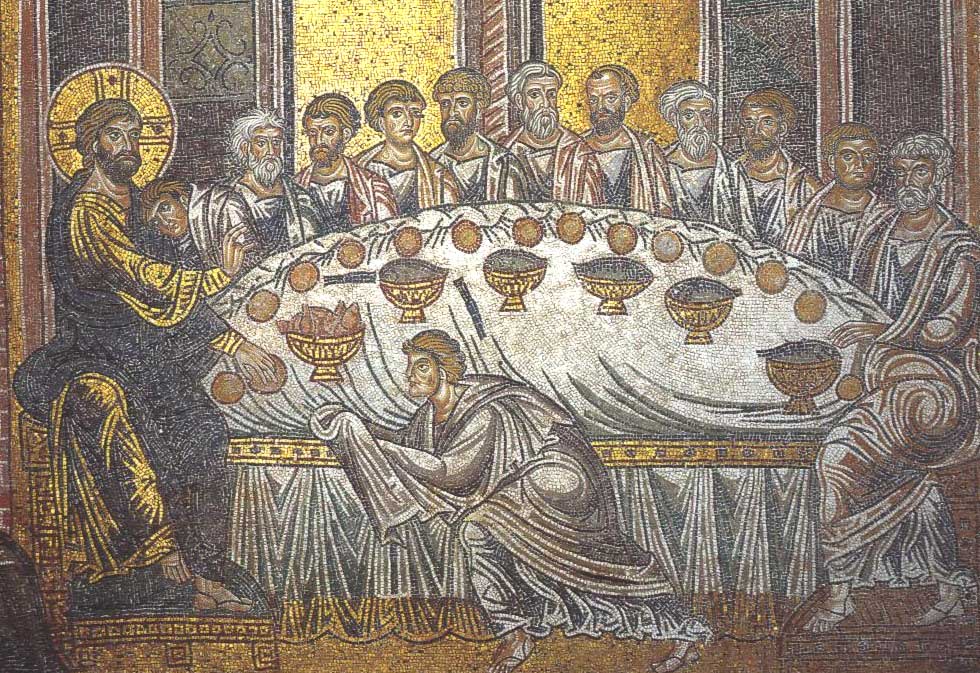
Pope Benedict’s Last Holy Thursday Homily
MASS OF THE LORD’S SUPPER HOMILY OF HIS HOLINESS BENEDICT XVI Basilica of St John Lateran Holy Thursday, 5 April 2012 Photo Gallery (Video) Dear Brothers and Sisters! Holy Thursday is not only the day of the institution of the Most Holy Eucharist, whose splendour bathes all else and in some ways draws it to[…]Continue reading→