
Fires of Faith: Catholic England under Mary Tudor
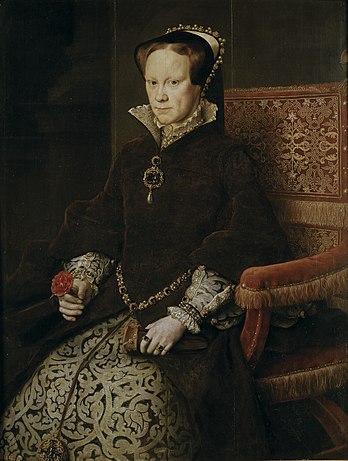
(Saint Thomas More was put to death on July 6th, even though we celebrate his feast on June 22nd, the day when his compatriot and contemporary, Saint John Fisher, had his head removed for his faith. Both Fisher and More represent a merrier and more moral England, the seeds of whose demise were sown by what we now know as the ‘Protestant Reformation’. A brief attempt to return to that Catholic England was attempted, all too briefly, by Mary Tudor, the daughter of Henry and Catherine of Aragon, who is tragically, and rather unfairly, known to history as ‘bloody Mary’, even though her half-sister, Elizabeth, a future persecutor of the Church, had far more blood on her hands. Father Callam reviews the matchless Eamon Duffy’s take on Mary’s brief reign, and we may wonder what might have been…)
Eamon Duffy, Fires of Faith: Catholic England under Mary Tudor (New Haven: Yale University Press, 2009)
“Elizabeth’s reign is ‘golden,’ Mary’s is ‘bloody,’ the Church of England is ‘pure and apostolical,’ . . . ‘Pope’ and ‘pagan’ go together.” Thus in 1851 did Cardinal Newman summarize anti-Catholic prejudice in England, which, as Eamon Duffy demonstrates in the opening chapter of his book, could be found as widely among academics as in the man in the street. In 1992, Duffy published a revolutionary reassessment of the English Reformation with his magisterial The Stripping of the Altars: Traditional Religion in England, 1400-1580. In it he challenged the common view that English Catholicism was so unpopular and corrupt in the early sixteenth-century that it collapsed under its own weight, to be replaced by a vigorous Protestantism, tentatively under Henry VIII (d. 1547) and then definitively under Elizabeth I (1558-1603). The attempted restoration of Catholicism championed by Mary Tudor (1554-58) and her cousin Cardinal Reginald Pole has therefore been interpreted as the last gasp of an outdated mediævalism. The burning at the stake of 284 heretics, including fifty-six women, proves, if proof is needed, that “bloody” is indeed the best epithet for Mary’s reign.
Of late this simplistic account has been called into question. In the Times Literary Supplement, the reviewer of Duffy’s Fires of Faith included three other books, all of which treat Queen Mary I (to use her proper title) with sympathy and respect.[1] The purpose of Duffy’s book is narrower than these biographies, namely, to examine the motives, the facts, and the effects of the burnings in the campaign to restore England to papal allegiance within European Catholicism. He doesn’t shy away from controversy: “The greatest barrier to a positive assessment of the Marian restoration, however, remains the fact of the burning of more than 280 protestant men and women, . . . [which] constitutes a horrifying moral blot on any regime purporting to be Christian.” His thesis, however, is twofold. Firstly, violent punishment for (treasonable) heresy was universal in the time and in fact continued unabated in the reign of “Good Queen Bess”: “In sixteenth-century terms, the burnings were inevitable.” Second, it was successful. Hard-line Evangelicals may have virtually insisted on being put to death for their convictions, but the declining number of executions, Duffy says, indicates a withering away of Protestant zeal except among the most fanatical. He is able to justify this novel conclusion by a judicious use of his sources, including John Foxe’s violently anti-Catholic and immensely influential account of the burnings, commonly known as Foxe’s Book of Martyrs, published under Elizabeth in 1563.
These gruesome executions would excite sympathy in some, at least, of the onlookers. Under the direction of Cardinal Pole, however, the opportunity to explain at the very site of the burning the rationale of the persecution of Protestants was made full use of. One preacher, for example, chose as his text Saint Paul’s famous dictum, “If I give my body to be burned and have not charity, it profits me nothing.” Publishing, despite the well-nigh universal opinion to the contrary, was a prominent feature of the Marian years. Not only were homilies and apologetic manuals provided for parish priests, but also a massive effort was made to provide service books for the 10,000 parishes of the nation, which had been stripped—“bulldozed” is Duffy’s term—of decoration, missals, plate, and even of vestments during the reign of Henry’s young son, Edward VI (1547-1553).
That Fires of Faith is an expanded version of the Birbeck Lectures in Ecclesiastical History, which Duffy delivered at Cambridge in 2007-2008, accounts for their focussing on specific aspects of the period. There is nothing about Queen Mary herself, for example, or about her unpopular marriage to Philip II of Spain. At centre stage is the often-misunderstood figure of Cardinal Pole,[2] seen as the architect of the Catholic restoration, with, of course, the full support and collaboration of the Queen. Under his leadership, the English Church, far from being obsessed with re-establishing the Middle Ages, functioned as a laboratory for the Catholic Counter-Reformation. Seminaries were to be an all-important feature of the post-Tridentine Church; the first had already been established in England by the Cardinal. Opportunities for preaching, Duffy stresses, were likewise fully exploited. Most striking were the huge crowds—“well into five figures”—that assembled to hear the sermons at Paul’s Cross, London, but the greater effect would have come from the carefully orchestrated preaching in parish churches across the nation. The restored Catholic hierarchy was also one of Pole’s great achievements. Only one of the Marian bishops, the ecclesiastical weathervane Anthony Kitchin of Llandaff, Wales, continued under Elizabeth—as he had under Henry, Edward, and Mary! Their fidelity to Catholicism stands in sharp contrast to the wholesale surrender of the episcopate to Henry’s demands, Saint John Fisher alone excepted.
Accurate assessment of the extent and effectiveness of the restoration has been hampered a neglect of its books and pamphlets as well as by the assumption that they must have been second rate. Duffy puts things right. But it is his treatment of Cardinal Pole that reveals a fascinating historical personage, whose career exhibits the international character of European Catholicism. Pole spent years in Rome, coming at one time within a single vote of being elected pope. His opening address to the Council of Trent (1545), referred to by Duffy as “magnificent,” demonstrates by the very fact as well as by its contents the respect Pole had gained by his abilities and the position that English Catholics could attain on the continent. That Cardinal Pole and Queen Mary died the same day, 17 November 1558, doomed their great project. One of the great what-ifs of history is surely, “What would have happened if they had both lived another twenty years?”a
[1] Judith M. Richards, Mary Tudor (London: Routledge, 2009); Anna Whitelock, Mary Tudor: England’s First Queen (London: Bloomsbury, 2009); Linda Porter, Mary Tudor, the First Queen (London: Pinktus, 2009).
[2] . . . as in Hilary Mantel’s The Mirror and the Light (London: HarperCollins, 2020).

Saint Kateri , Canada’s Protectress
This was the title given to Saint Kateri Tekakwitha, by Pope Benedict XVI, when he canonized her on October 28th, 2012, along with six others, in Saint Peter’ Square (she had been beatified by Pope John Paul II back in 1980). With Saint Joseph as our protector, along with the Canadian martyrs, we seem to[…]Continue reading→

Remembering Father Alphonse de Valk
(Today marks the sixth anniversary of the death of Father Alphonse de Valk, C.S.B., a faithful, courageous and indefatigable Basilian priest, pro-life-and-family apostle, and the founder of Catholic Insight magazine. Here is what we wrote those on his entering into eternity five years ago, as we continue to remember him in our prayers and thoughts)[…]Continue reading→

My Name is Bernadette
April 16th is a propitious day, for besides the anniversary of Father de Valk’s death, who founded Catholic Insight in its print form decades ago, and the commemoration of the ‘two Benedicts’, mentioned in accompanying posts, today we also recall Saint Bernadette Soubirous, the young visionary to whom the Virgin Mary appeared numerous times at[…]Continue reading→

Canonizing Sister Faustina and Divine Mercy
HOMILY OF THE HOLY FATHER MASS IN ST PETER’S SQUARE FOR THE CANONIZATION OF SR MARY FAUSTINA KOWALSKA Sunday, 30 April 2000 1. “Confitemini Domino quoniam bonus, quoniam in saeculum misericordia eius”; “Give thanks to the Lord for he is good; his steadfast love endures for ever” (Ps 118: 1). So the Church sings on the Octave of[…]Continue reading→

Divine Mercy Sunday – An Echo of Every Mass
Reach out your hand and put it in my side. Do not doubt but believe’… ‘My Lord and my God!’ (Jn. 20:18)). Today is Divine Mercy Sunday, and as we celebrate the end of the Easter Octave, we contemplate the wounded side of our Saviour, the Church’s source of life. On Good Friday in the[…]Continue reading→
First Holy Communion: Sermon from May 16, 1943
Here is a sermon from the good old days by +Rev. Msgr. Vincent Nicholas Foy (August 14, 1915 – March 13, 2017), from 1943. Readers may recall that Pope Saint Pius X, by the decree Quam Singulari in 1910, lowered the customary age of reception of Holy Communion – after the rigours of the plague[…]Continue reading→
In the Glorious Light of Easter, Alleluia!
Set your minds on things that are above, not on things that are on earth, for you have died, and your life is hidden with Christ in God. When Christ who is your life is revealed, then you also will be revealed with him in glory (Col. 3:3-4). The Resurrection of Our Lord and Saviour[…]Continue reading→
An Ancient Homily for Holy Saturday
The time between Good Friday and Easter Sunday is one of waiting, in silence, as the world wonders – anticipates – what will happen, after the death of Christ. We re-live this time each year in the anamnesis of our liturgy, and in turn look forward to the glorious re-creation of all things at the[…]Continue reading→
Europe’s Long Descent
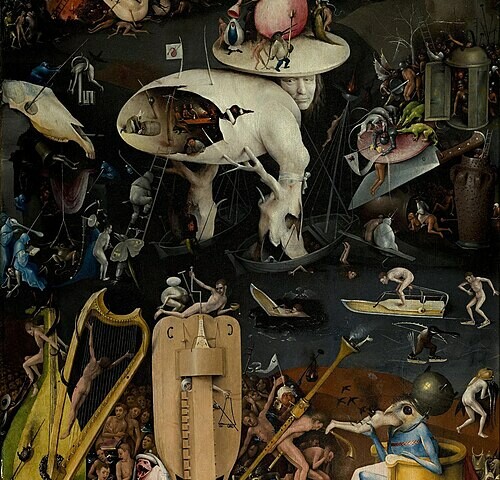
(As we meditate on this day on Christ’s burial, and His descent into hell, it is fitting to ponder here with contributor Peter Marcus how the world seems to be heading there as well. The difference is that, although God cannot ‘redeem’ hell, nor those therein, He can and did redeem the world. There is[…]Continue reading→
Pope Saint John Paul II’s First Good Friday Homily
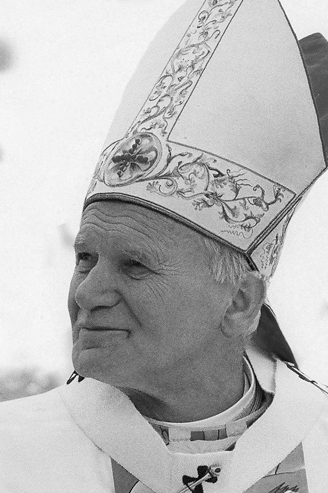
ADDRESS OF HIS HOLINESS JOHN PAUL II AT THE CONCLUSION OF THE STATIONS OF THE CROSS AT THE COLOSSEUM Good Friday, 13 April 1979 When we make the Way of the Cross from one station to the next, in spirit we are always at the spot wherethis journey had its “historical” place: where it[…]Continue reading→