
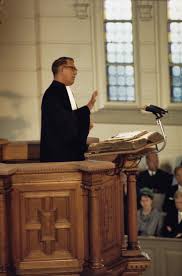
Callam’s Law
Murphy, whoever he was, has gained immortality of a sort by enunciating a law which, if not absolutely universal, is close enough to experience to be universally quoted: “If anything can go wrong, it will.” Similarly, the Peter Principle captures an aspect of contemporary society that most of us recognize: “Everyone rises to his level of incompetence.” Today I intend to make my bid for fame by means of Callam’s Law, which goes like this: “Preachers always address the wrong congregation.”
The truth of this law can be demonstrated by calling to mind the topics that are the staples of preachers today and then contrasting that list with sermons preached, say, a hundred and twenty years ago, in 1900. Contemporary preaching, if my experience is representative, is usually centred on the biblical readings used at Mass. More abundant and varied now than they were a century ago, these texts invite comment and exposition, and a few preachers seem able to resist the circuit from one to the other. When the congregation hears, “And in the Gospel . . . ,” it knows that Father has rounded third and is heading for home. But it is what the priest derives from Scripture that reveals what are our contemporary concerns. The homilist will often draw from a scholarly commentary on the texts, for we all want the expert opinion, even if only at second hand. Vibrant preachers, who follow politics and have a social conscience, will make their listeners aware of the needs for social justice in society and in the world. The victims of war, of economic exploitation, of racism and sexism will be brought vividly before the mind’s eye. At the great feasts—Christmas and Easter—the emphasis will be on the presence of a loving God among his people in the Eucharistic banquet that the whole community confects. At funerals, again, the people will be invited to deepen their relationship with a loving God as they rejoice in the fulfilment of the promise of salvation in one of Christ’s members.
Callam’s Law states that these beautiful and encouraging sentiments would have been much more helpful to the Catholics of 1900 than 2020. What they actually heard from the pulpit back then stressed a holy fear of God and his inescapable judgments. It was a society that glorified the rapacious “self-made man” for his use—and abuse—of others and that was chauvinistic, in both the literal and the current sense of the term. How greatly people would have benefitted from hearing the consoling message of our version of the Gospel: about an accepting and understanding God who loves the poor and disadvantaged. How wonderful it would have been if our great-grandparents could have experienced the rich banquet of Scripture that the lectionary spreads before us, and if they could have been encouraged to approach the Holy Eucharist in frequent—even weekly—communion as we do today without even thinking about it.
These were the messages they needed to hear instead of what was actually preached. And what was that? Not surprisingly, it was the very things they already knew and practised. At a time when there was a tremendous reverence for the Blessed Sacrament, they were exhorted to exhibit even more; when everyone knew his catechism, there were expositions of the sacraments and the creed; when the saints were much honoured, their glories were endlessly retailed; when all practising Catholics went to confession often, there were explanations of indulgences and exhortations to frequent reception of the sacrament of penance; when everyone feared the pains of hell, fire and brimstone poured from the pulpits. In other words, Catholics were told about the things that everyone accepted. Preachers merely restated the obvious.
But Callam’s Law goes further than that simple fact. For to claim that preachers always address the wrong congregation is to imply that there is another one that could profit from hearing what those misplaced apostles of long ago had to say. What congregation, I wonder, would constitute the right audiences for the sermons of 1900? Could it be that we would benefit from hearing them? I think so, for those sermons contain Catholic truth, a truth that we pass over as we follow the trends that are popular in religion today. (For there is fashion in religion just as there is in clothing or entertainment.) And what are the elements of Catholicism that we bypass nowadays? They are, I would say, precisely those that loomed large in 1900 When was the last time you heard anything from the pulpit about the creed, for instance, or about purgatory, much less hell? About saints or about the Real Presence? Our practical ignorance of the fearsome and salutary doctrines of our faith has left us only partially evangelized. Furthermore, while the Church must honour what is good in a society—such as the unquenchable demand for social justice in ours—it also must go beyond or even against some aspects of whatever society it finds itself in, whether it’s 1900 or 2020.

Saint Kateri , Canada’s Protectress
This was the title given to Saint Kateri Tekakwitha, by Pope Benedict XVI, when he canonized her on October 28th, 2012, along with six others, in Saint Peter’ Square (she had been beatified by Pope John Paul II back in 1980). With Saint Joseph as our protector, along with the Canadian martyrs, we seem to[…]Continue reading→

Remembering Father Alphonse de Valk
(Today marks the sixth anniversary of the death of Father Alphonse de Valk, C.S.B., a faithful, courageous and indefatigable Basilian priest, pro-life-and-family apostle, and the founder of Catholic Insight magazine. Here is what we wrote those on his entering into eternity five years ago, as we continue to remember him in our prayers and thoughts)[…]Continue reading→

My Name is Bernadette
April 16th is a propitious day, for besides the anniversary of Father de Valk’s death, who founded Catholic Insight in its print form decades ago, and the commemoration of the ‘two Benedicts’, mentioned in accompanying posts, today we also recall Saint Bernadette Soubirous, the young visionary to whom the Virgin Mary appeared numerous times at[…]Continue reading→
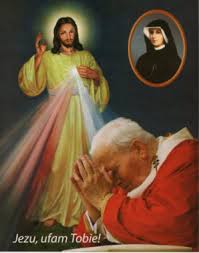
Canonizing Sister Faustina and Divine Mercy
HOMILY OF THE HOLY FATHER MASS IN ST PETER’S SQUARE FOR THE CANONIZATION OF SR MARY FAUSTINA KOWALSKA Sunday, 30 April 2000 1. “Confitemini Domino quoniam bonus, quoniam in saeculum misericordia eius”; “Give thanks to the Lord for he is good; his steadfast love endures for ever” (Ps 118: 1). So the Church sings on the Octave of[…]Continue reading→

Divine Mercy Sunday – An Echo of Every Mass
Reach out your hand and put it in my side. Do not doubt but believe’… ‘My Lord and my God!’ (Jn. 20:18)). Today is Divine Mercy Sunday, and as we celebrate the end of the Easter Octave, we contemplate the wounded side of our Saviour, the Church’s source of life. On Good Friday in the[…]Continue reading→
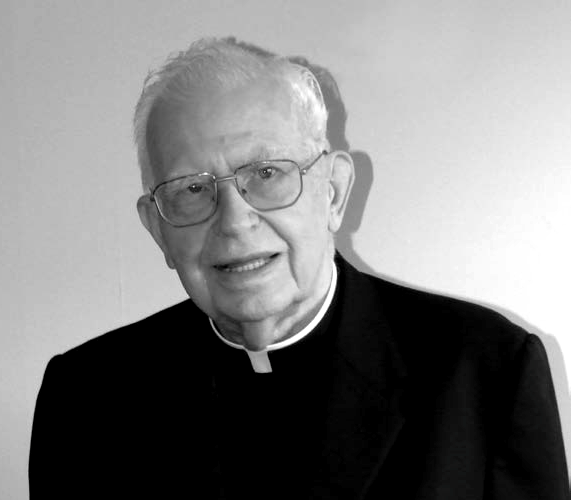
First Holy Communion: Sermon from May 16, 1943
Here is a sermon from the good old days by +Rev. Msgr. Vincent Nicholas Foy (August 14, 1915 – March 13, 2017), from 1943. Readers may recall that Pope Saint Pius X, by the decree Quam Singulari in 1910, lowered the customary age of reception of Holy Communion – after the rigours of the plague[…]Continue reading→
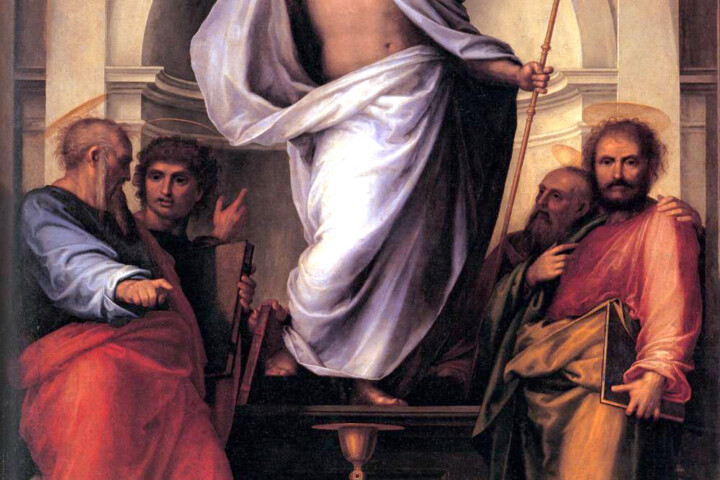
In the Glorious Light of Easter, Alleluia!
Set your minds on things that are above, not on things that are on earth, for you have died, and your life is hidden with Christ in God. When Christ who is your life is revealed, then you also will be revealed with him in glory (Col. 3:3-4). The Resurrection of Our Lord and Saviour[…]Continue reading→
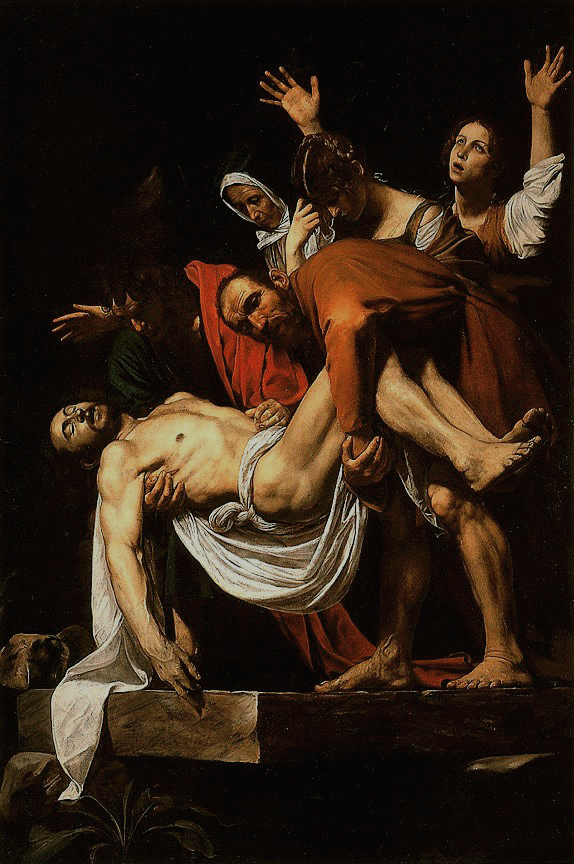
An Ancient Homily for Holy Saturday
The time between Good Friday and Easter Sunday is one of waiting, in silence, as the world wonders – anticipates – what will happen, after the death of Christ. We re-live this time each year in the anamnesis of our liturgy, and in turn look forward to the glorious re-creation of all things at the[…]Continue reading→
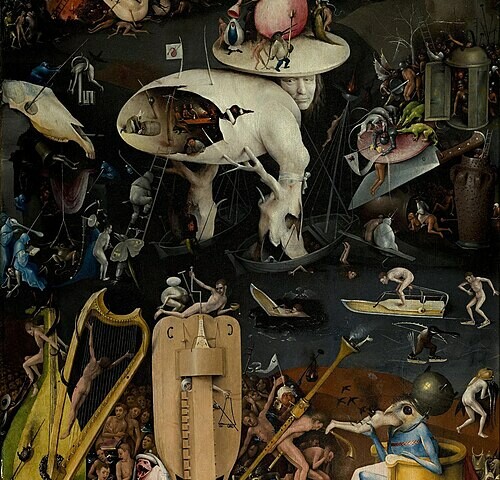
Europe’s Long Descent
(As we meditate on this day on Christ’s burial, and His descent into hell, it is fitting to ponder here with contributor Peter Marcus how the world seems to be heading there as well. The difference is that, although God cannot ‘redeem’ hell, nor those therein, He can and did redeem the world. There is[…]Continue reading→
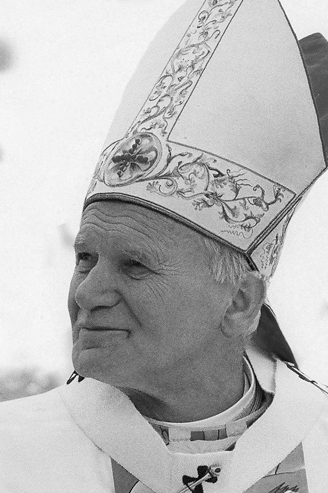
Pope Saint John Paul II’s First Good Friday Homily
ADDRESS OF HIS HOLINESS JOHN PAUL II AT THE CONCLUSION OF THE STATIONS OF THE CROSS AT THE COLOSSEUM Good Friday, 13 April 1979 When we make the Way of the Cross from one station to the next, in spirit we are always at the spot wherethis journey had its “historical” place: where it[…]Continue reading→