
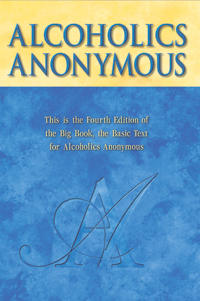
A.A., Catholics and Temperance
This is the 85th anniversary of the founding of Alcoholics Anonymous, back in 1935 by Bill Wilson, a WW I veteran and stockbroker, and Dr. Robert Smith, a retired surgeon.
They developed their 12-step program in the ‘Big Book’, with a religious and theistic basis, five of the steps mentioning ‘God’ (hence, the difficulty of the program for atheists). Their doctrine is simple: The only way out of alcohol addiction is total and unremitting abstinence, admitting that one is ‘powerless’ over one’s addiction, relying upon a ‘higher power’, to see one through the rest of one’s life, sober.
However many people A.A. has helped – and it seems to have helped many – there are some skeptics. As this article from the Atlantic points out, it is nearly impossible to empirically verify the success rate of A.A., as they keep no records, their members are unknown (anonymity being an essential feature), and almost all of what evidence there is, is anecdotal.
So, is A.A. the only answer to problem drinkers, and what is a problem drinker, anyway?
Like most things, we should approach this question through the eyes of faith: I am all for reliance on a ‘higher power’, and think that without God we are doomed to a quasi-Pelagian crash and burn. Yet we should also avoid a kind of Calvinistic despair of our own free-will, and that we are not ‘doomed’ to anything, be it heaven or hell, in this life, or the next.
Hence, we should rely upon ourselves, along with a little help from our friends, and that we are never truly ‘powerless’. The human will is a powerful thing, and, as the saying goes, God helps those who help themselves, or, more scholastically, grace builds on nature. People in A.A. know this to be true, that they must exercise their will-power, especially at the beginning, and that the cravings – or at least the desires – may never completely go away, and may at times return with a vengeance, which is why they have 24-7 mentors to call, anytime, anyplace.
Whatever one decides, it would also be good to ask themselves why people are giving up alcohol: Like vegetarianism, going meatless may be a good thing for some – many religious orders have done so as part of their rule – but we should not extend this to think eating meat is intrinsically evil. The same with wine, a gift of God to cheer men’s hearts. Alcohol is not evil, and I find it tragic that many of us misuse this wonderful gift – and who of us has not, at some point or other? – but that does not mean the gift itself is bad.
The same could be said of other groups that follow A.A.’s pattern, now with gamblers, overeaters and sexaholics anonymous… They all differ from A.A. in quite fundamental ways, each addiction a different thing, even if they use more or less the same 12-step program.
As the aforementioned article suggests, and as modern psychiatry has it in the DSM-V, one’s dependence upon alcohol is not an either/or – either you have complete control, or you have no control – but rather falls upon a spectrum. For some, alcohol is ruining their lives, and for these, A.A. may well be a viable path. Catholics should treat with caution the more evangelical and Calvinistic strains within its principles – not least, that diminishing of free-will – but use what good there is, as well as immersing oneself in the Church’s sacraments and the grace they offer.
For those who fall lower on the ‘misuse’ spectrum, and who still have the potential to scale things back, perhaps a better and more felicitous treatment would be to have them learn moderation, to re-temper their use – or, better, enjoyment – of alcohol, as we must learn for any pleasures in this wonderful world God has given us, and to treat and heal the underlying problems that prompted them to drink, or do anything else, intemperately and harmfully to themselves and others – to delve into and strive to heal their self-esteem issues, anxiety, trauma, depression. For these will still be there, regardless of whether one is completely sober or not, especially the brittle white-knuckle version of sobriety. Cold turkey may be one way, and for some necessary, but ‘tis not the only way. Aristotle taught us all those years ago, virtue resides in a ‘mean’ between two extremes, the way we might best live joyfully amidst the good things of this good earth.
At least, it’s food, and drink, for thought.
Carney’s Amoral Majority
After five defections – euphemistically described as ‘crossing the floor’ – and three by-elections, Mark Carney and his Liberals how have their coveted majority. One wonders what bowls of pottage were offered in back-room deals. In the archaic monarchical system that is the Dominion of Canada, this majority allows the newly-minted Prime Minister to rule[…]Continue reading→
A Closed, Unsustainable, Descending Loop
As a follow-up to my thoughts on Payette’s payout, here be a stark image of where are here in Canada. As the graph shows in, well, graphic terms, since 2025, the public sector has contributed to 95.5% of economic growth. The private sector – which funds the public sector, or is supposed to – has[…]Continue reading→

Remembering Father Alphonse de Valk
(Today marks the sixth anniversary of the death of Father Alphonse de Valk, C.S.B., a faithful, courageous and indefatigable Basilian priest, pro-life-and-family apostle, and the founder of Catholic Insight magazine. Here is what we wrote those on his entering into eternity five years ago, as we continue to remember him in our prayers and thoughts)[…]Continue reading→
A Tale of Two Benedicts
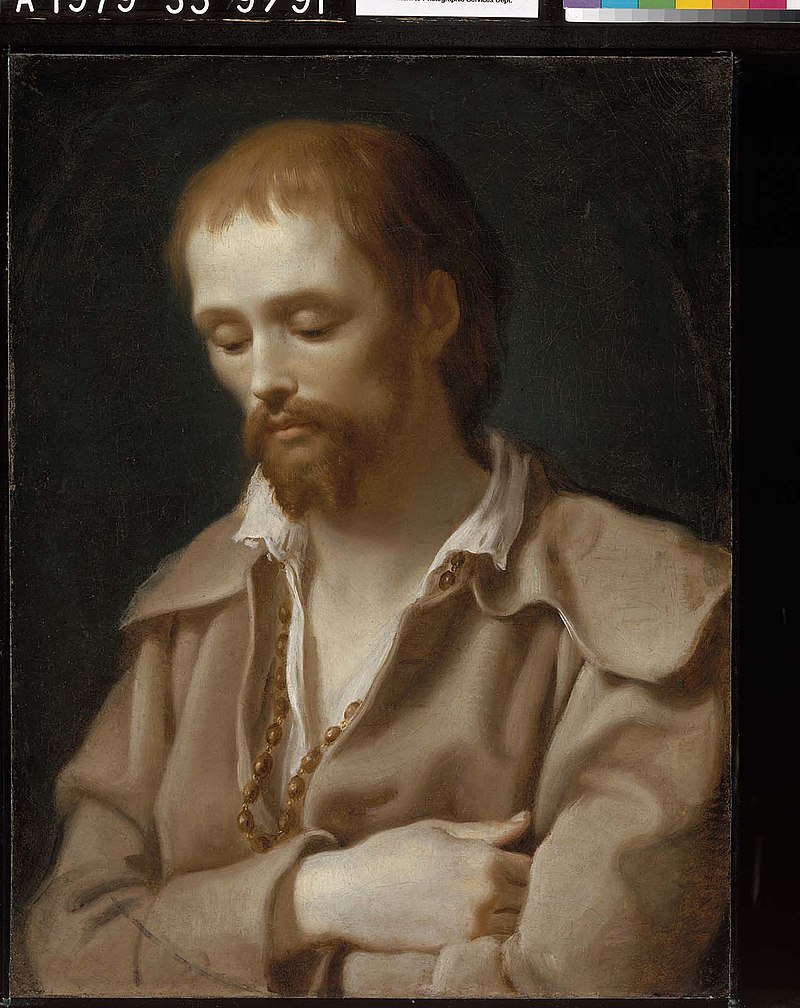
A grace-filled Holy Week to all our readers! As we await and prepare for the Resurrection about to dawn upon us, we might keep in mind two Benedicts: Pope Emeritus Benedict XVI, requiescat in pace, elected on this day in 2005; and today’s commemoration of the mystic pilgrim, Benedict Joseph Labre, who died on this[…]Continue reading→
Presidential Pardon of Weronika Krawczyk
As a good news, follow-up to our story from Poland, of the persecution of Weronika Krawczyk for her pro-life views, we heard that she has been granted a presidential pardon. One might still wonder why one needs a presidential pardon for simply holding the long-held belief that the child within the womb is a child,[…]Continue reading→
Saint Lydwina of Schiedam and Suffering Joyfully
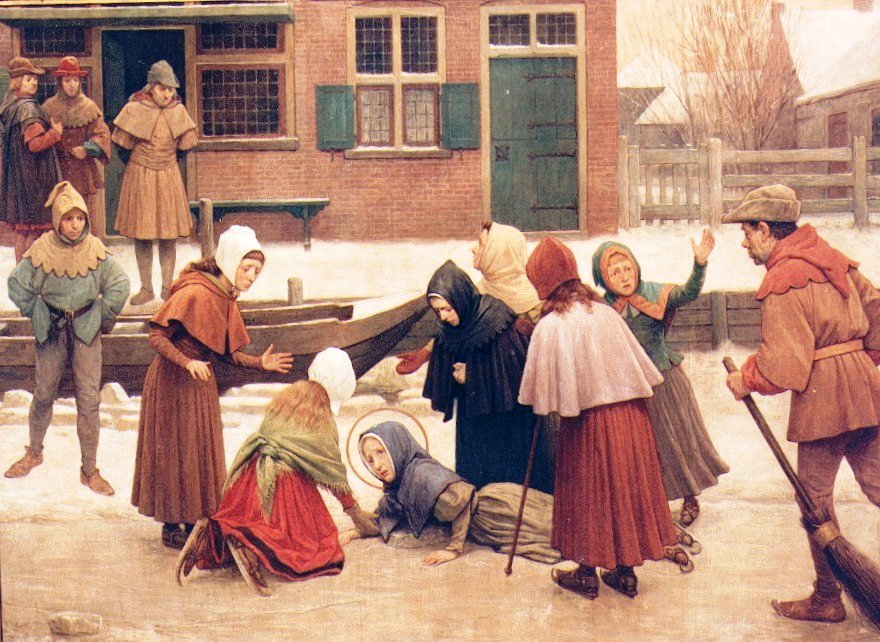
Saint Lydwina of Schiedam (1380 – 1433) was one of the countless and glorious ‘victim souls’ in the history of the Church, those whose lives are filled with suffering, often of an unimaginable intensity, but who suffer joyfully. She was a fifteen-year old Dutch girl, out skating one day, when she fell and broke one[…]Continue reading→
The Glorious Martyrdoms of Martin and Maximus
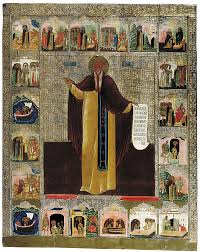
As we enter into Eastertide, we recall on this 13th of April Pope Saint Martin I (+655), one of the noblest, if most tragic, of the successors of Saint Peter. Born in Umbria, Italy, he was of noble lineage, with great intelligence combined with charity and love of the poor and the Church. While still[…]Continue reading→
Pope Leo and a Rosary for Peace
Pope Leo XIV has asked Catholics across the world to join him in a Rosary for peace today, at 18:00 Rome time (6 pm), which would be noon from where I write (EST). If you are able, whether at that time or another, and in whatever way you pray, to join in intercession with the[…]Continue reading→
Payette’s Payout
I was glancing through some headlines, and noticed a mention of Julie Payette – engineer and astronaut and sometime the Queen’s representative in Canada – which brought back vague memories. She was appointed Governor-General by Justin Trudeau in 2017. Ms. Payette resigned in 2021, amidst claims that she created a ‘toxic work environment’, with allegations[…]Continue reading→

Saint Stanislaus of Szczepanów
We celebrate Saint Stanislaus today (+ April 11, 1079), in light of this Easter Octave, a bishop and martyr who accepted the episcopacy only at the direct order of Pope Alexander II. He proved a wise and courageous leader of his flock, put to death by his own king, Boleslaus, for rebuking the monarch’s ‘immoral[…]Continue reading→