
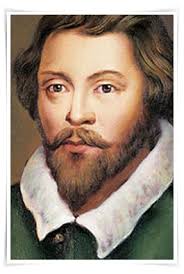
Word Painting in William Byrd’s Vigilate and Ave Verum Corpus
Few composers have lived and nonetheless thrived in such a turbulent era as William Byrd. Born sometime between 1539 and 1543, Byrd grew up in newly Protestant England, Henry VIII having passed the Act of Supremacy in 1534, which completed the separation of the English Church (later becoming known as Anglicanism) from the Roman Catholic Church. By the time Byrd died in 1623, there had been five reigning monarchs. Of these, only one—Mary I—was Catholic, and in Byrd’s lifetime hundreds, perhaps even thousands, of Catholics were martyred for their faith.
Roughly 300 of these martyrs are remembered by name in the Catholic Church, of whom Byrd knew some personally. St. Robert Southwell – priest, poet and martyr – after his training and ordination on the continent, spent some of his first time back in England at Hurleyford House, where his is recorded as having met William Byrd.[i] The composer was certainly familiar with the Jesuit martyrs. Byrd set the poem, “Why Do I Use My Paper, Ink, and Pen?” to music in his collection of 1588, titled Psalmes, Sonets, and Songs. This is no ordinary poem, however, for it was most likely written by St. Henry Walpole, who converted to Catholicism after witnessing the martyrdom of St. Edmund Campion. Walpole quickly left England to become a Jesuit, and only days after returning as a priest, he was captured, and himself martyred in 1595, some fourteen years after Campion.[ii]
While it is not clear if Byrd was raised a Catholic, in the 1580s, he and his wife began to appear on the list of recusants (from Latin recusare, “to refuse”), that is, people who did not attend the mandatory services of the Church of England.[iii] It remains an astonishing balancing act that Byrd was able to continue as a faithful Catholic during the this period in which he worked in the Chapel Royal of Queen Elizabeth I, while priests, monks and the laity alike were killed for their faith. It is during this decade, one that first saw St. Edmund Campion martyred (d. 1581), and the execution of Mary Queen of Scots, that Byrd began to focus more heavily on the composition of Latin motets. This is one of the oldest genres of sacred music, having a secondary place only to Gregorian chant. Many of Byrd’s motets from this period set texts from the penitential psalms, using the different captivities of the Israelites as an allegory for the suffering of English Catholics.
Word painting is a technique in which the composer uses different elements of music to evoke the imagery exhibited in the text of the work. Vigilate, from an 1589 publication of motets, has numerous examples of word painting. Byrd sets, in Latin, Christ’s words from Mark 13: 35-37: “Watch ye therefore, (for you know not when the lord of the house cometh: at even, or at midnight, or at the cockcrowing, or in the morning,) Lest coming on a sudden, he find you sleeping. And what I say to you, I say to all: Watch.” (Douay-Rheims) Unlike many of Byrd’s more serene motets, this work is at times frenetic. The opening section, with its incessant repetition of “vigilate,” is the composer calling out to his fellow Englishmen to be vigilant, to be watchful, for the Lord could return in His Second Coming at any time. This watchful atmosphere continues, until it is interrupted by the basses with the almost triumphant phrase, “an gallicantu,” referring to the cock crowing, which could signal the coming of Christ. The piece continues to become more intense, approaching the height of the work’s tension on the word, “repente,” meaning “suddenly.” Byrd cleverly composes a tight layering effect in three voices, in which the voices nearly trip over each other in this passage, in an effort to convey the urgency in which England must return to Catholicism. Byrd then repeats a previous section of text, “ne cum venerit,” (“lest coming”), in the midst of a frenzied singing of “repente.” This dizzying array of contrapuntal skill contributes to a feeling of imperativeness. The motet ends with another iteration of “vigilate,” calling once again for his countrymen to be watchful for the coming of the Lord. Byrd possibly—perhaps even likely—believed that Christ would return within his lifetime, or at least soon, to restore the Catholic Church in England. Vigilate illustrates the composer’s own faith while calling those around him to return to Catholicism.
While not as elaborate as Vigilate, another motet that exhibits word painting is the more well-known Ave Verum Corpus. It comes from the 1605 Gradualia, in which Byrd aimed to write motets based on all of the Propers of the Mass. This motet is for the Feast of Corpus Christi. In the first phrase, setting a 14th century text. Byrd uses a false relation several times in this piece. Also known as a cross relation, this unique kind of dissonance was a favourite of the English Renaissance composers long after its use had died out on this continent. In its simplest form, a false relation involves two notes, a semitone a part (the distance between a white key and the adjacent black key on a piano), but having the same letter name. Between the words “ave” (“hail”) and “verum” (“true”), Byrd has the F-sharp of the first chord in the second measure (a D-major triad in the context of the G minor modality) become an F-natural (of an F-major triad) in the second chord of the second measure. This occurs on the first syllable of verum, which draws attention to “true” in “hail true body,” highlighting the Catholic belief of the Real Presence of Christ in the Eucharist. Later in the work, Byrd uses a more striking false relation. On the word miserere (“have mercy”), the composer has the tenors and basses rub against each other, with the pitches of F-sharp and F-natural, which emphasizes our need for the Lord’s mercy. Byrd uses this dissonant device several times on miserere, depicting in the music the suffering of Christ’s body, asking for God to have mercy on us.
William Byrd’s masterful motets, written in a time of religious turmoil and political upheaval, stand as timeless examples of sacred choral music. Unlike so many of his friends and fellow Catholics, Byrd died comfortably at home in his early eighties. In 1622, he wrote a prayer in his will, “that I may live and die a true and perfect member” of the “holy Catholic Church, without which I believe there is no salvation for me.”[iv] Byrd’s motets are imbued with his deep faith, and a sense of reaching toward the transcendent heights of God Himself.
Endnotes
[i] Mann, Stephanie A. “The Fascinating Mr. Byrd.” Catholic Exchange, April 10, 2012. https://catholicexchange.com/the-fascinating-mr-byrd.
[ii] Mann, Stephanie A. “The Blood of One Martyr Inspires Another.” National Catholic Register, December 9, 2016. https://www.ncregister.com/blog/stephaniemann/the-blood-of-one-martyr-inspires-another.
[iii] Trendell, David. “Aspects of William Byrd’s Musical Recusancy.” The Musical Times 148, no. 1900 (2007): 27-50. Accessed May 10, 2020. doi:10.2307/25434476.
[iv] Sullivan, Roseanne T. “William Byrd’s Secret Catholic Masterpieces.” Catholic Education Resource Center, November 19, 2013. https://www.catholiceducation.org/en/culture/music/william-byrd-s-secret-catholic-masterpieces.html.

Remembering Father Alphonse de Valk
(Today marks the sixth anniversary of the death of Father Alphonse de Valk, C.S.B., a faithful, courageous and indefatigable Basilian priest, pro-life-and-family apostle, and the founder of Catholic Insight magazine. Here is what we wrote those on his entering into eternity five years ago, as we continue to remember him in our prayers and thoughts)[…]Continue reading→

Divine Mercy Sunday – An Echo of Every Mass
Reach out your hand and put it in my side. Do not doubt but believe’… ‘My Lord and my God!’ (Jn. 20:18)). Today is Divine Mercy Sunday, and as we celebrate the end of the Easter Octave, we contemplate the wounded side of our Saviour, the Church’s source of life. On Good Friday in the[…]Continue reading→

Saint Stanislaus of Szczepanów
We celebrate Saint Stanislaus today (+ April 11, 1079), in light of this Easter Octave, a bishop and martyr who accepted the episcopacy only at the direct order of Pope Alexander II. He proved a wise and courageous leader of his flock, put to death by his own king, Boleslaus, for rebuking the monarch’s ‘immoral[…]Continue reading→

First Holy Communion: Sermon from May 16, 1943
Here is a sermon from the good old days by +Rev. Msgr. Vincent Nicholas Foy (August 14, 1915 – March 13, 2017), from 1943. Readers may recall that Pope Saint Pius X, by the decree Quam Singulari in 1910, lowered the customary age of reception of Holy Communion – after the rigours of the plague[…]Continue reading→

In the Glorious Light of Easter, Alleluia!
Set your minds on things that are above, not on things that are on earth, for you have died, and your life is hidden with Christ in God. When Christ who is your life is revealed, then you also will be revealed with him in glory (Col. 3:3-4). The Resurrection of Our Lord and Saviour[…]Continue reading→

An Ancient Homily for Holy Saturday
The time between Good Friday and Easter Sunday is one of waiting, in silence, as the world wonders – anticipates – what will happen, after the death of Christ. We re-live this time each year in the anamnesis of our liturgy, and in turn look forward to the glorious re-creation of all things at the[…]Continue reading→

Europe’s Long Descent
(As we meditate on this day on Christ’s burial, and His descent into hell, it is fitting to ponder here with contributor Peter Marcus how the world seems to be heading there as well. The difference is that, although God cannot ‘redeem’ hell, nor those therein, He can and did redeem the world. There is[…]Continue reading→
Pope Saint John Paul II’s First Good Friday Homily
ADDRESS OF HIS HOLINESS JOHN PAUL II AT THE CONCLUSION OF THE STATIONS OF THE CROSS AT THE COLOSSEUM Good Friday, 13 April 1979 When we make the Way of the Cross from one station to the next, in spirit we are always at the spot wherethis journey had its “historical” place: where it[…]Continue reading→
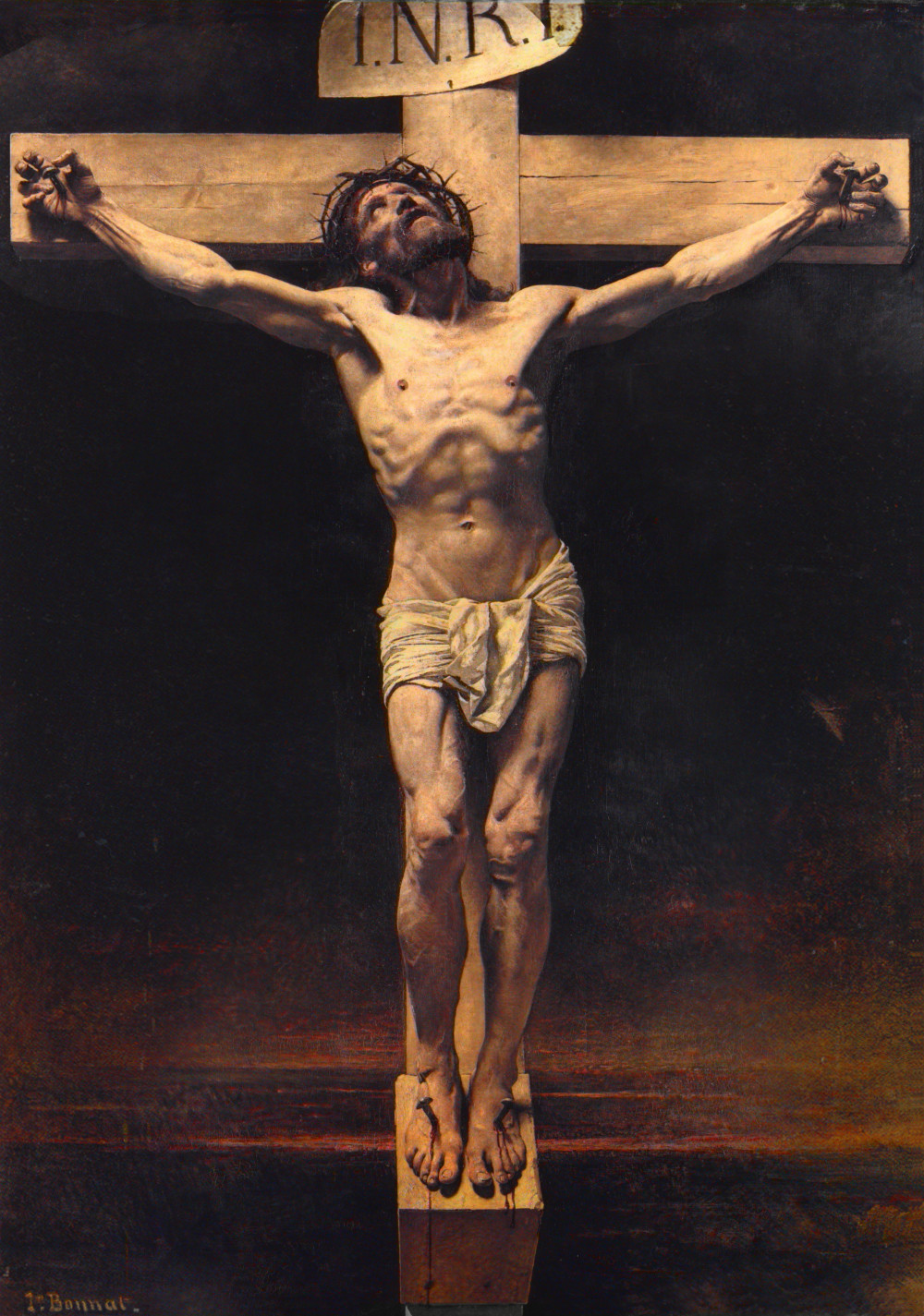
A Meditation for Good Friday: How To Undo the Effects of Sin?
Cardinal Newman, now Saint John Henry Newman, was a towering figure of nineteenth-century Catholicism who is almost universally admired. I say “almost” because not everyone likes him. I knew a priest once, Arthur Caulkins, who has become disenchanted with Newman. As an undergraduate Arthur had been enamoured of Newman, and this interest continued when he[…]Continue reading→
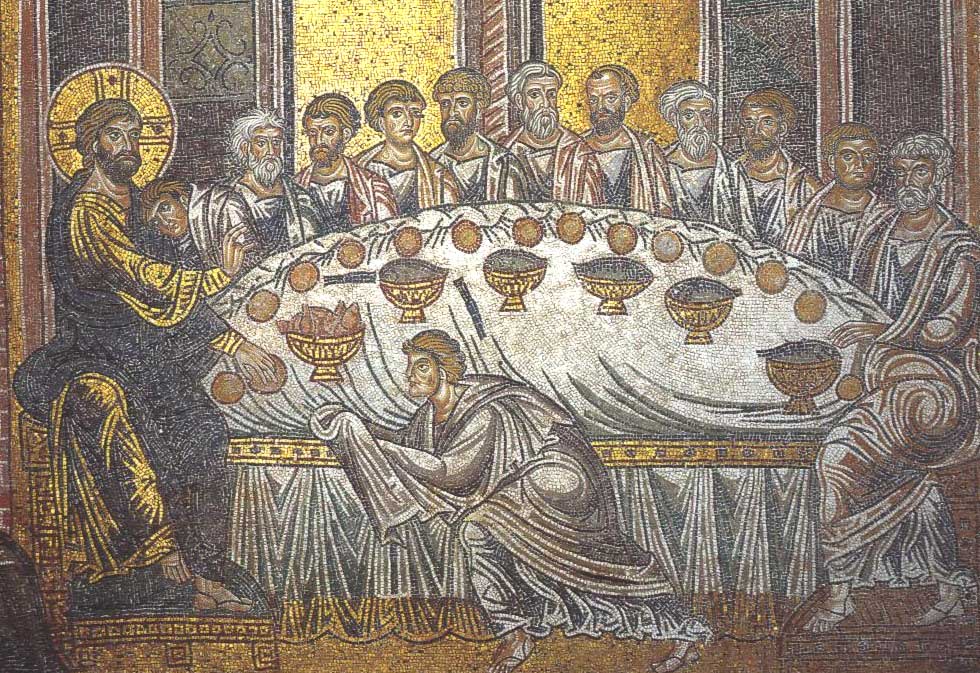
Pope Benedict’s Last Holy Thursday Homily
MASS OF THE LORD’S SUPPER HOMILY OF HIS HOLINESS BENEDICT XVI Basilica of St John Lateran Holy Thursday, 5 April 2012 Photo Gallery (Video) Dear Brothers and Sisters! Holy Thursday is not only the day of the institution of the Most Holy Eucharist, whose splendour bathes all else and in some ways draws it to[…]Continue reading→