
The Fifth Sunday of Easter: Body, Soul and Spirit
Geraldine Thompson, a Sister of Saint Joseph who taught English at Saint Michael’s College, Toronto, was utterly charming in person, . . . and challenging in conversation. Once she asked me, “Why is it that preachers will explain in detail aspects of the Sunday readings that everyone knows and but say nothing about other passages that we all find perplexing?” For instance, she might have wondered why Jesus told us to cut off a hand or tear out an eye: “If your right eye causes you to sin, pluck it out and throw it away; it is better that you lose one of your members than that your whole body be thrown into hell.”[1] Perhaps she has a point, because I’ve never heard a sermon address that verse. Well, what could be said about it? To begin with, I may note that there are times when anyone would gladly tear out an eye, if it were cancerous, for example, and had to be sacrificed to save his life. Our Lord, in his dramatic way, was telling us to be as concerned about our spiritual health as we are about our physical well being; for to preserve the former may require actions as desperate as those we embrace to safeguard the latter.
Would anything in the readings for the fifth Sunday of Easter fall into the category that Sister Geraldine described as “perplexing?” Certainly not the first reading from the Acts of the Apostles, recounting the appointment of Stephen and six others as assistants to the Apostles, traditionally taken as the beginning of the diaconate. The second reading, from 1 Peter, is perhaps a bit more challenging because of the comparison of Christians to “living stones,” but in context the meaning is clear in that we are “a chosen race, a royal priesthood, a holy nation, God’s own people,”[2] built upon the chief cornerstone, Jesus Christ. And John’s Gospel, often mystical and mysterious, is nevertheless generally accessible to us who see in Jesus the Word made flesh.
And thus, on this fifth Sunday of Easter, the priest—whatever his venue—may resort to the usual platitudes in his homily, as long, that is, as he omits any reference to the final line of the Gospel: “Truly, truly, I say to you, he who believes in me will also do the works that I do and greater works than these will he do, because I go to the Father.”[3] If Sister Geraldine were present, she would surely ask, “How can anyone do greater works than Jesus?” That’s an intriguing question in that it may be addressed on two levels: first, creation and then redemption. The Gospel of Saint John opens with praise for the eternal Word, present to the Father and the agent of creation: “All things were made through him, and without him was not anything made that was made.”[4] It is an indication of the nobility of man that he uncovers possibilities latent in creation by making things that are not found in the natural order, such as a violin or a computer. There is thus what one might term a development, but, as C.S. Lewis pointed out,[5] it can never be against but always in harmony with the laws of nature; science and technology may make use of gravity, e.g., but they cannot ignore or eliminate it, much less “conquer” it. It is a mark of man’s fallen nature, however, that ingenuity governed by greed or misled by ignorance can destroy rather than enhance the perfection of nature as we see in the pollution of the oceans, to cite but one egregious instance.
But can there be anything superior to the wonders that Jesus performed during his earthly life? Certainly, the work of redemption, accomplished by his death and resurrection to life, is unique and unsurpassable. But there is in the Church a sort of extension of the actions and miracles of Jesus. He told the Syro-Phoenician, i.e., gentile woman, “I was sent only to the lost sheep of the house of Israel.”[6] Hence, the preaching of the Gospel to the nations, as realizing the universal mission of Israel, is in terms of numbers more than what Jesus accomplished, and in that sense is greater. There are also new sorts of miracles, such as the shadow of Peter curing the sick, Paul’s immunity from the venom of a snake bite, the stigmata of Saint Francis,[7] the subsisting on the Eucharist by Saint Catherine of Siena, which can be considered a continuation of the signs performed by Our Lord; but it would be a rash man, indeed, who would think of these later marvels as essentially superior to those reported in the Gospels.
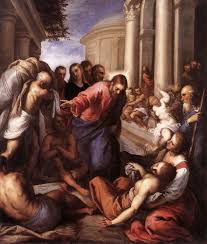
Another aspect of the question merits consideration, in that modern medicine accomplishes cures as marvelous in their way as those of Jesus. The blind see by having cataracts removed or retinas reattached, the lame walk on artificial joints, the deaf hear with hearing aids, the dumb learn to speak, not to mention heart by-passes, brain surgery and a host of other medical miracles. As Christians, we are called upon to reflect on these wonders in the light of the Gospel. For the common element in what began with Jesus and has continued in the Church is a recognition that physical distress is a summons to conversion, as when the paralytic who had come to Jesus to be cured heard him say, “Take heart, son, your sins are forgiven,” and only thereafter, “Rise, take up you bed and go home.”[8] To be true to the Gospel, therefore, any medical procedure should begin with an acknowledgement that man is a union of body, soul and spirit.[9] Everyone knows that a bodily illness will affect the mind, and also that mental stress has a physical counterpart.
What is less widely accepted is the fact that spiritual malaise is equally deleterious to the whole person. It follows that to limit treatment merely to preserving physical health or assuring mental stability is to ignore the spiritual aspect of the human condition and so leave the patient still infirm. If you wish to see an instance of holistic medicine, turn to the cure of the lame man in the Acts of the Apostles. He is described as “walking, and leaping and praising God.”[10] He can walk because his body has been made sound; he can leap because his soul is filled with joy; and he praises God because his spirit recognizes a grace received. Saint Paul’s prayer, “May the God of peace sanctify you wholly,” thus reminds doctors and therapists to use their skills for the physical and mental well being of a patient even as they honour the role of family and friends to visit and strengthen him, and of chaplains and priest to console and anoint him.
[1] Matt 5.29.
[2] 1 Pet 2.9.
[3] Jn 14.12.
[4] Jn 1.3.
[5] C.S. Lewis, The Abolition of Man (Oxford: Oxford University Press, 1943).
[6] Matt 15.24.
[7] And perhaps of Saint Paul: “I bear on my body the marks of Jesus.” Gal 6.17.
[8] Matt 9.2, 6.
[9] “May the God of peace himself sanctify you wholly; and may your spirit and soul and body be kept sound and blameless at the coming of our Lord Jesus Christ.” 1Thess 5.23.
[10] Acts 3.8.

Remembering Father Alphonse de Valk
(Today marks the sixth anniversary of the death of Father Alphonse de Valk, C.S.B., a faithful, courageous and indefatigable Basilian priest, pro-life-and-family apostle, and the founder of Catholic Insight magazine. Here is what we wrote those on his entering into eternity five years ago, as we continue to remember him in our prayers and thoughts)[…]Continue reading→

Divine Mercy Sunday – An Echo of Every Mass
Reach out your hand and put it in my side. Do not doubt but believe’… ‘My Lord and my God!’ (Jn. 20:18)). Today is Divine Mercy Sunday, and as we celebrate the end of the Easter Octave, we contemplate the wounded side of our Saviour, the Church’s source of life. On Good Friday in the[…]Continue reading→

Saint Stanislaus of Szczepanów
We celebrate Saint Stanislaus today (+ April 11, 1079), in light of this Easter Octave, a bishop and martyr who accepted the episcopacy only at the direct order of Pope Alexander II. He proved a wise and courageous leader of his flock, put to death by his own king, Boleslaus, for rebuking the monarch’s ‘immoral[…]Continue reading→
First Holy Communion: Sermon from May 16, 1943
Here is a sermon from the good old days by +Rev. Msgr. Vincent Nicholas Foy (August 14, 1915 – March 13, 2017), from 1943. Readers may recall that Pope Saint Pius X, by the decree Quam Singulari in 1910, lowered the customary age of reception of Holy Communion – after the rigours of the plague[…]Continue reading→
In the Glorious Light of Easter, Alleluia!
Set your minds on things that are above, not on things that are on earth, for you have died, and your life is hidden with Christ in God. When Christ who is your life is revealed, then you also will be revealed with him in glory (Col. 3:3-4). The Resurrection of Our Lord and Saviour[…]Continue reading→
An Ancient Homily for Holy Saturday
The time between Good Friday and Easter Sunday is one of waiting, in silence, as the world wonders – anticipates – what will happen, after the death of Christ. We re-live this time each year in the anamnesis of our liturgy, and in turn look forward to the glorious re-creation of all things at the[…]Continue reading→
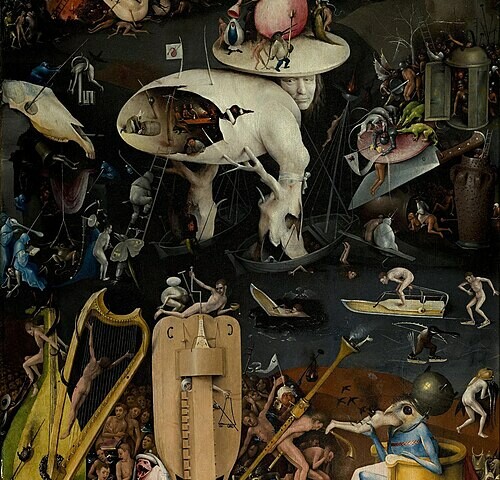
Europe’s Long Descent
(As we meditate on this day on Christ’s burial, and His descent into hell, it is fitting to ponder here with contributor Peter Marcus how the world seems to be heading there as well. The difference is that, although God cannot ‘redeem’ hell, nor those therein, He can and did redeem the world. There is[…]Continue reading→
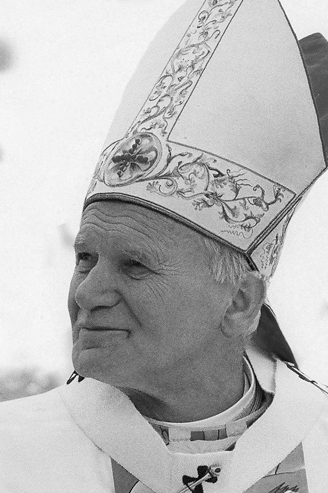
Pope Saint John Paul II’s First Good Friday Homily
ADDRESS OF HIS HOLINESS JOHN PAUL II AT THE CONCLUSION OF THE STATIONS OF THE CROSS AT THE COLOSSEUM Good Friday, 13 April 1979 When we make the Way of the Cross from one station to the next, in spirit we are always at the spot wherethis journey had its “historical” place: where it[…]Continue reading→
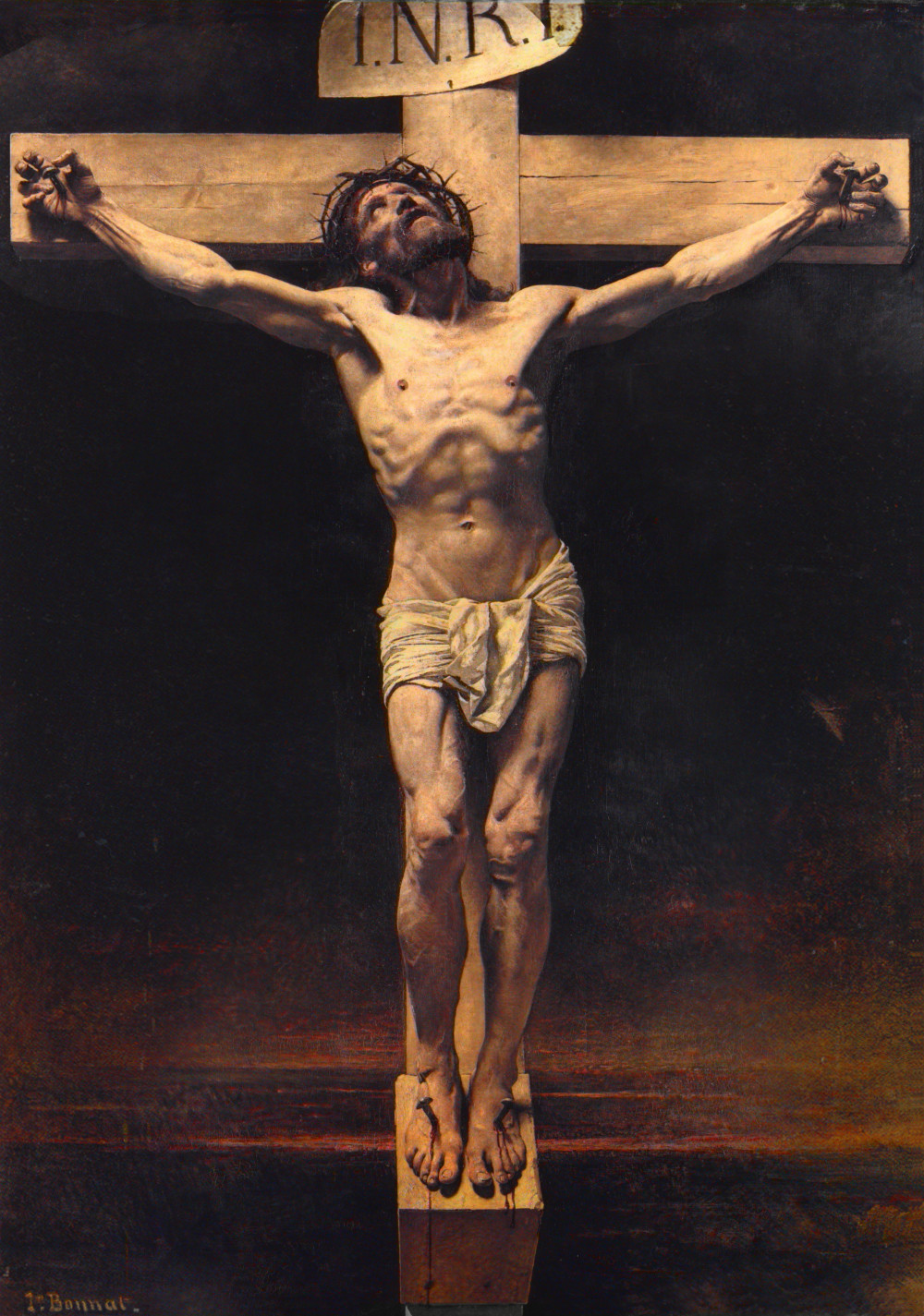
A Meditation for Good Friday: How To Undo the Effects of Sin?
Cardinal Newman, now Saint John Henry Newman, was a towering figure of nineteenth-century Catholicism who is almost universally admired. I say “almost” because not everyone likes him. I knew a priest once, Arthur Caulkins, who has become disenchanted with Newman. As an undergraduate Arthur had been enamoured of Newman, and this interest continued when he[…]Continue reading→
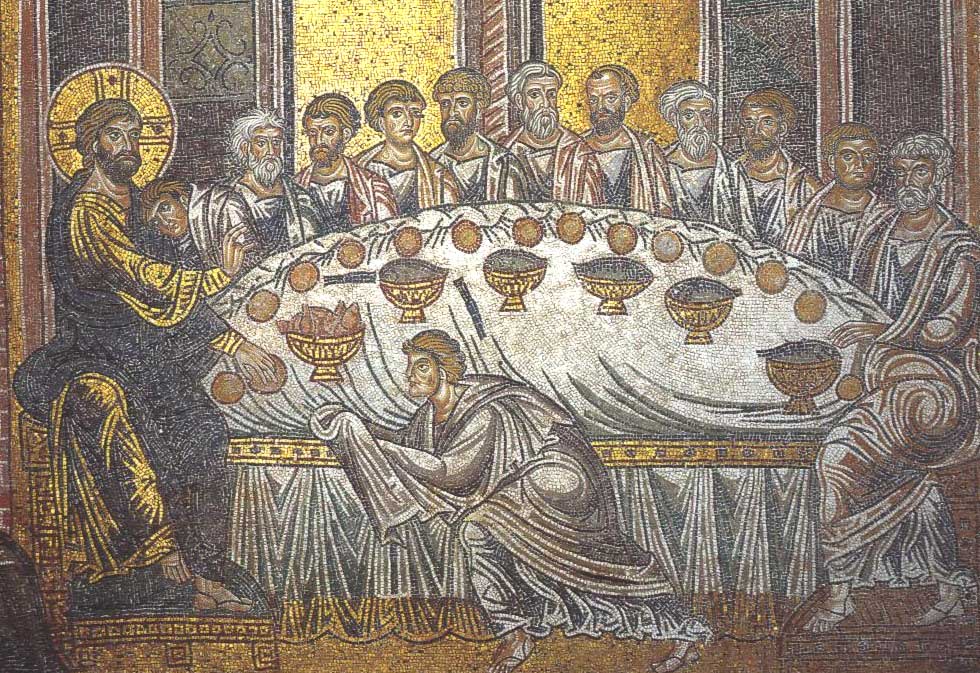
Pope Benedict’s Last Holy Thursday Homily
MASS OF THE LORD’S SUPPER HOMILY OF HIS HOLINESS BENEDICT XVI Basilica of St John Lateran Holy Thursday, 5 April 2012 Photo Gallery (Video) Dear Brothers and Sisters! Holy Thursday is not only the day of the institution of the Most Holy Eucharist, whose splendour bathes all else and in some ways draws it to[…]Continue reading→