
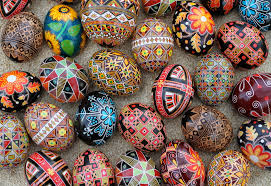
Ukrainian Pysanky Eggs
From our archives, Sharon-Rose Milan – now Sharon-Rose Fraser, wife and mother – from years ago, in April. She is still an artist and pro-life activist.
What can you tell us about pysanky eggs?
Every pysanky egg is supposed to tell a story; every colour and symbol represents something different. Black means eternity; red means happiness, life, hope, and spirit-awakening; green means strength and endurance; white means purity and innocence. Using four or more colors signifies family happiness, peace, and love. Pysanky eggs use colours and symbols to tell a story. So the color black and a triangle, which symbolizes the Trinity, would mean that I want to spend eternity with the Father, Son, and Holy Spirit.
When did you start making pysanky eggs?
I made pysanky eggs for the first time in 2012, when I was a guest at Madonna House in Combermere, Ontario. I was drawn to the art form by its calming nature, which led me in contemplative prayer. Through the symbolism in the eggs I was able to express my personal journey and what I wanted to achieve while I was at Madonna House and after I left. I kept making Pysanky eggs to develop the skill: it teaches patience, perseverance, and steadiness of hand.
What other art forms do you enjoy?
I paint with acrylics, do pastel portraits, use water markers, and sketch cartoon characters. Pysanky is a different mode than what I am used to, but I enjoy learning different art forms. Most of all I am drawn to the human face—there is something beautiful about faces; no two are exactly alike. I enjoy being able to produce work that is never identical, and I’m not a writer; drawing lets me tell a story.
Who or what did you learn from?
My dad, my mom, and my siblings are all artists—I grew up with a paintbrush in my hand. I have always been an artist.
What do you do with your pieces? are they ever shown? are they for sale?
Most of my work I give away as gifts, or I use as decoration in my own home. I do commissioned pieces and create political cartoons and covers for The Interim newspaper.
How would you define beauty?
The youth catechism (YOUCAT) says that “God is the source of beauty and also the source of truth. Art, which is dedicated to the beautiful, is therefore a special path to the whole and to God. [2500-2503, 2513] … What cannot be said in words or expressed in thought is brought to light in art. It is ‘a freely given superabundance of the human being’s inner riches’ (CCC 2501). In a way that closely approximates God’s creativity, inspiration and human skill are combined in the artist so as to give a valid form to something new, a previously unseen aspect of reality. Art is not an end in itself. It should uplift people, move them, improve them, and ultimately lead them to worship and thank God.”
What is the purpose of art?
The purpose of art is to express beauty, which should lead the observer to contemplate truth, beauty, and goodness—which should ultimately direct them to the author of beauty, who is God.
Who inspires you and what inspires you?
My mom inspires me; she has been creating art her entire life and was the one who first put a crayon in my hand. Seeing her push through difficult pieces and make her art a prayer is an example to me of perseverance—and she always produces great work. My dad is also an inspiration; his art is carpentry, and I get many of my hands-on skills from him. I love the works of Boticelli, and admire Gustav Klimt for the elegance and innocence of his faces.
A brief history of Pysanky eggs
In Ukrainian, the eggs decorated for Easter are called “pysanky” from the word “pysaty,” which means “to write.” The design is actually written on the egg with a fine-point stylus dipped in wax, and then dipped in a series of dyes. Originally, pysanky eggs symbolized the release of the earth from the shackles of winter and the coming of spring with its promise of new hope, life, health, and prosperity. After the advent of Christianity, the decorated eggs took the new symbols of the Resurrection and its promise of a better world.
Photo by Jonathan Castellino

Saint Kateri , Canada’s Protectress
This was the title given to Saint Kateri Tekakwitha, by Pope Benedict XVI, when he canonized her on October 28th, 2012, along with six others, in Saint Peter’ Square (she had been beatified by Pope John Paul II back in 1980). With Saint Joseph as our protector, along with the Canadian martyrs, we seem to[…]Continue reading→

Remembering Father Alphonse de Valk
(Today marks the sixth anniversary of the death of Father Alphonse de Valk, C.S.B., a faithful, courageous and indefatigable Basilian priest, pro-life-and-family apostle, and the founder of Catholic Insight magazine. Here is what we wrote those on his entering into eternity five years ago, as we continue to remember him in our prayers and thoughts)[…]Continue reading→

My Name is Bernadette
April 16th is a propitious day, for besides the anniversary of Father de Valk’s death, who founded Catholic Insight in its print form decades ago, and the commemoration of the ‘two Benedicts’, mentioned in accompanying posts, today we also recall Saint Bernadette Soubirous, the young visionary to whom the Virgin Mary appeared numerous times at[…]Continue reading→
Canonizing Sister Faustina and Divine Mercy
HOMILY OF THE HOLY FATHER MASS IN ST PETER’S SQUARE FOR THE CANONIZATION OF SR MARY FAUSTINA KOWALSKA Sunday, 30 April 2000 1. “Confitemini Domino quoniam bonus, quoniam in saeculum misericordia eius”; “Give thanks to the Lord for he is good; his steadfast love endures for ever” (Ps 118: 1). So the Church sings on the Octave of[…]Continue reading→

Divine Mercy Sunday – An Echo of Every Mass
Reach out your hand and put it in my side. Do not doubt but believe’… ‘My Lord and my God!’ (Jn. 20:18)). Today is Divine Mercy Sunday, and as we celebrate the end of the Easter Octave, we contemplate the wounded side of our Saviour, the Church’s source of life. On Good Friday in the[…]Continue reading→

Saint Stanislaus of Szczepanów
We celebrate Saint Stanislaus today (+ April 11, 1079), in light of this Easter Octave, a bishop and martyr who accepted the episcopacy only at the direct order of Pope Alexander II. He proved a wise and courageous leader of his flock, put to death by his own king, Boleslaus, for rebuking the monarch’s ‘immoral[…]Continue reading→
First Holy Communion: Sermon from May 16, 1943
Here is a sermon from the good old days by +Rev. Msgr. Vincent Nicholas Foy (August 14, 1915 – March 13, 2017), from 1943. Readers may recall that Pope Saint Pius X, by the decree Quam Singulari in 1910, lowered the customary age of reception of Holy Communion – after the rigours of the plague[…]Continue reading→
In the Glorious Light of Easter, Alleluia!
Set your minds on things that are above, not on things that are on earth, for you have died, and your life is hidden with Christ in God. When Christ who is your life is revealed, then you also will be revealed with him in glory (Col. 3:3-4). The Resurrection of Our Lord and Saviour[…]Continue reading→
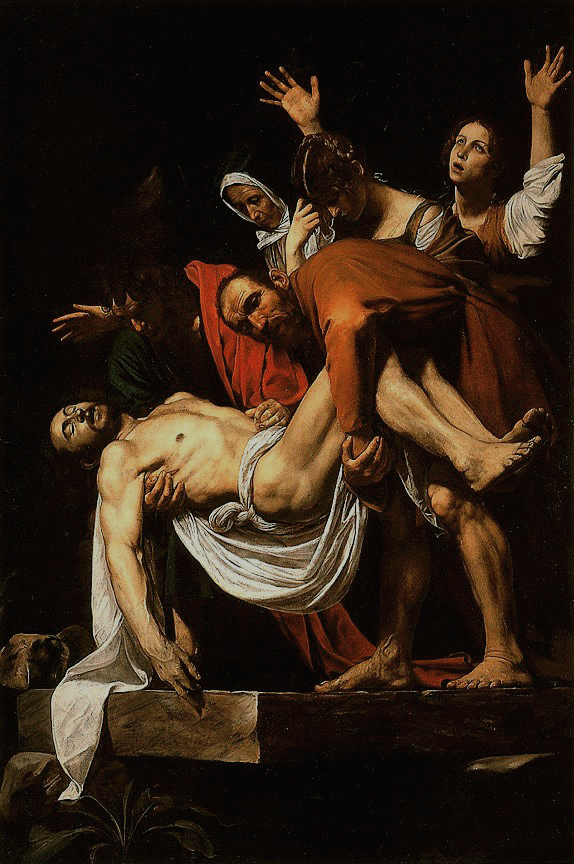
An Ancient Homily for Holy Saturday
The time between Good Friday and Easter Sunday is one of waiting, in silence, as the world wonders – anticipates – what will happen, after the death of Christ. We re-live this time each year in the anamnesis of our liturgy, and in turn look forward to the glorious re-creation of all things at the[…]Continue reading→
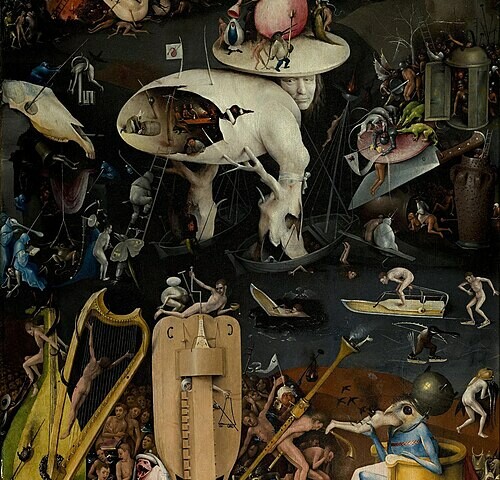
Europe’s Long Descent
(As we meditate on this day on Christ’s burial, and His descent into hell, it is fitting to ponder here with contributor Peter Marcus how the world seems to be heading there as well. The difference is that, although God cannot ‘redeem’ hell, nor those therein, He can and did redeem the world. There is[…]Continue reading→