
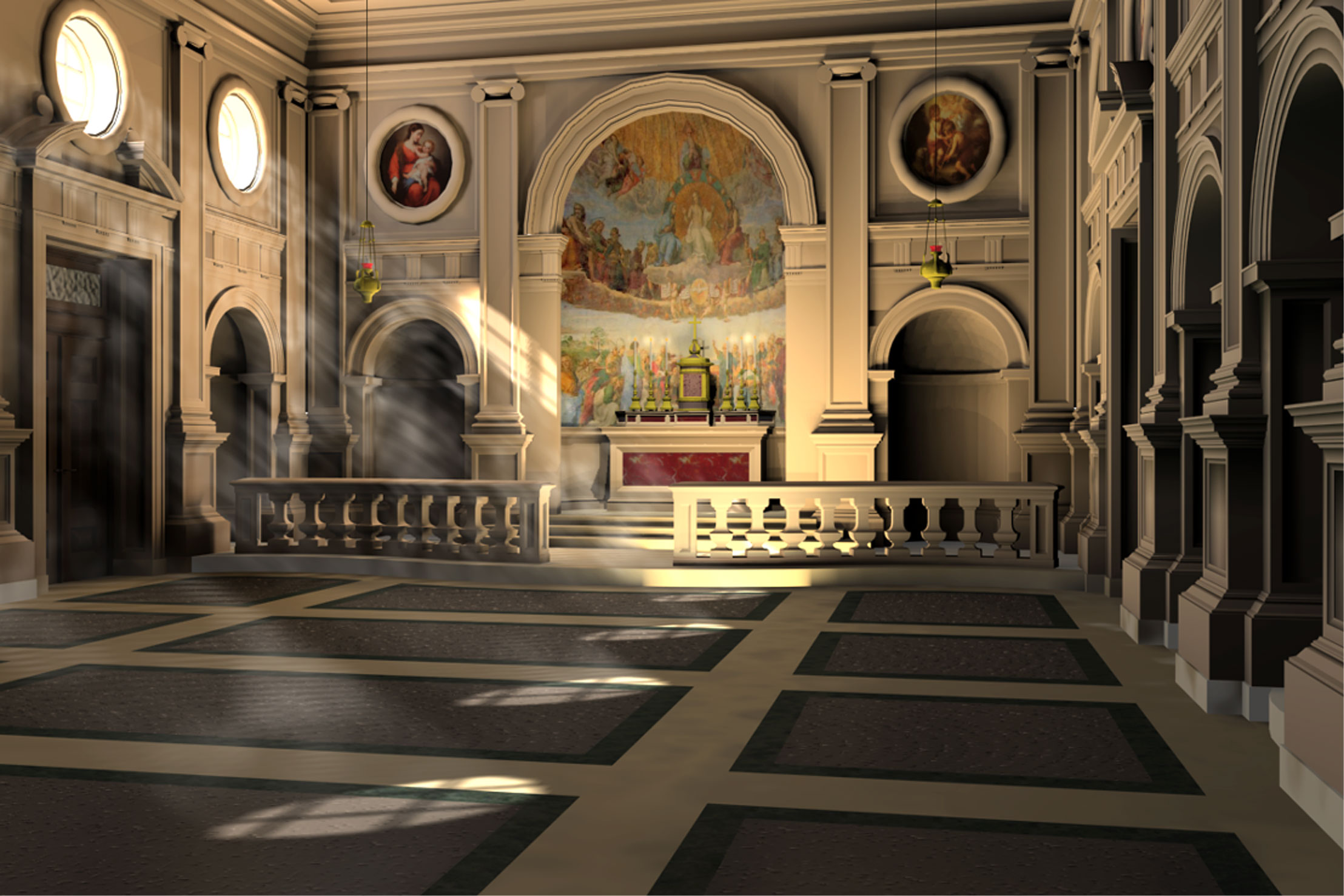
Surrendering to Grace When Bereft of the Sacraments
In times of spiritual aridity we can be tempted to think that without certain works, like the Sacraments, our good Lord cannot save us. After all, while St. Paul says we are “saved through Faith,” (Eph 2:8) St. James says that “Faith apart from works is dead.” (James 2:26) It is charity that gives faith life, St. Thomas Aquinas explains. So if we have not works, we lack charity and then our faith is as good as that of the devils’: useless.
At the same time it is Jesus Christ who saves us through our living faith, not we ourselves. “He saved us, not because of deeds done by us in righteousness, but in virtue of his own mercy, by the washing of regeneration and renewal in the Holy Spirit.” (Titus 3:5) It is clear that St. Paul is referring to the Sacraments here. As our Lord said, “unless one is born of water and the Spirit, he cannot enter the kingdom of God.” (John 3:5) No wonder the Council of Trent insisted on the necessity of the Sacraments.
In His infinite mercy, the normal means our Lord uses to save us are the seven Sacraments which He Himself instituted. These sensible signs which cause the grace they signify are a beacon of hope to us bodily creatures who have such trouble focusing on the invisible things of God. Sacraments assure us of God’s grace which we cannot see. So it can be frightening and disturbing when we do not have access to the Sacraments!
The Council of Trent affirmed that these Sacraments are indeed necessary. However, even though the sensible signs of the Sacraments are the normal means for salvation, our omnipotent and merciful Lord is not limited to these in order to save us. Is this a contradiction? How can the Sacraments be necessary and yet our Lord be not bound by them?
St. Thomas Aquinas makes a helpful distinction (ST 73, 3, and 84, 7 ad 4.) He explains that there is the Sacrament as a sensible sign and the Sacramental effect. The Sacrament as a sign consists of matter and form – the corporeal sign and the formal words. The Sacramental effect, on the other hand, is what the Sacrament signifies and causes in our soul – that special grace peculiar to each Sacrament. While normally the sensible sign of the Sacrament is necessary because that is how the Sacramental effect is normally conferred, it is actually the Sacramental effect that is the whole point of the Sacrament and that is absolutely necessary for our salvation.
Our Lord has bound Himself to the Sacraments insofar as He always delivers the grace when these sensible signs are conferred. Yet He is not bound by the Sacraments because He is not limited to these as a means for conferring the Sacramental effect, i.e. these special graces.
In extraordinary circumstances when the Sacrament as a sensible sign cannot be had, the graces can nevertheless be had as the sacramental effect. Hence the Council of Trent qualifies the statement that salvation cannot be obtained “without [Sacraments]” adding, “or without the desire thereof.”
What?! Does this mean that we need not concern ourselves with the ceremonies, since our desire suffices? No, not so fast!
St. Thomas says that the Sacrament as a “reality” confers the effect more fully than does the desire alone. Further, when Christ confers the effect without the Sacrament, our desire is always there. If we are not making every effort to in fact obtain the Sacraments as an ordinary means of obtaining grace, the desire is clearly not there. Naaman of the Old Testament was not healed of his leprosy until he first washed seven times in the river, as the prophet Elisha specified, as pointless as that may have seemed to Naaman at first. (Kings 5)
As St. Augustine said, “He who created you without you, will not justify you without you.” These efforts of ours are like baby steps that begin and then fail to reach their goal. Yet begin again and then fail again until with St. Therese we are lifted up in the arms of a loving Father who smiles at our good will and rewards us beyond our desserts.
Indeed our Lord is ever desirous of giving these special graces to us, as St. Therese confirmed. He longs to pour them out on us if only we will not resist Him. Ah, our resistance! That is just the problem!
Hence it is essential that we have the right disposition in order to receive these graces. The most crucial act that we can perform in these times without the Sacraments then is to work on that disposition which opens us up to the good Lord’s graces. We must surrender ourselves entirely to the mercy of God, habitually renewing our confidence in both His omnipotent power to save us, as well as His all-loving desire to save us, all the while continuing our feeble efforts.
St. Claude de la Colombiere expresses this sentiment in an astounding manner when he says to our Lord in his beautiful prayer: “ I know that my confidence cannot exceed Your generosity, and that I shall never receive less than I have hoped for from You.” (It is well worth praying the entire prayer.)
The indulgences that the Holy Father has granted in these special times are another good way to open ourselves up to Christ’s Mercy. Again we read something absolutely astounding: the Church grants the faithful “unable to receive the Sacrament of the Anointing of the Sick and of the Viaticum… a Plenary Indulgence on the point of death, provided that they are duly disposed and have recited a few prayers during their lifetime.” A plenary indulgence is no less than complete remission of one’s sins and the purgatory due them. Yet all that is required of us while dying without the Sacraments in these times is that we have said a few prayers in our lifetimes, because the Church makes up for the rest. What a tremendous mercy!
Note that the Holy Father refers to being “properly disposed.” This is the necessary desire for the Sacraments we have been discussing. It is the baby step which cannot be dispensed with because it is our fiat (yes!) to the good Lord’s graces. In the language of indulgences being properly disposed includes the intention to receive the Sacraments as soon as we are able while having “true contrition” for our sins. In other words we must have a repugnance and detachment so as not to desire to commit sin again, despite our weakness. This thought of complete detachment may seem overwhelming! Especially with regard to the sins in which we seek comfort and pleasure. Yet if we desire this detachment and put our trust in Jesus, granting even this is not impossible to Him, Whose victory over sin on the cross knows no limit.
We are living in a time of tremendous grace, while the Lord hides His face from us! Let us not resist these graces, but instead lean entirely on Him, as He invites us to do.
Lord, he whom Thou lovest is ill. (Jn. 11:3)
If Thou willest it, Thou canst make me clean.
“I do will it,” Thou dost say. “Be cleansed.” (Lk 5: 12-13)
My Jesus, I trust in Thee completely! Let me not be confounded. (Ps. 30:18)

Remembering Father Alphonse de Valk
(Today marks the sixth anniversary of the death of Father Alphonse de Valk, C.S.B., a faithful, courageous and indefatigable Basilian priest, pro-life-and-family apostle, and the founder of Catholic Insight magazine. Here is what we wrote those on his entering into eternity five years ago, as we continue to remember him in our prayers and thoughts)[…]Continue reading→

Divine Mercy Sunday – An Echo of Every Mass
Reach out your hand and put it in my side. Do not doubt but believe’… ‘My Lord and my God!’ (Jn. 20:18)). Today is Divine Mercy Sunday, and as we celebrate the end of the Easter Octave, we contemplate the wounded side of our Saviour, the Church’s source of life. On Good Friday in the[…]Continue reading→

Saint Stanislaus of Szczepanów
We celebrate Saint Stanislaus today (+ April 11, 1079), in light of this Easter Octave, a bishop and martyr who accepted the episcopacy only at the direct order of Pope Alexander II. He proved a wise and courageous leader of his flock, put to death by his own king, Boleslaus, for rebuking the monarch’s ‘immoral[…]Continue reading→
First Holy Communion: Sermon from May 16, 1943
Here is a sermon from the good old days by +Rev. Msgr. Vincent Nicholas Foy (August 14, 1915 – March 13, 2017), from 1943. Readers may recall that Pope Saint Pius X, by the decree Quam Singulari in 1910, lowered the customary age of reception of Holy Communion – after the rigours of the plague[…]Continue reading→

In the Glorious Light of Easter, Alleluia!
Set your minds on things that are above, not on things that are on earth, for you have died, and your life is hidden with Christ in God. When Christ who is your life is revealed, then you also will be revealed with him in glory (Col. 3:3-4). The Resurrection of Our Lord and Saviour[…]Continue reading→

An Ancient Homily for Holy Saturday
The time between Good Friday and Easter Sunday is one of waiting, in silence, as the world wonders – anticipates – what will happen, after the death of Christ. We re-live this time each year in the anamnesis of our liturgy, and in turn look forward to the glorious re-creation of all things at the[…]Continue reading→
Europe’s Long Descent
(As we meditate on this day on Christ’s burial, and His descent into hell, it is fitting to ponder here with contributor Peter Marcus how the world seems to be heading there as well. The difference is that, although God cannot ‘redeem’ hell, nor those therein, He can and did redeem the world. There is[…]Continue reading→
Pope Saint John Paul II’s First Good Friday Homily
ADDRESS OF HIS HOLINESS JOHN PAUL II AT THE CONCLUSION OF THE STATIONS OF THE CROSS AT THE COLOSSEUM Good Friday, 13 April 1979 When we make the Way of the Cross from one station to the next, in spirit we are always at the spot wherethis journey had its “historical” place: where it[…]Continue reading→
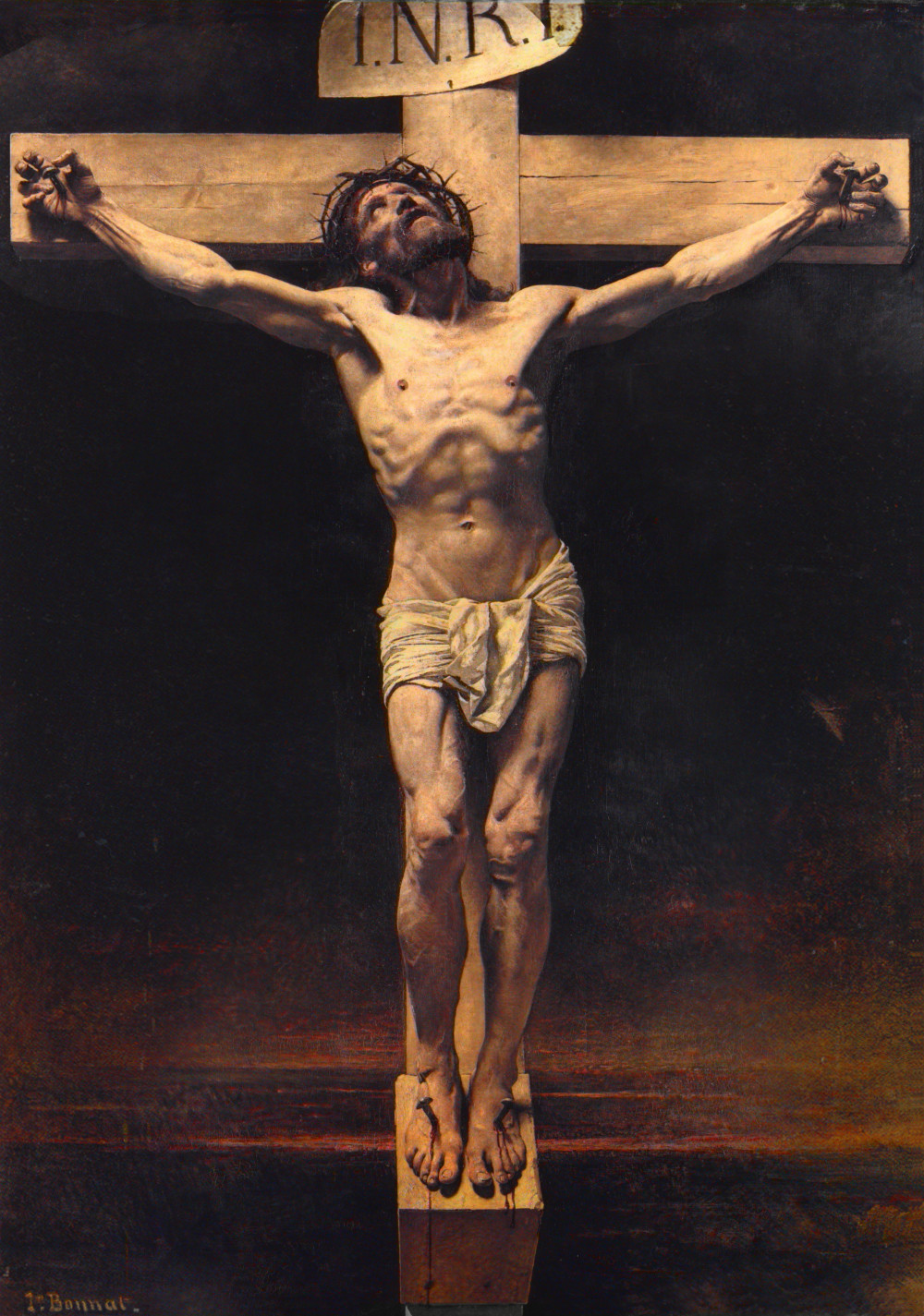
A Meditation for Good Friday: How To Undo the Effects of Sin?
Cardinal Newman, now Saint John Henry Newman, was a towering figure of nineteenth-century Catholicism who is almost universally admired. I say “almost” because not everyone likes him. I knew a priest once, Arthur Caulkins, who has become disenchanted with Newman. As an undergraduate Arthur had been enamoured of Newman, and this interest continued when he[…]Continue reading→
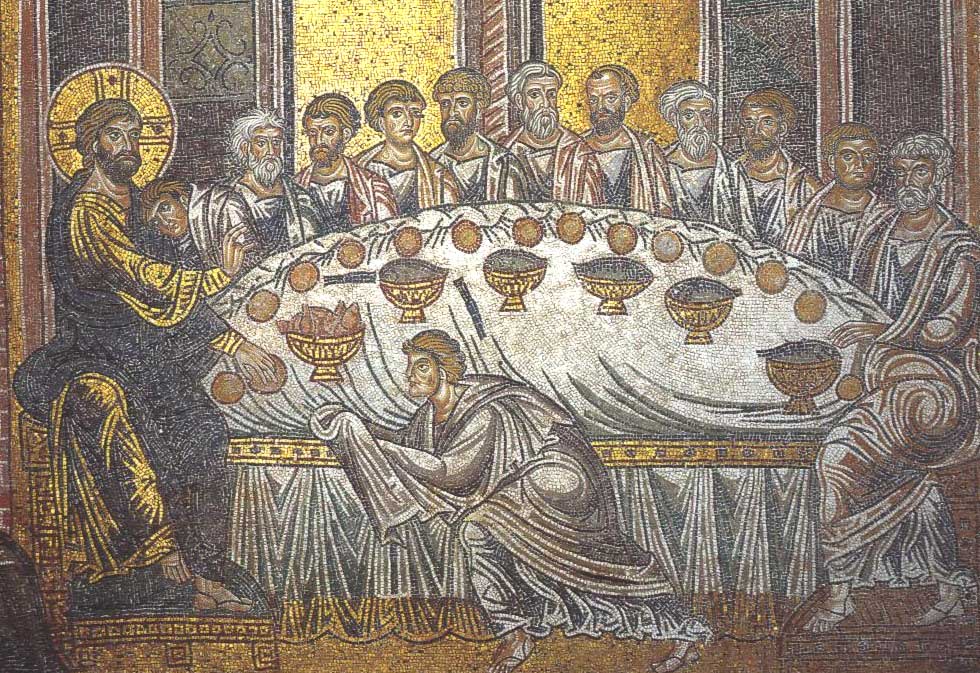
Pope Benedict’s Last Holy Thursday Homily
MASS OF THE LORD’S SUPPER HOMILY OF HIS HOLINESS BENEDICT XVI Basilica of St John Lateran Holy Thursday, 5 April 2012 Photo Gallery (Video) Dear Brothers and Sisters! Holy Thursday is not only the day of the institution of the Most Holy Eucharist, whose splendour bathes all else and in some ways draws it to[…]Continue reading→