
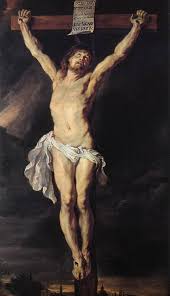
Christ’s Bearing the Pain of the World
For God created man for incorruption, and made him the image of his own eternity, but through the devil’s envy death entered the world, and those who belong to his company experience it. (Wis 2:23-24)
These words from the Book of Wisdom, our first reading, address the problem of suffering—as did our first reading last Sunday, taken from the Book of Job. Suffering is part of the human condition; we all know that. Everyone suffers in some way, at some time; this too we know. Yet, when suffering visits us personally, it is possible to feel isolated and abandoned. Sometimes people say, “I cannot believe in a God who would allow such suffering.” Perhaps we have been tempted to say these words ourselves or at least have thought them. Though suffering is evidently part of human existence it nevertheless remains threatening, challenging, and mysterious.
From a theological point of view, that is, from the perspective of one who believes in God, the problem raised by the experience of suffering is generally called theodicy. Derived from the Greek words for God and justice, theodicy attempts to answer the question of why a good God permits the manifestation of evil. This effort attempts to hold together these three propositions: God is all powerful, God is just, and people suffer. To put it another way, how can an omnipotent God allow suffering, especially innocent suffering?
In the Bible one encounters different approaches to this problem. The authors of the wisdom books spoke of the law of retribution: God rewards the good and punishes evil. Yet this is a partial answer because it doesn’t apply to the suffering of the innocent. Ultimately, much is mysterious and we face the problem of evil in the knowledge of God and of His infinite goodness. Faith with complete trust in God is the only way to bridge the gap between our temporal world and the eternal life of God.
When we read the Gospels we see that Our Lord and Saviour Jesus Christ confronted the problem of human suffering at almost every turn in the course of His earthly ministry; not only because the Gospels relate many accounts of exorcisms, healings, and the restoring of life, but also because He Himself suffered in His passion and in the course of His own public ministry. Our Lord’s sufferings were both physical and spiritual or psychological. In His agony on the Cross He was rejected and misunderstood by almost everyone. In fact, the Gospel of Mark that we are reading this year is called the Gospel of suffering. So we ask: Why did Jesus, the Son of God, suffer?
In his Gospel, St. Mark presents Our Lord as a model of fidelity in the midst of suffering and as compassionate to those who suffer—as today’s Gospel reading clearly illustrates. Our Lord also invites His disciples to take up their cross and so find real freedom. St. Mark also suggests that Our Lord’s suffering and death constituted a vicarious and expiatory sacrifice; for the Son of Man—as Jesus is called in this Gospel—came “to give His life as a ransom for many” (10:45). His suffering was clearly part of God’s plan. “And He began to teach them that the Son of Man must suffer many things, and be rejected by the elders and chief priests, and scribes and be killed, and after three days rise again” (8:31).
Is this of any help to us as we confront this all too present reality of suffering? I believe it is. If the essence of Christian discipleship is to be with Jesus and to share His mission (Cf. Mk 3:14), then to be faithful in the midst of suffering and to be compassionate to those who suffer is the first step in confronting this reality.
This First Friday of the month is, as you know, dedicated in a particular manner to Our Lord’s Most Sacred Heart; a Heart broken by man’s cruelty, yet a symbol of love’s triumph, a pledge of all that man is called to be. The Holy Eucharist, and all the Sacraments, come to us from this Heart. The Eucharist is most certainly the love of the Sacred Heart of Jesus realized in our midst. When we assist at the Holy Sacrifice of the Mass, we recall the suffering and death of an innocent Man who was misunderstood and treated unjustly, who struggled to accept the sufferings that He foresaw, and who gave His life so patiently, that one of His executioners declared, “Truly this man was the Son of God!” (Mk 15:39).
The memory of Jesus the Son of God also calls into the question the many easy assumptions about life, happiness, and success that most people hold—including the law of retribution. The memory of Jesus confronts us with the realities of misunderstanding, injustice, and innocent suffering. Yet the memory of Jesus also places before us the hope that God can and does bring life out of suffering and death; and no less it also reminds us that in the Bible, suffering and death never have the last word for “Our Saviour Jesus Christ has abolished death and brought us life through the Gospel” (2 Tim 1:10).
Who of us has not suffered in some way, however small? It may be that your own heart has been pierced and wounded by man’s cruelty. You and I, however, are disciples of Christ and we are here today surely to adore the living God in Christ but no less to learn from Christ our Teacher who says to each one of us: “Come to me all you who labour and are heavy laden and I will give you rest. Take my yoke upon you and learn from me; for I am gentle and lowly of heart, and you will find rest for your souls” (Mt 11:28-29). He has called us to be with Him and, simply, to be as He is. As we recall His memory in the Sacrifice which He has left us, let us be mindful that our wounded hearts too can be a symbol of love’s triumph and a pledge of all that we are called to be, for God “created man for incorruption, and made him the image of his own eternity.” May the divine sacrifice which we are about to offer fill us with life and bind us to Him and to one another in lasting charity.

Saint Kateri , Canada’s Protectress
This was the title given to Saint Kateri Tekakwitha, by Pope Benedict XVI, when he canonized her on October 28th, 2012, along with six others, in Saint Peter’ Square (she had been beatified by Pope John Paul II back in 1980). With Saint Joseph as our protector, along with the Canadian martyrs, we seem to[…]Continue reading→

Remembering Father Alphonse de Valk
(Today marks the sixth anniversary of the death of Father Alphonse de Valk, C.S.B., a faithful, courageous and indefatigable Basilian priest, pro-life-and-family apostle, and the founder of Catholic Insight magazine. Here is what we wrote those on his entering into eternity five years ago, as we continue to remember him in our prayers and thoughts)[…]Continue reading→

My Name is Bernadette
April 16th is a propitious day, for besides the anniversary of Father de Valk’s death, who founded Catholic Insight in its print form decades ago, and the commemoration of the ‘two Benedicts’, mentioned in accompanying posts, today we also recall Saint Bernadette Soubirous, the young visionary to whom the Virgin Mary appeared numerous times at[…]Continue reading→

Canonizing Sister Faustina and Divine Mercy
HOMILY OF THE HOLY FATHER MASS IN ST PETER’S SQUARE FOR THE CANONIZATION OF SR MARY FAUSTINA KOWALSKA Sunday, 30 April 2000 1. “Confitemini Domino quoniam bonus, quoniam in saeculum misericordia eius”; “Give thanks to the Lord for he is good; his steadfast love endures for ever” (Ps 118: 1). So the Church sings on the Octave of[…]Continue reading→

Divine Mercy Sunday – An Echo of Every Mass
Reach out your hand and put it in my side. Do not doubt but believe’… ‘My Lord and my God!’ (Jn. 20:18)). Today is Divine Mercy Sunday, and as we celebrate the end of the Easter Octave, we contemplate the wounded side of our Saviour, the Church’s source of life. On Good Friday in the[…]Continue reading→

Saint Stanislaus of Szczepanów
We celebrate Saint Stanislaus today (+ April 11, 1079), in light of this Easter Octave, a bishop and martyr who accepted the episcopacy only at the direct order of Pope Alexander II. He proved a wise and courageous leader of his flock, put to death by his own king, Boleslaus, for rebuking the monarch’s ‘immoral[…]Continue reading→
First Holy Communion: Sermon from May 16, 1943
Here is a sermon from the good old days by +Rev. Msgr. Vincent Nicholas Foy (August 14, 1915 – March 13, 2017), from 1943. Readers may recall that Pope Saint Pius X, by the decree Quam Singulari in 1910, lowered the customary age of reception of Holy Communion – after the rigours of the plague[…]Continue reading→
In the Glorious Light of Easter, Alleluia!
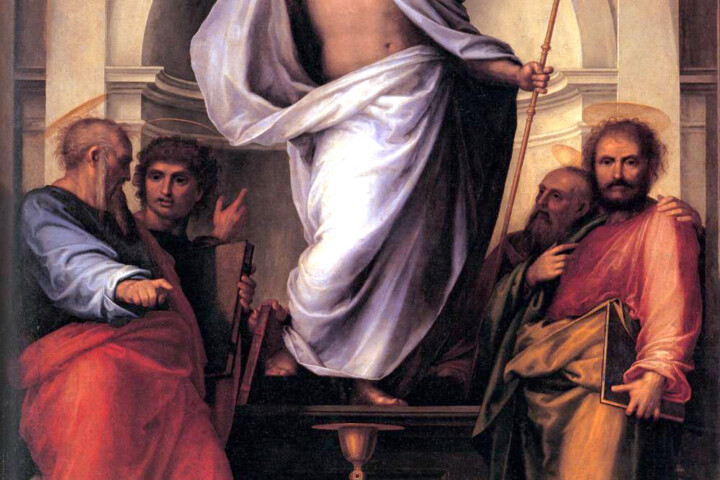
Set your minds on things that are above, not on things that are on earth, for you have died, and your life is hidden with Christ in God. When Christ who is your life is revealed, then you also will be revealed with him in glory (Col. 3:3-4). The Resurrection of Our Lord and Saviour[…]Continue reading→
An Ancient Homily for Holy Saturday
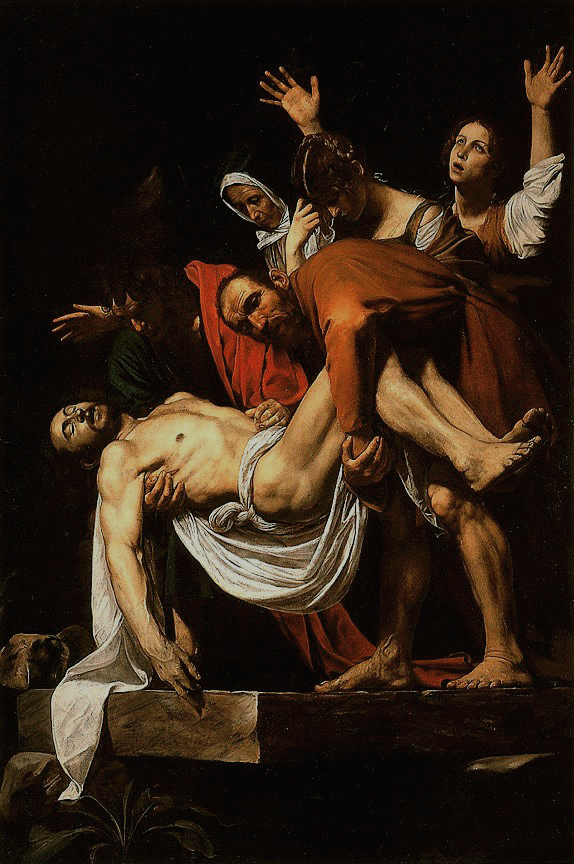
The time between Good Friday and Easter Sunday is one of waiting, in silence, as the world wonders – anticipates – what will happen, after the death of Christ. We re-live this time each year in the anamnesis of our liturgy, and in turn look forward to the glorious re-creation of all things at the[…]Continue reading→
Europe’s Long Descent
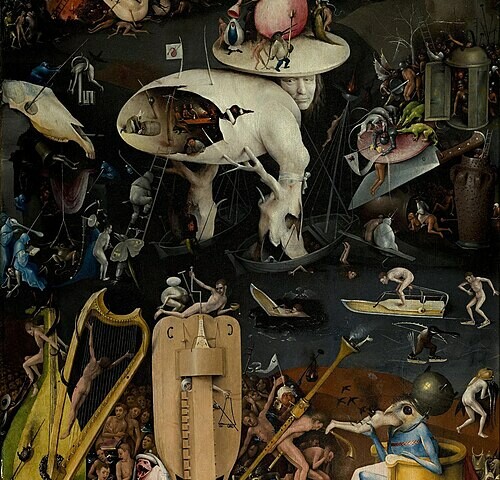
(As we meditate on this day on Christ’s burial, and His descent into hell, it is fitting to ponder here with contributor Peter Marcus how the world seems to be heading there as well. The difference is that, although God cannot ‘redeem’ hell, nor those therein, He can and did redeem the world. There is[…]Continue reading→