
Be Ye Perfect: The Seventh Sunday and Lent
Be perfect, therefore, as your heavenly Father is perfect (Mt. 5:38). ⧾
At face value, these words appear to demand the impossible of us; but in the context in which Our Lord spoke them, and in light of the tradition of the Old Covenant which Our Lord came to fulfill, they are an invitation to live life at its fullest. In our reflections on the Gospel of St. Matthew we have noted that Our Lord is presented as the new Moses or lawgiver who explains the precepts of the Old Law in greater fullness and detail and who brings it to perfection. ‘Do not think that I have come to abolish the Law or the Prophets; I have come not to abolish but to fulfill (Mt. 5:17). Hence, Our Lord introduces the fuller meaning of the Law with this familiar phrase: ‘You have heard that it was said to those of ancient times….But I say to you’. Our first reading from the Book of Leviticus provides the greater context for Our Lord’s command to perfection. The Lord spoke to Moses: ‘Speak to all the congregation of the children of Israel and say to them; ‘You shall be holy, for I the Lord your God am holy’ (Lev. 19:1).
Our Lord’s command to perfection makes sense in light of the command to holiness; and in turn, to understand holiness as the perfection of charity. This phrase, the perfection of charity, as a definition of holiness, helps us to understand Our Lord’s call to perfection not only as something possible for each one of us, but also essential for the fulfillment of our Christian life. Holiness is one of the four marks of the Church, as her own Constitution makes clear:
This holiness of the Church is unceasingly manifested, and must be manifested, in the fruits of grace which the Spirit produces in the faithful; it is expressed in many ways in individuals, who in their walk of life, tend toward the perfection of charity….In order that the faithful may reach this perfection, they must use their strength accordingly as they have received it, as a gift from Christ. They must follow in His footsteps and conform themselves to His image seeking the will of the Father in all things. They must devote themselves with all their being to the glory of God and the service of their neighbor. In this way, the holiness of the People of God will grow into an abundant harvest of good, as is admirably shown by the life of so many saints in Church history (Lumen Gentium, Dogmatic Constitution on the Church, 38, 40).
The veneration and imitation of the saints is an indispensable aspect of Catholic life. At the reception of the Sacrament of Confirmation we take a confirmation name; a patron and model to emulate as we mature in the knowledge and practice of the faith. We do well to look to the saints as examples to follow; and to learn from them the way of holiness and of perfection. This coming Saturday, the first Saturday of the holy season of Lent, we will have an opportunity to reflect on the life and teaching of St. Benedict, the Father of Western monasticism. He is arguably history’s greatest expert and exemplar in the art of good living in community. He was primarily concerned with living on a very small scale – with a family of monks; and we can learn from his precepts how to live well both in the intimacy of our own family life and by extension, the family of the Church, which for all Catholics is experienced in the lived reality of parish life. In his Rule, St. Benedict provides us with practical wisdom to help us live and experience the peace and joy of the Gospel and to achieve the perfection of charity chiefly by learning to bear one another’s burdens (Gal. 6:2) to love one another with mutual affection and to anticipate one another in showing honour (Rom. 12:10). The saints teach us by their example to be guided by charity, the sacrificial love that is God Himself. I hope that you will make an effort to join our parish family on this day of recollection as a good beginning to the holy season of Lent which will begin on Wednesday of this week.
Be perfect, therefore, as your heavenly Father is perfect (Mt. 5:38). It is possible for us to heed and to follow these words within the concrete circumstances of our lives as we endeavour to live by the light of both truth and charity. Our Lord calls us to be good; to abide in His truth, to keep the commandments and to be one with Him in His desire that all be saved and come to the knowledge of the truth (1Tim. 2:4). The way of discipleship that we endeavour to follow is an invitation to become godly ourselves. This is the work of a lifetime; and if we undertake this work in all seriousness we can become perfect in love.
We can heed Our Lord’s counsel to perfection however, only if we also strive to know God. His commandments, His words of wisdom and encouragement, are always an invitation to know Him and in knowing Him to participate in His life. Just as natural life evolves so too the spiritual life evolves. Our knowledge deepens as we grow in our ability to think and to understand; and as this happens we come to the realization that the ultimate unity of things, the ultimate unity of our very self with God is through grace, the imitation of Christ, love and knowledge. We can never of course become God; but we can “become” what is not ourselves after the manner of knowing. It is possible to become like Our Heavenly Father and even arrive at a level of perfection that makes Him clearly known and loved. This is the participation in the divine nature that St. Peter speaks of in his epistles. It is an affirmation of the power and efficacy of the grace we receive through the Sacraments of the Church.
As we begin the holy season of Lent on Wednesday with the imposition of Ashes, let us encourage one another by our individual response to the call to penance and renewal to seek to follow Our Lord with greater fidelity along the path of devout humility. Let us be fervent in the reception of the Sacraments, especially the Sacraments of Confession and of the Eucharist. In gratitude for the gift of our Catholic Faith, I encourage you to make an effort during this Lent to attend Holy Mass one extra time during the week as both a sacrifice and an effort to come to a deeper love of the Mass. May the example of the saints be for all of us a source of encouragement and inspiration in the imitation of Christ; that our own holiness may also grow into an abundant harvest of good.

Remembering Father Alphonse de Valk
(Today marks the sixth anniversary of the death of Father Alphonse de Valk, C.S.B., a faithful, courageous and indefatigable Basilian priest, pro-life-and-family apostle, and the founder of Catholic Insight magazine. Here is what we wrote those on his entering into eternity five years ago, as we continue to remember him in our prayers and thoughts)[…]Continue reading→

Divine Mercy Sunday – An Echo of Every Mass
Reach out your hand and put it in my side. Do not doubt but believe’… ‘My Lord and my God!’ (Jn. 20:18)). Today is Divine Mercy Sunday, and as we celebrate the end of the Easter Octave, we contemplate the wounded side of our Saviour, the Church’s source of life. On Good Friday in the[…]Continue reading→

Saint Stanislaus of Szczepanów
We celebrate Saint Stanislaus today (+ April 11, 1079), in light of this Easter Octave, a bishop and martyr who accepted the episcopacy only at the direct order of Pope Alexander II. He proved a wise and courageous leader of his flock, put to death by his own king, Boleslaus, for rebuking the monarch’s ‘immoral[…]Continue reading→
First Holy Communion: Sermon from May 16, 1943
Here is a sermon from the good old days by +Rev. Msgr. Vincent Nicholas Foy (August 14, 1915 – March 13, 2017), from 1943. Readers may recall that Pope Saint Pius X, by the decree Quam Singulari in 1910, lowered the customary age of reception of Holy Communion – after the rigours of the plague[…]Continue reading→
In the Glorious Light of Easter, Alleluia!
Set your minds on things that are above, not on things that are on earth, for you have died, and your life is hidden with Christ in God. When Christ who is your life is revealed, then you also will be revealed with him in glory (Col. 3:3-4). The Resurrection of Our Lord and Saviour[…]Continue reading→

An Ancient Homily for Holy Saturday
The time between Good Friday and Easter Sunday is one of waiting, in silence, as the world wonders – anticipates – what will happen, after the death of Christ. We re-live this time each year in the anamnesis of our liturgy, and in turn look forward to the glorious re-creation of all things at the[…]Continue reading→
Europe’s Long Descent
(As we meditate on this day on Christ’s burial, and His descent into hell, it is fitting to ponder here with contributor Peter Marcus how the world seems to be heading there as well. The difference is that, although God cannot ‘redeem’ hell, nor those therein, He can and did redeem the world. There is[…]Continue reading→
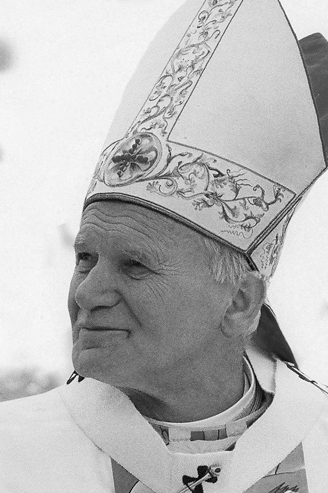
Pope Saint John Paul II’s First Good Friday Homily
ADDRESS OF HIS HOLINESS JOHN PAUL II AT THE CONCLUSION OF THE STATIONS OF THE CROSS AT THE COLOSSEUM Good Friday, 13 April 1979 When we make the Way of the Cross from one station to the next, in spirit we are always at the spot wherethis journey had its “historical” place: where it[…]Continue reading→
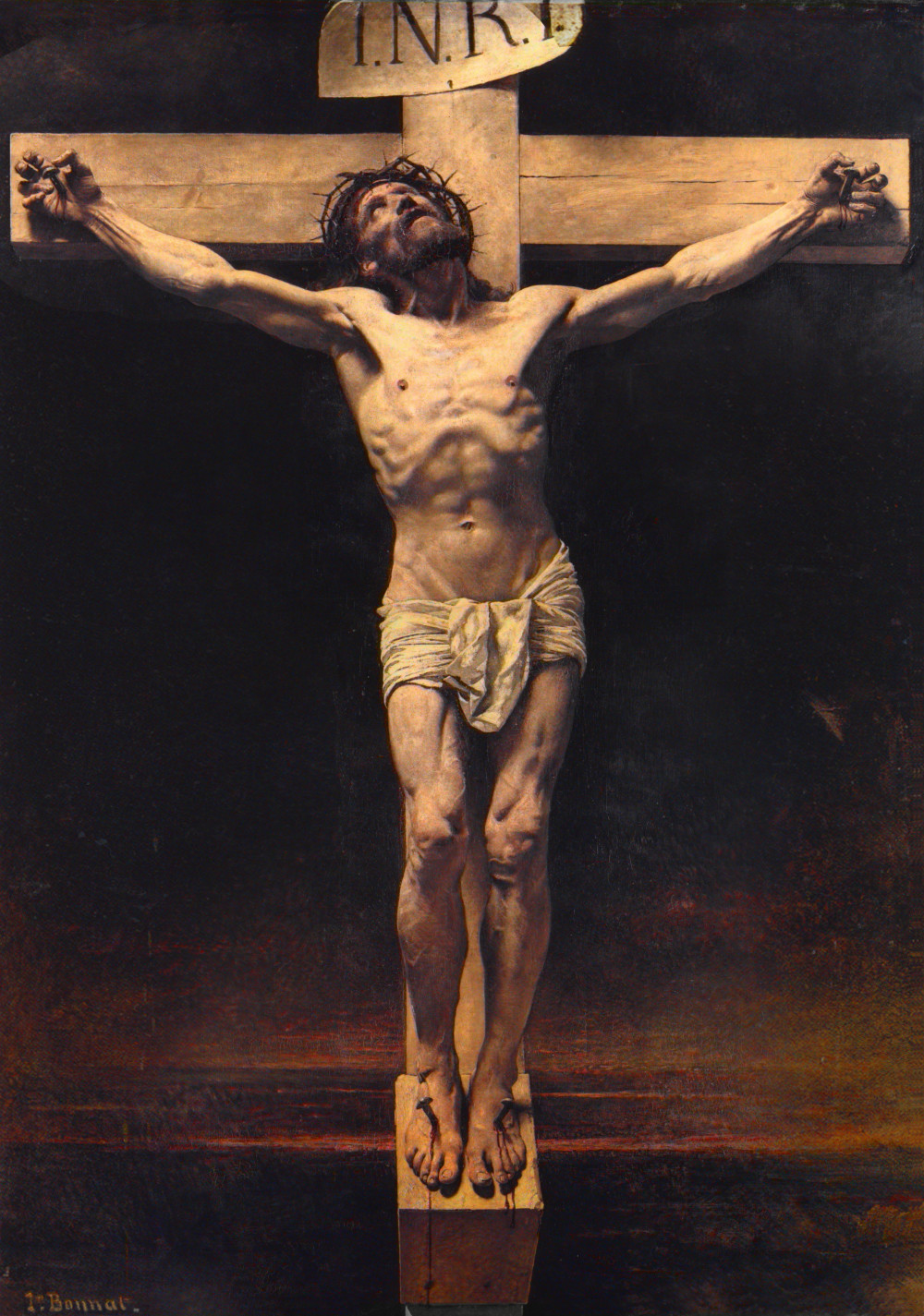
A Meditation for Good Friday: How To Undo the Effects of Sin?
Cardinal Newman, now Saint John Henry Newman, was a towering figure of nineteenth-century Catholicism who is almost universally admired. I say “almost” because not everyone likes him. I knew a priest once, Arthur Caulkins, who has become disenchanted with Newman. As an undergraduate Arthur had been enamoured of Newman, and this interest continued when he[…]Continue reading→
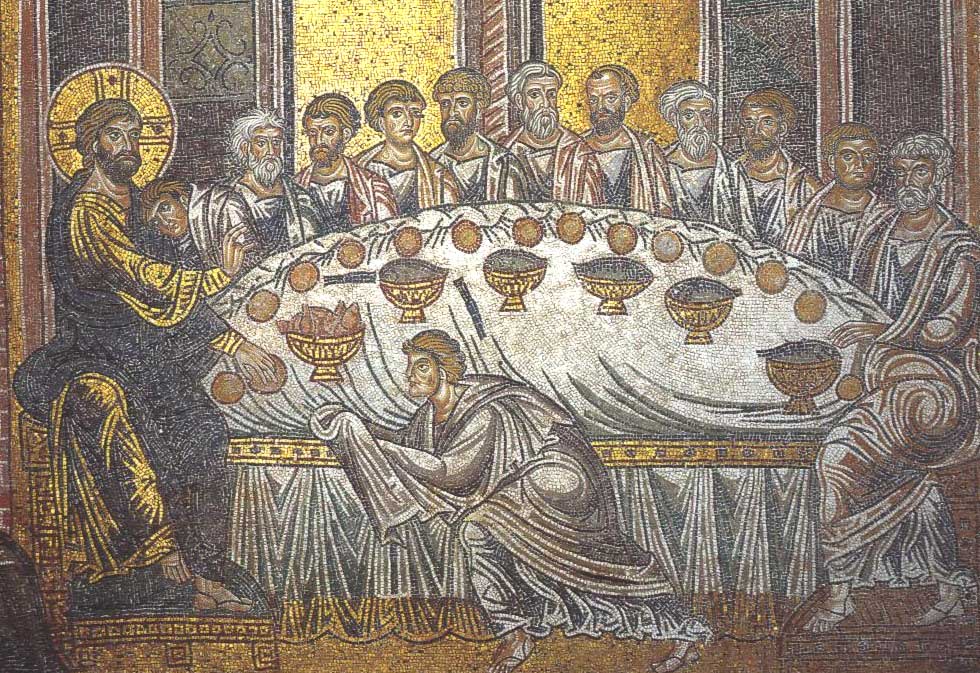
Pope Benedict’s Last Holy Thursday Homily
MASS OF THE LORD’S SUPPER HOMILY OF HIS HOLINESS BENEDICT XVI Basilica of St John Lateran Holy Thursday, 5 April 2012 Photo Gallery (Video) Dear Brothers and Sisters! Holy Thursday is not only the day of the institution of the Most Holy Eucharist, whose splendour bathes all else and in some ways draws it to[…]Continue reading→