
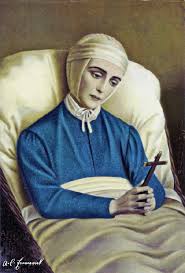
The Suffering of Blessed Anne Catherine Emmerich
February 9th marks the anniversary of the death of Bl. Anne Catherine Emmerich in 1824. An Augustinian nun, she was highly favoured by God from a very young age with the grace of having intimate knowledge of the divine through visions and supernatural visits from her guardian angel, many saints, Our Lady, and of course, Our Blessed Lord Himself. Bl. Anne Catherine is well known for her prophecies, visions and insights into all aspects of salvation history. What is less known was her desire for a life of redemptive suffering in union with Our Lord, a life of profound humility, obedience and countless acts of charity toward the sick and the poor.
Her deep desire to suffer with Our Lord was present from an early age. Her voluntary mortifications reflected her love of hard physical work and suffering for souls. She ate and drank only what was necessary and only what was rejected by others. She prayed all hours of each night; in the winter, she knelt on the snow. Her bed consisted of planks shaped like a cross on the floor. Throughout her life, Bl. Anne Catherine communicated with the souls in Purgatory as she offered all her prayers, works and suffering for them. From childhood, she was visited by suffering souls, often in groups, who begged her assistance.
At the age of twenty-four, before her entrance into religious life, she was given the grace to experience the visible and actual pain of Our Lord’s crown of thorns. She frequently suffered days and nights of terrible pain and swelling about her forehead and temples. The bandage strips wrapped about her head many times did not stem the flow of blood.
Her entry into the novitiate at the Augustinian convent of Agnetenberg in Dulmen, Germany, in 1802 marked the beginning of an increase in her most severe sufferings. Some were because of accusations, misunderstandings, undeserved punishments and discrimination she endured because of her family’s poverty and because of her strictness in following the rules of the Order. The Sisters were not aware of the special graces imparted to her by God. She had learned, while living in the world, to conceal these graces; but living in close quarters with many Sisters made them increasingly difficult to hide. One of her gifts from God that the Sisters did not understand was the grace of tears. She often spent hours in church weeping over the sins and ingratitude of man, the sufferings of the Church, the imperfections of her Augustinian community and her own faults. Condemnation, jealousy and gossip about her spread throughout the convent. Since she knew interiorly what was said about her, the Sisters felt unnatural in her presence and charged her with eavesdropping into their conversations.
From 1802 until 1812, she silently lived with an intense pain around her heart that began when she asked the Lord to allow her to bear the punishment of sins against charity that the Sisters committed against her. In 1812, the impression of a cross appeared exteriorly at the area of her heart. The pain continued to intensify; little blisters developed and burst, causing colourless liquid drainage from the wound. Later, a smaller cross developed over the first mark. From here, blood flowed every Friday until 1814 when the blood drained less but the red colour of the cross became more intense.
By 1811, the convent was suppressed by the secular government and the Sisters were scattered and forced to find new lodgings. Since she was too ill to move, Bl. Anne Catherine remained at the convent with a faithful servant until October, 1813, when she was carried to a new dwelling.
On the 29th of December, 1812, while in a state of prayerful ecstasy, she begged the Lord to grant that she be allowed to suffer like Him. Immediately, intense pain struck her as blood flowed from her hands, feet and side. The agony from the stigmata was excruciating until the moment of her death. News of her stigmata became widely known, putting an end to her life of seclusion. Many people came to see her, some who became her friends and supporters, others who came to satisfy their curiosity, pass judgment, insult her or regard her as a spectacle. Bl. Anne Catherine begged Our Lord to remove the outward signs of the stigmata because of the difficulties they produced. After seven years her prayer was granted; however, the harrowing pain at the areas of the wounds continued. On subsequent Good Fridays, her wounds re-opened, causing copious amounts of blood to flow from them.
Many times, she took upon herself and offered to God the physical symptoms and spiritual battles of strangers who were dying so that they would be able to die serenely in a state of grace, reconciled to those with whom they were not at peace, and most importantly, reconciled to God. She patiently accepted these sufferings in obedience and humility, consenting to various medical treatments subjected upon her to address the symptoms of whatever illness she manifested although she knew they would be ineffective.
By 1823, one year before her death, her sufferings were for the sins from all time committed against Holy Mother Church by us, her sinful children; by our indifference, rejection and wasting of the torrent of graces for our salvation that our Saviour merited for us. She prayed to take on these sins and their due punishment as an offering to God. Her petition was granted and her sufferings increased even more. The faithful companions who ministered to her described her as remaining “motionless, insensible, looking like a dying lamb” for many days on end, even as she bore these punishments with “patience and sweetness.” When her companions asked how she was, she would answer sweetly, “My sufferings are most salutary.”
Towards the end of 1823, her excruciating agony became even more indescribable. She revealed that the Lord granted her more graces, asking her to “suffer as I suffered, without asking the reason why.” Bl. Anne Catherine, who usually kept silent while in harrowing pain, now began to groan under the weight of the heightened torment she experienced.
When death was imminent, and as her friends and family gathered to be with her, she begged them to stop saying good things about her. In a weakened voice, she explained: “Ah for the love of God, do not praise me – that keeps me here because I then have to suffer double… Do not praise me, but let me die in ignominy with Jesus on the Cross… I cannot die if so many good persons think well of me through a mistake; I beg of you to tell them all that I am a wretched sinner! Would that I could proclaim so as to be heard by all men, how great a sinner I am.”
Death came on the evening of February 9th, 1824, followed by her burial on Friday, February 13. Six or seven weeks later, her grave was re-opened in the presence of civil authorities and seven witnesses to lay to rest the rumours that her body had been stolen. They observed that her body resembled a sleeping woman smiling sweetly and there was no odour of bodily decay. In February 1975, her remains were moved to Holy Cross Church in Dulmen, Germany.
Bl. Anne Catherine’s desire to suffer with Our Lord was fueled by her great love for Him. Her life was a sacrificial offering of reparation for the innumerable offences that continue to be committed against Our Saviour and to save souls. She prayed: “Lord, not my will but Thine be done. If my prayers and sufferings are useful let me live a thousand years, but grant that I may die rather than ever offend Thee.” Her sufferings were joined so intimately with Our Blessed Lord not just in the visible signs and the cruelty and ridicule of unbelievers, but also in the sins that she felt as an impossibly oppressive weight upon her: the sins committed against the Catholic Church by us, the members of the mystical Body of Christ. As we prepare for Lent we ought to reflect on Bl. Anne Catherine’s heroic suffering and ask her assistance as we unite our own hardships with the sufferings of Christ.
Blessed Anne Catherine Emmerich, ora pro nobis.
Source: The Dolorous Passion of Our Lord Jesus Christ From the Visions of Anne Catherine Emmerich, Charlotte, North Carolina, Tan Books, 2012.

Remembering Father Alphonse de Valk
(Today marks the sixth anniversary of the death of Father Alphonse de Valk, C.S.B., a faithful, courageous and indefatigable Basilian priest, pro-life-and-family apostle, and the founder of Catholic Insight magazine. Here is what we wrote those on his entering into eternity five years ago, as we continue to remember him in our prayers and thoughts)[…]Continue reading→

Divine Mercy Sunday – An Echo of Every Mass
Reach out your hand and put it in my side. Do not doubt but believe’… ‘My Lord and my God!’ (Jn. 20:18)). Today is Divine Mercy Sunday, and as we celebrate the end of the Easter Octave, we contemplate the wounded side of our Saviour, the Church’s source of life. On Good Friday in the[…]Continue reading→

Saint Stanislaus of Szczepanów
We celebrate Saint Stanislaus today (+ April 11, 1079), in light of this Easter Octave, a bishop and martyr who accepted the episcopacy only at the direct order of Pope Alexander II. He proved a wise and courageous leader of his flock, put to death by his own king, Boleslaus, for rebuking the monarch’s ‘immoral[…]Continue reading→

First Holy Communion: Sermon from May 16, 1943
Here is a sermon from the good old days by +Rev. Msgr. Vincent Nicholas Foy (August 14, 1915 – March 13, 2017), from 1943. Readers may recall that Pope Saint Pius X, by the decree Quam Singulari in 1910, lowered the customary age of reception of Holy Communion – after the rigours of the plague[…]Continue reading→

In the Glorious Light of Easter, Alleluia!
Set your minds on things that are above, not on things that are on earth, for you have died, and your life is hidden with Christ in God. When Christ who is your life is revealed, then you also will be revealed with him in glory (Col. 3:3-4). The Resurrection of Our Lord and Saviour[…]Continue reading→

An Ancient Homily for Holy Saturday
The time between Good Friday and Easter Sunday is one of waiting, in silence, as the world wonders – anticipates – what will happen, after the death of Christ. We re-live this time each year in the anamnesis of our liturgy, and in turn look forward to the glorious re-creation of all things at the[…]Continue reading→

Europe’s Long Descent
(As we meditate on this day on Christ’s burial, and His descent into hell, it is fitting to ponder here with contributor Peter Marcus how the world seems to be heading there as well. The difference is that, although God cannot ‘redeem’ hell, nor those therein, He can and did redeem the world. There is[…]Continue reading→
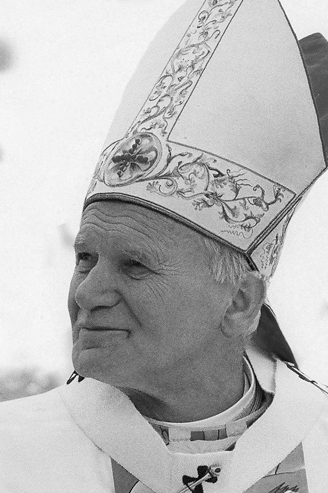
Pope Saint John Paul II’s First Good Friday Homily
ADDRESS OF HIS HOLINESS JOHN PAUL II AT THE CONCLUSION OF THE STATIONS OF THE CROSS AT THE COLOSSEUM Good Friday, 13 April 1979 When we make the Way of the Cross from one station to the next, in spirit we are always at the spot wherethis journey had its “historical” place: where it[…]Continue reading→
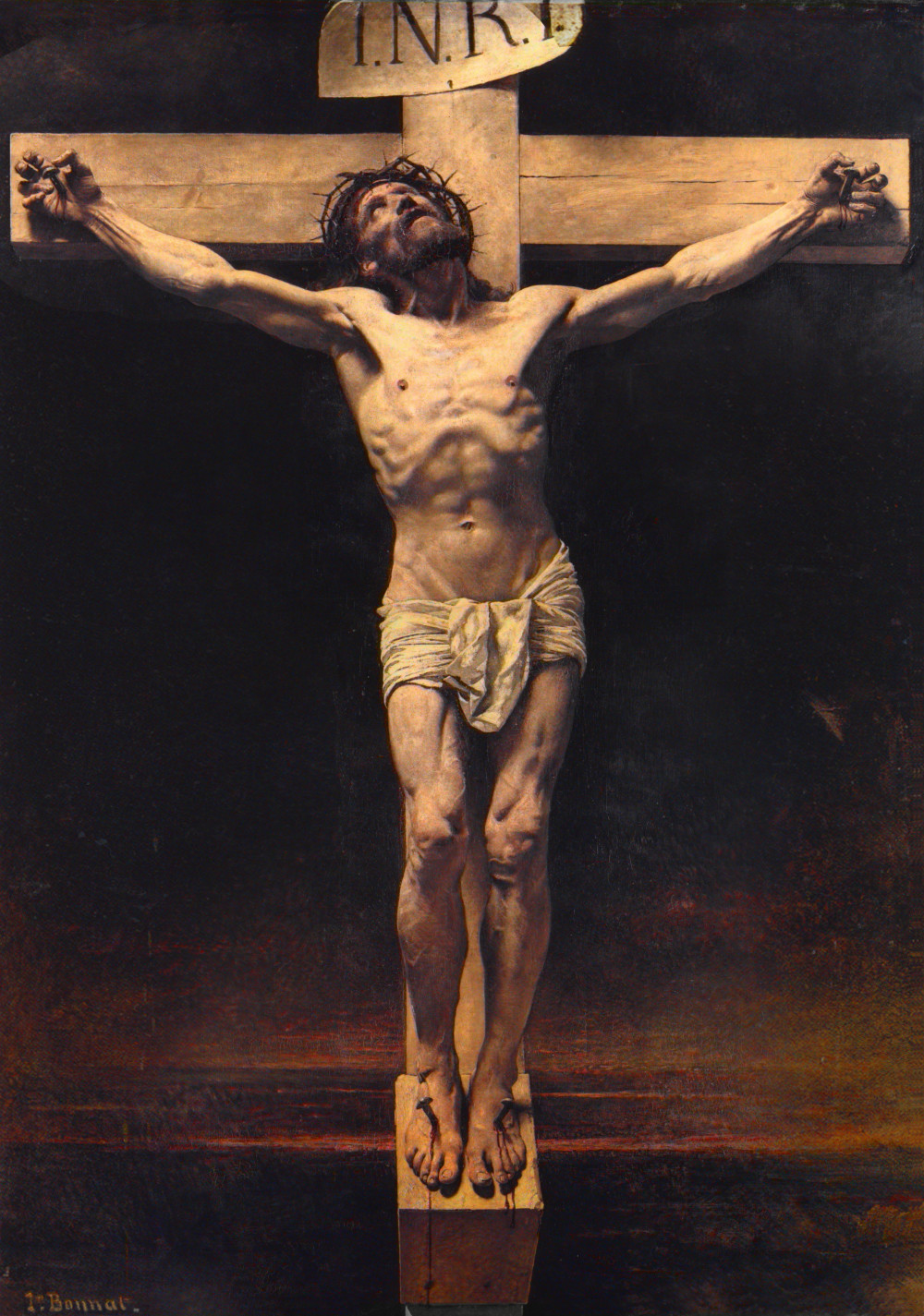
A Meditation for Good Friday: How To Undo the Effects of Sin?
Cardinal Newman, now Saint John Henry Newman, was a towering figure of nineteenth-century Catholicism who is almost universally admired. I say “almost” because not everyone likes him. I knew a priest once, Arthur Caulkins, who has become disenchanted with Newman. As an undergraduate Arthur had been enamoured of Newman, and this interest continued when he[…]Continue reading→
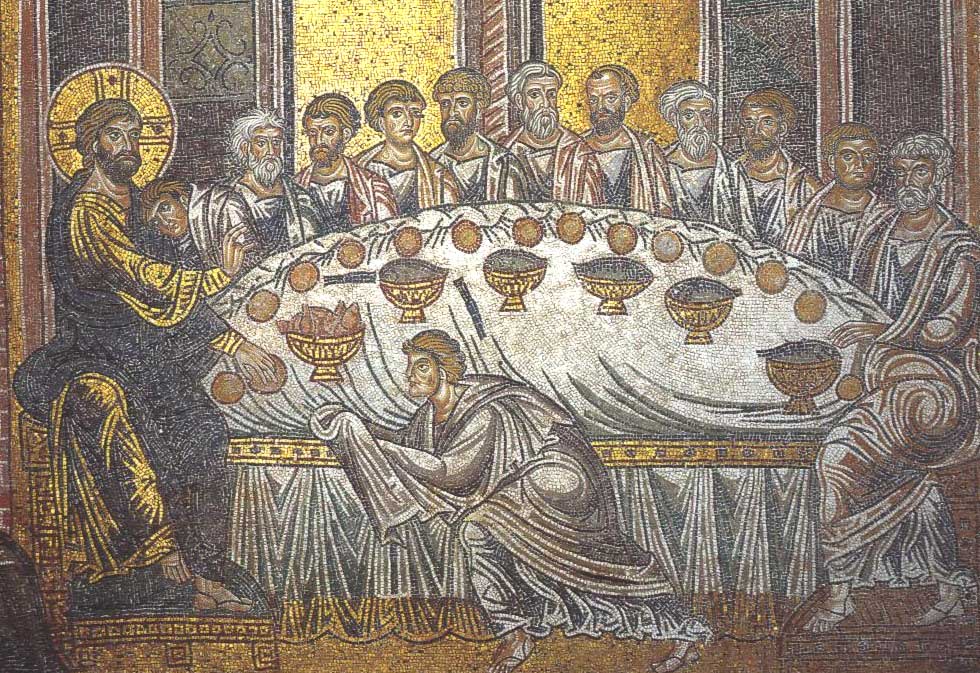
Pope Benedict’s Last Holy Thursday Homily
MASS OF THE LORD’S SUPPER HOMILY OF HIS HOLINESS BENEDICT XVI Basilica of St John Lateran Holy Thursday, 5 April 2012 Photo Gallery (Video) Dear Brothers and Sisters! Holy Thursday is not only the day of the institution of the Most Holy Eucharist, whose splendour bathes all else and in some ways draws it to[…]Continue reading→