
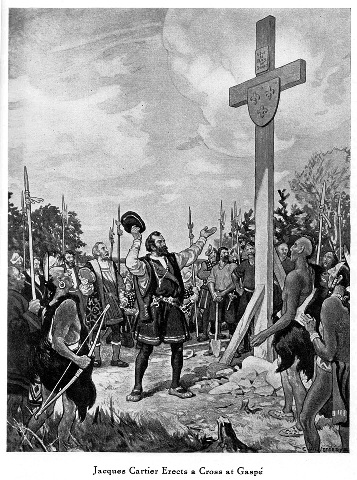
Third Sunday and the Foolishness of the Cross
For the message about the Cross is foolishness to those who are perishing, but to us who are being saved, it is the power of God. (1 Cor. 1:18). ⧾
The Gospel reading records the beginning of Our Lord’s public ministry; the call of the first Apostles, the proclamation of the good news of the kingdom, and His ministry of healing. The Church through the ages continues this proclamation and ministry by preaching Christ Crucified. But we preach Christ crucified, a stumbling block to Jews and folly to Gentiles, but to those who are called, both Jews and Greeks, Christ the power of God and the wisdom of God (1 Cor. 1:23-24). As we reflect on and contemplate Our Lord’s work of salvation, we see also that prayer is not absent from this mission; for the Gospels tell us that Our Lord often withdrew to a solitary place to pray (Cf. Mk. 1:35). To know the wisdom of Christ Crucified it is necessary to pray. We may summarize His mission and ours as one of work, prayer and sacrifice; for sacrifice was the chief act of Our Lord’s earthly life.
As we noted in our meditation last Sunday, this mission engages all of us actively through the works of mercy and service and passively or mysteriously as we share in the mission of the Son of God, the Lamb of God through the union of our own suffering with His. When we come to understand this truth we see how every prayer, every sacrifice, every act of penance, every act of charity is at the service of the saving Mystery of Christ and nothing is without value or meaning. This is the power and the wisdom of God, of Christ Crucified.
If there is a crisis of meaning in the greater culture and even among Catholics whose mission it is to be the light of the world and the salt of the earth, it is incumbent upon us to recover our identity and to be very clear about the ultimate purpose of our life. Everything in nature has a purpose. Human life is no different. Perhaps the single most important fact that has led to the moral crisis of our time is the denial of an ultimate purpose to life and indeed, of human existence itself. Questions about the meaning of human existence are as old as humanity itself but we believe that the only correct answer to these questions or question can only be given by God, the origin and destiny of all that is for in Him we live and move and have our being (Acts 17:28). This truth has been revealed to us by Our Lord and Saviour Jesus Christ.
This is a truth first learned in the family. The family is rightly understood as the original cell of social life…the family is the community in which, from childhood, one can…begin to honour God (Catechism of the Catholic Church, 2207); and for this reason it can and should be called a domestic church (Familiaris Consortio, 21). The Christian family is a community of faith, hope and charity and it is the only place most of us ever learn life’s most important value; charity: caritas or agape, the love that is the very nature of God. The same can be said of the parish or the parish family. For those whose family life has been less than ideal, this important lesson is learned in the heart of the Church. Here too we discover this charity and this God, not as an abstract idea but in the concrete reality of the Eucharistic Sacrifice and in the life of charity that flows from this Sacrifice. The Eucharist that we receive is not merely an image or symbol of Our Lord’s sacrificial love. The Eucharist is Our Lord’s Sacrifice on the Cross, His sacrificial love. The Sacrifice of Christ and the sacrifice of the Eucharist are one single sacrifice. Only the manner of the offering is different (Catechism of the Catholic Church, 1367). It is important for us see the link between the life of our individual families and the parish family. The life that is fostered both in our homes and in this our common home is one and the same: a life of prayer, work and sacrifice expressing itself in an intense life of charity that has as its goal our transformation in Christ.
This is the goal of Catholic life as revealed by God Himself and we achieve this goal through humble lives characterised by prayer, work and sacrifice. Those who awaken to this truth and live by it are the greatest friends of the human family, as our history clearly teaches us. The noise of the world would have us believe that we must concern ourselves with undefined and indeterminate concepts like sustainability goals, the environment, global compacts. These are distractions that detract from the pursuit of personal holiness, the hard work whose goal is the perfection of charity in us; our transformation in Christ. What is needed is the light of faith! It is high time to restore our Catholic culture, and in so doing to provide a source of hope for those who live in the land of deep darkness, the darkness of unbelief and of meaningless existence. Our future is in tradition. In the early 1950s the Venerable Archbishop Fulton Sheen observed: Humanity in a crisis is generally insensitive to the gravity of the times in which it lives. Men do not want to believe their own times are wicked, partly because they have no standards outside of themselves by which to measure their times. If there is no fixed concept of justice, how shall men know it is violated? Only those who live by faith really know what is happening in the world: the great masses without faith are unconscious of the destructive processes going on, because they have lost the vision of the heights from which they have fallen. This is a profound insight worthy of further reflection and consideration; an insight that should spur us on to deepen the knowledge of our faith and of sacred tradition.
Our faith in Christ Crucified, the power of God and wisdom of God provides us with a godly wisdom, a body of fixed concepts, moral absolute enabling us to gain victory over the lies and half-truths of the world. Ideally, as we respond to the call to personal conversion which is at the heart of every Gospel reading, we endeavour to bring about a unity of worship and life that manifests itself in a life of virtue and meaning bringing grace into our intimate social circles and into the world. What is needed more than anything from us is a continual return to the quiet unsung Christian sacrificial life exemplified by the saints; defined by charity, humility and hard work. St Paul exhorts us to such a life when he says, whatever your task, work heartily, as serving the Lord (Col. 3:23). A sacrificial life is a life centred on Our Lord’s Cross; foolishness to those who are perishing, but to us…the power of God (1 Cor. 1:18).
An integrated life is one that we seek to establish for ourselves, our families and by extension, our greater culture. In the absence of order or meaningful purpose, Christians have always imbued the greater culture with values and truths that affirm the dignity of the human person. This is always our point of reference because we have our origin and destiny in God. There is a distinct Catholic culture that we must foster and defend because the wellbeing and salvation of the world depends upon it. For the message about the Cross is foolishness to those who are perishing, but to us who are being saved, it is the power of God. (1 Cor. 1:18). It is this power that we wish to employ in the service of the work of salvation for our prayer always is that none be lost.⧾

Remembering Father Alphonse de Valk
(Today marks the sixth anniversary of the death of Father Alphonse de Valk, C.S.B., a faithful, courageous and indefatigable Basilian priest, pro-life-and-family apostle, and the founder of Catholic Insight magazine. Here is what we wrote those on his entering into eternity five years ago, as we continue to remember him in our prayers and thoughts)[…]Continue reading→

Divine Mercy Sunday – An Echo of Every Mass
Reach out your hand and put it in my side. Do not doubt but believe’… ‘My Lord and my God!’ (Jn. 20:18)). Today is Divine Mercy Sunday, and as we celebrate the end of the Easter Octave, we contemplate the wounded side of our Saviour, the Church’s source of life. On Good Friday in the[…]Continue reading→

Saint Stanislaus of Szczepanów
We celebrate Saint Stanislaus today (+ April 11, 1079), in light of this Easter Octave, a bishop and martyr who accepted the episcopacy only at the direct order of Pope Alexander II. He proved a wise and courageous leader of his flock, put to death by his own king, Boleslaus, for rebuking the monarch’s ‘immoral[…]Continue reading→

First Holy Communion: Sermon from May 16, 1943
Here is a sermon from the good old days by +Rev. Msgr. Vincent Nicholas Foy (August 14, 1915 – March 13, 2017), from 1943. Readers may recall that Pope Saint Pius X, by the decree Quam Singulari in 1910, lowered the customary age of reception of Holy Communion – after the rigours of the plague[…]Continue reading→

In the Glorious Light of Easter, Alleluia!
Set your minds on things that are above, not on things that are on earth, for you have died, and your life is hidden with Christ in God. When Christ who is your life is revealed, then you also will be revealed with him in glory (Col. 3:3-4). The Resurrection of Our Lord and Saviour[…]Continue reading→

An Ancient Homily for Holy Saturday
The time between Good Friday and Easter Sunday is one of waiting, in silence, as the world wonders – anticipates – what will happen, after the death of Christ. We re-live this time each year in the anamnesis of our liturgy, and in turn look forward to the glorious re-creation of all things at the[…]Continue reading→

Europe’s Long Descent
(As we meditate on this day on Christ’s burial, and His descent into hell, it is fitting to ponder here with contributor Peter Marcus how the world seems to be heading there as well. The difference is that, although God cannot ‘redeem’ hell, nor those therein, He can and did redeem the world. There is[…]Continue reading→
Pope Saint John Paul II’s First Good Friday Homily
ADDRESS OF HIS HOLINESS JOHN PAUL II AT THE CONCLUSION OF THE STATIONS OF THE CROSS AT THE COLOSSEUM Good Friday, 13 April 1979 When we make the Way of the Cross from one station to the next, in spirit we are always at the spot wherethis journey had its “historical” place: where it[…]Continue reading→
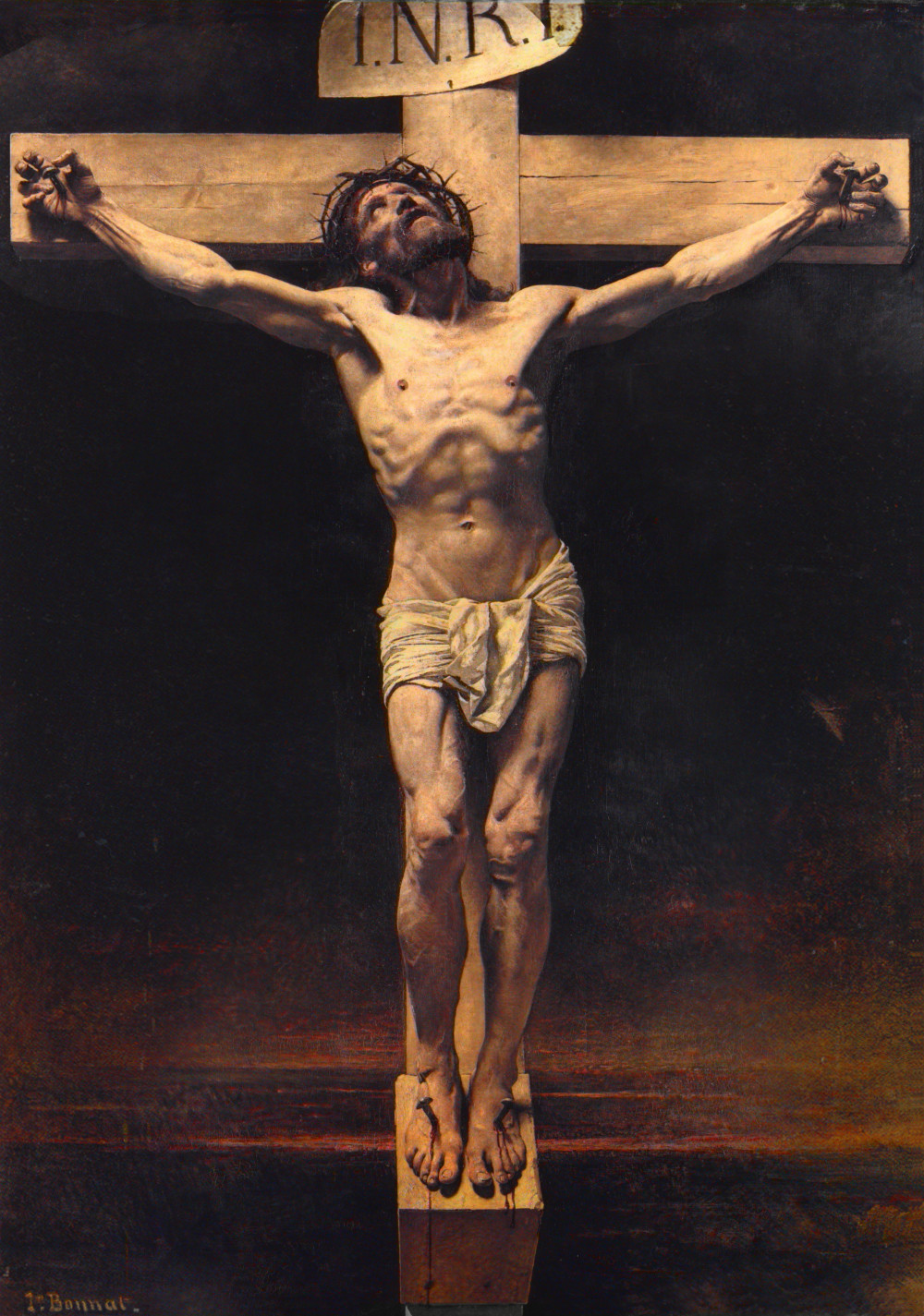
A Meditation for Good Friday: How To Undo the Effects of Sin?
Cardinal Newman, now Saint John Henry Newman, was a towering figure of nineteenth-century Catholicism who is almost universally admired. I say “almost” because not everyone likes him. I knew a priest once, Arthur Caulkins, who has become disenchanted with Newman. As an undergraduate Arthur had been enamoured of Newman, and this interest continued when he[…]Continue reading→
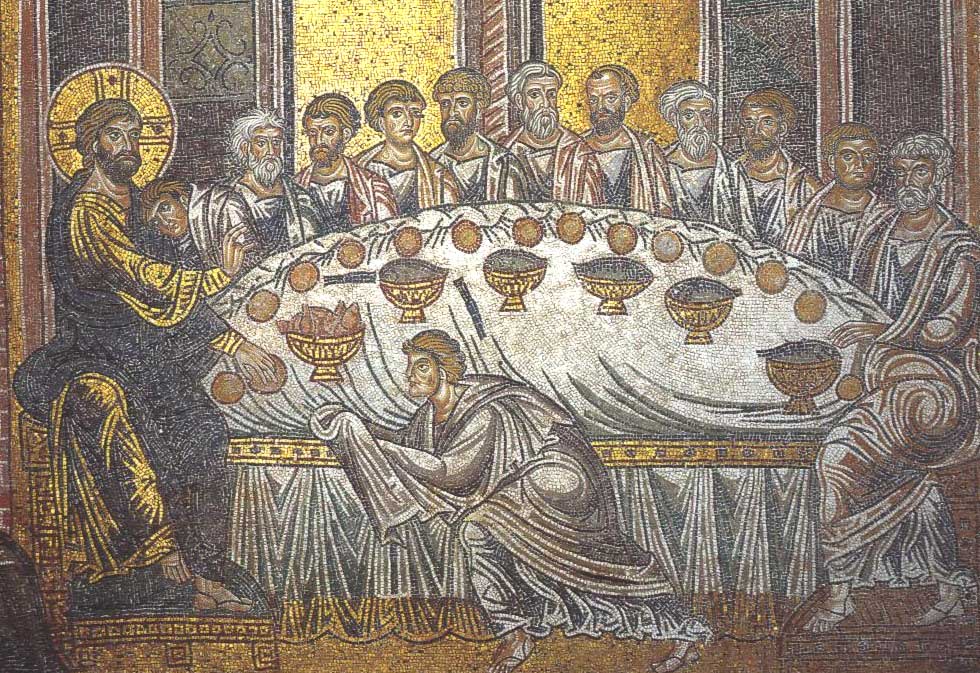
Pope Benedict’s Last Holy Thursday Homily
MASS OF THE LORD’S SUPPER HOMILY OF HIS HOLINESS BENEDICT XVI Basilica of St John Lateran Holy Thursday, 5 April 2012 Photo Gallery (Video) Dear Brothers and Sisters! Holy Thursday is not only the day of the institution of the Most Holy Eucharist, whose splendour bathes all else and in some ways draws it to[…]Continue reading→