
Catholic and Christian Unity
Today, the 19th of January and the Second Sunday in Ordinary Time, marks the beginning of the Church unity octave, a week of prayer for the reunion of Christians—Protestant, Orthodox and Catholic. One doesn’t hear much about Church unity these days. I believe the reason for a decrease in interest is the fact that the Christian churches are now in the third stage of interdenominational dialogue. The first stage occurred when we stopped calling one another names. We Catholics no long routinely referred to Protestant as heretics, and they, generally, have dropped the practice of referring to the Catholic Church as “the whore of Babylon.” In the second stage of dialogue, we examined areas of agreement as found in the principles and beliefs that all Christians accept, what C.S. Lewis persuasively presents in his ever-popular Mere Christianity. Obviously, redemption, freely bestowed on us by the death and resurrection of Jesus, is the central shared tenet of our faith. The importance of the Bible would be another and even, sometimes, the authority of the ancient creeds, such as the Apostles’ and the Nicene. This is all well and good, but eventually we have to move to the third stage. In it, we face the fact that there are irreconcilable differences among the various forms of Christianity, so that, if any sort of reunion is to be achieved, it will come about only if one or other of the parties says, “I was wrong.” Three such difficulties come to mind at once, in that certain forms of Calvinism profess doctrines that strike me as antithetical to Catholicism. The first of them is double predestination; the second is sola Scriptura, the Bible and the Bible alone; and the third is known as “total depravity.” I learned to look on these doctrines with a more favourable eye thanks to a devout Presbyterian gentleman by the name of Leslie Neatby. My acquaintance with Doctor Neatby goes back to 1979, when we inaugurated a Friday ritual which began with an hour of reading Latin together. Afterwards there would be tea in the priests’ dining room at Saint Thomas More College in Saskatoon, where our company consisted of academics who came to nourish mind and body. As the weeks succeeded one another and the Doctor’s stories became familiar, but never stale, my respect and admiration increased. I came to discover in him the embodiment of a form of Protestantism which I had never before comprehended nor, to be frank, had much wanted to. His witness to the principles of predestination, the all-sufficiency of Scripture and of the total depravity of fallen man led me to acknowledge that Protestantism in its unadulterated form had a breath and a profundity which could create cultures and form societies.
The doctrine of predestination lay behind, I believe, the stoic fortitude which never failed to impress us as we witnessed Doctor Neatby’s response to life’s vicissitudes. Because God had from all eternity predetermined every event, nothing could happen that would discompose a Christian. Hence, Doctor Neatby never complained, whatever the provocation, including on one memorable day the cancellation of a visit with his daughter and her family in Nova Scotia. I was the culprit in that I had forgotten about driving him to the airport, and when I rushed in too late to meet my obligation I found him calmly reading in his room, the whole trip off. “Just as well,” he said placidly, “for it’s a lot of work for an old man.” He brought the same powers of accommodation to the fall that robbed him first of his easy walk and eventually of his mobility. Only the death of his beloved wife could shake his composure to the extent of eliciting from time to time a sigh and a quiet exclamation of “Poor Murdena.” When he asked me to suggest something he might read for consolation I unwisely recommended Cardinal Newman’s Anglican sermons, only to find that they operated in a domain that was too remote from Doctor Neatby’s religious practice for him to profit from them.
The second principle of Protestantism, its exclusive reliance on the Bible, instilled in my friend a respect and a love for the printed word. In his extreme old age, as his eyesight failed, various substitutes for reading were attempted: television, tape recorders, head sets. He seemed incapable of mastering their use, a tribute I always thought to his affection for print rather than an inability to run a machine. His Bible—the King James version—was always at hand, but so were the works of the authors he had read and reread throughout his life. He could not be called an omnivorous reader, for he could not stomach or even comprehend contemporary writing, which he found crude and vulgar. But good literature of ever genre seemed to shine for him with the reflected glory of Scripture itself. His primary study had been Latin and Greek antiquity. After receiving his doctorate from the University of Toronto in 1950, he taught at Acadia University in Wolfville, Nova Scotia. As his retirement approached, and with it a return to Saskatchewan, he developed his long-standing interest in the Arctic into an avocation, eventually publishing six books on the exploration of the Canadian north. But in conversation, it was the nineteenth-century novel that came to the fore, and Doctor Neatby would recite entire pages from one or another, such as the address to the jury of Serjeant Buzfuz at the trial of Mr. Pickwick or the exchanges between Bartle Massey and Mrs. Poyser from Adam Bede. The pages of Scripture might from his perspective contain all that is necessary for salvation, but the commentary provided by worthy secular authors could be regarded as a delightful oveflow of the inspired text.
Of all the doctrines of Protestantism, the one I find most antipathetic is that of total depravity, according to which all man’s actions are contaminated by sin, even after he has experienced regeneration in Christ. This austere doctrine, too, was illuminated for me by the attitude of Doctor Neatby to the joys that came his way. He seemed surprised, almost incredulous, that a person such as himself, a sinner, I suppose he would have said, should know the love of a wife and daughter, should experience the joys of learning, should find friendship and support. He remembered his father shaking with laughter as, half-apologetically, he read the comic novels of P.G. Wodehouse. How could it be permissible or even possible for a sinner to enjoy that much amusement in this vale of tears? Doctor Neatby seemed almost startled at any good fortune, from discovering a companion to share his interests to a finding a piece of cheese with his muffin at tea. It is simply more than we have any right to. Existence itself, like salvation, is a gift we can never deserve; but how wonderful to have received it.
In my exploration of Protestantism as exemplified in my friend I have learned that some of the elements that Reformed Christianity adapted from the mediæval Church could be reclaimed by us Catholics and so be restored to their full and natural setting. Predestination points to God’s providence active throughout history and accommodating with ever greater love man’s mistakes even as, under the direction of God’s grace, we are in fact free agents. Similarly, the role of Scripture is to assure us of God’s revelation, but it must be honoured in its fulness, that is, as it has been lived in the history of the Church, for that is one definition of what we honour as “Tradition.” Even the austere doctrine of man’s continuing sinfulness reminds us that, even as we recognize the sinlessness of Our Lady, we know that each of us has been guilty of moral failures, . . . but also that our generous God is eager to forgive them. Every Catholic will thus be able to accept all three in their full, authentic form, i.e., as taught by the Church. It was my good fortune to recover them by the witness of a Protestant gentleman.

Remembering Father Alphonse de Valk
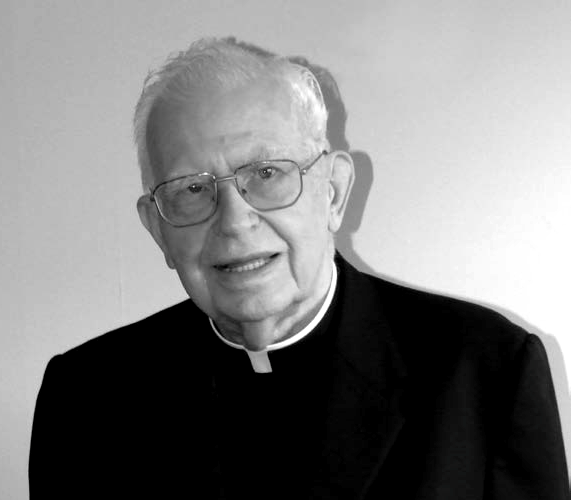
(Today marks the sixth anniversary of the death of Father Alphonse de Valk, C.S.B., a faithful, courageous and indefatigable Basilian priest, pro-life-and-family apostle, and the founder of Catholic Insight magazine. Here is what we wrote those on his entering into eternity five years ago, as we continue to remember him in our prayers and thoughts)[…]Continue reading→

Divine Mercy Sunday – An Echo of Every Mass
Reach out your hand and put it in my side. Do not doubt but believe’… ‘My Lord and my God!’ (Jn. 20:18)). Today is Divine Mercy Sunday, and as we celebrate the end of the Easter Octave, we contemplate the wounded side of our Saviour, the Church’s source of life. On Good Friday in the[…]Continue reading→

Saint Stanislaus of Szczepanów
We celebrate Saint Stanislaus today (+ April 11, 1079), in light of this Easter Octave, a bishop and martyr who accepted the episcopacy only at the direct order of Pope Alexander II. He proved a wise and courageous leader of his flock, put to death by his own king, Boleslaus, for rebuking the monarch’s ‘immoral[…]Continue reading→
First Holy Communion: Sermon from May 16, 1943
Here is a sermon from the good old days by +Rev. Msgr. Vincent Nicholas Foy (August 14, 1915 – March 13, 2017), from 1943. Readers may recall that Pope Saint Pius X, by the decree Quam Singulari in 1910, lowered the customary age of reception of Holy Communion – after the rigours of the plague[…]Continue reading→
In the Glorious Light of Easter, Alleluia!
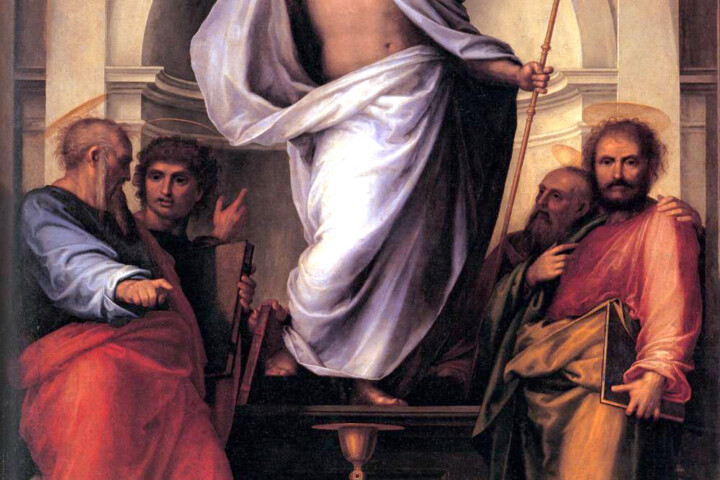
Set your minds on things that are above, not on things that are on earth, for you have died, and your life is hidden with Christ in God. When Christ who is your life is revealed, then you also will be revealed with him in glory (Col. 3:3-4). The Resurrection of Our Lord and Saviour[…]Continue reading→
An Ancient Homily for Holy Saturday
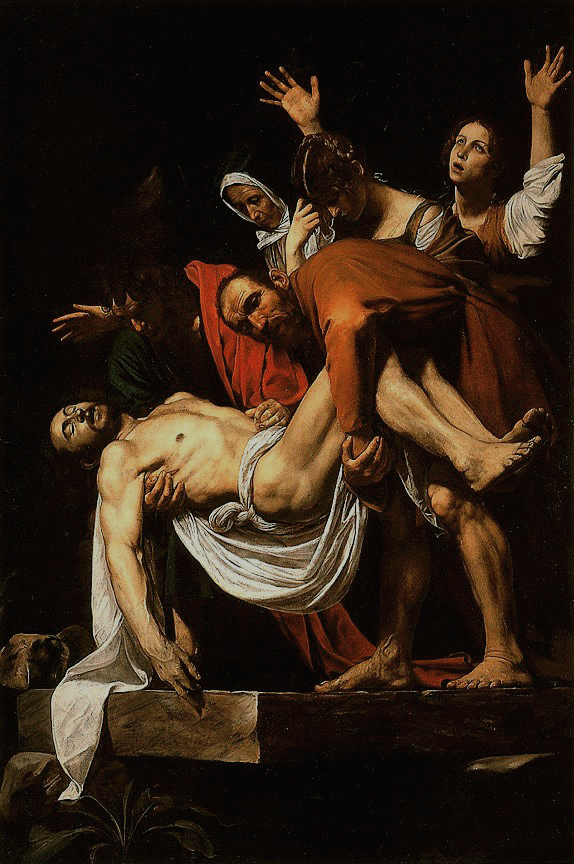
The time between Good Friday and Easter Sunday is one of waiting, in silence, as the world wonders – anticipates – what will happen, after the death of Christ. We re-live this time each year in the anamnesis of our liturgy, and in turn look forward to the glorious re-creation of all things at the[…]Continue reading→
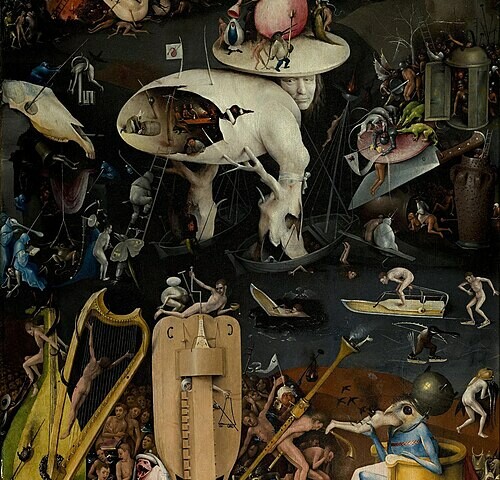
Europe’s Long Descent
(As we meditate on this day on Christ’s burial, and His descent into hell, it is fitting to ponder here with contributor Peter Marcus how the world seems to be heading there as well. The difference is that, although God cannot ‘redeem’ hell, nor those therein, He can and did redeem the world. There is[…]Continue reading→
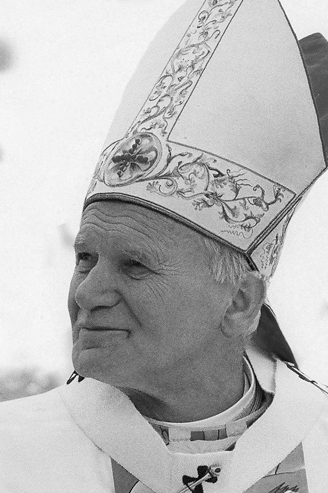
Pope Saint John Paul II’s First Good Friday Homily
ADDRESS OF HIS HOLINESS JOHN PAUL II AT THE CONCLUSION OF THE STATIONS OF THE CROSS AT THE COLOSSEUM Good Friday, 13 April 1979 When we make the Way of the Cross from one station to the next, in spirit we are always at the spot wherethis journey had its “historical” place: where it[…]Continue reading→
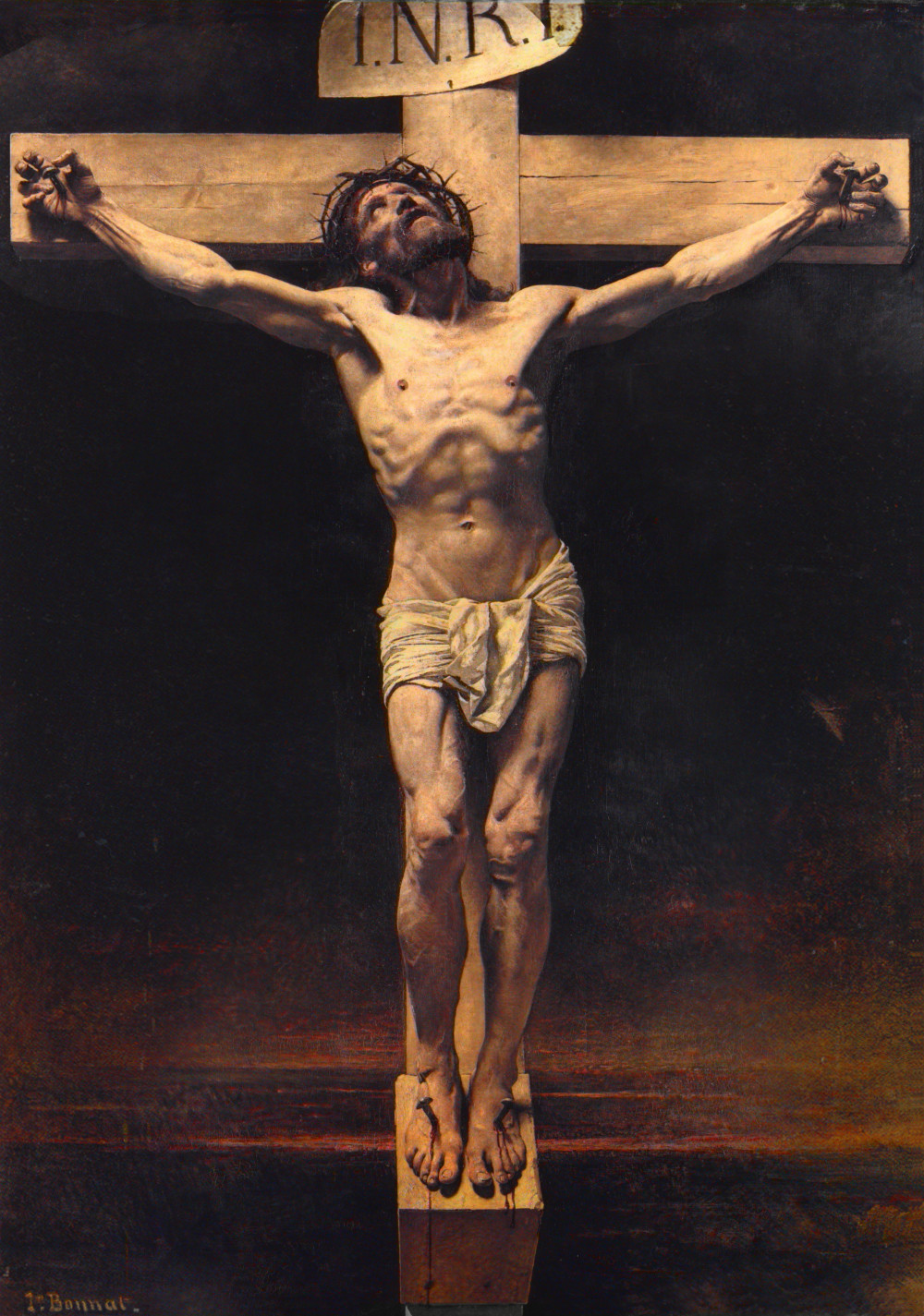
A Meditation for Good Friday: How To Undo the Effects of Sin?
Cardinal Newman, now Saint John Henry Newman, was a towering figure of nineteenth-century Catholicism who is almost universally admired. I say “almost” because not everyone likes him. I knew a priest once, Arthur Caulkins, who has become disenchanted with Newman. As an undergraduate Arthur had been enamoured of Newman, and this interest continued when he[…]Continue reading→
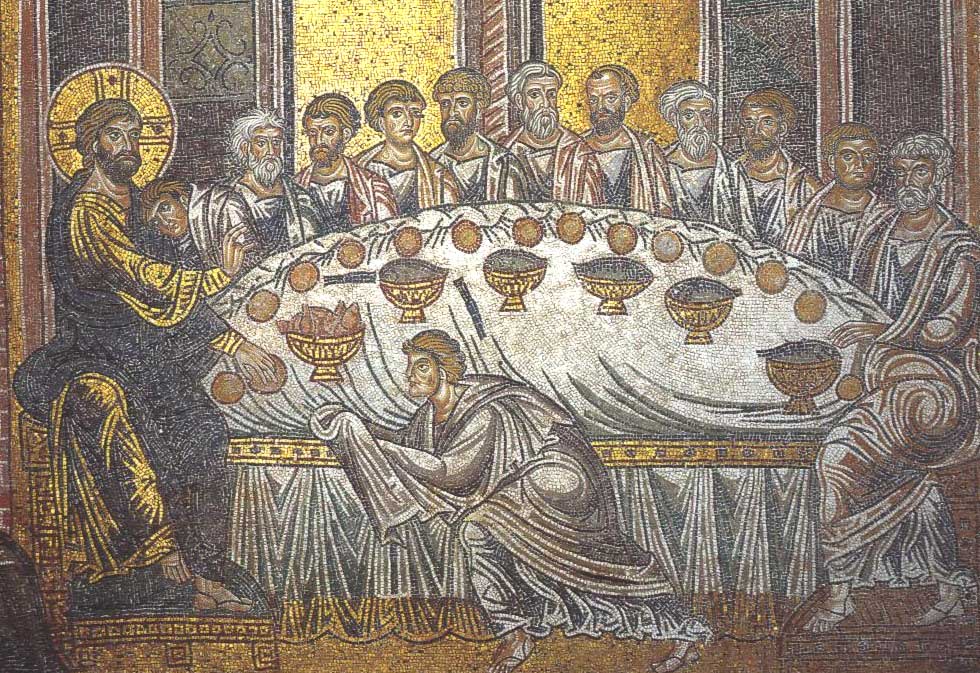
Pope Benedict’s Last Holy Thursday Homily
MASS OF THE LORD’S SUPPER HOMILY OF HIS HOLINESS BENEDICT XVI Basilica of St John Lateran Holy Thursday, 5 April 2012 Photo Gallery (Video) Dear Brothers and Sisters! Holy Thursday is not only the day of the institution of the Most Holy Eucharist, whose splendour bathes all else and in some ways draws it to[…]Continue reading→