
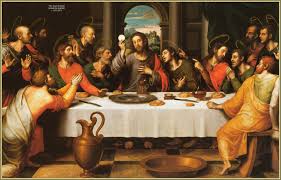
The Eucharistic Reign of Christ
‘Truly, I tell you, today you will be with me in Paradise’ (Lk. 23:43). ⧾
From the moment that Our Lord spoke these words, the Church has lived in this time frame. Although the chronology of time progresses and unfolds, the eternal today of God’s time reaches across and underlies all history. This today of the living God that we are called to enter is ‘the hour’ of Jesus’ Passover which reaches across and underlies all history (Catechism of the Catholic Church, 1165). St. Hippolytus further explains it in this manner: A day of long eternal light is ushered in for us who believe in Him, a day which is never blotted out: the mystical Passover (Ibid. 1165).
The eternal today is the Mass; for the Mass is the celebration of Our Lord’s Passover. This unending Sacrifice which Our Lord commanded us to offer and to celebrate is the eternal Mass. Through the ages this sacrificial Offering has been the very life of the Church and it is in the strength derived from this Sacrifice and only in this strength that Our Lord’s Kingdom is established, an eternal and universal kingdom: a kingdom of truth and life, a kingdom of holiness and grace, a kingdom of justice, love and peace (Preface, Solemnity of Christ the King, The Roman Missal).
Our Gospel reading today however, gives no indication of such a kingdom. Our text records the dialogue of three dying men, condemned to a cruel and slow death. The King between the two criminals has been rejected by His people. He hangs on the Cross alone. Betrayed by one of His friends, indicted on false charges, condemned by public opinion, tried before a prejudiced jury, convicted by a cowardly judge, He waits for death. He nevertheless makes an astonishing promise in response to the request of a dying man: ‘Jesus, remember me when you come into your kingdom’. He replies, ‘Truly, I tell you, today you will be with me in Paradise’ (Lk. 23:42-43).
In the course of His ministry Our Lord had often spoken of His kingdom; and by signs and wonders and above all by the power of His word had sought to establish it. St. Luke tells us that once, being asked by the Pharisees when the kingdom of God was coming, Our Lord answered: ‘The kingdom of God is not coming with signs to be observed …for behold, the kingdom of God is in the midst of you’ (Lk. 17: 20-21). These few words express the essential and complete truth of the human person in relation to God. The disciple of Christ who has accepted Our Lord’s invitation to belong to God’s kingdom produces its fruits by the power and presence of the Holy Spirit. But the fruit of the Spirit, says St. Paul, is love, joy, peace, patience, kindness, goodness, faithfulness, gentleness, self-control (Gal. 5:22).
Our Lord affirms the presence of this kingdom in our midst, indeed, within us as a reality that we endeavour to establish, foster, build up and share. The true disciple of Christ the King seeks the reign of Our Lord’s Sacred Heart first and foremost in his own heart. This is why we foster devotion to the Sacred Heart of Jesus as a practical means of furthering the social kingship of Jesus Christ. We who know and experience the benefits of having the heart and mind of Christ seek the establishment of God’s kingdom in every heart. Among other things, Our Lord’s ministry of preaching and healing was an effort to bring His listeners to understand this truth, namely: the kingdom of God is within you. It is within our reach. In other words, we have the power to establish this kingdom not by force, not by persuasion, but by humble charity – the most powerful force on earth. This is the power Our Lord used and only in this power is Our Lord’s kingdom established. It is a power that imposes nothing and proposes everything; for what one is able to accomplish through supernatural grace is endless.
Humble charity helps us to realise that in our lifetime we accomplish only a fraction of the magnificent enterprise that is God’s kingdom. We all contribute to its growth by our growth in holiness –humble charity at work in an enterprise that is eternal and universal; but its point of reference always and everywhere is the Holy Sacrifice of the Mass, the source and summit of the Church’s life and the font of all graces. Nourished and strengthened by the Eucharist, we become God’s fellow workers (1 Cor. 3:9). St. Paul uses this expression, a phrase that expresses more than just cooperation with God’s grace. As God’s kingdom becomes a reality in us, His indwelling through grace transforms our hearts and minds and the Sacred Heart of Our Lord truly becomes the King and centre of our hearts.
Our Lord wishes to be King of our hearts and when we welcome Him in our midst, in the very intimacy of our own individual soul, then we experience and already begin to participate in His eternal and universal kingdom. This is brought about most effectively and intimately through the transformation effected by Holy Communion, the fruit of the Sacrifice of the Mass. St. Peter Julian Eymard (+1868) a Saint known as the Apostle of the Holy Eucharist, teaches us that the Triumph of Christ the King is brought about through the Eucharist. Christus vincit, regnat, imperat; ab omni malo plebem suam defendat. )Christ conquers, He reigns, He commands. May He defend His people from all evil. Pope Sixtus V had these words engraved on the obelisk which stands in the centre of St. Peter’s Square in Rome. These magnificent words are in the present tense, and not in the past, to indicate that Christ’s triumph is always actual, and that it is brought about in the Eucharist and by the Eucharist. This is why even in the midst of the darkest confusion we never lose heart, for His Eucharistic Presence guarantees us the assistance of His grace and strength and Presence. May we never despair of His presence and help. His eternal today embraces all history including our own individual history, with its lights and shadows. Everything is illumined by the healing truth and light of Christ. St. Peter Julian further explains: Jesus does not rule over earthly territories, but over souls, and He does so through the Eucharist. A king must rule through his laws and through the love of his subjects for him. The Eucharist is the law of the Christian. How unhappy are the nations that no longer possess the Eucharist! [If I may paraphrase, how unhappy is the Catholic who has forsaken the Eucharist!] What darkness! What confusion in the minds! What a chill in the hearts! Satan alone rules supreme, and with him all evil passions. As for us, the Eucharist delivers us from all evil.
For this, we thank Our Lord and King; and with grateful hearts we pray that His Kingdom may be firmly established in every human heart to God’s greater glory and the salvation of all. Christus vincit, regnat, imperat; ab omni malo plebem suam defendat. Christ conquers, He reigns, He commands. May He defend His people from all evil. ⧾

Remembering Father Alphonse de Valk
(Today marks the sixth anniversary of the death of Father Alphonse de Valk, C.S.B., a faithful, courageous and indefatigable Basilian priest, pro-life-and-family apostle, and the founder of Catholic Insight magazine. Here is what we wrote those on his entering into eternity five years ago, as we continue to remember him in our prayers and thoughts)[…]Continue reading→

Divine Mercy Sunday – An Echo of Every Mass
Reach out your hand and put it in my side. Do not doubt but believe’… ‘My Lord and my God!’ (Jn. 20:18)). Today is Divine Mercy Sunday, and as we celebrate the end of the Easter Octave, we contemplate the wounded side of our Saviour, the Church’s source of life. On Good Friday in the[…]Continue reading→

Saint Stanislaus of Szczepanów
We celebrate Saint Stanislaus today (+ April 11, 1079), in light of this Easter Octave, a bishop and martyr who accepted the episcopacy only at the direct order of Pope Alexander II. He proved a wise and courageous leader of his flock, put to death by his own king, Boleslaus, for rebuking the monarch’s ‘immoral[…]Continue reading→

First Holy Communion: Sermon from May 16, 1943
Here is a sermon from the good old days by +Rev. Msgr. Vincent Nicholas Foy (August 14, 1915 – March 13, 2017), from 1943. Readers may recall that Pope Saint Pius X, by the decree Quam Singulari in 1910, lowered the customary age of reception of Holy Communion – after the rigours of the plague[…]Continue reading→
In the Glorious Light of Easter, Alleluia!
Set your minds on things that are above, not on things that are on earth, for you have died, and your life is hidden with Christ in God. When Christ who is your life is revealed, then you also will be revealed with him in glory (Col. 3:3-4). The Resurrection of Our Lord and Saviour[…]Continue reading→
An Ancient Homily for Holy Saturday
The time between Good Friday and Easter Sunday is one of waiting, in silence, as the world wonders – anticipates – what will happen, after the death of Christ. We re-live this time each year in the anamnesis of our liturgy, and in turn look forward to the glorious re-creation of all things at the[…]Continue reading→
Europe’s Long Descent
(As we meditate on this day on Christ’s burial, and His descent into hell, it is fitting to ponder here with contributor Peter Marcus how the world seems to be heading there as well. The difference is that, although God cannot ‘redeem’ hell, nor those therein, He can and did redeem the world. There is[…]Continue reading→
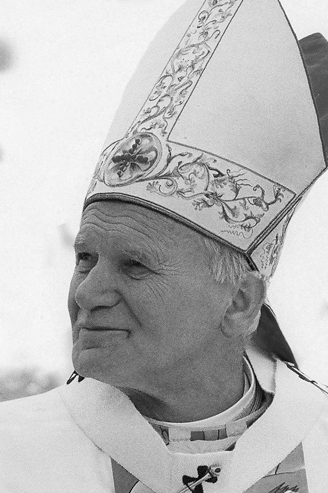
Pope Saint John Paul II’s First Good Friday Homily
ADDRESS OF HIS HOLINESS JOHN PAUL II AT THE CONCLUSION OF THE STATIONS OF THE CROSS AT THE COLOSSEUM Good Friday, 13 April 1979 When we make the Way of the Cross from one station to the next, in spirit we are always at the spot wherethis journey had its “historical” place: where it[…]Continue reading→
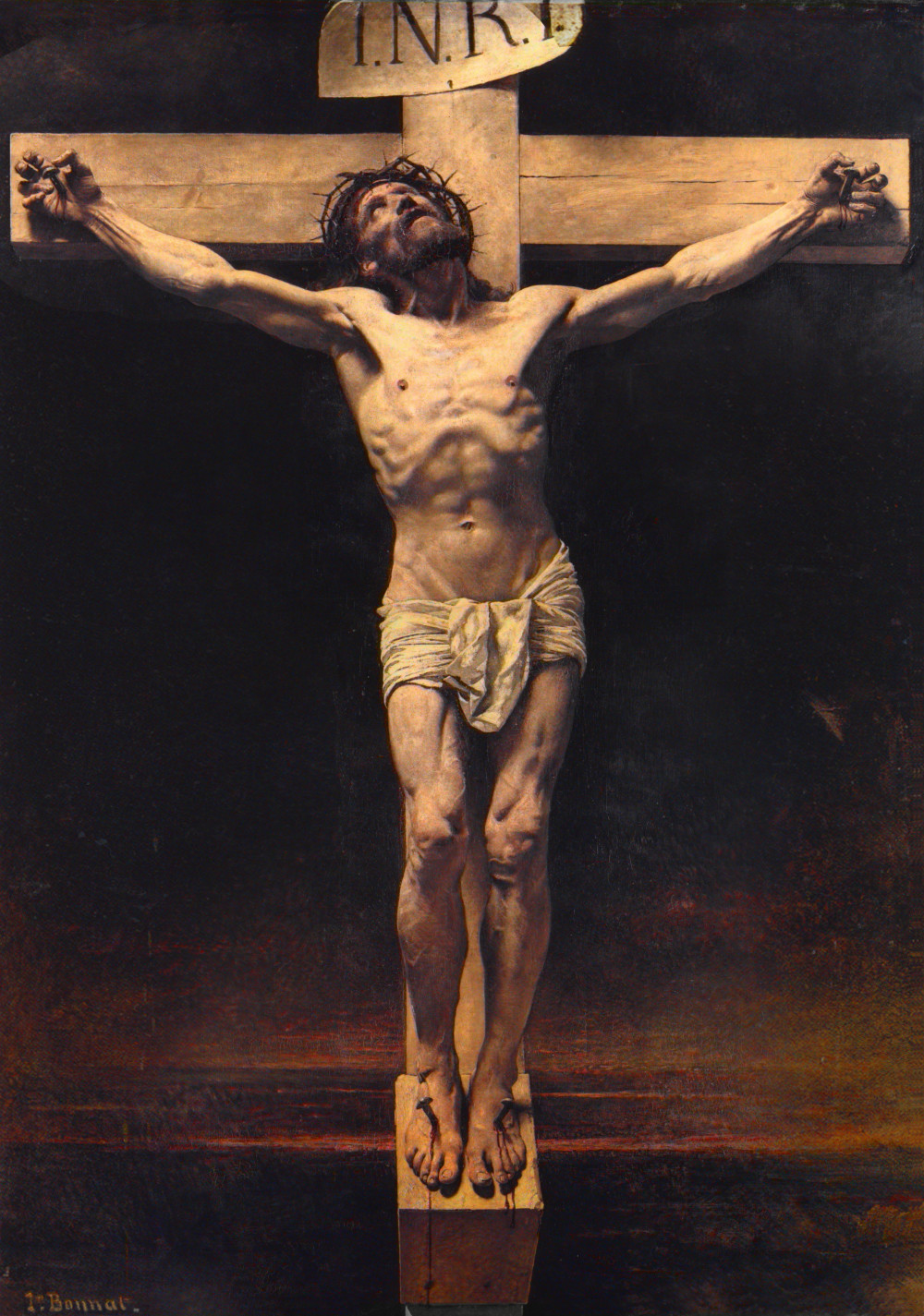
A Meditation for Good Friday: How To Undo the Effects of Sin?
Cardinal Newman, now Saint John Henry Newman, was a towering figure of nineteenth-century Catholicism who is almost universally admired. I say “almost” because not everyone likes him. I knew a priest once, Arthur Caulkins, who has become disenchanted with Newman. As an undergraduate Arthur had been enamoured of Newman, and this interest continued when he[…]Continue reading→
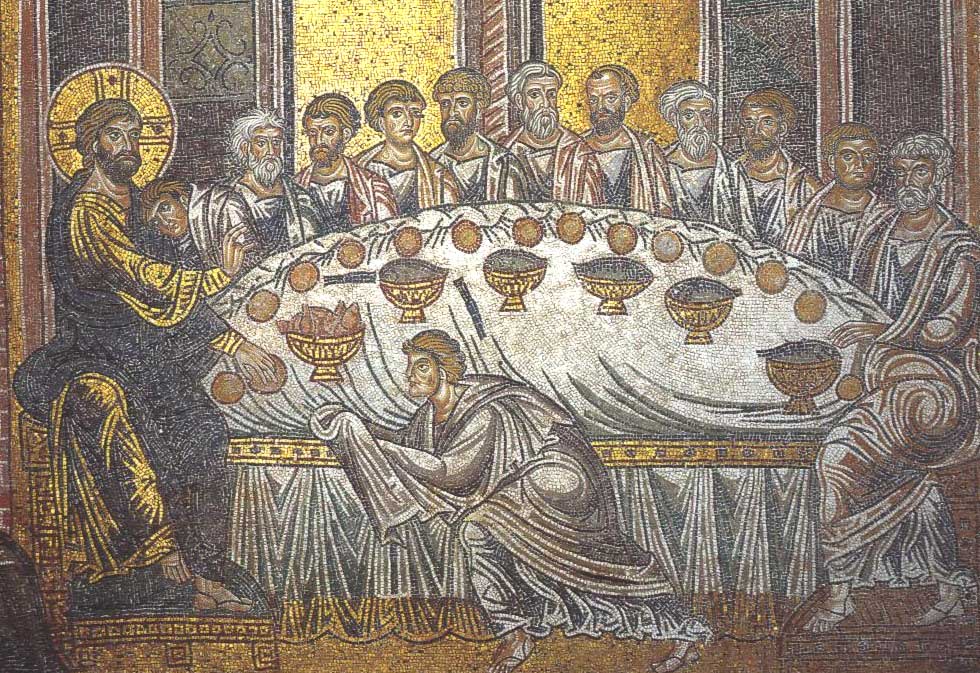
Pope Benedict’s Last Holy Thursday Homily
MASS OF THE LORD’S SUPPER HOMILY OF HIS HOLINESS BENEDICT XVI Basilica of St John Lateran Holy Thursday, 5 April 2012 Photo Gallery (Video) Dear Brothers and Sisters! Holy Thursday is not only the day of the institution of the Most Holy Eucharist, whose splendour bathes all else and in some ways draws it to[…]Continue reading→