
Christ the King’s Providential Passion
THE GOSPELS this year have come from the Gospel of Luke, and we finish on the feast of Christ the King with a section of Saint Luke’s account of the crucifixion. The few verses you have just heard is typical of Luke in that it emphasizes the compassion of Jesus, a trait that runs through the entire passion narrative, as when he prayed for his executioners: “Father, forgive them, for they know not what they do.” He extends this beneficence even to Pilate and Herod, for in the full account we read that Pilate had sent Jesus to Herod—who ridiculed and humiliated him—and, surprisingly afterwards the two rulers became friends, “who,” Saint Luke reports, “had been enemies formerly.” And for the women of Jerusalem who wept over him, Jesus has words, if not of consolation then of concern: “Do not weep for me; weep instead for yourselves and for your children.” Supreme among these instances is the dialogue between Jesus and the good thief that forms today’s Gospel: “Remember me when you come into your kingdom,” and the response: “Amen, I say to you, today you will be with me in paradise.” This episode has captured the attention of Catholics down the centuries, mainly because of what we would call a surprise ending. But there are more substantial reasons for examining it, for it reveals something about the sacrament of baptism and also about the workings of divine providence.
Baptism is a participation in the passion of Jesus: “Do you not know that all of us who have been baptized into Christ Jesus were baptized into his death?” This statement by Saint Paul is instanced in the dramatic scene we are considering, for the faith-filled thief shared, not sacramentally but physically in the passion and death of Jesus: he was there, on the spot! In other words, his prayer joined to his suffering alongside Jesus was his baptism. We know that baptism removes sin and, in an adult, the punishment due to sin. Hence, Dismas—for that is the name tradition has assigned him—died and went to heaven. Fortunate man, to be at the right place, at the right time. And isn’t that the definition of providence, to which this passage directs our attention? When he first heard his sentence, he must have cursed the fate that had brought him to a horrendous death, by crucifixion. And yet we may truly say that it was a blessing in disguise, for it was the means of his eternal salvation. Saint Paul again: “The sufferings of the present time are not worth comparing with the glory that is to be revealed in us.” We see, then, that all the events of what must have been a troubled past were, if not designed by God were certainly used by him to bring Dismas to his glorious end.
The question of evil and especially of moral evil, has always been the strongest argument against the providence, and therefore against the existence, of God. There is, of course, no abstract argument that can adequately respond to the anguish of a profound and personal grief, as I can tell you with decades of priestly ministry behind me; but the history of Dismas suggests that the bad things that people do or experience need not necessarily destroy faith in God as a loving father. I know of one case, at least, in confirmation of this fact. I was visiting a farmer and his wife after Sunday Mass when I lived in Saskatchewan, out in the prairies. Their son was present, a young man of twenty or so. He was horribly disfigured, one side of his face a mass of twisted and discoloured flesh. When my momentary shock at the sight was noticed, his father told me what had happened. The boy had been building a rocket, and at a crucial moment it had exploded, nearly ending his life and leaving him hideously deformed. When I expressed sympathy, his mother said, “No, it was the best thing that ever happened to him.” Before the accident, he had been a troubled and troublesome teen, a continual source of grief to his parents and his entire family. But afterwards, he changed completely and was somehow transformed into the responsible and caring man I had met. It seems, then, that it is not misfortune that of itself challenges our trust in God. Rather, it is what use is made of the grief that physical or emotional harm can occasion. There is hardly time here and now to examine the more difficult cases, such as the suffering of innocent children, but our faith in the supreme benefits that have accrued from the death of our supremely innocent Saviour may shed light on this perennial, ultimately unanswerable question. Jesus died for us, and we may say that every innocent person, every child, every fœtus, that suffers violence also does so, in one way or another, on our behalf. No doubt, one of the searching questions each one of us will face on judgement day will be, “How was your life, your behaviour affected by the knowledge and even witnessing of innocent suffering?” If nothing else, it must lead to serious reflection on my present situation, on what I owe to others, and on what I can accomplish in the service of God and my fellow man.
A Closed, Unsustainable, Descending Loop
As a follow-up to my thoughts on Payette’s payout, here be a stark image of where are here in Canada. As the graph shows in, well, graphic terms, since 2025, the public sector has contributed to 95.5% of economic growth. The private sector – which funds the public sector, or is supposed to – has[…]Continue reading→

Remembering Father Alphonse de Valk
(Today marks the sixth anniversary of the death of Father Alphonse de Valk, C.S.B., a faithful, courageous and indefatigable Basilian priest, pro-life-and-family apostle, and the founder of Catholic Insight magazine. Here is what we wrote those on his entering into eternity five years ago, as we continue to remember him in our prayers and thoughts)[…]Continue reading→
Divine Mercy Sunday – An Echo of Every Mass
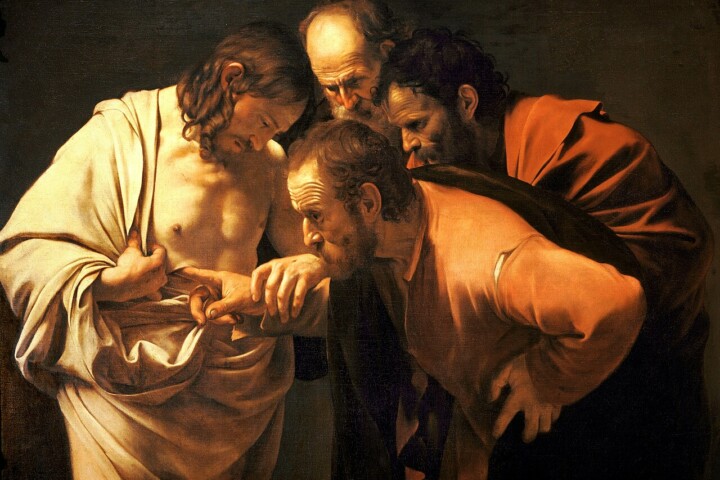
Reach out your hand and put it in my side. Do not doubt but believe’… ‘My Lord and my God!’ (Jn. 20:18)). Today is Divine Mercy Sunday, and as we celebrate the end of the Easter Octave, we contemplate the wounded side of our Saviour, the Church’s source of life. On Good Friday in the[…]Continue reading→
Pope Leo and a Rosary for Peace
Pope Leo XIV has asked Catholics across the world to join him in a Rosary for peace today, at 18:00 Rome time (6 pm), which would be noon from where I write (EST). If you are able, whether at that time or another, and in whatever way you pray, to join in intercession with the[…]Continue reading→
Payette’s Payout
I was glancing through some headlines, and noticed a mention of Julie Payette – engineer and astronaut and sometime the Queen’s representative in Canada – which brought back vague memories. She was appointed Governor-General by Justin Trudeau in 2017. Ms. Payette resigned in 2021, amidst claims that she created a ‘toxic work environment’, with allegations[…]Continue reading→
Your Easter Prayer
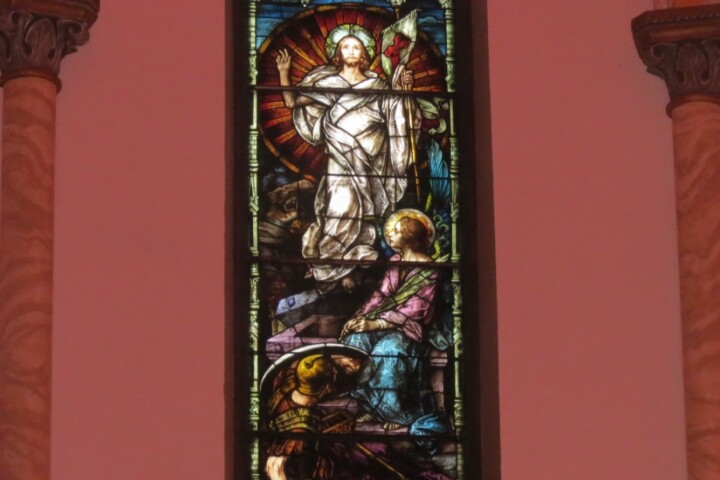
Happy Easter Lord Jesus Christ. It’s Easter day and we smile In the Lord’s in gentle light and His tomb is bare the stone is rolled A story new that must be told And Lord Jesus Christ We love you it’s so true and Lord Jesus Christ has risen From his sleep and the Promises[…]Continue reading→
In the Glorious Light of Easter, Alleluia!
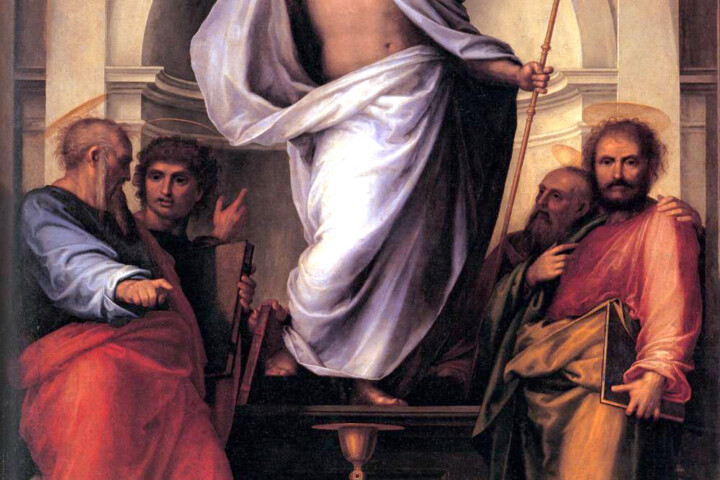
Set your minds on things that are above, not on things that are on earth, for you have died, and your life is hidden with Christ in God. When Christ who is your life is revealed, then you also will be revealed with him in glory (Col. 3:3-4). The Resurrection of Our Lord and Saviour[…]Continue reading→
An Ancient Homily for Holy Saturday
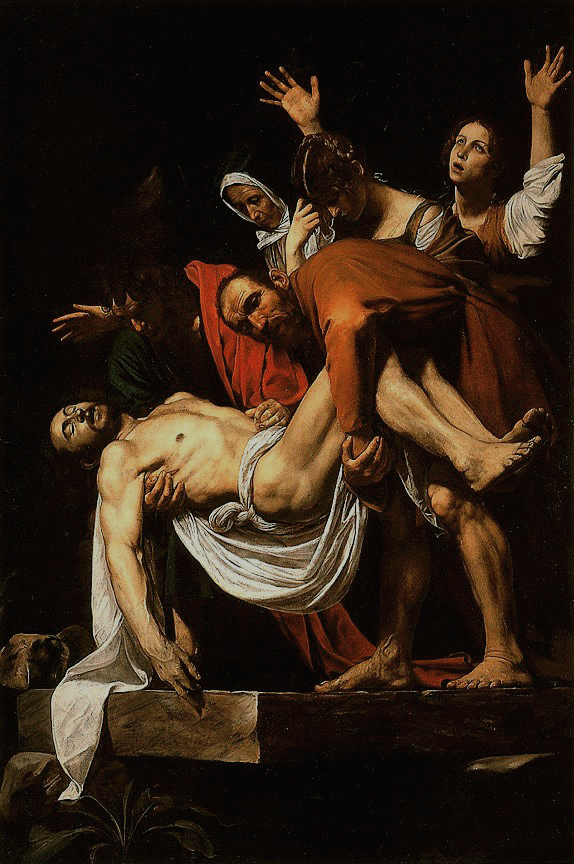
The time between Good Friday and Easter Sunday is one of waiting, in silence, as the world wonders – anticipates – what will happen, after the death of Christ. We re-live this time each year in the anamnesis of our liturgy, and in turn look forward to the glorious re-creation of all things at the[…]Continue reading→
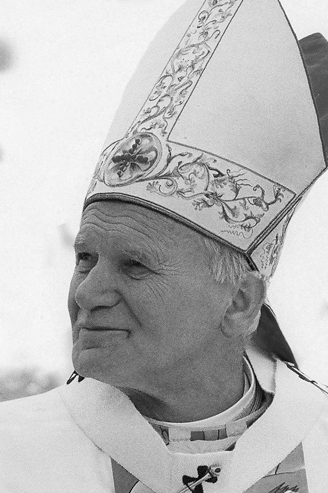
Pope Saint John Paul II’s First Good Friday Homily
ADDRESS OF HIS HOLINESS JOHN PAUL II AT THE CONCLUSION OF THE STATIONS OF THE CROSS AT THE COLOSSEUM Good Friday, 13 April 1979 When we make the Way of the Cross from one station to the next, in spirit we are always at the spot wherethis journey had its “historical” place: where it[…]Continue reading→
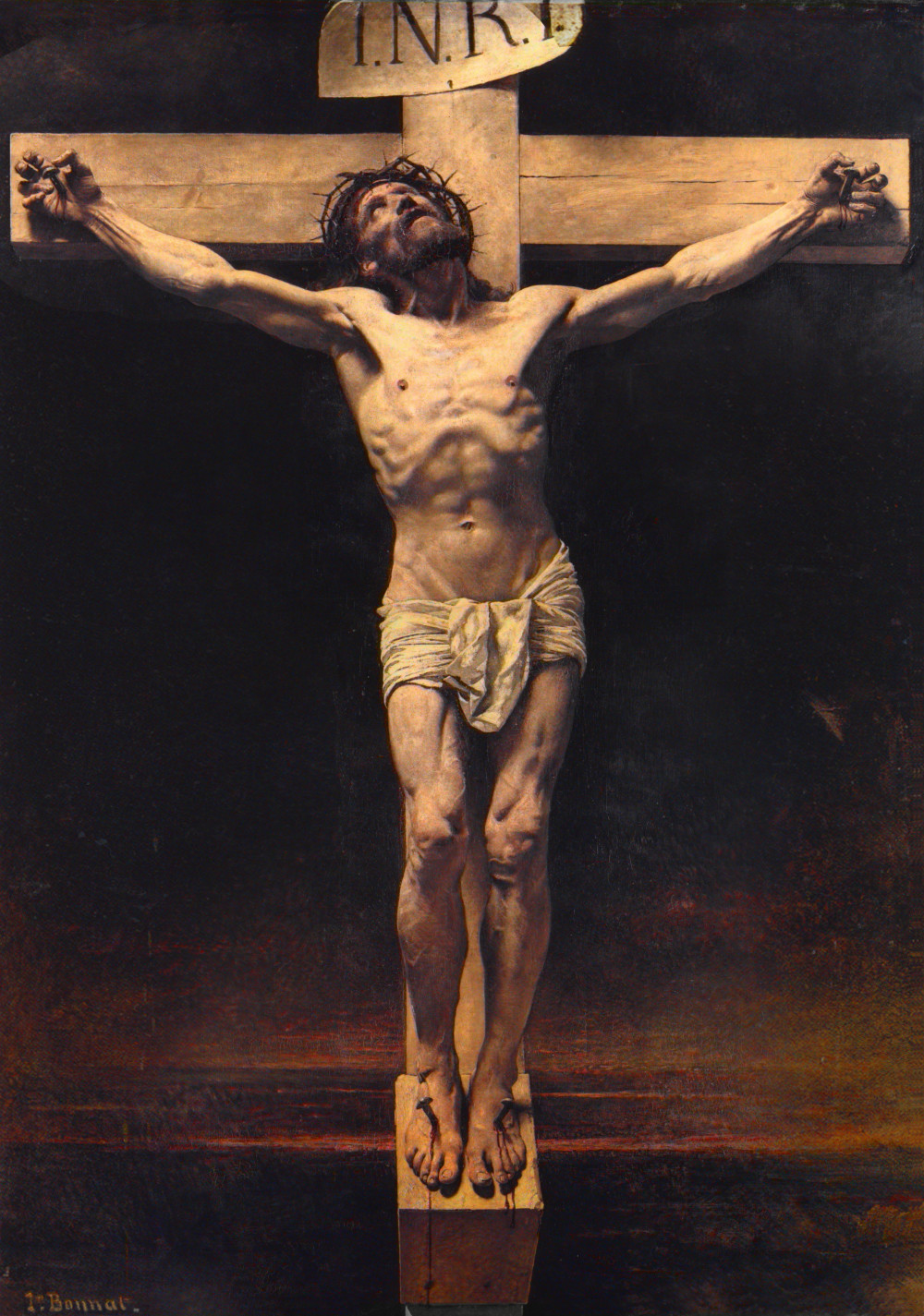
A Meditation for Good Friday: How To Undo the Effects of Sin?
Cardinal Newman, now Saint John Henry Newman, was a towering figure of nineteenth-century Catholicism who is almost universally admired. I say “almost” because not everyone likes him. I knew a priest once, Arthur Caulkins, who has become disenchanted with Newman. As an undergraduate Arthur had been enamoured of Newman, and this interest continued when he[…]Continue reading→