
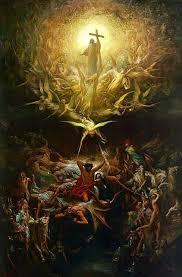
The Cleansing Fire of Purgatory
Now He is God not of the dead, but of the living; for to Him all of them are alive. (Lk. 20:38)
As we approach the end of the liturgical year, the Sacred Liturgy invites us to ponder the four last things: death, judgment, Heaven and hell. These are realities that help us to live soberly and vigilantly (Cf. 1 Pt. 5:8). Death is an inevitable reality. Everyone knows this, although not everyone knows what comes next. Nearly all religions, cultures and individuals in history have believed in some form of life after death. We also have an innate sense of justice. Consequently, most people believe in an ultimate reckoning; that in the final analysis no one can cheat the moral law and get away with it or suffer undeserved injustices throughout life and not be justly compensated. The instinctive conviction that there must be a higher more-than-human justice is nearly universal. Hence, judgment is also widely known.
The Epistle to the Hebrew says: Whoever would draw near to God must believe that He exists and that He rewards those who seek Him (11:6). Our innate sense of justice logically causes us to believe that justice distinguishes the good from the evil, and therefore, that after punishment there must be separate destinies for us; rewards for good and punishments for evil. So we can safely say that there is a general belief in some form of heaven and hell. What the Church adds to this universal human wisdom – and this we could not discover without divine revelation – centers on Our Lord and Saviour Jesus Christ. The Church gives a radically sharper focus to our instinctive but vague sense of justice by telling us about God, and specifically, Christ Our Lord. This applies not only to life as we live it but also to our final judgment. It is an encounter with Christ. Quoting the great Spanish mystic St. John of the Cross, the Catechism of the Catholic Church states: At the evening of life we shall be judged on our love (1022). These are beautiful words; eloquent in their simplicity. Our love is a response to God’s love, which was given to us in Christ (1 Jn. 4:16). Therefore the standard of our final judgment is Christ. Like life, judgment is Christocentric; that is to say that its point of reference is Christ. Again the Catechism explains: In the presence of Christ, who is Truth itself, the truth about man’s relationship with God will be laid bare (1039). Death puts an end to human life as the time open to either accepting or rejecting the divine grace manifested in Christ. The New Testament speaks of judgment primarily in its aspect of the final encounter with Christ (1021).
In this final encounter, a judgement, each man receives his eternal retribution in his immortal soul at the very moment of his death, in a particular judgment that refers his life to Christ: either entrance into the blessedness of Heaven – whether through a purification – [what we refer to as Purgatory] or immediately – or immediate and everlasting damnation (1022), hell. There are only two eternal destinies: Heaven or hell, union or disunion with God, the one and only ultimate source of all goodness and joy. Each one of us will be either with God or without Him forever. There is no reincarnation; no “second chance” after time is over. There is no annihilation, no end of the soul’s existence. There is no change of species from human being to angel or to anything else.
We do well during this month dedicated to the Holy Souls in Purgatory to think about our mortality. There is no “second chance” after death because there is no more time. Our life—time comes to an end. The time for repentance and salvation is now. St. Paul exhorts us: Behold, now is the acceptable time; behold now is the day of salvation (2 Cor. 6:2). After death our soul is no longer in this material body and this material universe, which is the place where time resides. Death is a definitive “point of no return”. Again, Scripture says, It is appointed for men to die once, and after death comes judgment (Heb. 9:27). Purgatory exists because God is both just and merciful. Purgatory is like a refiner’s fire (Mal. 3:2). It refines and purifies those who at the moment of death are neither good enough for immediate Heaven nor bad enough for hell. The Catechism explains: All those who die in God’s grace and friendship, but still imperfectly purified, are indeed assured of their eternal salvation; but after death they undergo purification, so as to achieve the holiness necessary to enter the joy of Heaven (1030). Purgatory is like a mud room where we clean up before we enter the house.
We can’t buy our way into this house nor can we presume to enter it. We are invited in and please God, when the invitation is issued we shall hear these words: Well done, good and faithful servant…enter into the joy of your master (Mt. 25:23). Our good deeds and merits go before us; and these are the evidence of our friendship with God for we are called to be much more than servants. Our Lord has told us: No longer do I call you servants… but I have called you friends, for all that I have heard from my Father I have made known to you (Jn. 15:15). The all that He has made known to us includes our ultimate destiny, life everlasting either in a state of union or disunion with God. I shudder at the very thought of it.
In The Problem of Pain, the Christian apologist C. S. Lewis said of hell: There is no doctrine which I would more willingly remove from Christianity than this, if it lay in my power. But it has the full support of Scripture, and, especially, of Our Lord’s own words; it has always been held by Christendom; and it has the support of reason. If a game is played, it must be possible to lose it. If the happiness of a creature lies in self-surrender, no one can make that self-surrender but himself (though many can help him to make it), and he may refuse. Hell exists because free will exists. ‘The devil made me do it’ cannot be used as a justification for the bad or evil choices we make. Hell exists because free will exists. There are many vivid images to describe this awful reality and the most prominent image, used by Our Lord Himself, is fire, as an agent of destruction. In this sense, selfishness, pride, egotism, rebellion; these are like a spiritual self-destructive fire that can cause us to experience the reality of hell already here in time. Our ultimate happiness lies in self- surrender. This is the lesson we gladly learn in the loving embrace of a deep friendship.
Here, in the loving embrace of Christ Our Saviour, Who calls us His friends, we help one another to surrender to the love of God in the communion of Saints; a communion that includes not only those who are radiant in the glory of Heaven, but also the Holy Souls in Purgatory, and us who feebly struggle but who nonetheless strive for that unfading crown of glory. This is our hope and in this hope we [are] saved (Rom. 8:24). The life of Christ in us through grace is our hope of glory (Col. 1:27). As we live our lives in view of this glory, may the Lord direct [our] hearts to the love of God and to the steadfastness of Christ (2 Thes. 3:5).

Remembering Father Alphonse de Valk
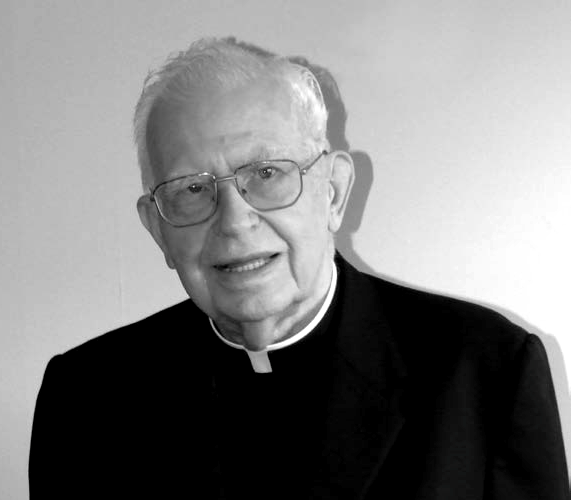
(Today marks the sixth anniversary of the death of Father Alphonse de Valk, C.S.B., a faithful, courageous and indefatigable Basilian priest, pro-life-and-family apostle, and the founder of Catholic Insight magazine. Here is what we wrote those on his entering into eternity five years ago, as we continue to remember him in our prayers and thoughts)[…]Continue reading→

Divine Mercy Sunday – An Echo of Every Mass
Reach out your hand and put it in my side. Do not doubt but believe’… ‘My Lord and my God!’ (Jn. 20:18)). Today is Divine Mercy Sunday, and as we celebrate the end of the Easter Octave, we contemplate the wounded side of our Saviour, the Church’s source of life. On Good Friday in the[…]Continue reading→

Saint Stanislaus of Szczepanów
We celebrate Saint Stanislaus today (+ April 11, 1079), in light of this Easter Octave, a bishop and martyr who accepted the episcopacy only at the direct order of Pope Alexander II. He proved a wise and courageous leader of his flock, put to death by his own king, Boleslaus, for rebuking the monarch’s ‘immoral[…]Continue reading→
First Holy Communion: Sermon from May 16, 1943
Here is a sermon from the good old days by +Rev. Msgr. Vincent Nicholas Foy (August 14, 1915 – March 13, 2017), from 1943. Readers may recall that Pope Saint Pius X, by the decree Quam Singulari in 1910, lowered the customary age of reception of Holy Communion – after the rigours of the plague[…]Continue reading→
In the Glorious Light of Easter, Alleluia!
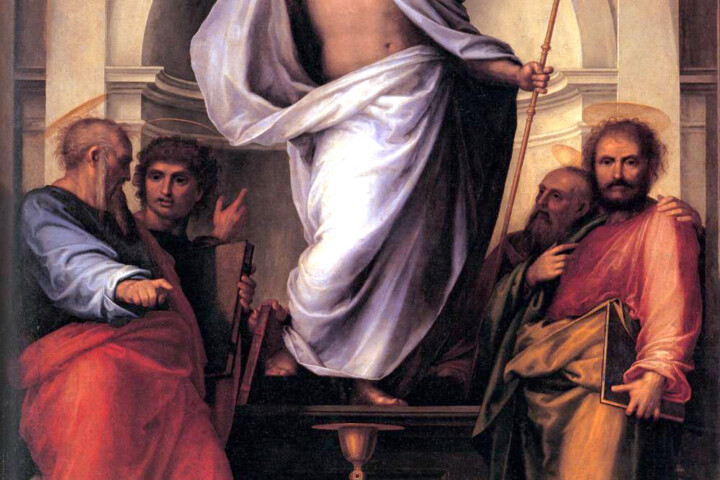
Set your minds on things that are above, not on things that are on earth, for you have died, and your life is hidden with Christ in God. When Christ who is your life is revealed, then you also will be revealed with him in glory (Col. 3:3-4). The Resurrection of Our Lord and Saviour[…]Continue reading→
An Ancient Homily for Holy Saturday
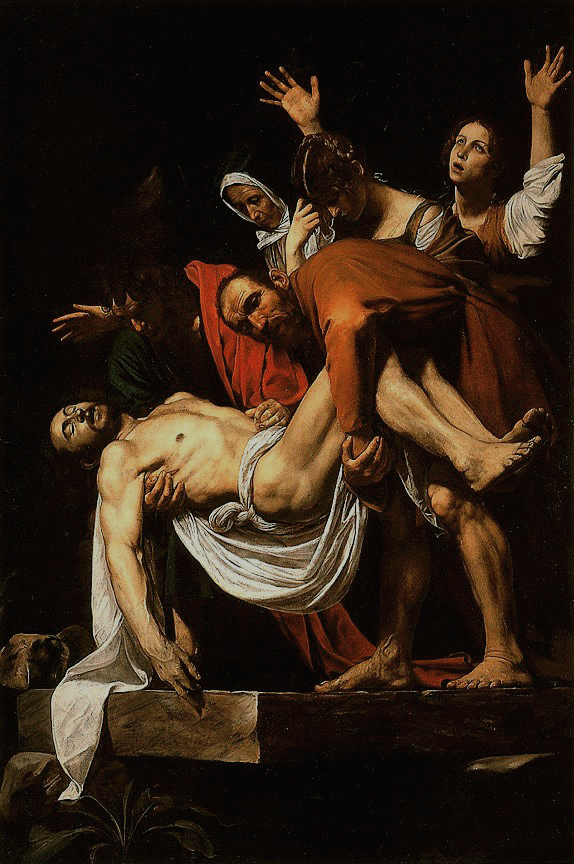
The time between Good Friday and Easter Sunday is one of waiting, in silence, as the world wonders – anticipates – what will happen, after the death of Christ. We re-live this time each year in the anamnesis of our liturgy, and in turn look forward to the glorious re-creation of all things at the[…]Continue reading→
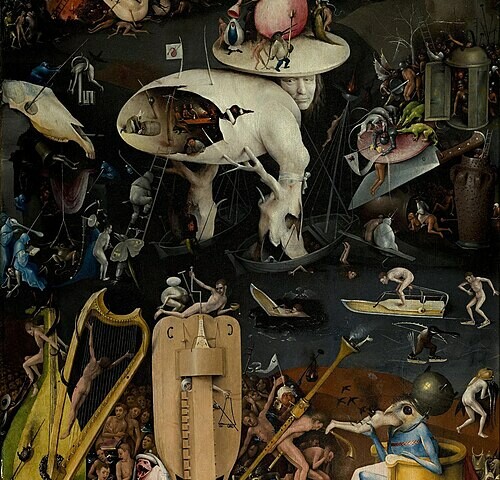
Europe’s Long Descent
(As we meditate on this day on Christ’s burial, and His descent into hell, it is fitting to ponder here with contributor Peter Marcus how the world seems to be heading there as well. The difference is that, although God cannot ‘redeem’ hell, nor those therein, He can and did redeem the world. There is[…]Continue reading→
Pope Saint John Paul II’s First Good Friday Homily
ADDRESS OF HIS HOLINESS JOHN PAUL II AT THE CONCLUSION OF THE STATIONS OF THE CROSS AT THE COLOSSEUM Good Friday, 13 April 1979 When we make the Way of the Cross from one station to the next, in spirit we are always at the spot wherethis journey had its “historical” place: where it[…]Continue reading→
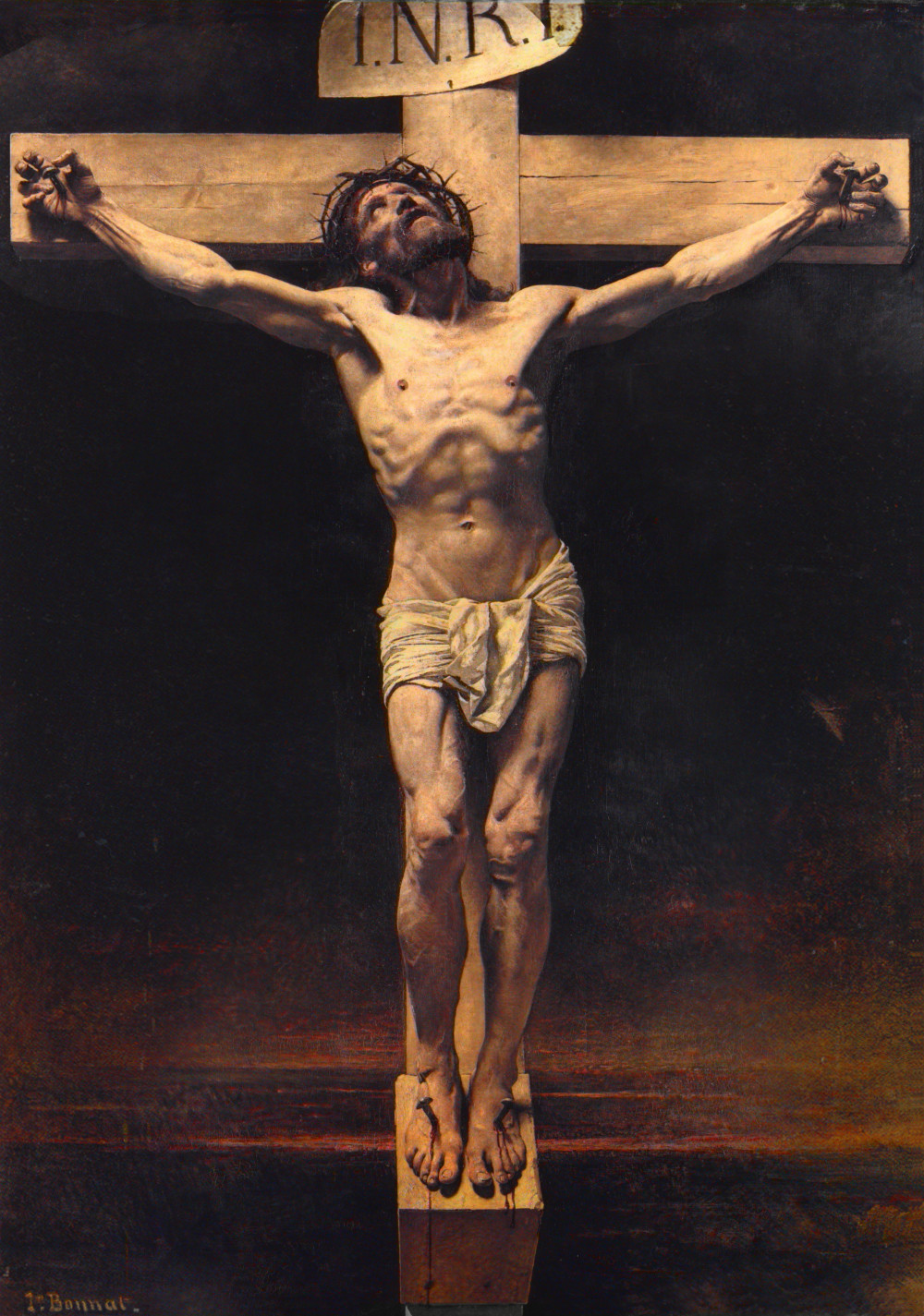
A Meditation for Good Friday: How To Undo the Effects of Sin?
Cardinal Newman, now Saint John Henry Newman, was a towering figure of nineteenth-century Catholicism who is almost universally admired. I say “almost” because not everyone likes him. I knew a priest once, Arthur Caulkins, who has become disenchanted with Newman. As an undergraduate Arthur had been enamoured of Newman, and this interest continued when he[…]Continue reading→
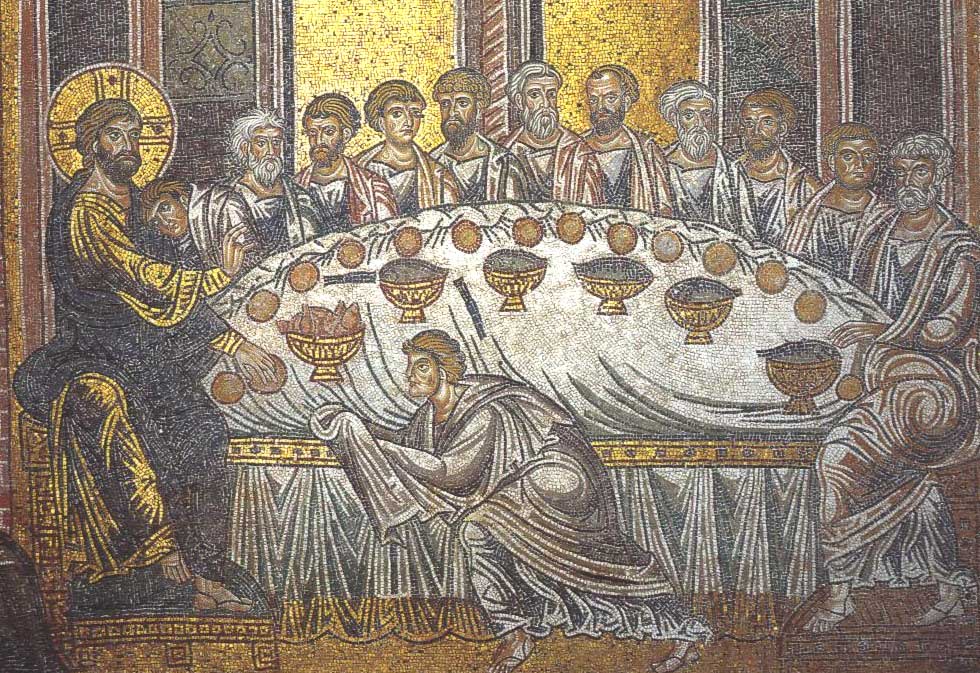
Pope Benedict’s Last Holy Thursday Homily
MASS OF THE LORD’S SUPPER HOMILY OF HIS HOLINESS BENEDICT XVI Basilica of St John Lateran Holy Thursday, 5 April 2012 Photo Gallery (Video) Dear Brothers and Sisters! Holy Thursday is not only the day of the institution of the Most Holy Eucharist, whose splendour bathes all else and in some ways draws it to[…]Continue reading→