
Humility and Happiness
The prayer of the humble pierces the clouds, and it will not rest until it reaches its goal (Sir. 35:17). ⧾
The parable of the tax collector and the Pharisee which is well known to us, helps us to understand that repentance is truly transformative; and that when repentance is coupled with authentic prayer, we are renewed and God’s own logic revealed to us by Our Saviour Jesus Christ governs our lives. ‘God, be merciful to me, a sinner!’ I tell you, this man went down to his home justified rather than the other; for whoever exalts himself will be humbled, but whoever humbles himself will be exalted (Lk. 18:14). We can have no part of God’s kingdom both here on earth and in eternity unless we are humble in the sight of God. The prayer of the humble pierces the clouds, and it will not rest until it reaches its goal (Sir. 35:17). Heaven is our goal and the way that gets us there is the path of devout humility which Christ Our Lord became for us (St. Augustine of Hippo). We pattern our lives on that of Our Saviour and in the communion that is the Church we journey towards the life of Heaven. The Catechism of the Catholic Church teaches us that this perfect life with the Most Holy Trinity – this communion of life and love with the Trinity, with the Virgin Mary, the angels and all the blessed – is called ‘heaven.’ Heaven is the ultimate end and fulfillment of the deepest human longings, the state of supreme, definitive happiness (Catechism of the Catholic Church, 1024).
Every prayer, be it long or short, is always an act of humility for in praying we affirm that the recipient of our prayer is greater than we are. This is why the quality of all prayer is always determined by humility of heart. A humbled, contrite heart O Lord, you will not spurn (Ps. 50). Humility is truly a foundational virtue and for this reason Our Lord never ceases to say to us: ‘Learn from me, for I am gentle and humble in heart’ (Mt. 11:29).
Beating his breast, the tax collector prays, ‘God, be merciful to me, a sinner’ (Lk. 18:13). His prayer, and it is no less our prayer, gives voice to the insufficiency of the human condition. Self-sufficiency is an illusion that can tempt all of us whether we are tempted by our youth or wealth or ability or intellect. We are not self-sufficient either individually or even collectively. Our happiness ultimately depends on the quality of our relationships with ourselves, with others and most importantly, with God. Perhaps tax collectors sought their security in the abundance of wealth; even at the cost of being ostracized as virtual enemies among their own people. As Our Lord tells the parable, the tax collector was standing far off [and] would not even look up to heaven. He is an outcast and at least in relation to his community, dead. The prayer of the tax collector is a cry for deliverance, for mercy and salvation. His confession of sin – ‘God be merciful to me a sinner’ – is an essential requisite for salvation in the spiritual order. The authentic Gospel of salvation that the Church has been charged to preach addresses each person individually and in the response that one makes to this Gospel there is a commitment to save one’s soul; for what does it profit a man to gain the whole world and forfeit his life (Mk. 8:36)? The tax collector for all intents had no life to speak of. He was completely alienated from others and yes, even from himself; and in the experience of poverty he cries out for mercy. The prayer of the humble pierces the clouds, and it will not rest until it reaches its goal. So Our Lord assures us: ‘I tell you, this man went down to his house justified’ (Lk. 18:14). A right relationship with God is the foundation for a truly happy life here on earth and in the blessedness of eternal life.
What about the prayer of the Pharisee? ‘God, I thank you that I am not like other people: thieves, rogues, adulterers, or even like this tax collector. I fast twice a week; I give a tenth of all my income.’ (Lk. 18:11-12). His prayer is an exercise in self-affirmation; essentially a list of all the reasons why he is better than others. He is at the centre of his prayer, not God. His prayer is about himself; and this fundamental error, effectively a religion that centers on man and not on God is certainly not Christianity. What is the flavor of our prayer? Neither our prayer nor our life can be exclusively self-referential. We are created to find our fulfilment outside ourselves; in the gift of self to others through sacrificial love, and ultimately only in God. Heaven is our goal. In his sinful life the tax collector was tempted to material self-sufficiency which proved to be an illusion. The Pharisee sought salvation in himself and his good deeds but this too is false for we receive the gift of salvation from a loving God who in Christ Our Saviour assures us that only a right relationship with Him can provide us with the foundation for a truly happy life here on earth, and the blessedness of eternal life in Heaven.
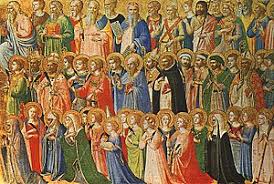
On Friday we will celebrate the great Feast of All Saints, the blessed communion of all those who have achieved the only true goal striving for while on earth. Heave in our goal. On Saturday, we will commemorate all the Holy Souls in Purgatory undergoing their purification so as to achieve the holiness necessary to enter the joy of heaven (Catechism of the Catholic Church, 1030). These two days celebrate the mystery of communion that is the Church. The glory of the Feast and the sobriety of the Commemoration are an exhortation to great hope and to sobriety of life. We should be mindful of the four last things: death, judgment, heaven and hell. On these days the Church exhorts us to generous prayer and almsgiving in suffrage for the Holy Souls in Purgatory. We belong to this blessed communion through grace and love. The Saints in Heaven and the Souls in Purgatory love us with the purest of loves for they who have pierced the clouds and reached their goal, desire no less for us. This is a great mystery and one worth our pondering. As for us still here on pilgrimage, united in prayer in the Holy Sacrifice of the Mass; here where Heaven and earth meet, ever-mindful of our dependence on God’s grace, we endeavour even now to make our own the prayer of the Saints in Heaven: My God and my all. Deus meus et omnia. ⧾

Remembering Father Alphonse de Valk
(Today marks the sixth anniversary of the death of Father Alphonse de Valk, C.S.B., a faithful, courageous and indefatigable Basilian priest, pro-life-and-family apostle, and the founder of Catholic Insight magazine. Here is what we wrote those on his entering into eternity five years ago, as we continue to remember him in our prayers and thoughts)[…]Continue reading→

Divine Mercy Sunday – An Echo of Every Mass
Reach out your hand and put it in my side. Do not doubt but believe’… ‘My Lord and my God!’ (Jn. 20:18)). Today is Divine Mercy Sunday, and as we celebrate the end of the Easter Octave, we contemplate the wounded side of our Saviour, the Church’s source of life. On Good Friday in the[…]Continue reading→

Saint Stanislaus of Szczepanów
We celebrate Saint Stanislaus today (+ April 11, 1079), in light of this Easter Octave, a bishop and martyr who accepted the episcopacy only at the direct order of Pope Alexander II. He proved a wise and courageous leader of his flock, put to death by his own king, Boleslaus, for rebuking the monarch’s ‘immoral[…]Continue reading→

First Holy Communion: Sermon from May 16, 1943
Here is a sermon from the good old days by +Rev. Msgr. Vincent Nicholas Foy (August 14, 1915 – March 13, 2017), from 1943. Readers may recall that Pope Saint Pius X, by the decree Quam Singulari in 1910, lowered the customary age of reception of Holy Communion – after the rigours of the plague[…]Continue reading→

In the Glorious Light of Easter, Alleluia!
Set your minds on things that are above, not on things that are on earth, for you have died, and your life is hidden with Christ in God. When Christ who is your life is revealed, then you also will be revealed with him in glory (Col. 3:3-4). The Resurrection of Our Lord and Saviour[…]Continue reading→

An Ancient Homily for Holy Saturday
The time between Good Friday and Easter Sunday is one of waiting, in silence, as the world wonders – anticipates – what will happen, after the death of Christ. We re-live this time each year in the anamnesis of our liturgy, and in turn look forward to the glorious re-creation of all things at the[…]Continue reading→

Europe’s Long Descent
(As we meditate on this day on Christ’s burial, and His descent into hell, it is fitting to ponder here with contributor Peter Marcus how the world seems to be heading there as well. The difference is that, although God cannot ‘redeem’ hell, nor those therein, He can and did redeem the world. There is[…]Continue reading→
Pope Saint John Paul II’s First Good Friday Homily
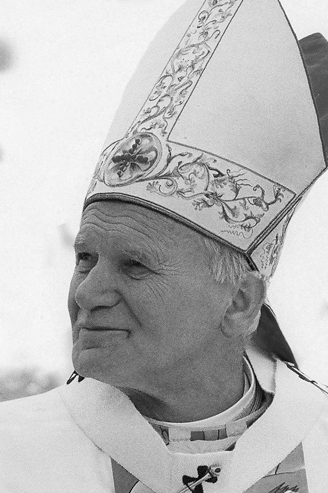
ADDRESS OF HIS HOLINESS JOHN PAUL II AT THE CONCLUSION OF THE STATIONS OF THE CROSS AT THE COLOSSEUM Good Friday, 13 April 1979 When we make the Way of the Cross from one station to the next, in spirit we are always at the spot wherethis journey had its “historical” place: where it[…]Continue reading→
A Meditation for Good Friday: How To Undo the Effects of Sin?
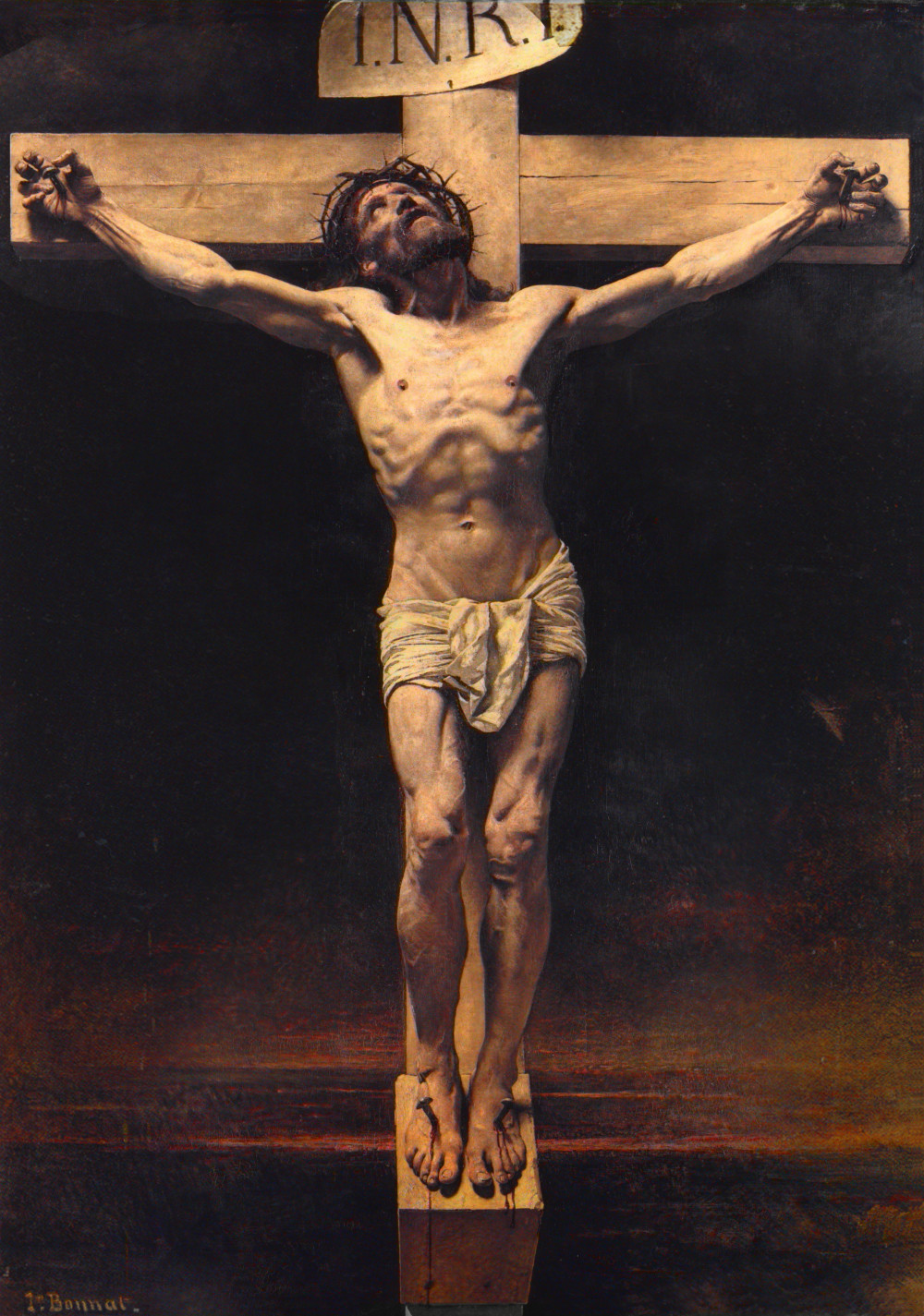
Cardinal Newman, now Saint John Henry Newman, was a towering figure of nineteenth-century Catholicism who is almost universally admired. I say “almost” because not everyone likes him. I knew a priest once, Arthur Caulkins, who has become disenchanted with Newman. As an undergraduate Arthur had been enamoured of Newman, and this interest continued when he[…]Continue reading→
Pope Benedict’s Last Holy Thursday Homily
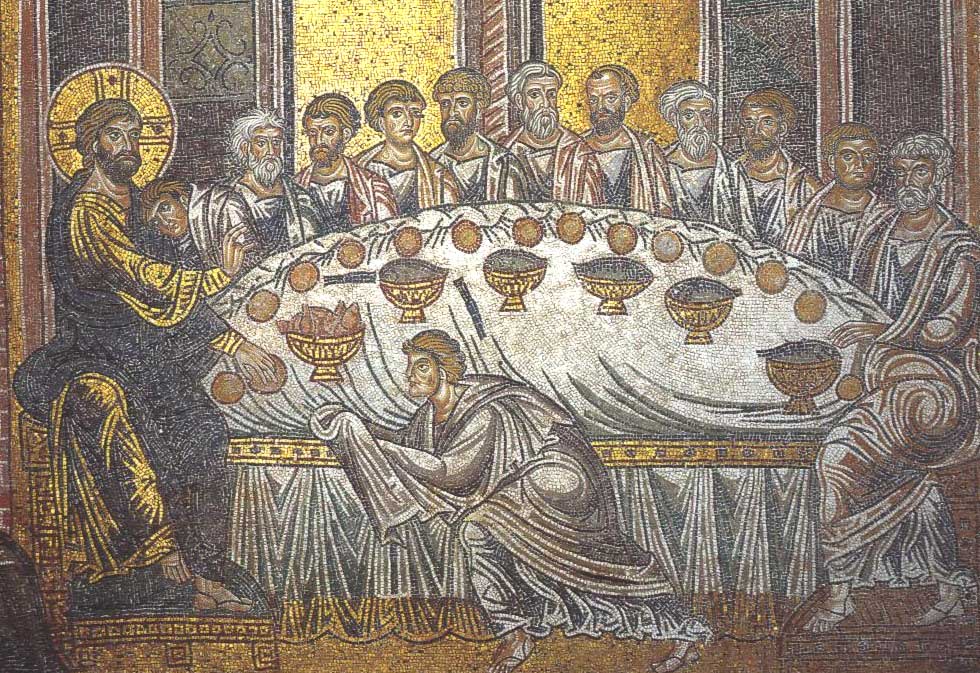
MASS OF THE LORD’S SUPPER HOMILY OF HIS HOLINESS BENEDICT XVI Basilica of St John Lateran Holy Thursday, 5 April 2012 Photo Gallery (Video) Dear Brothers and Sisters! Holy Thursday is not only the day of the institution of the Most Holy Eucharist, whose splendour bathes all else and in some ways draws it to[…]Continue reading→