
Debacle in Hong Kong and the Church
When Hong Kong leader Carrie Lam announced the withdrawal of the extradition bill that triggered the largest and longest protests in that city’s history, protest leaders remained deeply sceptical.
For months, they had been demanding the full withdrawal of the much-loathed extradition bill – which would have allowed Hong Kong residents to be sent to mainland China to stand trial. The protests, which began in March and snowballed in June, sent tens of thousands of demonstrators into the streets every weekend, and have since evolved into a push for greater democracy for Hong Kong which reverted from British to Chinese rule in 1997.
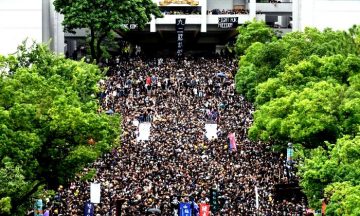
“Too little, too late,” said an exasperated Joshua Wong, one of the leaders of the pro-democracy Umbrella Movement that was the precursor to the current unrest. “Carrie Lam’s response comes after 7 lives sacrificed, more than 1,200 protestors arrested, in which many are mistreated in police station.” Fears also persist that the proposal, initially withdrawn in June, could be reintroduced, perhaps after momentum for the protests has waned.
His comments are typical of Hong Kongers’ deep suspicion of the Chinese communists who, for seventy years, have subjected mainline China to the atheistic communist rule that began with Mao Zedong’s revolution of 1949 and continues to this day.
Like millions of his fellow citizens, Wong fully understands that, as with all communists and their dupes (as Lam is widely regarded), nothing is as it seems and no promise is made that cannot be unmade. All in communism’s insatiable quest for power as laid out by Lenin: “The strictest loyalty to the ideas of Communism must be combined with the ability to make all necessary practical compromise, to manoeuvre, to make agreements, zig-zags, retreats and so on, so as to accelerate the coming to power.”
Lenin’s Blueprint
And to this blueprint, Lenin added: “To all countries, even the freest, legal and peaceful; in the sense that the class struggle is less acute in them, the time has fully matured when it is necessary for every Communist Party systematically to combine legal with illegal work and for all legal Communist parties to form illegal organizations. It must be proved to the bourgeoisie that there is not, nor can there be, a sphere or field of work that cannot be won by the Communists.”
Since Lenin’s precepts were first uttered in 1919 following his Bolshevik takeover of Russia, they’ve been employed by the Communist Party and its minions throughout the world to infiltrate and absorb entire countries and international institutions – each deceitful zig-zag heralding another takeover of what was once a purely national organization overpowered by yet another patriotic-sounding group, all reinforced with double-talk.
And so Lenin’s pattern continued until international Communism’s next massive acquisition – China – which in 1949 fell under the boot of Mao Zedong and his savage revolution which soon began jailing religious leaders, driving out missionaries, destroying churches and killing inconvenient people in their tens of thousands.
Then, in 1951, the regime expelled papal representatives and broke diplomatic relations with the Holy See. Among the issues central to the diplomatic rift between China and the Catholic Church was the appointment of bishops. In the Code of Canon Law, Canon 377.5 states that “no rights or privileges of election, appointment, presentation, or designation of bishops are conceded to civil authorities.”
Which meant that an estimated 12 million Chinese Catholics have had only two options: join the state-controlled Chinese Patriotic Catholic Association (CPCA) or attend a “house church” as part of the underground Catholic Church that remains loyal to Rome.
The Sino-Vatican Agreement
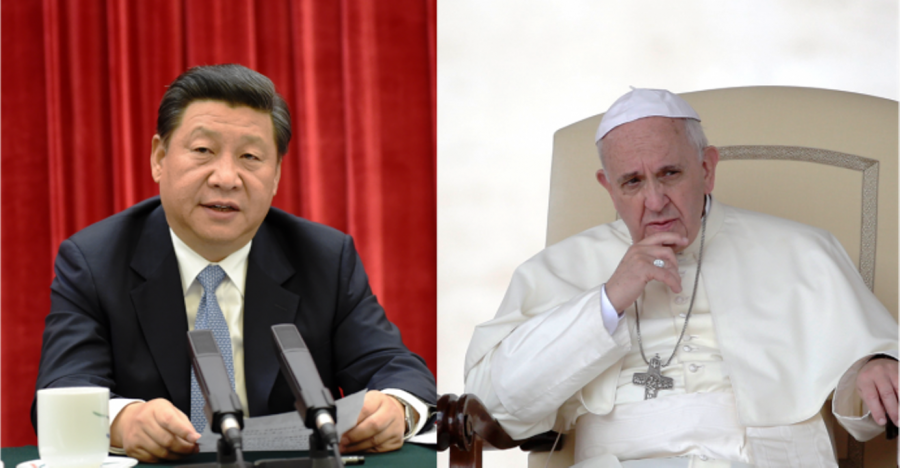
That is, until September 22 of last year when – after months of speculation and apprehension among Catholics everywhere – Pope Francis decided to sign a ‘provisional agreement’ with the People’s Republic of China on the appointment of bishops, thereby opening the door for the ordination of China’s first government-approved bishop in the hope that the deal will lead to increased freedoms for mainland Chinese Catholics.
At this time last year, there were about 100 bishops in China. Of those, about 65 belong to the government’s Chinese Patriotic Catholic Association while 35 belong to the “underground” church.
In addition, Pope Francis decided to readmit into communion with the Church the Chinese government’s ‘official’ bishops ordained without pontifical mandate – despite criticism from many experts who’ve called the agreement a sell-out of papal authority, a betrayal of the underground Church in China (the object of recently intensified persecution by the government) and, perversely, even a first blessing on a new Schismatic Church created by the Chinese communists.
The Church in Hong Kong
As for Hong Kong, which has a small population of Christians, life for Catholics is very different, compared to the mainland. And though the island is only about 8% Catholic, that represents a population of over half a million Hong Kongers who have total freedom of worship. Plus evangelization and diocesan decisions are not subject to government control. Unlike in mainland China where there has been a long history of persecution of Christians, Muslims, Tibetan Buddhists and Falun Gong practitioners.
Enter Joseph Cardinal Zen, now 87 and former bishop of Hong Kong, who has been sounding the alarm repeatedly over the Sino-Vatican deal which he believes will result in the annihilation of the authentic Catholic Church in China and, possibly, Hong Kong if that city’s worst fears of a Communist takeover are realized.
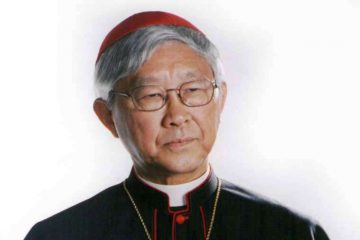
“I know the Church in China, I know the Communists and I know the Holy See,” the cardinal wrote late last year. “I’m a Chinese from Shanghai. I lived many years in the mainland and many years in Hong Kong.”
Which is why he flew to Rome in January 2018 to meet with the Pontiff and to deliver him a letter of appeal written by one of the forcibly retired Chinese bishops, and to ask the pope not to cave in to the Chinese regime. As to Francis’s reaction in the meeting, accounts differ. However, according to Zen, the pope expressed surprise upon learning the news of the changes in bishops and said that he had instructed Vatican officials not to create martyrs out of the faithful Chinese Catholics.
Pope Francis’ remarks came just three months after his removal of Archbishop Savio Hon Tai-Fai, the Secretary of the Congregation for the Evangelization of Peoples (Propaganda Fide) from a key post in the Vatican. Known for his strong opposition to the Chinese Communist regime, Archbishop Hon was appointed by Pope Benedict XVI in 2010 and was among the most senior bishops opposed to Francis’ policy of rapprochement with the Chinese regime. At the time, Hon’s removal was seen as the latest in a series of overtures the Pontiff has made in recent years in a bid to resume diplomatic relations with China.
Which made Cardinal Zen’s public objections even harder to ignore.
In a press statement after the January 18 meeting, the Vatican said that Francis is “in constant contact with his collaborators, in particular in the Secretariat of State, on Chinese issues.” Although not mentioning Zen directly, the Vatican said that critics of its China policy within the Catholic Church are “fostering confusion and controversy.”
In response, Cardinal Zen wrote on his blog that the Vatican press statement implied one of two things: either Vatican officials have been lying to both Francis and to the public, or Francis lied to him and that he has known of the Vatican officials’ plan with the Chinese regime all along and approves of what they are doing.
No Reversal
Over the next several months – and despite Cardinal Zen’s warnings – the Vatican pushed forward with its plans.
Which may account for the cardinal’s blistering column in the New York Times last October, in which he strongly criticized what he claimed was Pope Francis’ and Vatican officials’ misguided optimism over a deal with the People’s Republic of China with whom there had been no diplomatic relations since 1951.
“Pope Francis, an Argentine, doesn’t seem to understand the Communists,” noted the cardinal. “He is very pastoral, and he comes from South America, where historically military governments and the rich got together to oppress poor people. And who there would come out to defend the poor? The Communists. Maybe even some Jesuits, and the government would call those Jesuits Communists.”
“Francis may have natural sympathy for Communists because for him, they are the persecuted,” continued the cardinal. “He doesn’t know them as the persecutors they become once in power, like the Communists in China.”
In later remarks to the Chinese-language World Journal in New York, Cardinal Zen added: “The Chinese government has not made any concessions in the negotiations; (Pope Francis) does not understand the Chinese Communist Party at all.”
The Nature of Communism
Cardinal Zen does understand the Chinese Communist Party, however. As a lifelong opponent of Communism, he knows of what he speaks. He also knows the vast suffering that communism has inflicted on China and every other nation that has fallen into its grasp.
He knows that in 2014, Chinese officials instructed crews to demolish or hide statues depicting Biblical scenes at a site of Catholic pilgrimage in the city of Wenzhou where hundreds of Protestant churches were damaged or destroyed as part of this campaign, so similar to the destruction of church property during the bloody Cultural Revolution of the 1960s.
He knows that a year later, 94-year-old Bishop Cosmas Shi Enxiang died in prison after having spent 54 years working in forced labour camps because of his faith. Moreover, Cosmas’ successor, Bishop James Su Zhimin is still being held in secret detention since October 1997, when he refused to join the state-sanctioned church. And though he’s not been heard from in several years, according to a 2015 report from his family, the Chinese government had offered him as a bargaining chip in negotiations with the Vatican.
Meanwhile, according to several reports, the Chinese government has been further tightening its grip on religion, beginning with the launch by Chinese President Xi Jinping of a program to “Sinicize” all religions to ensure they are in accord with the Communist Party viewpoint.
Spiritual Concerns
But Cardinal Zen’s concerns for Chinese Catholics run far deeper than communism’s casualties. They involve the spiritual issues. What the cardinal understands – as do most people knowledgeable about Communism and its true nature – is that no one can be a true communist and believe in God. He also understands that no one can believe in God and have a peaceable life under Communism for the simple reason that in all their plans and actions, communists regard religion as Enemy No.1. Its history has confirmed this: That where they dominate, they attack it head on. Where they do not dominate, they try to deceive and to corrupt from within just as they do in government, in education, in labour unions, in entertainment, in journalism and throughout a nation’s life in general.
Cardinal Zen also knows that Communism’s goal is always the same – complete control over the human mind and body from birth to death. Which is why religion must be destroyed, so that Communism can dominate family life, force its own moral code upon persons, make education a weapon in its hands and remake the lives of an entire people, an entire world.
But Communism is also a difficult enemy to combat. Once it has infiltrated, it becomes deep-seated and diffuse. And it always avoids a showdown, backing away and waiting until the next opportunity rather than daring an enemy to fight.
This is why this highly respected cardinal, who’s become the public face of opposition to the Vatican deal, was probably unsurprised that his warnings have been ignored. As evidenced by the news that China’s first government approved bishop. Fr. Antonio Yao Shun, 54, has just been consecrated in Jining, Mongolia, having received the “papal mandate” to be ordained, just eleven months after the Sino-Vatican deal was signed last September.
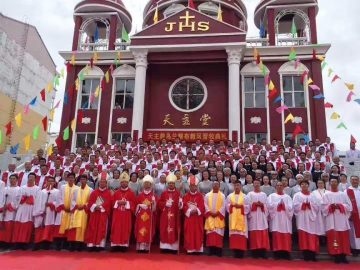
Bishop Yao was ordained August 26 by bishops Paul Meng Qinglu of Hohhot (Inner Mongolia), Mattia Du Jiang of Bameng (Inner Mongolia), Joseph Li Jing of Ningxia (Ningxia), and Paul Meng Ningyou of Taiyuan (Shanxi with over 120 priests concelebrating the Mass.
As to the legitimacy of the bishops who will comprise this new hierarchy in this Communist state to provide the sacraments of the Holy Roman Catholic Church and to spread the Gospel of Jesus Christ, history will record.
But crucial questions must also be answered. Eventually. For example, what will become of the 30-plus bishops who were part of the underground Church in China? Will they now be forced to join the so-called Bishops’ Conference? Or will they become a minority among them serving an underground Church facing intensified persecution?
Either way, Cardinal Zen says the Vatican’s deal, struck in the name of unifying the Church in China, means the annihilation of the real Church in China. The deal with the Vatican, he notes, also raises significant questions about the legitimacy of the bishops who will comprise the hierarchy in the Communist state: “Soon after the deal was announced, two Chinese bishops from the official church were sent to Vatican City for the synod, a regular meeting of bishops from around the world. Who selected them? Both men are known to be close to the Chinese government. As I said, their presence at the gathering was an insult to the good bishops of China. Their presence also raises the painful question of whether the Vatican will now legitimize the seven official bishops who remain illegitimate. The pope has already lifted their excommunication, paving the way for them to be formally granted dioceses.”
In addition, he adds that the 30 or so bishops who were part of the underground Church in China now “will be forced to join the so-called Bishops’ Conference. They will be forced to join the others in that bird cage, and will become a minority among them. The Vatican’s deal, struck in the name of unifying the Church in China, means the annihilation of the real Church in China.”
As for the underground bishops and priests of China, the cardinal is more spiritually optimistic: “To the underground bishops and priests of China, I can only say this: Please don’t start a revolution. They take away your churches? You can no longer officiate? Go home, and pray with your family. Till the soil. Wait for better times. Go back to the catacombs. Communism isn’t eternal.”

Remembering Father Alphonse de Valk
(Today marks the sixth anniversary of the death of Father Alphonse de Valk, C.S.B., a faithful, courageous and indefatigable Basilian priest, pro-life-and-family apostle, and the founder of Catholic Insight magazine. Here is what we wrote those on his entering into eternity five years ago, as we continue to remember him in our prayers and thoughts)[…]Continue reading→

Divine Mercy Sunday – An Echo of Every Mass
Reach out your hand and put it in my side. Do not doubt but believe’… ‘My Lord and my God!’ (Jn. 20:18)). Today is Divine Mercy Sunday, and as we celebrate the end of the Easter Octave, we contemplate the wounded side of our Saviour, the Church’s source of life. On Good Friday in the[…]Continue reading→

Saint Stanislaus of Szczepanów
We celebrate Saint Stanislaus today (+ April 11, 1079), in light of this Easter Octave, a bishop and martyr who accepted the episcopacy only at the direct order of Pope Alexander II. He proved a wise and courageous leader of his flock, put to death by his own king, Boleslaus, for rebuking the monarch’s ‘immoral[…]Continue reading→

First Holy Communion: Sermon from May 16, 1943
Here is a sermon from the good old days by +Rev. Msgr. Vincent Nicholas Foy (August 14, 1915 – March 13, 2017), from 1943. Readers may recall that Pope Saint Pius X, by the decree Quam Singulari in 1910, lowered the customary age of reception of Holy Communion – after the rigours of the plague[…]Continue reading→
In the Glorious Light of Easter, Alleluia!
Set your minds on things that are above, not on things that are on earth, for you have died, and your life is hidden with Christ in God. When Christ who is your life is revealed, then you also will be revealed with him in glory (Col. 3:3-4). The Resurrection of Our Lord and Saviour[…]Continue reading→
An Ancient Homily for Holy Saturday
The time between Good Friday and Easter Sunday is one of waiting, in silence, as the world wonders – anticipates – what will happen, after the death of Christ. We re-live this time each year in the anamnesis of our liturgy, and in turn look forward to the glorious re-creation of all things at the[…]Continue reading→
Europe’s Long Descent
(As we meditate on this day on Christ’s burial, and His descent into hell, it is fitting to ponder here with contributor Peter Marcus how the world seems to be heading there as well. The difference is that, although God cannot ‘redeem’ hell, nor those therein, He can and did redeem the world. There is[…]Continue reading→
Pope Saint John Paul II’s First Good Friday Homily
ADDRESS OF HIS HOLINESS JOHN PAUL II AT THE CONCLUSION OF THE STATIONS OF THE CROSS AT THE COLOSSEUM Good Friday, 13 April 1979 When we make the Way of the Cross from one station to the next, in spirit we are always at the spot wherethis journey had its “historical” place: where it[…]Continue reading→
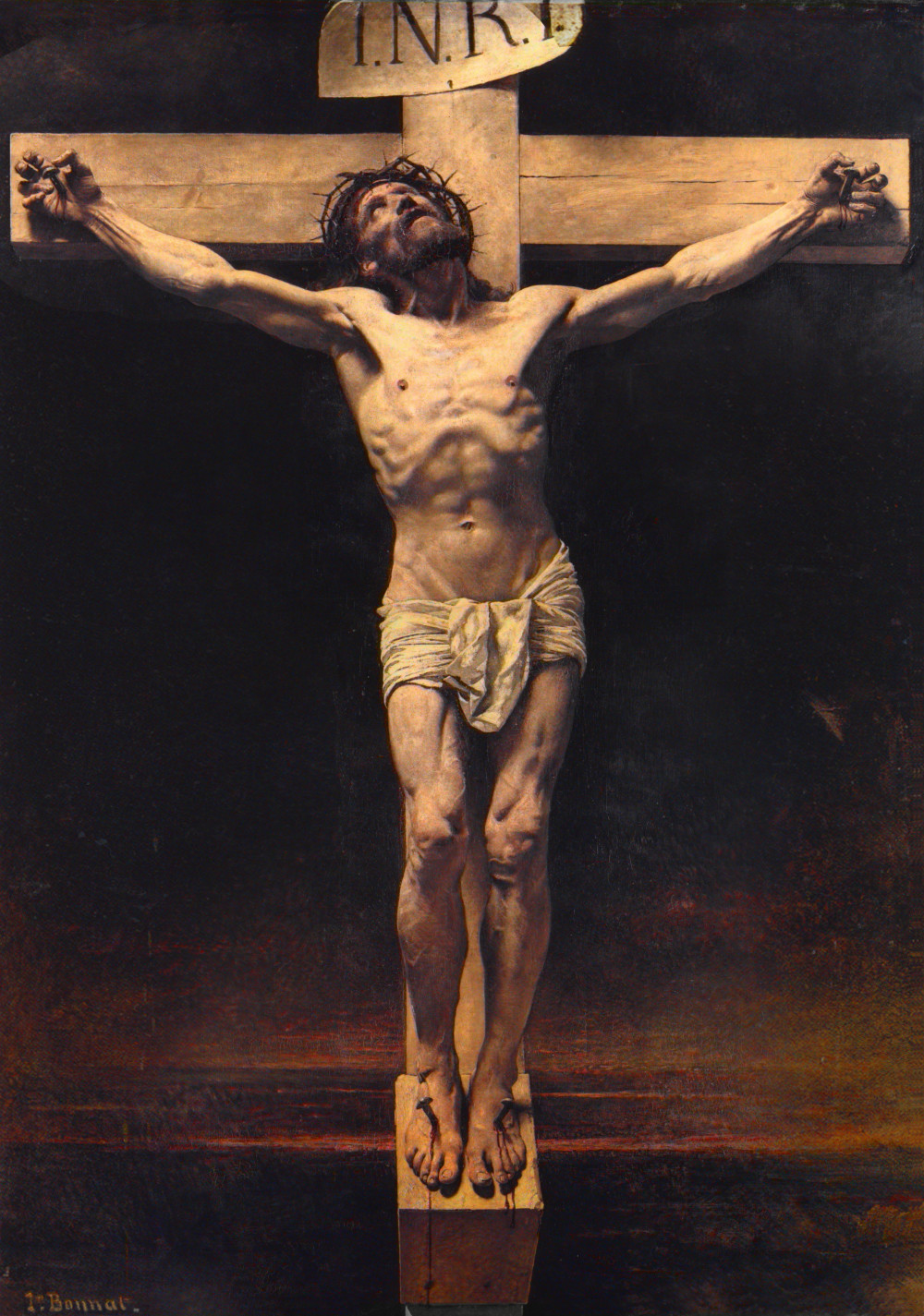
A Meditation for Good Friday: How To Undo the Effects of Sin?
Cardinal Newman, now Saint John Henry Newman, was a towering figure of nineteenth-century Catholicism who is almost universally admired. I say “almost” because not everyone likes him. I knew a priest once, Arthur Caulkins, who has become disenchanted with Newman. As an undergraduate Arthur had been enamoured of Newman, and this interest continued when he[…]Continue reading→
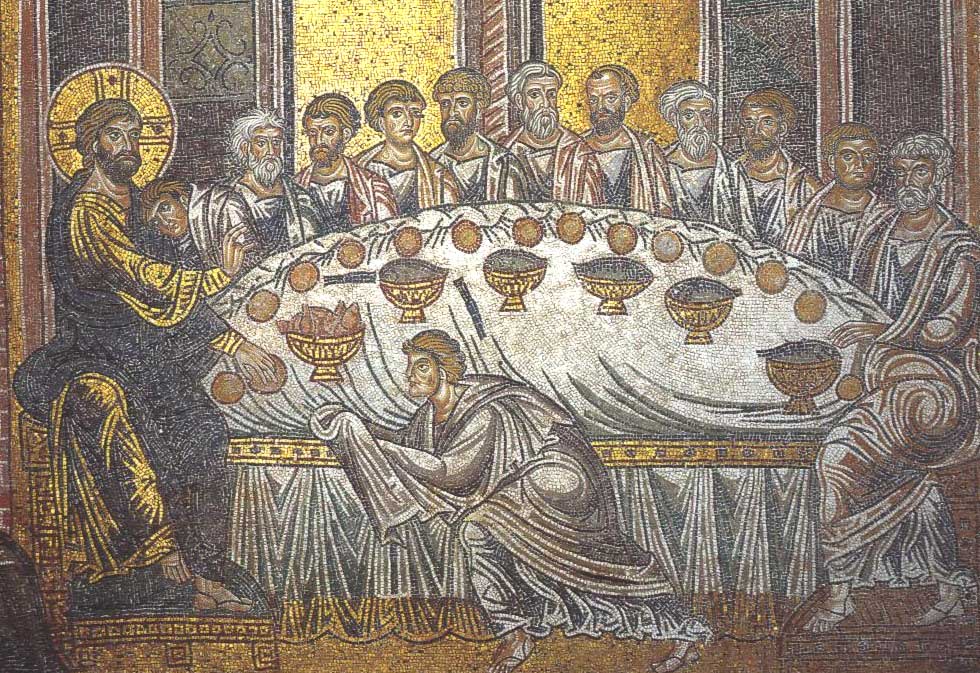
Pope Benedict’s Last Holy Thursday Homily
MASS OF THE LORD’S SUPPER HOMILY OF HIS HOLINESS BENEDICT XVI Basilica of St John Lateran Holy Thursday, 5 April 2012 Photo Gallery (Video) Dear Brothers and Sisters! Holy Thursday is not only the day of the institution of the Most Holy Eucharist, whose splendour bathes all else and in some ways draws it to[…]Continue reading→