
The Greatness of Humility
Twenty-second Sunday Per Annum (C) September 1, 2019.
Perform your tasks with humility….To the humble the Lord reveals His secrets…By the humble He is glorified (Sir. 3: 17-20). ⧾
The lessons of today’s Mass invite us to ponder the virtue of humility, the very foundation of our spiritual life. Humility is a foundational virtue for both faith and life and yet it is generally misunderstood for it is often erroneously associated with weakness. Humility – the word itself is a derivative of the Latin word for earth, humus. A humble person is grounded in reality; in his or her own reality and of course, in the truth of God. Humility is truth. A humble person can readily acknowledge his accomplishments, never losing sight of God our Heavenly Father, whose goodness has bestowed on us our abilities and talents. The greater you are, the more you must humble yourself (Sir. 3:18). Humility enables us to avoid the seductions of the world and its spirit and the most dangerous of all vices, the pride of Satan.
It is not possible to have a true relationship with God without the practice of humility for to the humble the Lord reveals His secrets. This past week in our Calendar of Saints we celebrated one of the greatest intellects of all time, Saint Augustine of Hippo, the North African Bishop and Doctor of the Church who died in the year 430. To say that he was brilliant is an understatement. In his autobiography, the Confessions, he recounts his search for truth and wisdom, effectively for meaning and for purpose, and for integrity of life. His autobiography is an account of man’s search for truth and it is rightly considered one of the greatest literary classics of all time. In what can be described as a torturous intellectual and moral journey, he, the gifted intellectual, at last acknowledges the necessity of the virtue of humility and the dangerous pitfall of pride. He wrote: I sought a way to obtain strength enough to enjoy you; but I did not find it until I embraced ‘the mediator between God and man, the man Christ Jesus….To possess my God, the humble Jesus, I was not yet humble enough. I did not know what his weakness was meant to teach (VII. xviii 24).
Learn from me; for I am gentle and humble of heart (Mt. 11:28). Our Lord invites all His disciples to the same school, regardless of our age or abilities. Humility of spirit and gentleness of life are the true hallmarks of Christian discipleship. If humility is truth, then gentleness is love and mercy. Our discipleship is a lifelong endeavour to appropriate these virtues; that we might be transformed into Our Lord’s likeness and possess the heart and mind of Christ. In St. Benedict’s Rule for monasteries a whole chapter is dedicated to the necessity and value of humility. He writes: The word of God in Scripture teaches us in clear and resounding terms that anyone who lays claim to a high position will be brought low and anyone who is modest in self-appraisal will be lifted up. This is Christ’s teaching about the guest who took the first place at the king’s banquet: all who exalt themselves, he said, will be humbled and all who humble themselves will be exalted. He explains further using the metaphor of Jacob’s ladder: On that ladder angels of God were shown to him going up and down in a constant exchange between heaven and earth. It is just such an exchange that we need to establish in our own lives, but with this difference for us: our proud attempts at upward climbing will really bring us down, whereas to step downwards in humility is the way to lift our spirit up towards God (Rule, Ch. 7).
All of our expressions of humility in God’s presence, from our genuflection when we enter the church, our reverent silence, the beating of our breasts in sorrow at the Confiteor, our kneeling during the Canon of the Mass, to our expression of humility once again as we beat our breasts at the Lord, I am not worthy; all these help us to gain a humble and contrite heart. The disciple who possesses such a heart strives to conform his heart to the Sacred Heart of Jesus and to the Immaculate Heart of Mary. Humility of heart enables us to know our place in the grand scheme of things, to treat others with the same reverence that we use with sacred things, and to know our place.
Here, in the celebration of the Sacred Mysteries we learn to glorify God in humility and love. The sacred author may be said to be addressing us individually and collectively as we exercise our office of worship: My child, perform your tasks with humility; then you will be loved by those whom God accepts. In the celebration of the Mass we partake in the Liturgy of Heaven, and the Saints who have gone before us are one with us in prayer for we have come to Mount Zion and to the city of the living God, the heavenly Jerusalem and to the innumerable Angels…to the spirits of the righteous made perfect…to God the judge of all and to Jesus, the mediator of the new covenant (Cf. Heb. 12). May the example of the Saints, especially St. Augustine, whose search for truth led him to the gentle and humble Saviour, and St. Benedict who teaches us to prefer nothing to the worship of God, encourage us to live and to worship with humility of spirit. Let us then follow Christ’s paths which He has revealed to us, above all the path of humility, which He himself became for us (St. Augustine, Sermo 23A, Liturgy of the Hours, Vol. IV, p. 189). ⧾

Remembering Father Alphonse de Valk
(Today marks the sixth anniversary of the death of Father Alphonse de Valk, C.S.B., a faithful, courageous and indefatigable Basilian priest, pro-life-and-family apostle, and the founder of Catholic Insight magazine. Here is what we wrote those on his entering into eternity five years ago, as we continue to remember him in our prayers and thoughts)[…]Continue reading→

Divine Mercy Sunday – An Echo of Every Mass
Reach out your hand and put it in my side. Do not doubt but believe’… ‘My Lord and my God!’ (Jn. 20:18)). Today is Divine Mercy Sunday, and as we celebrate the end of the Easter Octave, we contemplate the wounded side of our Saviour, the Church’s source of life. On Good Friday in the[…]Continue reading→

Saint Stanislaus of Szczepanów
We celebrate Saint Stanislaus today (+ April 11, 1079), in light of this Easter Octave, a bishop and martyr who accepted the episcopacy only at the direct order of Pope Alexander II. He proved a wise and courageous leader of his flock, put to death by his own king, Boleslaus, for rebuking the monarch’s ‘immoral[…]Continue reading→
First Holy Communion: Sermon from May 16, 1943
Here is a sermon from the good old days by +Rev. Msgr. Vincent Nicholas Foy (August 14, 1915 – March 13, 2017), from 1943. Readers may recall that Pope Saint Pius X, by the decree Quam Singulari in 1910, lowered the customary age of reception of Holy Communion – after the rigours of the plague[…]Continue reading→
In the Glorious Light of Easter, Alleluia!
Set your minds on things that are above, not on things that are on earth, for you have died, and your life is hidden with Christ in God. When Christ who is your life is revealed, then you also will be revealed with him in glory (Col. 3:3-4). The Resurrection of Our Lord and Saviour[…]Continue reading→
An Ancient Homily for Holy Saturday
The time between Good Friday and Easter Sunday is one of waiting, in silence, as the world wonders – anticipates – what will happen, after the death of Christ. We re-live this time each year in the anamnesis of our liturgy, and in turn look forward to the glorious re-creation of all things at the[…]Continue reading→
Europe’s Long Descent
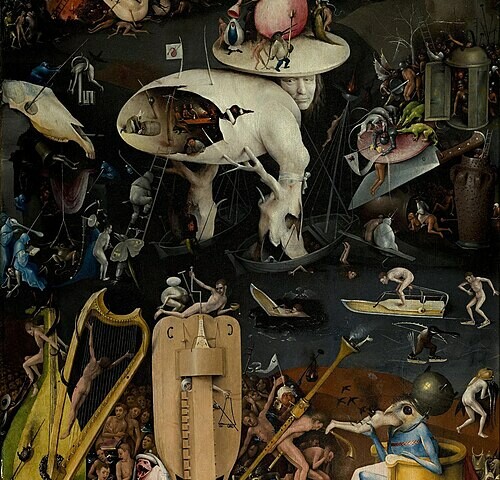
(As we meditate on this day on Christ’s burial, and His descent into hell, it is fitting to ponder here with contributor Peter Marcus how the world seems to be heading there as well. The difference is that, although God cannot ‘redeem’ hell, nor those therein, He can and did redeem the world. There is[…]Continue reading→
Pope Saint John Paul II’s First Good Friday Homily
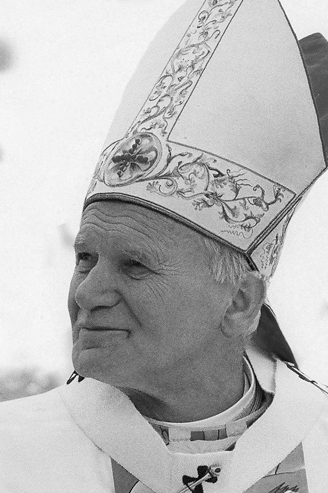
ADDRESS OF HIS HOLINESS JOHN PAUL II AT THE CONCLUSION OF THE STATIONS OF THE CROSS AT THE COLOSSEUM Good Friday, 13 April 1979 When we make the Way of the Cross from one station to the next, in spirit we are always at the spot wherethis journey had its “historical” place: where it[…]Continue reading→
A Meditation for Good Friday: How To Undo the Effects of Sin?
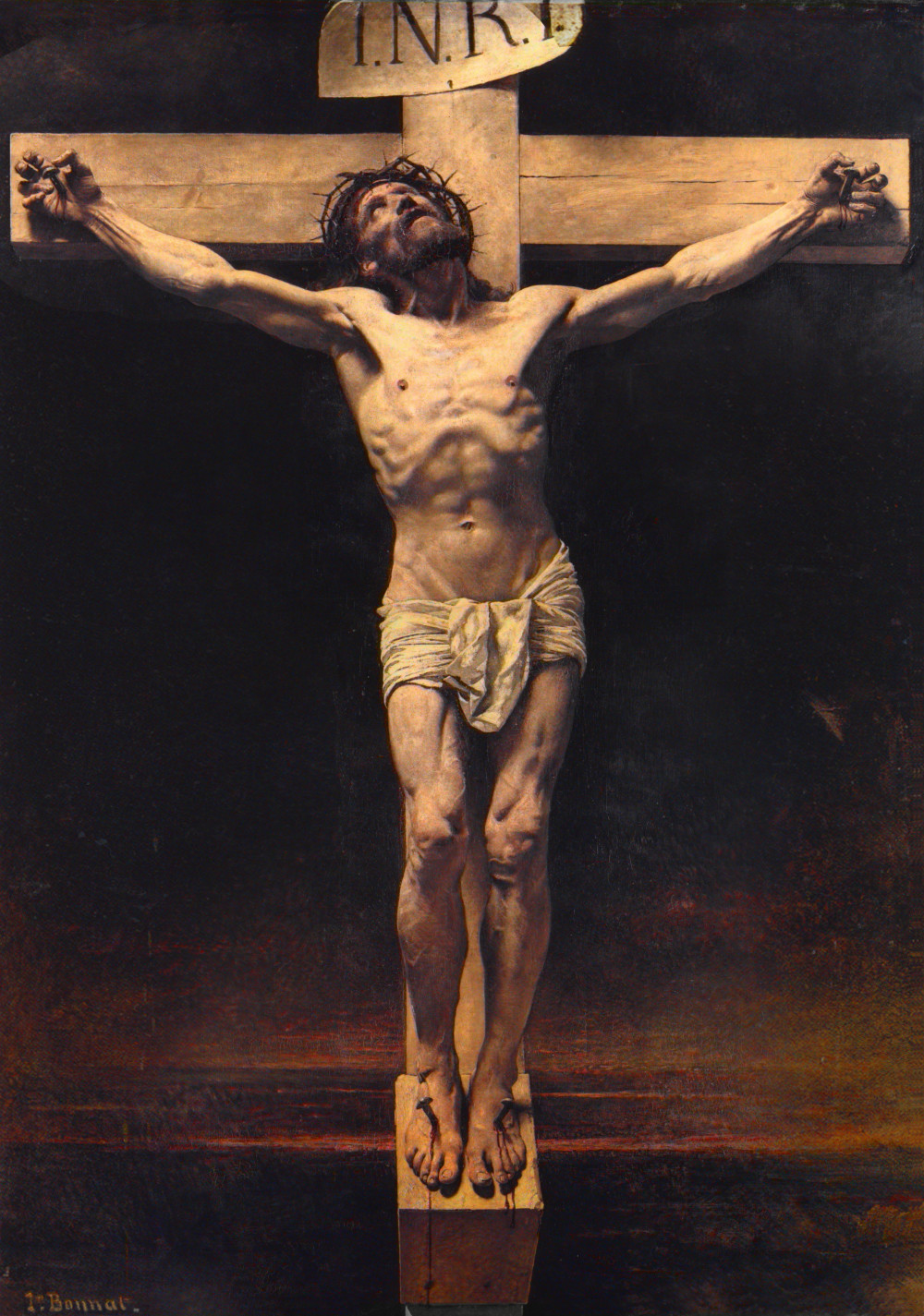
Cardinal Newman, now Saint John Henry Newman, was a towering figure of nineteenth-century Catholicism who is almost universally admired. I say “almost” because not everyone likes him. I knew a priest once, Arthur Caulkins, who has become disenchanted with Newman. As an undergraduate Arthur had been enamoured of Newman, and this interest continued when he[…]Continue reading→
Pope Benedict’s Last Holy Thursday Homily
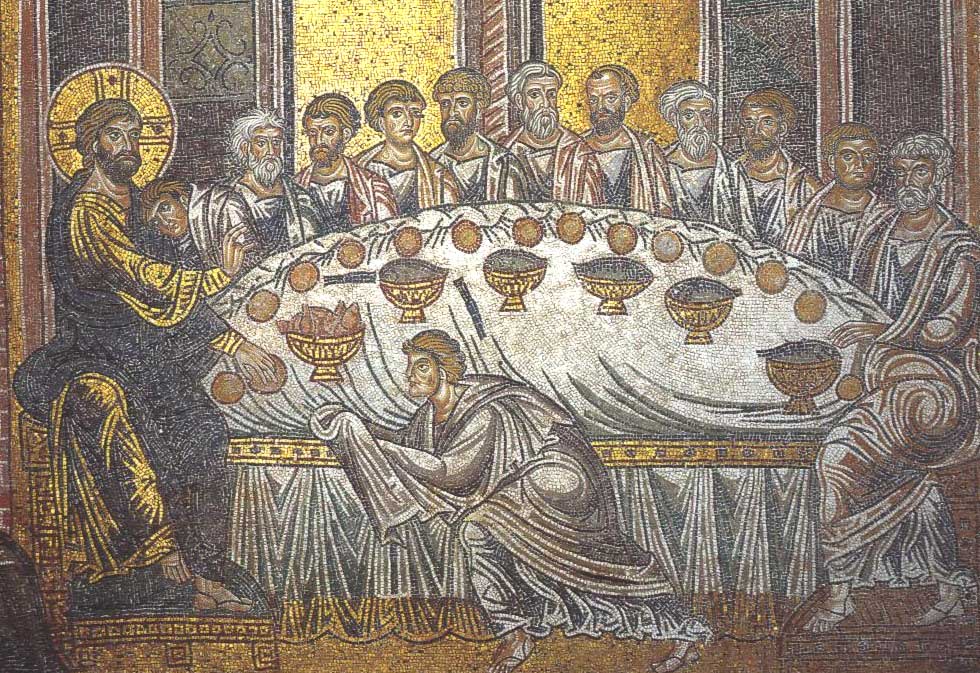
MASS OF THE LORD’S SUPPER HOMILY OF HIS HOLINESS BENEDICT XVI Basilica of St John Lateran Holy Thursday, 5 April 2012 Photo Gallery (Video) Dear Brothers and Sisters! Holy Thursday is not only the day of the institution of the Most Holy Eucharist, whose splendour bathes all else and in some ways draws it to[…]Continue reading→