
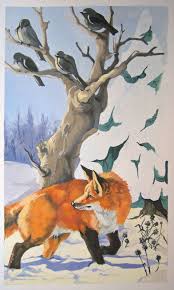
Foxes and Birds
A friend of mine and I have a long-standing debate about sermons. He prefers a straightforward approach, while I am more inclined to resort to symbolism. For instance, if he were in preaching on today’s Gospel, he would content himself with saying, “Jesus was homeless because he surrendered himself totally to his mission of preaching; he expected his disciples to be equally committed. We, too, should order our lives to reflect our absolute allegiance to the Gospel message.” And that’s that.
I, on the other hand, begin with the principle that nothing in Scripture is haphazard, for everything has its purpose, including the foxes and birds: “The foxes have holes, and the birds of the air have nests.” There must be a reason Jesus specifically mentioned foxes and birds, for they have very different connotations. The Bible confirms the common use of the word “foxy” to describe someone who is cunning and cruel. For instance, when Jesus learned that King Herod wanted to kill him, he said, “Tell that fox. . . .”[1] Similarly, in the Old Testament the prophet Ezekiel said, “The [false] prophets are like foxes among ruins.”2 In the Song of Songs, too, we read about “the little foxes that spoil the vineyard.” And so on. Birds are different in that they represent what is pleasing to God, as when sparrow and swallow symbolize the joy of being in the temple of Jerusalem: “Even the sparrow find a home and the swallow a nest for brood; your altars, O Lord of hosts.”3 There are many such statements: “Like the bird set free from the fowler; the snare was broken and we are set free”4 and “Fly like a bird to the mountains.”5 All in all, they add weight to Jesus’s assurance to his disciples: “You are worth more than many sparrows.”6
What can we make of these two as contrasting resting places for the Son of Man? Well, foxes burrow in the earth, and so they symbolize the earthbound man. He is so concerned with the things of this world that he cannot raise his eyes to heaven, someone for whom power or greed is the ruling passion. I may note here that the three systems most important in the last hundred years have all been forms of unbridled greed or abusive power: Marxist communism, Nazism, and laissez-faire capitalism. These represent what Saint Paul meant when—in today’s second reading—he warned us: “Live by the Spirit, I say, and do not gratify the desires of the flesh. For what the flesh desires is opposed to the Spirit, and what the Spirit desires is opposed to the flesh.”7 Certainly, Jesus will not lay down his head among such men. That raises the question of why Jesus would not liken himself to birds, who have their nests in the air, in “heaven,” so to speak. You would imagine that, as such, they would be apt symbols for people who “live by the Spirit.” But Christ avoids the comparison because he has not yet ascended to his Father; before he can find his “nest,” he must proclaim the kingdom in weariness and want, he must heal the sick, he must die in ignominy. Only then will he have a place to lay his head in the bosom of the Father, like those sparrows and swallows nesting in the temple.
In a way, we, too, may echo the words of Jesus, “Foxes have holes and birds of the air their nests; but the Son of Man has nowhere to lay his head.”8 Like him, we must eschew “foxes,” i.e., people who have a consuming greed or a lust for power. Nor can we yet nest among the “birds,” i.e., the heavenly Jerusalem, for “here we have no lasting city; but we seek a city which is to come.
[1]Lk 13.32. 2Ez 13.4 3Ps 83/84 4Ps 123/124 5Ps 10/11 6Matt 10.31 7Gal 5.17 8Matt 8.28 9Heb 13.14

Remembering Father Alphonse de Valk
(Today marks the sixth anniversary of the death of Father Alphonse de Valk, C.S.B., a faithful, courageous and indefatigable Basilian priest, pro-life-and-family apostle, and the founder of Catholic Insight magazine. Here is what we wrote those on his entering into eternity five years ago, as we continue to remember him in our prayers and thoughts)[…]Continue reading→

Divine Mercy Sunday – An Echo of Every Mass
Reach out your hand and put it in my side. Do not doubt but believe’… ‘My Lord and my God!’ (Jn. 20:18)). Today is Divine Mercy Sunday, and as we celebrate the end of the Easter Octave, we contemplate the wounded side of our Saviour, the Church’s source of life. On Good Friday in the[…]Continue reading→

Saint Stanislaus of Szczepanów
We celebrate Saint Stanislaus today (+ April 11, 1079), in light of this Easter Octave, a bishop and martyr who accepted the episcopacy only at the direct order of Pope Alexander II. He proved a wise and courageous leader of his flock, put to death by his own king, Boleslaus, for rebuking the monarch’s ‘immoral[…]Continue reading→
First Holy Communion: Sermon from May 16, 1943
Here is a sermon from the good old days by +Rev. Msgr. Vincent Nicholas Foy (August 14, 1915 – March 13, 2017), from 1943. Readers may recall that Pope Saint Pius X, by the decree Quam Singulari in 1910, lowered the customary age of reception of Holy Communion – after the rigours of the plague[…]Continue reading→
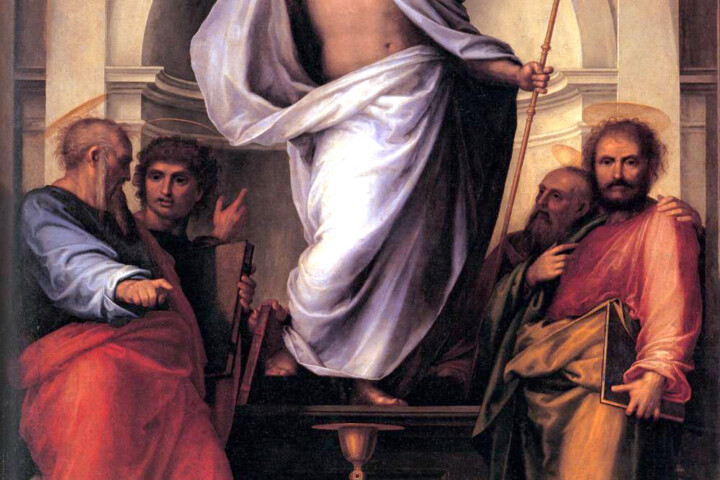
In the Glorious Light of Easter, Alleluia!
Set your minds on things that are above, not on things that are on earth, for you have died, and your life is hidden with Christ in God. When Christ who is your life is revealed, then you also will be revealed with him in glory (Col. 3:3-4). The Resurrection of Our Lord and Saviour[…]Continue reading→
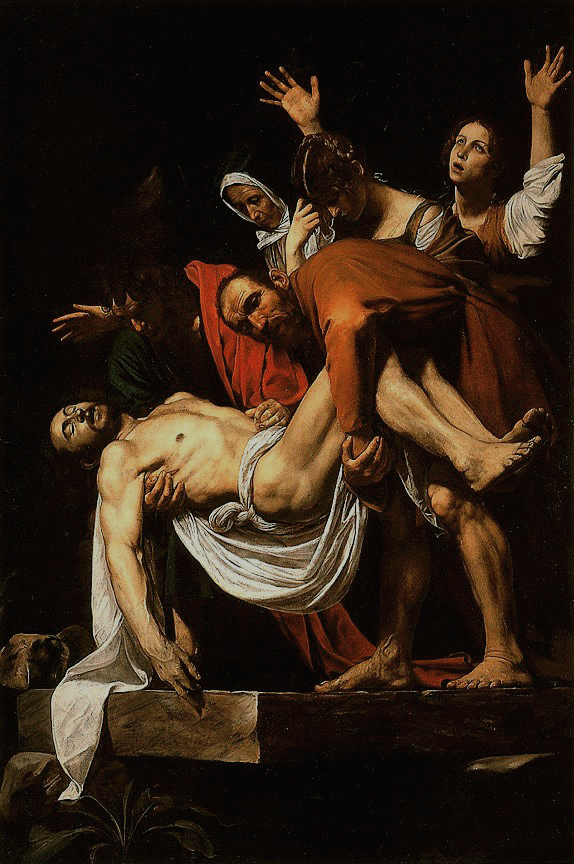
An Ancient Homily for Holy Saturday
The time between Good Friday and Easter Sunday is one of waiting, in silence, as the world wonders – anticipates – what will happen, after the death of Christ. We re-live this time each year in the anamnesis of our liturgy, and in turn look forward to the glorious re-creation of all things at the[…]Continue reading→
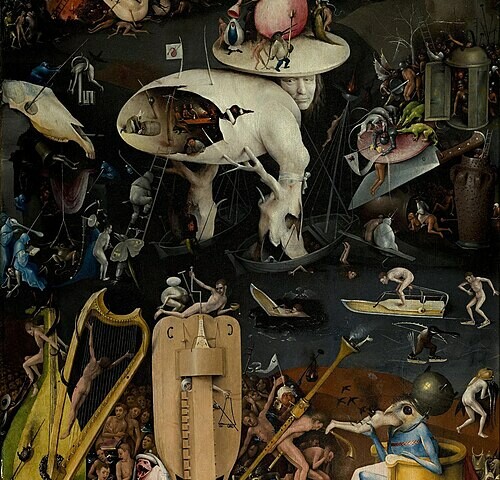
Europe’s Long Descent
(As we meditate on this day on Christ’s burial, and His descent into hell, it is fitting to ponder here with contributor Peter Marcus how the world seems to be heading there as well. The difference is that, although God cannot ‘redeem’ hell, nor those therein, He can and did redeem the world. There is[…]Continue reading→
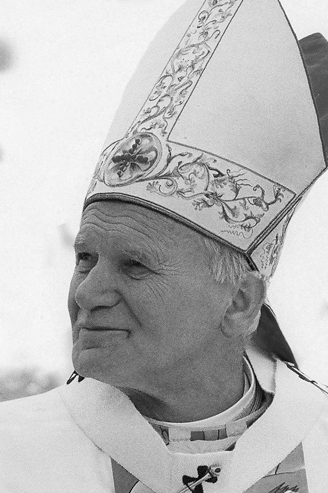
Pope Saint John Paul II’s First Good Friday Homily
ADDRESS OF HIS HOLINESS JOHN PAUL II AT THE CONCLUSION OF THE STATIONS OF THE CROSS AT THE COLOSSEUM Good Friday, 13 April 1979 When we make the Way of the Cross from one station to the next, in spirit we are always at the spot wherethis journey had its “historical” place: where it[…]Continue reading→
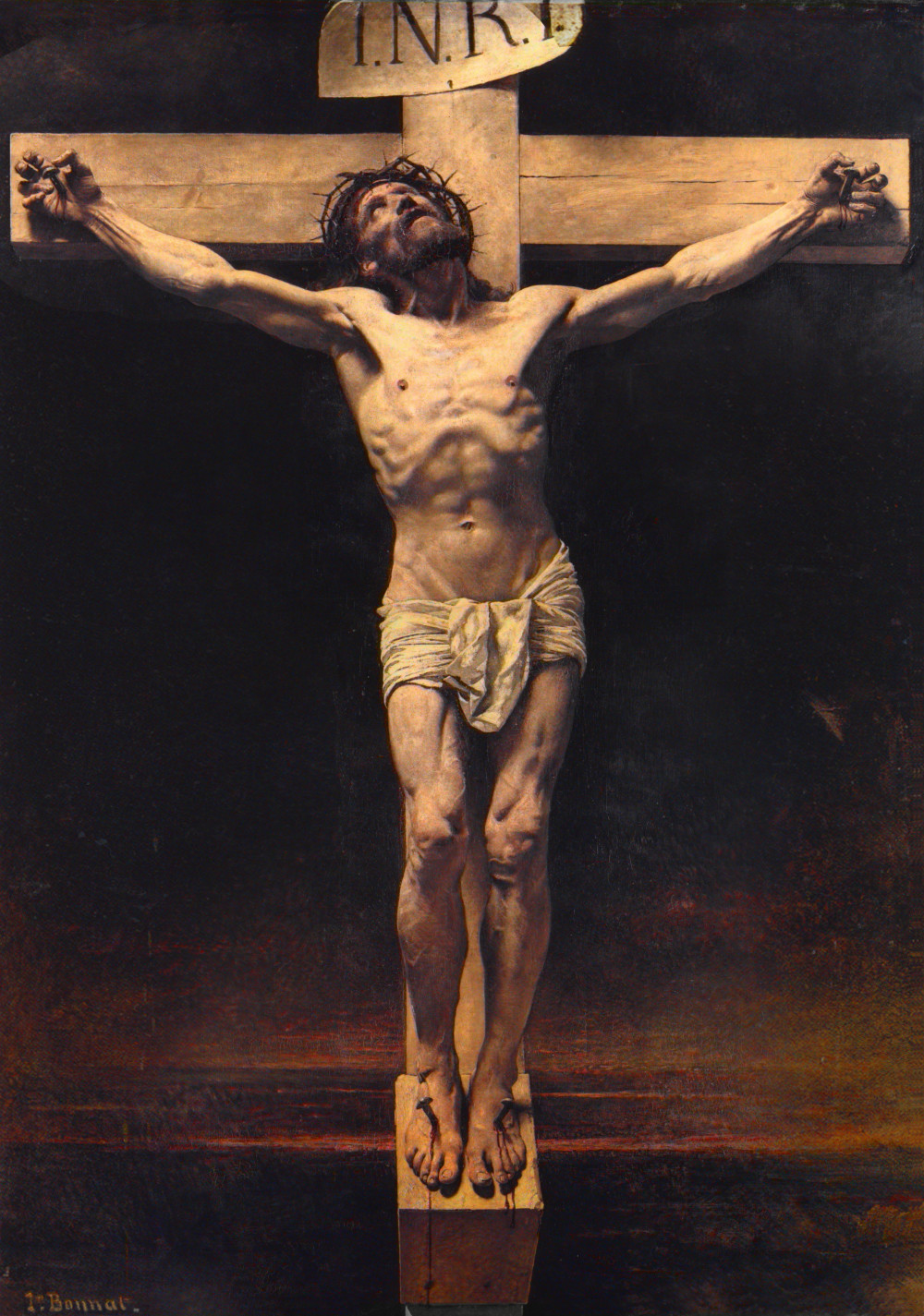
A Meditation for Good Friday: How To Undo the Effects of Sin?
Cardinal Newman, now Saint John Henry Newman, was a towering figure of nineteenth-century Catholicism who is almost universally admired. I say “almost” because not everyone likes him. I knew a priest once, Arthur Caulkins, who has become disenchanted with Newman. As an undergraduate Arthur had been enamoured of Newman, and this interest continued when he[…]Continue reading→
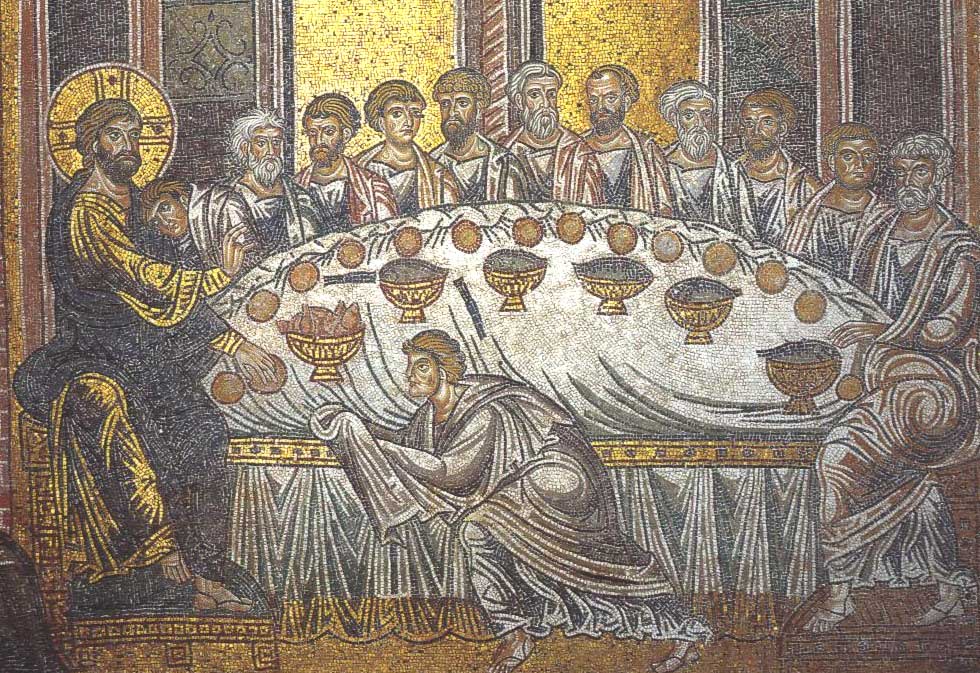
Pope Benedict’s Last Holy Thursday Homily
MASS OF THE LORD’S SUPPER HOMILY OF HIS HOLINESS BENEDICT XVI Basilica of St John Lateran Holy Thursday, 5 April 2012 Photo Gallery (Video) Dear Brothers and Sisters! Holy Thursday is not only the day of the institution of the Most Holy Eucharist, whose splendour bathes all else and in some ways draws it to[…]Continue reading→