

Immortal Irony
In his short story “The Ambitious Guest,” Nathaniel Hawthorne uses a lot of irony. A lot might actually be an understatement. The story is riddled with irony from the beginning to the rather awful ending. It is primarily a story about a young traveler who has great plans for his life. He believes that it is his destiny to become magnificent and incredibly important, and that when he dies the whole world will know him and remember him. Instead, by the time the story ends, all of those dreams are, quite literally, swept away and the traveler is utterly and completely forgotten.
Hawthorne’s story seems to point out that that you cannot possibly know what you are destined to be. A person can believe for years that she is destined for greatness and never see those beliefs come to fruition. On the other hand, a person can believe for years that he will live in complete anonymity, only to find himself somehow standing in the world’s spotlight.
One of the most frustrating things about life is that things almost never work out the way you expect them to. In the blink of an eye, plans get ripped up, shredded, thrown away, completely demolished, flipped upside down, and stomped into the ground. For instance, my family recently traveled from Wellington, Kansas to Albia, Iowa. The plan was to leave no later than 6:00 a.m. and make the six-hour trip with no stopping except once for gas and propane.
We left around 9:00. The first gas station we stopped at was experiencing some sort of card reader issues, so we ended up leaving without gas. The second gas station did not have propane, so we had to stop again. Then there was the completely unscheduled emergency stop when the awning that covers our slideout opted to come unrolled from its spool and billowed out like a sail as we were traveling down the interstate in a very strong crosswind. This had never happened to us before, and resulted in roughly an hour and a half spent first on the side of the road and then in a rest area/truck parking area where my brother got to climb up onto the roof to re-roll the awning and strap it down with wire ties. We got to our campground around 7:00 p.m.
The thing is, if even something as simple as moving from point A to point B has so many things that could go wrong (and that is not even counting the more catastrophic things) how could anyone possibly know exactly what he or she is destined to do or be? I do not honestly believe that a person can know exactly. One might be called or urged in a particular direction, such as the priesthood or married life, but that is not the same as having any idea where one might end up by following that path. The moment a person gets really sure of himself seems to be the very moment that God chooses to give the carpet a tug.
The trouble is, I think, that when a person gets to the point where she says, “I will be great, and a million people will remember me when I am dead,” then all of her focus is on achieving material recognition. Too much emphasis is placed on earthy success, even if the success desired is of a moral variety. If someone says, “I will be the greatest philanthropist in three hundred years,” then he has already defeated the purpose. In trying so hard to be unforgettable, many people overlook the fact that they already are.
In Regina Doman’s In the Shadow of the Bear (a retelling of the Snow White and Rose Red fairy tale) I came across a passage where the two sisters are talking with the man they know as Bear. Rose suggests that life might very well be “a battle between what’s peripheral and what’s really important. As though the people you meet aren’t just their plain, prosaic selves, but are actually princes and princesses, gods and goddesses, fairies, gypsies, shepherds, all sorts of fantastic creatures who’ve…forgotten who they really are.” While this statement is partially to remind the reader that this story is really a fairy tale, and that Rose is really a fairy tale princess herself, it is not that far from a quote from C. S. Lewis. Since the author mentions both Lewis and G. K. Chesterton several times throughout the book, I imagine that she is familiar with Lewis’s claim, “There are no ordinary people. You have never talked to a mere mortal. Nations, cultures, arts, civilizations—these are mortal, and their life is to ours as the life of a gnat. But it is immortals whom we joke with, work with, marry, snub and exploit—immortal horrors or everlasting splendors.”
The idea that a person must work so hard to be unforgettable, to become famous, powerful, important, or beloved on earth is actually quite sad; the more involved a person becomes in the quest for earthly acclaim, the more he forgets what he really and truly is—an immortal soul in a mortal body. In his quest to live forever he forgets all about his immortality. And therein lies the irony.
(This article is a reprise of one originally published in 2013, but as the title implies, truth is immortal)

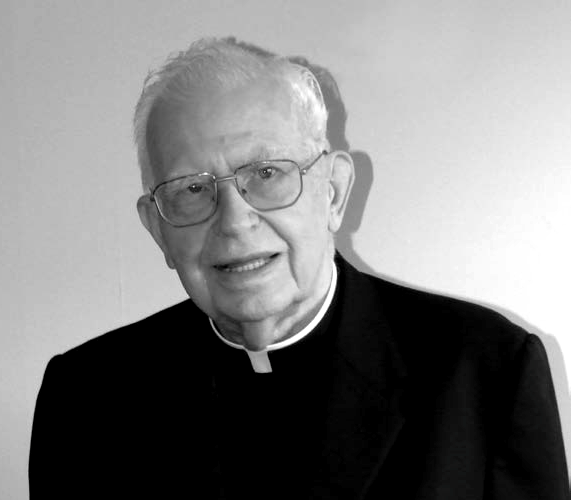
Remembering Father Alphonse de Valk
(Today marks the sixth anniversary of the death of Father Alphonse de Valk, C.S.B., a faithful, courageous and indefatigable Basilian priest, pro-life-and-family apostle, and the founder of Catholic Insight magazine. Here is what we wrote those on his entering into eternity five years ago, as we continue to remember him in our prayers and thoughts)[…]Continue reading→

Divine Mercy Sunday – An Echo of Every Mass
Reach out your hand and put it in my side. Do not doubt but believe’… ‘My Lord and my God!’ (Jn. 20:18)). Today is Divine Mercy Sunday, and as we celebrate the end of the Easter Octave, we contemplate the wounded side of our Saviour, the Church’s source of life. On Good Friday in the[…]Continue reading→

Saint Stanislaus of Szczepanów
We celebrate Saint Stanislaus today (+ April 11, 1079), in light of this Easter Octave, a bishop and martyr who accepted the episcopacy only at the direct order of Pope Alexander II. He proved a wise and courageous leader of his flock, put to death by his own king, Boleslaus, for rebuking the monarch’s ‘immoral[…]Continue reading→
First Holy Communion: Sermon from May 16, 1943
Here is a sermon from the good old days by +Rev. Msgr. Vincent Nicholas Foy (August 14, 1915 – March 13, 2017), from 1943. Readers may recall that Pope Saint Pius X, by the decree Quam Singulari in 1910, lowered the customary age of reception of Holy Communion – after the rigours of the plague[…]Continue reading→
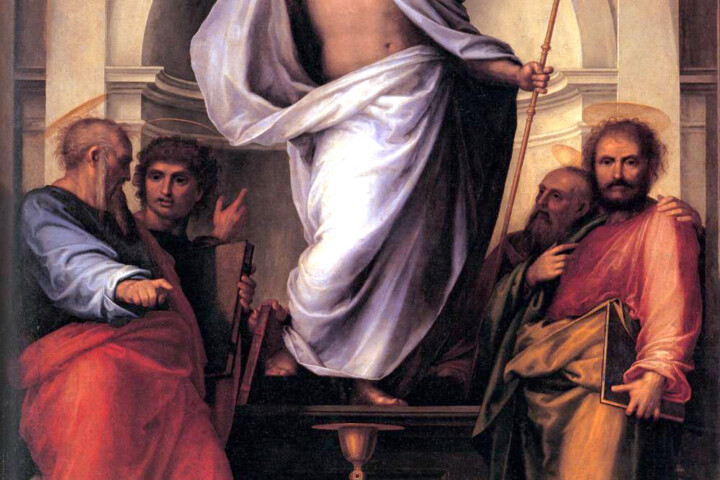
In the Glorious Light of Easter, Alleluia!
Set your minds on things that are above, not on things that are on earth, for you have died, and your life is hidden with Christ in God. When Christ who is your life is revealed, then you also will be revealed with him in glory (Col. 3:3-4). The Resurrection of Our Lord and Saviour[…]Continue reading→

An Ancient Homily for Holy Saturday
The time between Good Friday and Easter Sunday is one of waiting, in silence, as the world wonders – anticipates – what will happen, after the death of Christ. We re-live this time each year in the anamnesis of our liturgy, and in turn look forward to the glorious re-creation of all things at the[…]Continue reading→
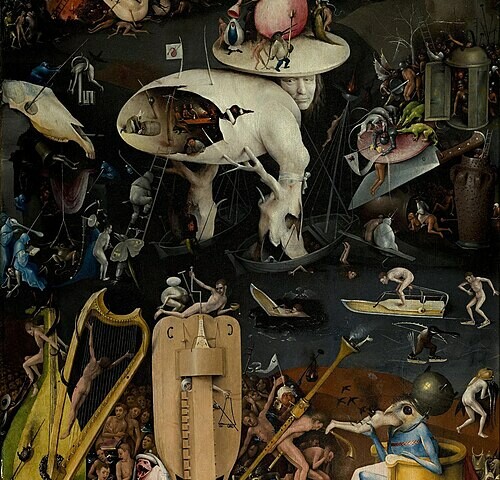
Europe’s Long Descent
(As we meditate on this day on Christ’s burial, and His descent into hell, it is fitting to ponder here with contributor Peter Marcus how the world seems to be heading there as well. The difference is that, although God cannot ‘redeem’ hell, nor those therein, He can and did redeem the world. There is[…]Continue reading→
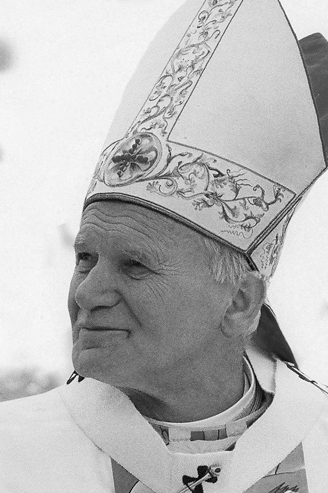
Pope Saint John Paul II’s First Good Friday Homily
ADDRESS OF HIS HOLINESS JOHN PAUL II AT THE CONCLUSION OF THE STATIONS OF THE CROSS AT THE COLOSSEUM Good Friday, 13 April 1979 When we make the Way of the Cross from one station to the next, in spirit we are always at the spot wherethis journey had its “historical” place: where it[…]Continue reading→
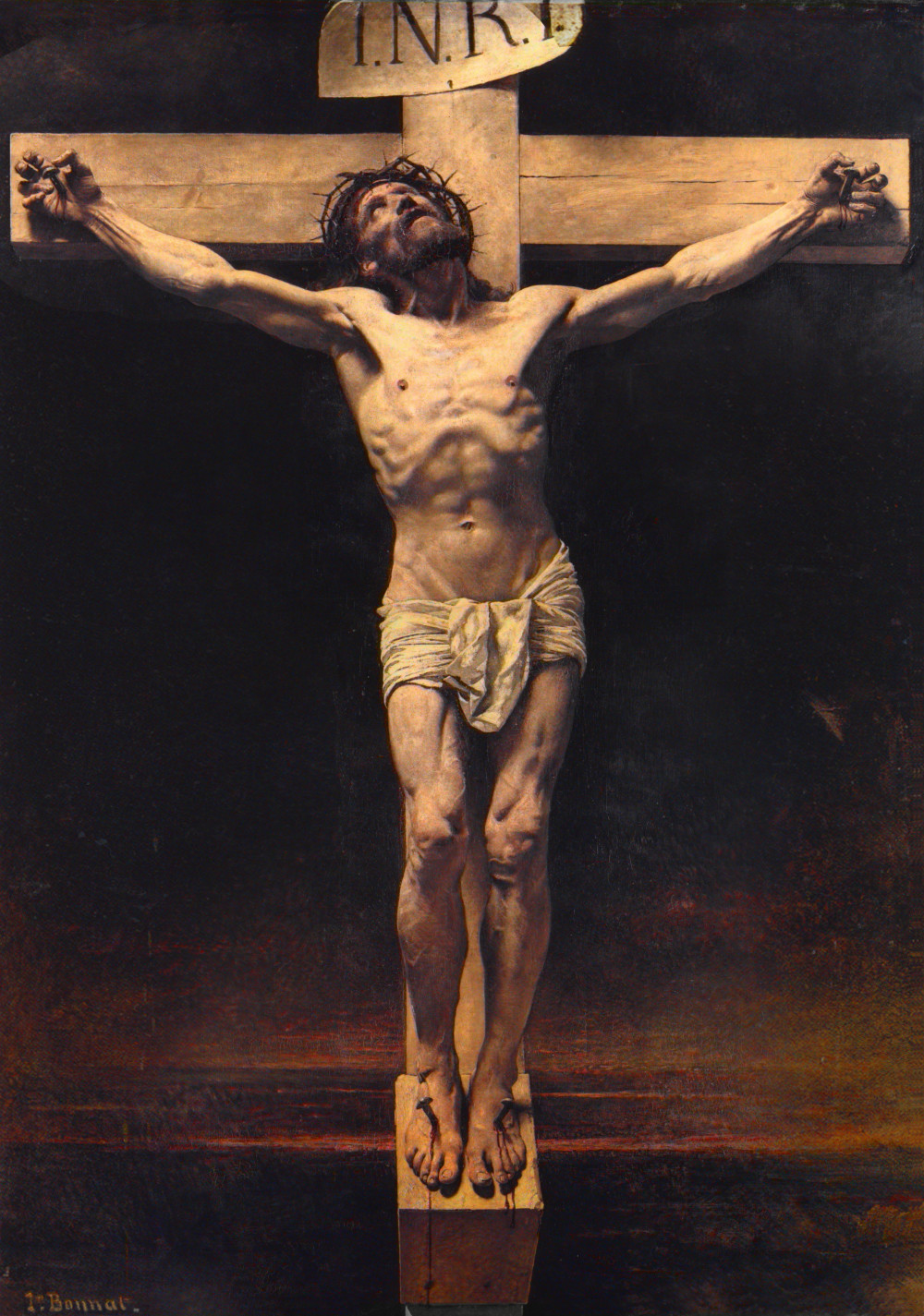
A Meditation for Good Friday: How To Undo the Effects of Sin?
Cardinal Newman, now Saint John Henry Newman, was a towering figure of nineteenth-century Catholicism who is almost universally admired. I say “almost” because not everyone likes him. I knew a priest once, Arthur Caulkins, who has become disenchanted with Newman. As an undergraduate Arthur had been enamoured of Newman, and this interest continued when he[…]Continue reading→
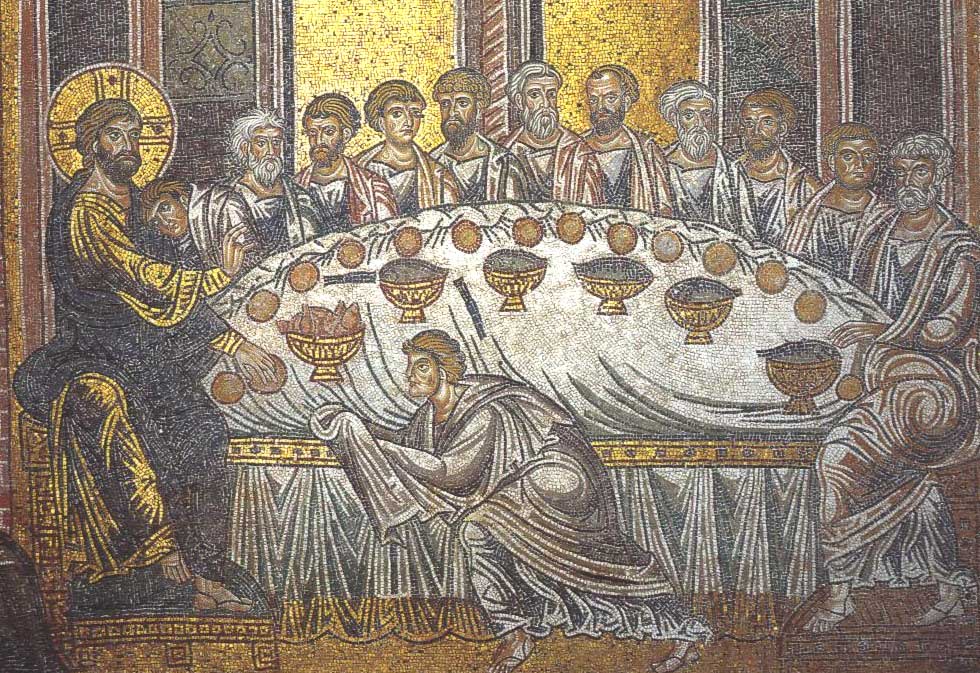
Pope Benedict’s Last Holy Thursday Homily
MASS OF THE LORD’S SUPPER HOMILY OF HIS HOLINESS BENEDICT XVI Basilica of St John Lateran Holy Thursday, 5 April 2012 Photo Gallery (Video) Dear Brothers and Sisters! Holy Thursday is not only the day of the institution of the Most Holy Eucharist, whose splendour bathes all else and in some ways draws it to[…]Continue reading→