
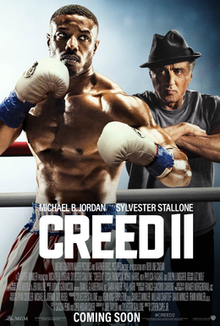
A Review of Creed II: Reflections on the Rocky Saga & the Intrinsic Value of the Human Person
The eighth “chapter” of the Rocky series, Creed II, was released on November 21. Continuing in the tradition of the previous seven chapters of the Rocky Saga, Creed II exploits the underdog archetype. The protagonist, Adonis Creed (Michael B. Jordan), although recently crowned heavyweight boxing champion of the world, is not prepared to beat a lethally dangerous opponent, Victor Drago (Florian Munteanu), son of Ivan Drago (Dolph Lundgren), who is superior in power, strength and speed. Adonis requires Rocky Balboa’s (Sylvester Stallone) mentorship to overcome this formidable foe. What makes this latest instalment of the Rocky series so poignantly beautiful and unique is its take on the Biblical notion of the “sins of the father.” This is a concept which William Shakespeare famously utilized in his Merchant of Venice in Act III, Scene V, where Launcelot Gobbo states in a conversation with Jessica, the daughter of Shylock (the Venetian Jewish moneylender): “the sins of the father are to be laid upon the children.” This concept is found throughout the Old Testament (Exodus 20:5, 34:7; Deuteronomy 5:9; Numbers 4:18; Isaiah 14:21; Psalm 51:5; 1 Kings 15:3). And yet other verses in the Old Testament pertain to taking moral responsibility for one’s own sins; for some theologians it represents a newer covenant, regardless of being a father, mother or child; neither are to be transferred to the other but one is to be judged by their own righteousness (Deuteronomy 24:16; Ezekiel 18:19-20; Jeremiah 31:30-33). Continuing in this progression, is the new covenant found in the New Testament whereby we are redeemed from the transgressions of our fathers through the sacrament of baptism (Acts 2:38; 1 Peter 3:21; Galatians 3:27; John 3:5; Hebrews 10:22). Furthermore, we are redeemed by Christ’s atoning sacrifice not by our own righteousness (1 John 1:19, 3:16-17, Titus 3:5, Romans 8:1; 1 Corinthians 15:22); this renewal of the self (Colossians 3:10) is shown by our faith and the good works that follow from it (James 2:14-24).
Even though not theologically explicit, the concept of “sins of the father” alongside those of redemption and reconciliation, run deep within Creed II, especially as they are found in the struggles of the main characters: Adonis, Rocky and Ivan. All three characters have their own awakening. Embedded within the struggles of these three men are many valuable elements that both Catholics and non-Catholics may overlook, including self-transcendence, family/community, and the sanctity of life.
Relevant Background to the Rocky Saga
The Rocky Saga comprises a series of American boxing sports-drama films (Rocky I-V, Rocky Balboa and Creed I and II). They are arguably some of the greatest sports movies ever made. The original Rocky movie was released in 1976, and nominated for ten Oscars in 1977, winning best picture and director. The script was written by Sylvester Stallone and directed by the late John Avildsen (who also directed the Karate Kid series). For those unfamiliar with the Rocky movies, here is a brief synopsis of them and here is an interesting documentary which will give readers a deeper background.
Most relevant to Creed II are Creed I and Rocky IV. In Rocky IV, Ivan Drago (Dolph Lundgren), a Soviet boxing Olympic champion, kills Adonis’ father – Apollo (who has become a dear friend of Rocky) in an exhibition match. Rocky then feels obliged to fight Drago in the Soviet Union in a brutal re-match. Despite winning, he suffers brain damage. One of the most interesting elements of this movie aside from the training montages and fights, are the proleptic words of Rocky with respect to ‘changing one’s heart’; several years after this movie, the Soviet Union collapsed.
Creed I is about the rise of Adonis, who was the result of Apollo’s infidelity before his death. Adonis is left an orphan at a young age after the death of his mother. Apollo’s wife adopts him and raises him. Adonis yearns to emulate his father and longs to be revered as a champion, so he seeks out Rocky for training. Now, Creed II shows the return of Ivan Drago through his son Viktor, 33 years after his loss to Rocky in the Soviet Union; the bad blood between Rocky and Ivan is brought into a new light.
Adonis’s Struggles
One of the striking features related to Adonis’s life struggles is the shame he feels from living in the absence of his father and being born illegitimately. Interestingly, whether the intention was even there or not, or even if it was meant to be implicit or explicit, there is a powerful argument for the sanctity of life. This is raised in Creed I and II, through Adonis’s desire for self-actualization. In Creed I, Adonis, says to Rocky, in an incredibly heartbreaking manner at the last round of his fight against ‘Pretty’ Ricky Conlan (Tony Bellew), that he wants to prove that he wasn’t a “mistake.” Rocky in his own words expresses that Adonis has been a blessing in helping him fight against cancer; Adonis then proves to himself by knocking down Conlan before the bell, that he is not a “mistake.”
In Creed II, this notion of the sanctity of life rears its head again. Adonis’s fiancé, Bianca, experiences progressive hearing loss in Creed I. In Creed II, they worry that their recently conceived offspring may be born with the same disability. Ever growing number of couples would be prepared to discard the unborn whom they discover to possess a genetic deficiency through what is known as fetal genome screening, even though it often can be inaccurate. This is beyond tragic and morally deficient.
Unfortunately, unborn children that are conceived with discoverable genetic deficiencies, or illegitimately through an extra-marital affair or an even a one-night stand, are aborted more often than one may think. Even children born in such situations feel as though they were a mistake. But at least those given a chance at life can have the opportunity to do amazing things and affect human history positively. However, God, as the sovereign, omniscient and omnibenevolent Creator who exists outside of the physical spatiotemporal reality, knows all of our struggles before we experience them. Even though aborted children have a home with Him, humans partaking in such action will be morally accountable if they do not repent. The truth is that no being that has the imago dei can be a mistake, despite the wrongdoings of their procreators.
Adonis throughout the movie also struggles with self-actualization through his desire to instantiate his own legacy. He attempts to move out of the shadow of his father’s greatness and traumatic demise; something that has persistently haunted him. Although he wears his last name proud and proves himself as the heavyweight champion of the world, he still suffers on this road to self-transcendence. It is important to note that self-transcendence is a mode of being which orients itself to the human good. For Adonis, it is related to a team (his family, consisting of Bianca, his mother, daughter and Rocky [whom he considers an uncle]) that is fighting together against both Ivan and Victor Drago. For Adonis it is this sense of community that gives him the strength to overcome not only his fears and living in his father’s shadow, but also the tragedy of his demise. Thus, he is able build his own identity and his claim to want to “rewrite history.” This is exemplified when he acknowledges, at his father’s grave, that his defeat of Viktor Drago was about himself and his life now, and not avenging his father’s death when he says: “I did it for me” – this is the moment where he explicitly becomes conscience of his self-actualization. Adonis is able to overcome both his internal and external struggles through his many trials and tribulations.
Rocky’s Reconciliation
Initially, Rocky refuses to train Adonis because he fears that he may suffer the same fate as his father. Although, thirty-three years have passed since Apollo’s death, he still carries the guilt of his death since he made the choice not to throw in the towel. Moreover, it was he who was supposed to fight Ivan Drago for that fateful exhibition match. He then also feels guilt when Adonis is massacred in the first fight against Viktor. Only then does he agree to help train him for the re-match. Although, Rocky with the help of Adonis overcomes his cancer and feels a sense of purpose again, he still suffers from the lack of contact with his only immediate family (son and grand-son). For Rocky too, there is a sense of incompleteness, a wrongness that can only made right by reconciliation. Yet, despite years of silence, in a beautiful scene nearing the end of the movie, he finally visits his son and grandson. It is through this reconciliation, brought forth by reflection then acting upon it, that Rocky also is able reconcile himself to his remaining family members. Thus, there is again an emphasis on love, family, community and the transcendence of the human spirit to overcome loss, suffering and adversity.
Ivan Drago’s Re-Emergence and Awakening
In 1985 Ivan Drago was an Olympic boxing gold medalist and hero of the Soviet Union. After his loss to Rocky on his own soil, he was exiled from Russia, losing the respect of his nation. Subsequently, his wife also left him. For thirty-three years, instead of taking responsibility for his own shortcomings he blames everything on Rocky. He raises his son in hatred, making him into a killing boxing machine. His son is now the vehicle for his re-emergence onto the world stage. For Viktor what matters more than anything is the love of his father and mother. He longs for the unity of his family, for the respect of his father and that is more central to him than defeating Adonis and the heavyweight championship title. In the final fight, Viktor’s mother leaves him as he begins to lose control of the fight. This destroys him internally and weakens him physically to the point one begins to wonder if their will be a repeat of what Ivan did to Apollo, whereby now it is Ivan’s son who is at risk of facing death. This is when Ivan has his moment of awakening. Ivan decides to throw in the towel, in order for history not to repeat itself, understanding what is truly good; the love and wellbeing of his son, not his pride and selfishness. In a strange way, despite the hate brought forth by Viktor which was propelled by Ivan’s anger, one begins to feel sympathetic to their sufferings, as Viktor’s mother abandons them yet again.
Recently, Charles Tator, a neurosurgery professor at University of Toronto, stated after Montreal boxer Adonis ‘Superman’ Stevenson was hospitalized for suffering some brutal blows to the head, that: “Boxing should be abolished as a sport… I wouldn’t hesitate to say that.” Although boxing is indeed a brutal sport that can cause severe physical damage, there is a certain elegance to it. It can also provide hope, solace, and inspiration to many who may not have much else in their life. Many boxers have said that they became fighters because of the influence of the Rocky movies. Be that as it may, the Rocky Saga and this last “chapter,” are incredibly inspirational movies and represent the triumph of the human spirit through confronting challenges in and out of the boxing ring.

Saint Kateri , Canada’s Protectress
This was the title given to Saint Kateri Tekakwitha, by Pope Benedict XVI, when he canonized her on October 28th, 2012, along with six others, in Saint Peter’ Square (she had been beatified by Pope John Paul II back in 1980). With Saint Joseph as our protector, along with the Canadian martyrs, we seem to[…]Continue reading→
A Closed, Unsustainable, Descending Loop
As a follow-up to my thoughts on Payette’s payout, here be a stark image of where are here in Canada. As the graph shows in, well, graphic terms, since 2025, the public sector has contributed to 95.5% of economic growth. The private sector – which funds the public sector, or is supposed to – has[…]Continue reading→
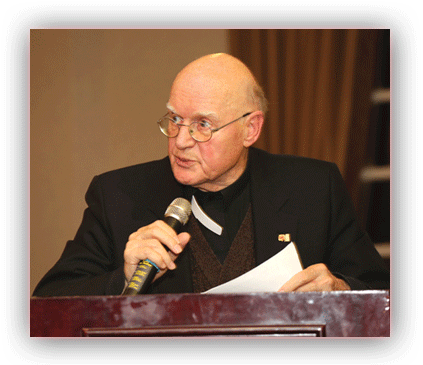
Remembering Father Alphonse de Valk
(Today marks the sixth anniversary of the death of Father Alphonse de Valk, C.S.B., a faithful, courageous and indefatigable Basilian priest, pro-life-and-family apostle, and the founder of Catholic Insight magazine. Here is what we wrote those on his entering into eternity five years ago, as we continue to remember him in our prayers and thoughts)[…]Continue reading→

My Name is Bernadette
April 16th is a propitious day, for besides the anniversary of Father de Valk’s death, who founded Catholic Insight in its print form decades ago, and the commemoration of the ‘two Benedicts’, mentioned in accompanying posts, today we also recall Saint Bernadette Soubirous, the young visionary to whom the Virgin Mary appeared numerous times at[…]Continue reading→
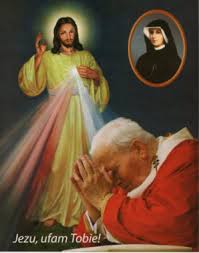
Canonizing Sister Faustina and Divine Mercy
HOMILY OF THE HOLY FATHER MASS IN ST PETER’S SQUARE FOR THE CANONIZATION OF SR MARY FAUSTINA KOWALSKA Sunday, 30 April 2000 1. “Confitemini Domino quoniam bonus, quoniam in saeculum misericordia eius”; “Give thanks to the Lord for he is good; his steadfast love endures for ever” (Ps 118: 1). So the Church sings on the Octave of[…]Continue reading→
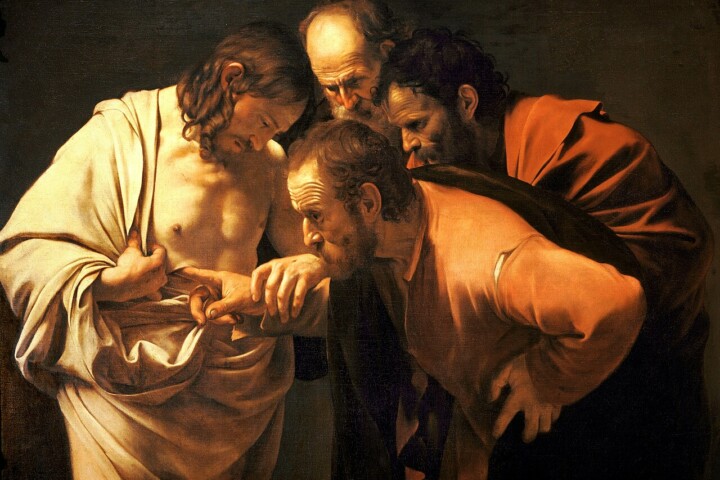
Divine Mercy Sunday – An Echo of Every Mass
Reach out your hand and put it in my side. Do not doubt but believe’… ‘My Lord and my God!’ (Jn. 20:18)). Today is Divine Mercy Sunday, and as we celebrate the end of the Easter Octave, we contemplate the wounded side of our Saviour, the Church’s source of life. On Good Friday in the[…]Continue reading→
Pope Leo and a Rosary for Peace
Pope Leo XIV has asked Catholics across the world to join him in a Rosary for peace today, at 18:00 Rome time (6 pm), which would be noon from where I write (EST). If you are able, whether at that time or another, and in whatever way you pray, to join in intercession with the[…]Continue reading→
Payette’s Payout
I was glancing through some headlines, and noticed a mention of Julie Payette – engineer and astronaut and sometime the Queen’s representative in Canada – which brought back vague memories. She was appointed Governor-General by Justin Trudeau in 2017. Ms. Payette resigned in 2021, amidst claims that she created a ‘toxic work environment’, with allegations[…]Continue reading→

Saint Stanislaus of Szczepanów
We celebrate Saint Stanislaus today (+ April 11, 1079), in light of this Easter Octave, a bishop and martyr who accepted the episcopacy only at the direct order of Pope Alexander II. He proved a wise and courageous leader of his flock, put to death by his own king, Boleslaus, for rebuking the monarch’s ‘immoral[…]Continue reading→
First Holy Communion: Sermon from May 16, 1943
Here is a sermon from the good old days by +Rev. Msgr. Vincent Nicholas Foy (August 14, 1915 – March 13, 2017), from 1943. Readers may recall that Pope Saint Pius X, by the decree Quam Singulari in 1910, lowered the customary age of reception of Holy Communion – after the rigours of the plague[…]Continue reading→