
Keeping Advent Well
Everyone here knows that Advent is the season of waiting. As the readings for the first Sunday indicate, the fundamental characteristic of this time in the Church year is an expression of our longing for the second coming of Christ; and we also, in imagination, place ourselves in the period of preparation for the birth of Jesus, the Messiah, and his appearance as the Saviour of mankind. Thus we see that the significant figures for Advent are the Old Testament prophet Isaiah—that’s the preparation—Our Lady—that’s the appearance—and John the Baptist—that’s the public proclamation of his appearance. The celebration of Mass is quiet, sombre, almost penitential, with purple vestments, subdued music and undecorated church buildings.
But the world cannot wait. Public worship may be subdued, but our streets and stores are aglow with Christmas cheer, or perhaps it would be more precise to say, “aglow with holiday glee.” Carols and Christmas songs greet you at every step, and decorated tress, some of them miracles of ingenuity, have sprouted on every corner. In our society, the feast is celebrated before the date, so that by Christmas day itself, one is so weary of the whole thing that he cannot wait to throw away the Christmas tree; you’ll find the streets littered with them on the feast of Saint Stephen, now, alas, known as ‘Boxing Day’. Good King Wencelsaus would not be pleased.
So, you see, there is a tension between our experience of Advent in church and our anticipation of Christmas everywhere else. What do you think of that? Should we change the form of our worship to fit in with the universal practice of contemporary society by putting up fir trees in the church now and filling the sanctuary with poinsettias? In other words, should we abandon the Church’s traditional mode of celebrating a feast, i.e., after the actual day rather than before?
Let’s be honest. We have already changed. I can demonstrate the change by contrasting the observance of Advent and Christmas which I knew a child with what I do now.
- Consider the Christmas tree. Back then it was set up and decorated on the twenty-fourth, Christmas eve, and it stayed up until what we called “little Christmas,” the feast of the Epiphany on January sixth. That rounded out the celebration of the feast which had continued for twelve days after Christmas. Now, in all the homes I know, including the priests’ residence where I now reside, the tree will soon be up—that is if it’s not already in place. And on boxing day (see above) or the day after, out it goes!
- Next look at Christmas eve. In the old days, it was a day of fast and abstinence. That means no meat was allowed and less food than usual. Nowadays, for many people, including Catholics, it has become the main celebration with a huge meal and the distribution of presents—or some of them, if you face another big feast at the in-laws on Christmas day itself.
- And what about Mass? Once upon a time, the first Mass was at midnight, and there were three different Mass texts, the other two being a Mass at dawn—“The shepherds’ Mass”—and the Mass of the day. Today there are multiple Masses, but they’re celebrated on Christmas eve—5 p.m., 7 p.m. 10 p.m.—and probably not at midnight. These Masses are well attended, generally much more crowded than those on the day itself.
- And how about all those parties? I have mentioned the traditional way of celebrating after the feast, during the twelve days of Christmas. Advent, as I say, was a quiet period, even penitential (though nothing as severe as Lent). Now all the Christmas parties take place during Advent: in schools, businesses and even churches. When I lived in Houston, Texas, the bishop always had a big Christmas dinner for all the clergy and parish workers during Advent, the hall festooned with wreathes and fir tress. There was even a string quartet somewhere, providing suitable music for the occasion.
So, you see. We have altered our observance of Advent, with the sole exception of the celebration of Sunday Mass. My question is, therefore, “Should we make over the liturgy so that it conforms to the rest of our behaviour and actions during Advent? Perhaps the example of Pope Francis will encourage us in this matter, for he exhibits a refreshing willingness to jettison obsolete practices and explore daring ways of bringing the Church up to date. But how can such an updating be accomplished in that as Catholics we base our faith and also the practice of the faith on Tradition as well as Scripture. Well, consider Pope Saint John XXIII, who by summoning the Second Vatican Council back in the 1960s inaugurated a period of what he called aggiornamento, which is Italian for “moving with the times.” He presented the bishops, and indeed, the whole Church with a new attitude to Tradition that guided him and the Council in its deliberations. And what was this powerful tool for aggionamento? It was this: “We change in order to remain the same.”[1] In other words, the Gospel can be proclaimed in new languages, in new cultures, in different societies without surrendering the essential beliefs that we enumerate each Sunday when we say the creed. Well, then, what is the essence of Advent and Christmas for us Catholics? It is simply that Jesus, the eternal Word, was born at a given time and place in history and that, having once appeared among men, he will come again at the end of time. When you think about it, you can see that we commemorate these events every Sunday, and in every season of the Church year. Consequently, the externals of Advent may well be very different in the future from what we know, but the heart of the observation will always be the same, whatever the cultural dress it assumes.
As for me, not surprisingly, I rather like the present form of the liturgy. It provides each week a refuge from the hectic, noisy, commercial atmosphere I am subjected to during the rest of the week.
[1] The actual statement comes from The Development of Christian Doctrine by John Henry Newman; but the sentiment is that expressed by Pope Saint John XXIII in his opening address to the Second Vatican Council.

Saint Kateri , Canada’s Protectress
This was the title given to Saint Kateri Tekakwitha, by Pope Benedict XVI, when he canonized her on October 28th, 2012, along with six others, in Saint Peter’ Square (she had been beatified by Pope John Paul II back in 1980). With Saint Joseph as our protector, along with the Canadian martyrs, we seem to[…]Continue reading→

Remembering Father Alphonse de Valk
(Today marks the sixth anniversary of the death of Father Alphonse de Valk, C.S.B., a faithful, courageous and indefatigable Basilian priest, pro-life-and-family apostle, and the founder of Catholic Insight magazine. Here is what we wrote those on his entering into eternity five years ago, as we continue to remember him in our prayers and thoughts)[…]Continue reading→

My Name is Bernadette
April 16th is a propitious day, for besides the anniversary of Father de Valk’s death, who founded Catholic Insight in its print form decades ago, and the commemoration of the ‘two Benedicts’, mentioned in accompanying posts, today we also recall Saint Bernadette Soubirous, the young visionary to whom the Virgin Mary appeared numerous times at[…]Continue reading→
Canonizing Sister Faustina and Divine Mercy
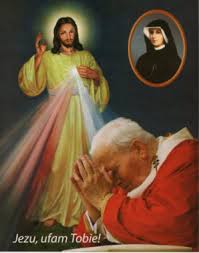
HOMILY OF THE HOLY FATHER MASS IN ST PETER’S SQUARE FOR THE CANONIZATION OF SR MARY FAUSTINA KOWALSKA Sunday, 30 April 2000 1. “Confitemini Domino quoniam bonus, quoniam in saeculum misericordia eius”; “Give thanks to the Lord for he is good; his steadfast love endures for ever” (Ps 118: 1). So the Church sings on the Octave of[…]Continue reading→

Divine Mercy Sunday – An Echo of Every Mass
Reach out your hand and put it in my side. Do not doubt but believe’… ‘My Lord and my God!’ (Jn. 20:18)). Today is Divine Mercy Sunday, and as we celebrate the end of the Easter Octave, we contemplate the wounded side of our Saviour, the Church’s source of life. On Good Friday in the[…]Continue reading→

Saint Stanislaus of Szczepanów
We celebrate Saint Stanislaus today (+ April 11, 1079), in light of this Easter Octave, a bishop and martyr who accepted the episcopacy only at the direct order of Pope Alexander II. He proved a wise and courageous leader of his flock, put to death by his own king, Boleslaus, for rebuking the monarch’s ‘immoral[…]Continue reading→
First Holy Communion: Sermon from May 16, 1943
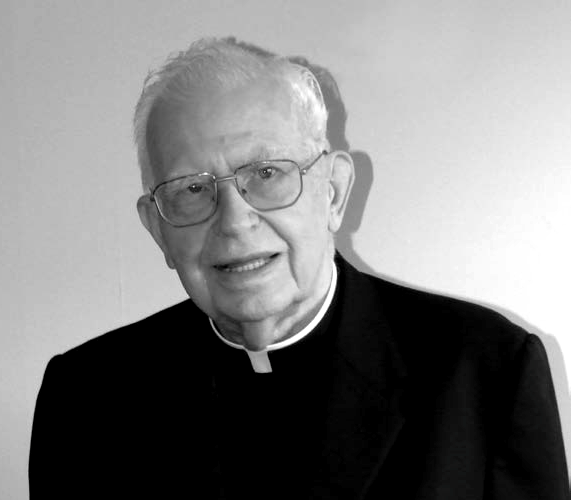
Here is a sermon from the good old days by +Rev. Msgr. Vincent Nicholas Foy (August 14, 1915 – March 13, 2017), from 1943. Readers may recall that Pope Saint Pius X, by the decree Quam Singulari in 1910, lowered the customary age of reception of Holy Communion – after the rigours of the plague[…]Continue reading→
In the Glorious Light of Easter, Alleluia!
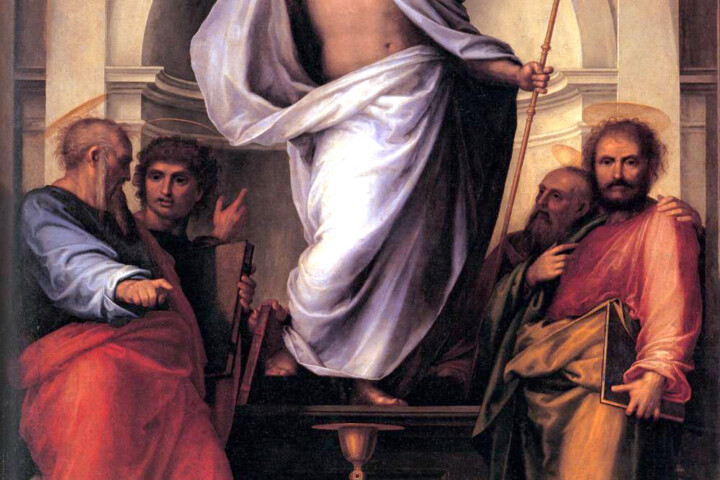
Set your minds on things that are above, not on things that are on earth, for you have died, and your life is hidden with Christ in God. When Christ who is your life is revealed, then you also will be revealed with him in glory (Col. 3:3-4). The Resurrection of Our Lord and Saviour[…]Continue reading→
An Ancient Homily for Holy Saturday
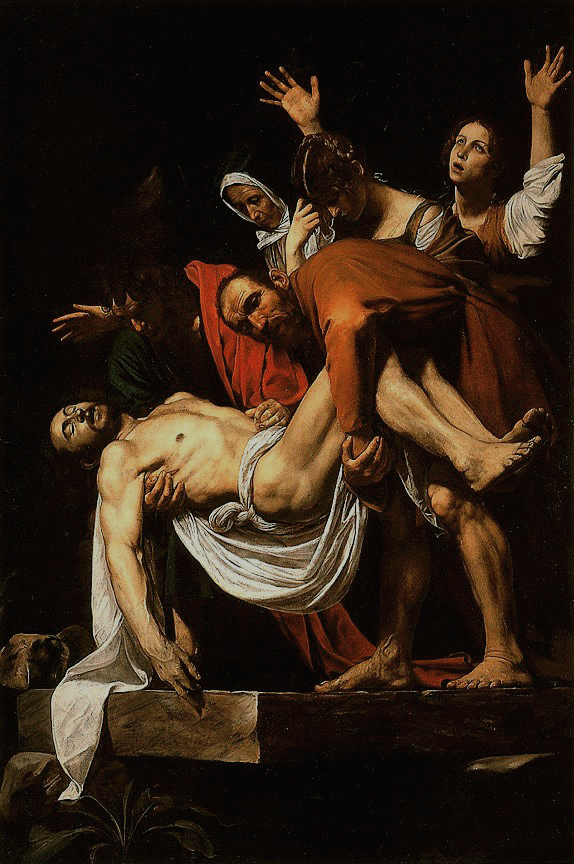
The time between Good Friday and Easter Sunday is one of waiting, in silence, as the world wonders – anticipates – what will happen, after the death of Christ. We re-live this time each year in the anamnesis of our liturgy, and in turn look forward to the glorious re-creation of all things at the[…]Continue reading→
Europe’s Long Descent
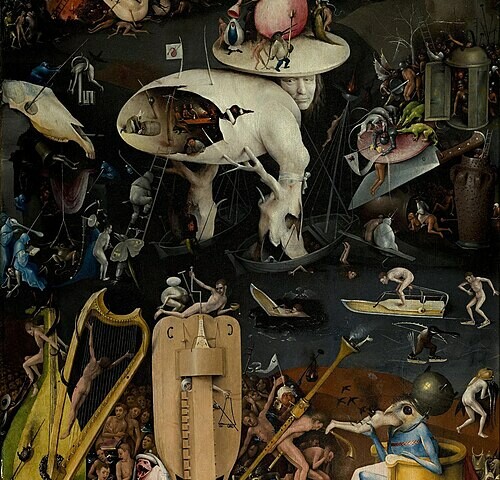
(As we meditate on this day on Christ’s burial, and His descent into hell, it is fitting to ponder here with contributor Peter Marcus how the world seems to be heading there as well. The difference is that, although God cannot ‘redeem’ hell, nor those therein, He can and did redeem the world. There is[…]Continue reading→