
Lingua Apocalyptica
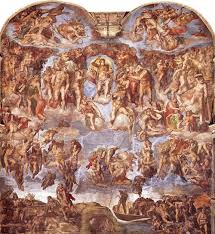
The biblical texts used at Mass towards the end of the liturgical year are certainly dramatic—with stars falling from heaven and the like—and, it must be said, confusing. Their obscurity has produced a myriad of interpretations, most notably among those people who like to predict the end of the world (which seems to be always just around the corner). There’s a simple explanation for some of the confusion, viz., that two different events are telescoped into a single account. The first is the destruction of the temple of Jerusalem by the Roman army, which occurred in the year A.D. 70. It is concerning this that Jesus said, “This generation shall not pass away until these things take place.” The second event is the end of the world, when Christ will appear in glory to judge the living and the dead: “the Son of man coming . . . with great power and glory.” The two are linked because the end of the Jewish dispensation, accomplished by the destruction of the temple, marks the start of the final stage of human history, which ha been established by the death and resurrection of Christ. So, you see in a way salvation is a completed work, and the centuries that have passed in the present era are nothing more—and nothing less—than the working out the implications of what had been accomplished already by Jesus.
The language used in these texts is highly—and obviously—symbolic: “the sun will be darkened, and the moon will not give its light, and the stars will be falling from heaven.” There is a long tradition of such language, as we find it, for exmample, in today’s first reading from the book of Daniel. It arose from the historical situation of the Jewish people in Old Testament times, when over and over again, their hopes as a nation were dashed. With time the people became convinced that God himself would have to intervene directly in human history to accomplish, once and for all, what no human agent, no David or Solomon, had been able to effect, viz., the independence and security of Israel. A difficulty then arises, for what human words could possibly be adequate to describe God’s actions, he who created the cosmos but is himself beyond human concepts? The prophets resorted to cataclysmic language to describe an earth-shattering event. And that is the tradition we find vividly expressed in today’s readings. But our God is a God who surprises, and when He did in fact intervene in history, He did so in the man Jesus, who is meek and humble of heart. Nevertheless, His appearance was a dramatic as any apocalyptic author could desire, since it changed the course of human history.
Despite the external difference between the wild apocalyptic imagery of the end of time and the figure of Jesus as a loving good shepherd, they have an element in common, in that they represent a moral judgement on human behaviour. The Son of Man descending on the clouds of heaven is coming to judge the living and the dead; and Jesus, in his very person, anticipates this final event, in that our response to his message already constitutes a judgment: “the one who rejects me and does not receive my words has a judge; on the last day, the word that I have spoken will serve as judge.”[1] In other words, all this flamboyant language is concerned more with morality than future cosmic happenings. When you think about it, conscience, that inner and persistent conviction of what is right or wrong, is what makes man different from the rest of creation. Plants and animals do not make decisions about what is morally good or bad; only man does. Philosophers like to emphasize the anomalous nature of man in the material order, i.e., the fact that man does not fit into the natural order, which would function very well, much better in fact, if the human race did not exist. It is human activity that is polluting soil, water and air. Ecologists are right about one thing: if there were no human beings on earth the balance of nature would be perfectly maintained. Even atheistic philosophers are aware of this fact. Jean-Paul Satre, for instance, said, “I gaily demonstrate that man is impossible. . . . I joyfully write about our unhappy state.” Even more gloomy is Emil Cioran: “We invariably produce and perform better out of jealousy and greed than out of nobility and disinterestedness,” and, if you have a strong stomach, “Sometimes I wish I were a cannibal—less for the pleasure of eating someone than for the pleasure of vomiting him.” In a strange way, such passages present a parallel to the Christian view of the human condition as it has been corrupted by sin. Consider this similar statement by the incisive Blessed John Henry Cardinal Newman:
To consider the . . . greatness and littleness of man, his far-reaching aims, his short duration, . . . the disappointments of life, the defeat of good, the success of evil, physical pain, mental anguish, the prevalence and intensity of sin; . . . all this is a vision to dizzy and appal; and inflicts upon the mind the sense of a profound mystery, which is absolutely beyond human solution.[2]
What we are talking about, of course, is the doctrine of Original Sin:
. . . the human race is implicated in some terrible aboriginal calamity. It is out of joint with the purposes of its Creator. This is a fact, a fact as true as the fact of its existence; and thus the doctrine of what is theologically called original sin becomes to me almost as certain as that the world exists, and as the existence of God.[3]
Man’s unique place in the physical universe implies that he has a destiny different from the rest of reality. This destiny can be expressed in a single word: immortality, with the implications of moral responsibility that we find in the biblical teachings about the resurrection of the dead, judgment, and heaven or hell. And whatever the language may be used about these final events in human history, the conviction remains that they are of supreme significance in that they require of me an absolute allegiance to the demands, as well as the privileges, that Jesus makes of his members
[1] Jn 12.4.
[2] John Henry Newman, Apologia pro vita sua, part 5.
[3] Ibid.

Saint Kateri , Canada’s Protectress
This was the title given to Saint Kateri Tekakwitha, by Pope Benedict XVI, when he canonized her on October 28th, 2012, along with six others, in Saint Peter’ Square (she had been beatified by Pope John Paul II back in 1980). With Saint Joseph as our protector, along with the Canadian martyrs, we seem to[…]Continue reading→

Remembering Father Alphonse de Valk
(Today marks the sixth anniversary of the death of Father Alphonse de Valk, C.S.B., a faithful, courageous and indefatigable Basilian priest, pro-life-and-family apostle, and the founder of Catholic Insight magazine. Here is what we wrote those on his entering into eternity five years ago, as we continue to remember him in our prayers and thoughts)[…]Continue reading→

My Name is Bernadette
April 16th is a propitious day, for besides the anniversary of Father de Valk’s death, who founded Catholic Insight in its print form decades ago, and the commemoration of the ‘two Benedicts’, mentioned in accompanying posts, today we also recall Saint Bernadette Soubirous, the young visionary to whom the Virgin Mary appeared numerous times at[…]Continue reading→

Canonizing Sister Faustina and Divine Mercy
HOMILY OF THE HOLY FATHER MASS IN ST PETER’S SQUARE FOR THE CANONIZATION OF SR MARY FAUSTINA KOWALSKA Sunday, 30 April 2000 1. “Confitemini Domino quoniam bonus, quoniam in saeculum misericordia eius”; “Give thanks to the Lord for he is good; his steadfast love endures for ever” (Ps 118: 1). So the Church sings on the Octave of[…]Continue reading→

Divine Mercy Sunday – An Echo of Every Mass
Reach out your hand and put it in my side. Do not doubt but believe’… ‘My Lord and my God!’ (Jn. 20:18)). Today is Divine Mercy Sunday, and as we celebrate the end of the Easter Octave, we contemplate the wounded side of our Saviour, the Church’s source of life. On Good Friday in the[…]Continue reading→

Saint Stanislaus of Szczepanów
We celebrate Saint Stanislaus today (+ April 11, 1079), in light of this Easter Octave, a bishop and martyr who accepted the episcopacy only at the direct order of Pope Alexander II. He proved a wise and courageous leader of his flock, put to death by his own king, Boleslaus, for rebuking the monarch’s ‘immoral[…]Continue reading→
First Holy Communion: Sermon from May 16, 1943
Here is a sermon from the good old days by +Rev. Msgr. Vincent Nicholas Foy (August 14, 1915 – March 13, 2017), from 1943. Readers may recall that Pope Saint Pius X, by the decree Quam Singulari in 1910, lowered the customary age of reception of Holy Communion – after the rigours of the plague[…]Continue reading→
In the Glorious Light of Easter, Alleluia!
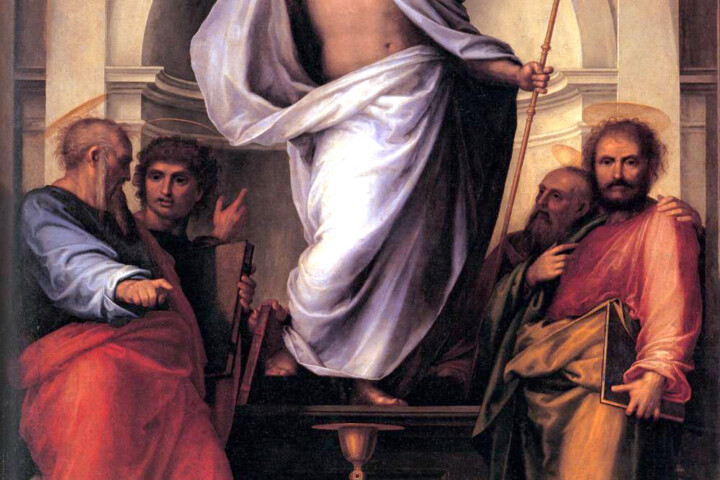
Set your minds on things that are above, not on things that are on earth, for you have died, and your life is hidden with Christ in God. When Christ who is your life is revealed, then you also will be revealed with him in glory (Col. 3:3-4). The Resurrection of Our Lord and Saviour[…]Continue reading→
An Ancient Homily for Holy Saturday
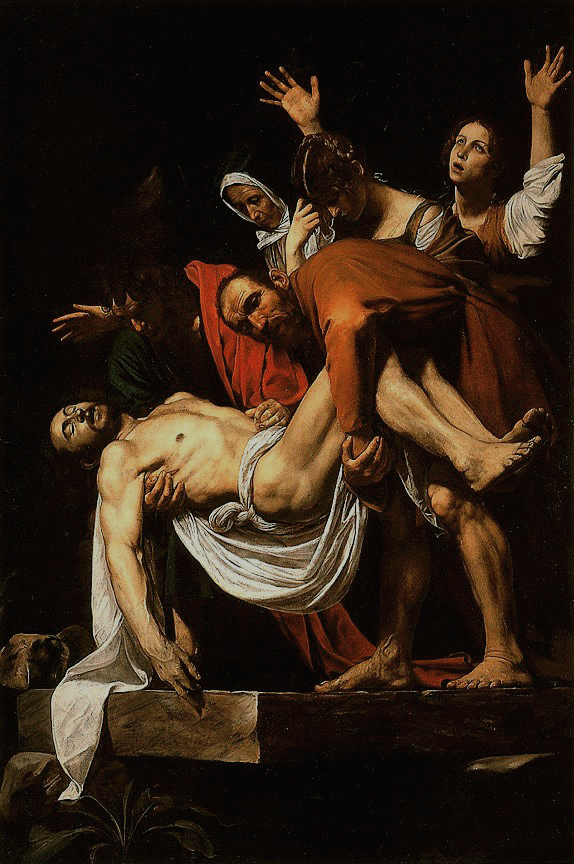
The time between Good Friday and Easter Sunday is one of waiting, in silence, as the world wonders – anticipates – what will happen, after the death of Christ. We re-live this time each year in the anamnesis of our liturgy, and in turn look forward to the glorious re-creation of all things at the[…]Continue reading→
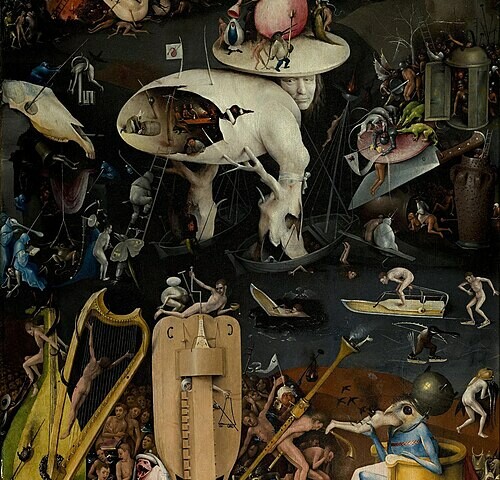
Europe’s Long Descent
(As we meditate on this day on Christ’s burial, and His descent into hell, it is fitting to ponder here with contributor Peter Marcus how the world seems to be heading there as well. The difference is that, although God cannot ‘redeem’ hell, nor those therein, He can and did redeem the world. There is[…]Continue reading→