
The Unspoken Heresy of Christ the Wimp
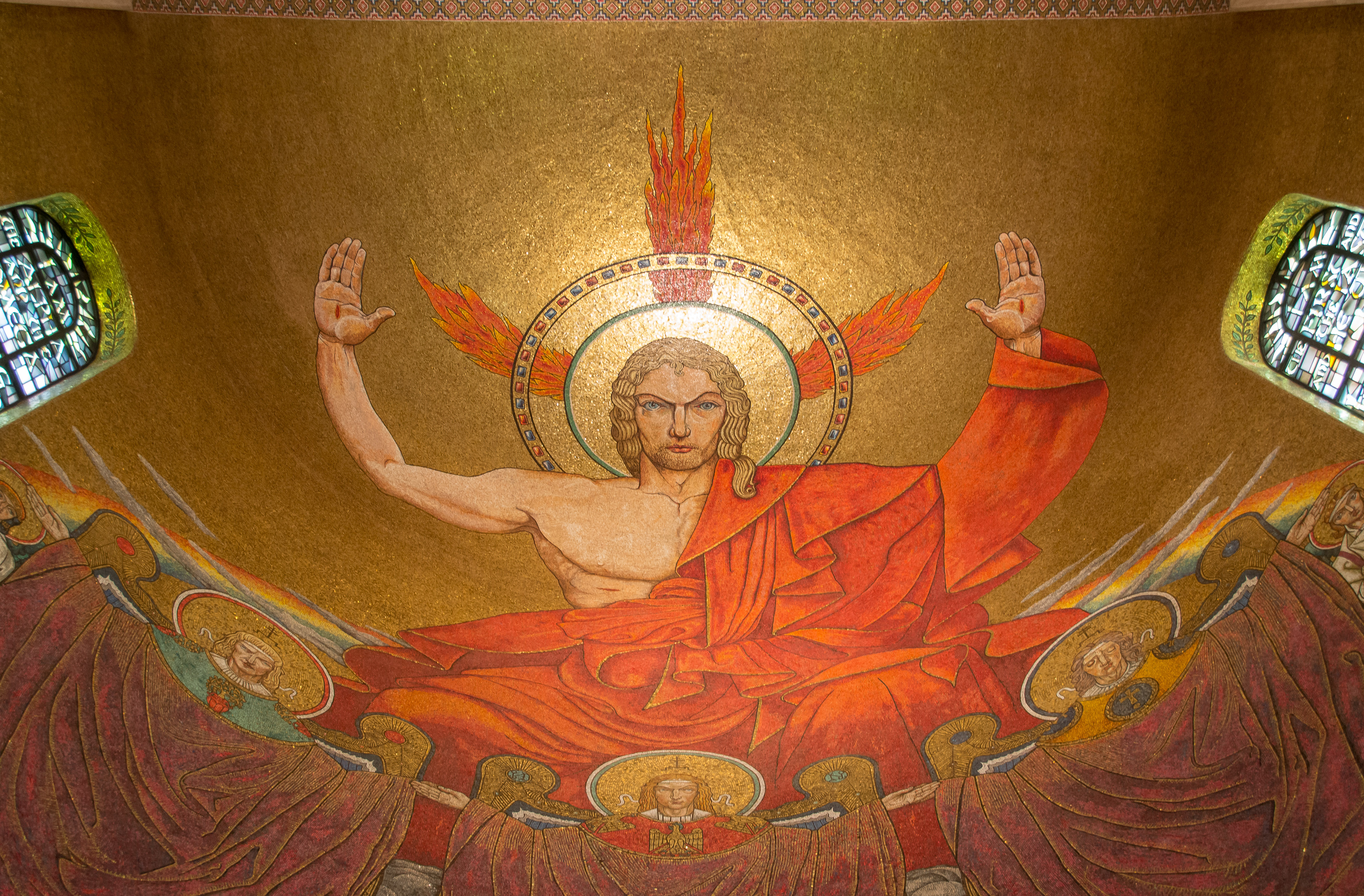
The powerlessness of Jesus. In a word, it is one of our modern heresies, but it lies hidden in the heart because it is logically absurd, and we are embarrassed to admit that we could simultaneously believe in the divinity of Christ while denying His power. Yet it happens all the time. Why are so many churches empty? Let me ask another question: where are the deeds of power? Recall when Jesus returned to his hometown of Nazareth, he could perform no dynamis — literally, act of power or miracle. Why? Because of people’s lack of faith. I wonder if we are caught in a similar quandary today: an absence of Jesus’ power because of our lack of faith. Perhaps we are among those mentioned by Saint Paul in his second letter to Timothy, those “holding the form of religion but denying the power of it.”
It is worth noting that Scripture never speaks of the powerlessness of Jesus, even in relation to the Cross. Instead, we hear that he emptied Himself, that He was rich but became poor, that He who knew no sin was made sin for us. St. Paul even refers to Christ crucified as the power (dynamis) and the wisdom of God. Jesus Himself said, “no one takes my life from me. I have power (exousia) to lay it down and power to take it up again.” The divine power of His love shone forth in His public ministry through the hundreds of visible miracles He accomplished, to the astonishment of His contemporaries and the delight of the crowds that followed Him.
I would like to briefly digress with a definition of heresy. Technically speaking, a heresy is a consciously held belief or opinion contrary to orthodox Christian doctrine. A sub-conscious suspicion that Jesus seems powerless is not a heresy properly speaking; notwithstanding, it is quite a serious matter if seeds of doubt are sown in the heart, sprouting into weeds, seducing us into an ignorance and indifference verging on unbelief.
With respect to the notion that Jesus is powerless, I believe we are dealing with a stronghold, specifically the stronghold that God is weak. For this interpretation, I am relying on the teachings of Henri Lemay, who bases his work on fifty years of experience in Christian healing and the Charismatic Renewal, (and who has also received training from Francis and Judith MacNutt, and John and Paula Sanford, founders of Elijah House). He defines a stronghold as “a work of the flesh, a way of thinking and feeling, contrary to the Christian faith, which is automatic, habitual and customary, and has acquired its own existence.” He adds that the sin of Adam and Eve “created . . . the illusion of the enormous power of the flesh and the devil rather than the transformative might of the Lord.” Accordingly, the “heresy” of the powerlessness of Jesus is not a harmless idea that floats on the surface of our brain and can be easily swept aside; as a stronghold it has deep roots that must be addressed.
We can begin by exposing this stronghold and renouncing this “heresy”. Trust in the power of God is essential for our personal conversion and for successful evangelization. Without the power of God, St. Paul’s whole mission would have been diminished to miniscule proportions, perhaps even resulting in dismal failure. His stunning success depended in part on the power of miracles. He wrote to the Thessalonians, “Our gospel came to you not only in word, but also in power (dynamis) and in the Holy Spirit.” To the Romans, Paul wrote boldly of “what Christ has wrought through me . . . by word and deed, by the power (dynamis) of signs and wonders.”
The early Church was not only absolutely convinced of the power of Jesus, but the Church itself was established through preaching accompanied by deeds of power. How did we lose our faith in the power of Jesus? One argument is the success of Christendom; for centuries, the power of Jesus was visible in the authority of the Church, inextricably linked to the formation of European civilization. To be a medieval man or woman was to be a Catholic, automatically. Perhaps a focus on outward social and political influence of the Church somewhat dimmed our belief in the power of Jesus, along with the expectation that his followers would work miracles to bring others to faith.
A case can be made that the traumas of the 20th century also imbedded a lie about the absence and powerlessness of God. How could a God who is all-loving and all-powerful permit the carnage of two World Wars and the unspeakable horror of the Holocaust? Is He not loving? Or perhaps He is loving but powerless?
Another impediment to relying on the power of Jesus is the propensity of the modern world to become drunk on our own power. We split the atom and put a man on the moon, sealing our claim to be masters of the universe. If the secular world is firm in its conviction that science and technology can solve all our problems, people will not perceive a need for relying on the power of God.
Because Catholics breathe in the atmosphere of our contemporary secular culture, I think it is quite common to find people in the pews who doubt the power of Jesus. Strange though it may seem, it is possible for Catholics to believe that Jesus is God AND He loves us BUT He is powerless. At least when it comes to the practical problems in my life, it is all too easy to believe the lie that Jesus is powerless to help me right now with the difficulties of my life. Like all heresies, this one is pernicious because it is clothed in the guise of common sense. Jesus may have worked miracles when He walked the earth, but those days are long gone. Doesn’t that sound like a reasonable argument? Yes, but it borders on heresy! Denying the power of Jesus is denying His divinity. I do not intend to accuse those who struggle with their faith, but to awaken them to rebuke a lie and unleash the power of Jesus in their lives.
Here is not the place for a detailed explanation of the dismantling of strongholds. St. Paul provides us with the basic outline in 2 Corinthians: “The weapons of our warfare are not worldly but have divine power to destroy strongholds. We destroy arguments and every proud obstacle to the knowledge of God, and take every thought captive to Christ.” In taking every thought captive to Christ, it is obviously necessary to identify the lie of the stronghold — in this case, that God is weak — and to replace it with the truth of God’s infinite power and love always at work in and among us.
I believe that one of the most effective ways of combatting this heresy and destroying this stronghold is to re-discover the power of Christ in the Eucharist. Many Catholics are familiar with “healing Masses” often associated with the Charismatic Renewal. But in actual fact, every Mass is a healing Mass because of the real Presence of the Risen Christ. While He walked the earth, He healed all those who came to Him with their diseases and distresses, and He continues the same work in the Eucharist, if we have the faith to seek this healing and the openness to receive the gift.
In the early Church, it seems that every Eucharist was a “healing Mass,” in which God always manifested His power. Consider what St. Paul wrote to the Corinthians. After writing about the Lord’s Supper in 1 Corinthians 11, he continues in chapter 12 to describe the various gifts of the Spirit that the Corinthians took for granted in their assemblies: gifts of wisdom and knowledge, various kinds of tongues, gifts of healing and the working of miracles (dynamis). We might get the wrong impression that the Corinthians had a separate celebration of the Eucharist according to proper liturgical guidelines, then a completely different charismatic gathering. Perhaps we fail to appreciate that they were one and the same gathering, with the power of God manifested in healing and miracles during Mass.
Baptized believers share in the power of Jesus to work miracles, as did St. Paul and the apostles. We need to reclaim that power. With even a mustard seed of faith, we share in the divine power, as Jesus states Himself, “I have given you authority (exousia) . . . over all the power (dynamis) of the enemy.” At the end of Mark’s Gospel, Jesus promises, “these signs will accompany those who believe: in my name they will cast out demons . . . they will lay their hands on the sick, and they will recover.”
Let us have every confidence that with living faith in the power of Jesus at work within us who believe, we will see again the same miracles performed by Jesus and Paul in our times. More than ever, we need the power of miracles, because of the stifling secularism and practical atheism of our culture. We have already seen miracles of physical healings in the Charismatic Renewal and in individuals with the gift of healing. The entire Church can continue to pray fervently for this new Pentecost in which the preaching of the Gospel will once again be accompanied by the power of signs and wonders, that the world may believe. “Now to him whose power (dynamis) at work within us is able to do immeasurably more than we ask or imagine, to him be glory in the Church and in Christ Jesus to all generations, for ever and ever. Amen.”

Remembering Father Alphonse de Valk
(Today marks the sixth anniversary of the death of Father Alphonse de Valk, C.S.B., a faithful, courageous and indefatigable Basilian priest, pro-life-and-family apostle, and the founder of Catholic Insight magazine. Here is what we wrote those on his entering into eternity five years ago, as we continue to remember him in our prayers and thoughts)[…]Continue reading→

Divine Mercy Sunday – An Echo of Every Mass
Reach out your hand and put it in my side. Do not doubt but believe’… ‘My Lord and my God!’ (Jn. 20:18)). Today is Divine Mercy Sunday, and as we celebrate the end of the Easter Octave, we contemplate the wounded side of our Saviour, the Church’s source of life. On Good Friday in the[…]Continue reading→

Saint Stanislaus of Szczepanów
We celebrate Saint Stanislaus today (+ April 11, 1079), in light of this Easter Octave, a bishop and martyr who accepted the episcopacy only at the direct order of Pope Alexander II. He proved a wise and courageous leader of his flock, put to death by his own king, Boleslaus, for rebuking the monarch’s ‘immoral[…]Continue reading→
First Holy Communion: Sermon from May 16, 1943
Here is a sermon from the good old days by +Rev. Msgr. Vincent Nicholas Foy (August 14, 1915 – March 13, 2017), from 1943. Readers may recall that Pope Saint Pius X, by the decree Quam Singulari in 1910, lowered the customary age of reception of Holy Communion – after the rigours of the plague[…]Continue reading→
In the Glorious Light of Easter, Alleluia!
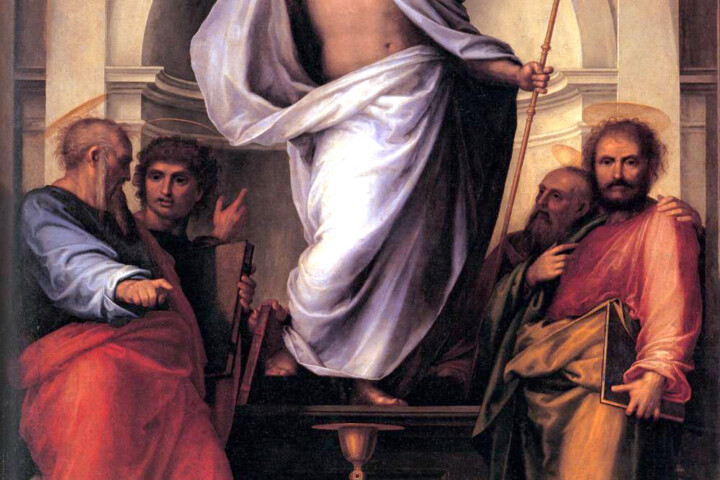
Set your minds on things that are above, not on things that are on earth, for you have died, and your life is hidden with Christ in God. When Christ who is your life is revealed, then you also will be revealed with him in glory (Col. 3:3-4). The Resurrection of Our Lord and Saviour[…]Continue reading→
An Ancient Homily for Holy Saturday
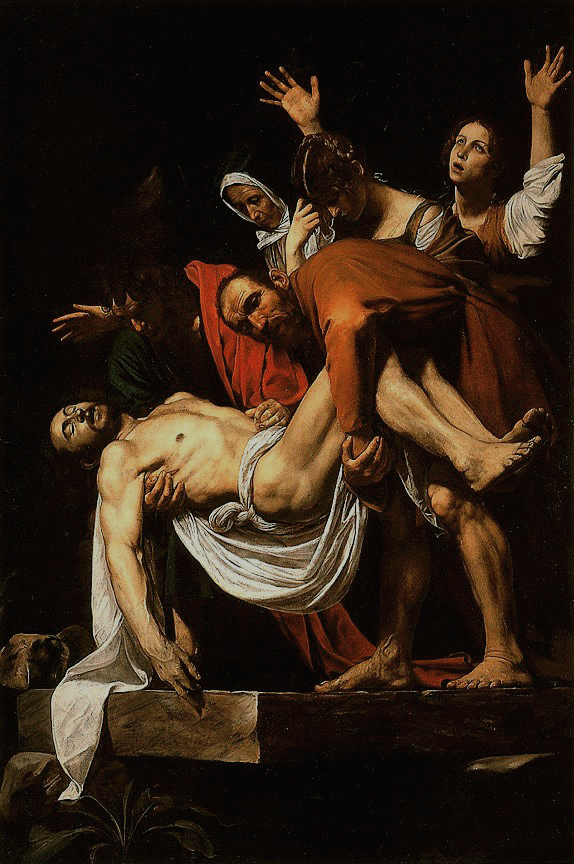
The time between Good Friday and Easter Sunday is one of waiting, in silence, as the world wonders – anticipates – what will happen, after the death of Christ. We re-live this time each year in the anamnesis of our liturgy, and in turn look forward to the glorious re-creation of all things at the[…]Continue reading→
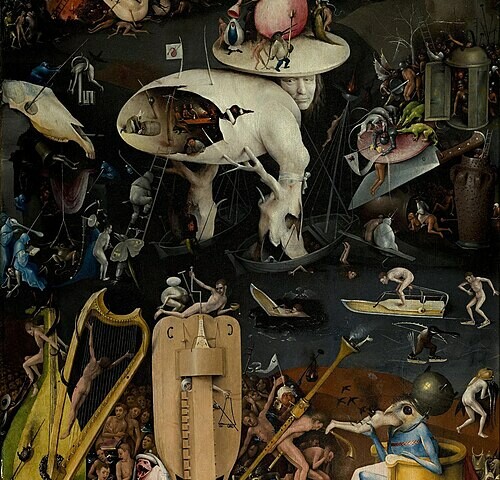
Europe’s Long Descent
(As we meditate on this day on Christ’s burial, and His descent into hell, it is fitting to ponder here with contributor Peter Marcus how the world seems to be heading there as well. The difference is that, although God cannot ‘redeem’ hell, nor those therein, He can and did redeem the world. There is[…]Continue reading→
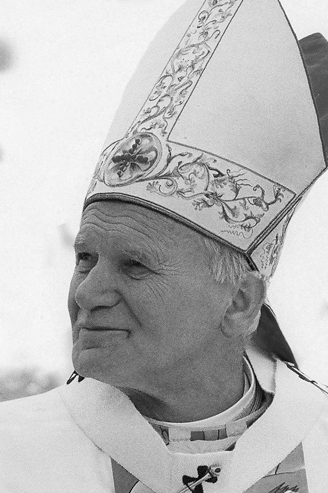
Pope Saint John Paul II’s First Good Friday Homily
ADDRESS OF HIS HOLINESS JOHN PAUL II AT THE CONCLUSION OF THE STATIONS OF THE CROSS AT THE COLOSSEUM Good Friday, 13 April 1979 When we make the Way of the Cross from one station to the next, in spirit we are always at the spot wherethis journey had its “historical” place: where it[…]Continue reading→
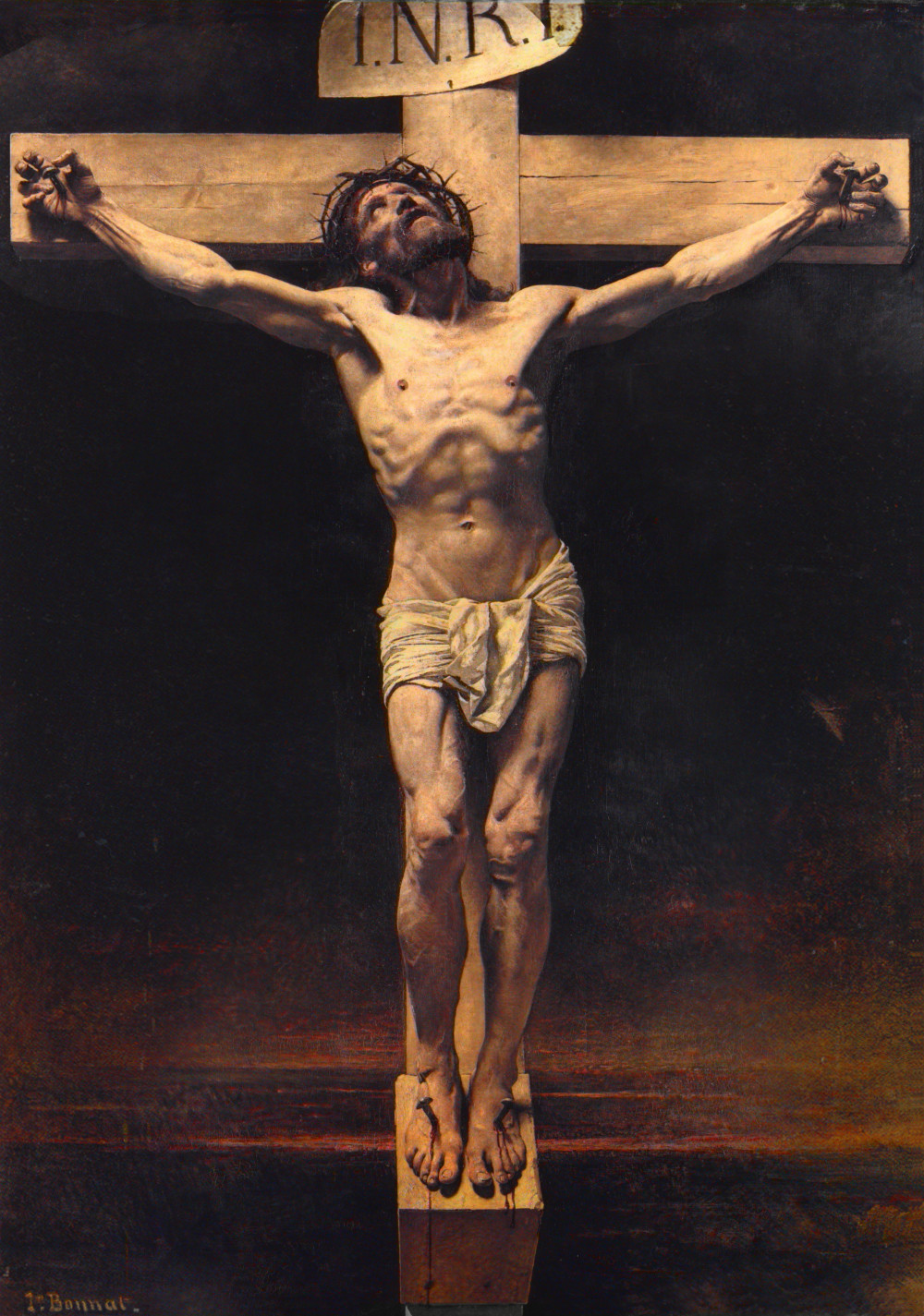
A Meditation for Good Friday: How To Undo the Effects of Sin?
Cardinal Newman, now Saint John Henry Newman, was a towering figure of nineteenth-century Catholicism who is almost universally admired. I say “almost” because not everyone likes him. I knew a priest once, Arthur Caulkins, who has become disenchanted with Newman. As an undergraduate Arthur had been enamoured of Newman, and this interest continued when he[…]Continue reading→
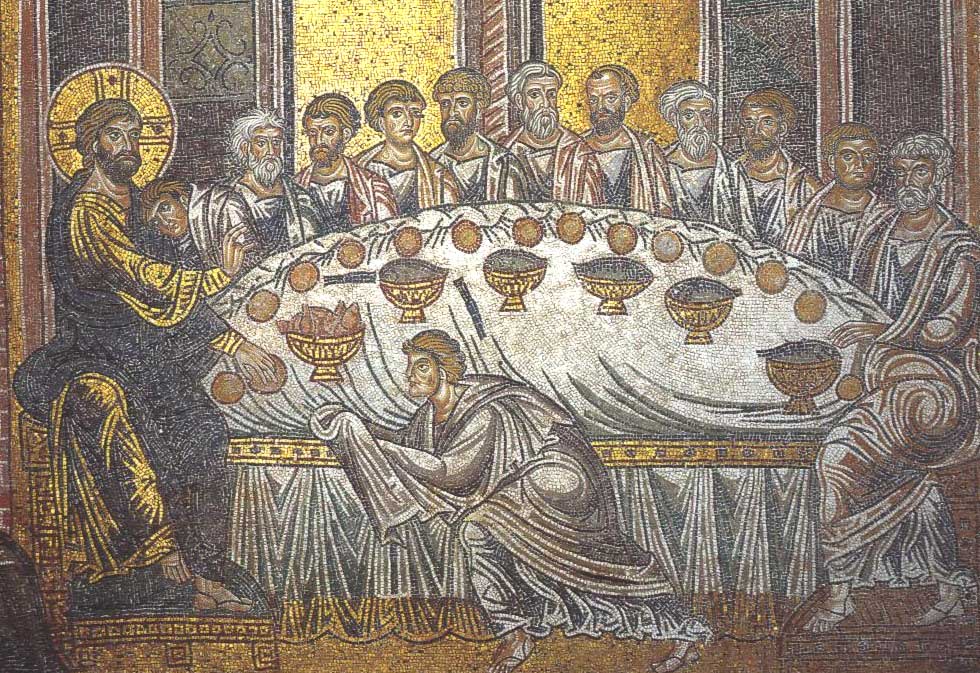
Pope Benedict’s Last Holy Thursday Homily
MASS OF THE LORD’S SUPPER HOMILY OF HIS HOLINESS BENEDICT XVI Basilica of St John Lateran Holy Thursday, 5 April 2012 Photo Gallery (Video) Dear Brothers and Sisters! Holy Thursday is not only the day of the institution of the Most Holy Eucharist, whose splendour bathes all else and in some ways draws it to[…]Continue reading→