
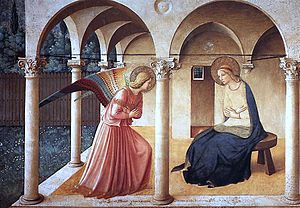
Sacred Art Briefly Considered
How often have we heard it said that beauty is in the mind of the beholder, that it has no objective existence of its own? The proof offered by some is that abstract art has an appeal unmatched by representational art, whereas others see “objective” art as obviously superior to the “empty forms” of abstract art. This, it seems to me, is not a proof of anything more than that some people might see beauty where it is not, and others might not see it where it is. But relativism in art is as wrong as relativism in morals.
Are there objective criteria for achieving the beautiful in art? Clearly there must be. One cannot simply throw cans of paint on the floor, ride a bicycle around on the various colors, and suppose that the resulting figure could be a work of art, never mind a masterpiece. Yet there is something to be said for randomness in the creation of the beautiful, just as there is something to be said for randomness in the toss of dice. You might get lucky. The following makes my point.
Several years ago I was attending a Mass celebrated by Bishop Plácido Rodriguez at Holy Spirit Catholic Church in Lubbock, Texas. I had brought my camera with me because this Mass celebrated the 10th anniversary of the founding of the parish and I wanted to help memorialize the event. I situated myself in a front pew left of the altar. At the point when the Bishop was incensing the altar, without in the least knowing what kind of photo I was there to get (the Holy Spirit surely knew) I lifted the camera and snapped a picture just as the celebrant passed by the altar and beneath the great crucifix above it. With the instant replay in the viewfinder I knew at once that I had been guided, with no talent of my own, to produce a
worthy memorial of the event. On my part it took neither artistic training nor skill to produce a sacred image so exalted that one of the great masters of the Renaissance might have painted it. Was it mere serendipity? Or was the Holy Spirit, the great Arbiter of all things true and beautiful, hiding in my camera?
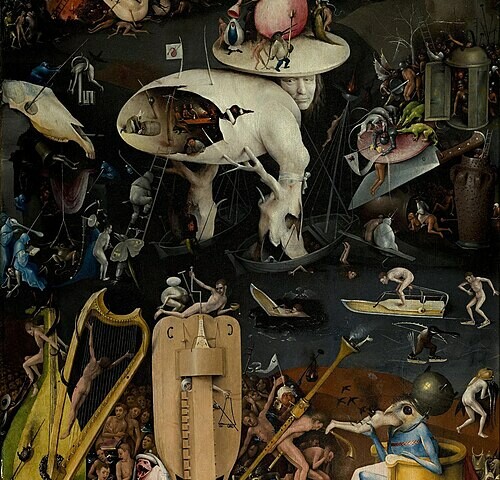
What this incident suggests is that there is a profound gap between the artist and the cameraman, a gap that perhaps can be closed to a degree but never bridged. No photograph taken of a sacred subject can begin to compare with the sublime beauty captured in the Last Supper of Leonardo da Vinci or the Last Judgment of Michelangelo. Sacred art is the supreme art; the only art that incites tears of joy; the only art that invites us to kneel and weep for the downward pull of our sins. Listen to Amazing Grace sung at the burial of a loved one; then let anyone try to imagine this loved one is not among the immortals. Sit in the darkness of a room and hear Mozart’s Ave verum Corpus; then let anyone deny proof offered that God exists … and that the Body, Blood, Soul, and Divinity of Christ can be found on the altar. Who other than the Holy Spirit could be hiding in the shadows of such divine music? After all, is there any other explanation why such music should evoke such powerful conviction of God’s presence among us?
The sense of the sacred is in all of God’s creation, as Charles Darwin noted in his Origin of the Species (in the last edition before his death). “There is grandeur in this view of life, with its several powers, having been originally breathed by the Creator into a few forms or into one; and that, whilst this planet has gone cycling on according to the fixed law of gravity, from so simple a beginning endless forms most beautiful and most wonderful have been, and are being, evolved.” So the scientist also is not without his sense of the sacred. How is this sense in us all, if it is not planted in us by the design of a kindly God who wants to share with us his delight in the goodness of all his Creation?

Saint Kateri , Canada’s Protectress
This was the title given to Saint Kateri Tekakwitha, by Pope Benedict XVI, when he canonized her on October 28th, 2012, along with six others, in Saint Peter’ Square (she had been beatified by Pope John Paul II back in 1980). With Saint Joseph as our protector, along with the Canadian martyrs, we seem to[…]Continue reading→

Remembering Father Alphonse de Valk
(Today marks the sixth anniversary of the death of Father Alphonse de Valk, C.S.B., a faithful, courageous and indefatigable Basilian priest, pro-life-and-family apostle, and the founder of Catholic Insight magazine. Here is what we wrote those on his entering into eternity five years ago, as we continue to remember him in our prayers and thoughts)[…]Continue reading→

My Name is Bernadette
April 16th is a propitious day, for besides the anniversary of Father de Valk’s death, who founded Catholic Insight in its print form decades ago, and the commemoration of the ‘two Benedicts’, mentioned in accompanying posts, today we also recall Saint Bernadette Soubirous, the young visionary to whom the Virgin Mary appeared numerous times at[…]Continue reading→

Canonizing Sister Faustina and Divine Mercy
HOMILY OF THE HOLY FATHER MASS IN ST PETER’S SQUARE FOR THE CANONIZATION OF SR MARY FAUSTINA KOWALSKA Sunday, 30 April 2000 1. “Confitemini Domino quoniam bonus, quoniam in saeculum misericordia eius”; “Give thanks to the Lord for he is good; his steadfast love endures for ever” (Ps 118: 1). So the Church sings on the Octave of[…]Continue reading→

Divine Mercy Sunday – An Echo of Every Mass
Reach out your hand and put it in my side. Do not doubt but believe’… ‘My Lord and my God!’ (Jn. 20:18)). Today is Divine Mercy Sunday, and as we celebrate the end of the Easter Octave, we contemplate the wounded side of our Saviour, the Church’s source of life. On Good Friday in the[…]Continue reading→

Saint Stanislaus of Szczepanów
We celebrate Saint Stanislaus today (+ April 11, 1079), in light of this Easter Octave, a bishop and martyr who accepted the episcopacy only at the direct order of Pope Alexander II. He proved a wise and courageous leader of his flock, put to death by his own king, Boleslaus, for rebuking the monarch’s ‘immoral[…]Continue reading→
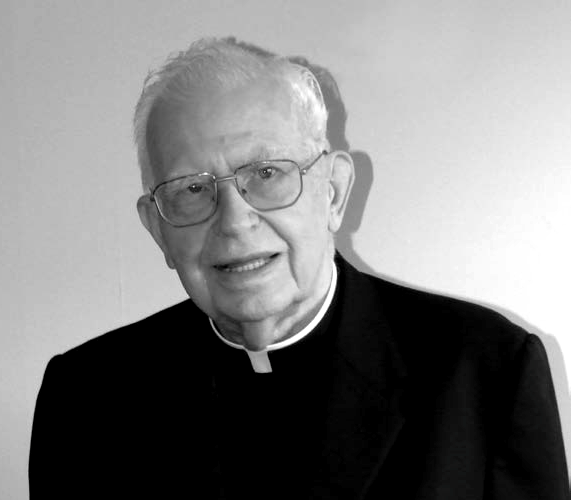
First Holy Communion: Sermon from May 16, 1943
Here is a sermon from the good old days by +Rev. Msgr. Vincent Nicholas Foy (August 14, 1915 – March 13, 2017), from 1943. Readers may recall that Pope Saint Pius X, by the decree Quam Singulari in 1910, lowered the customary age of reception of Holy Communion – after the rigours of the plague[…]Continue reading→
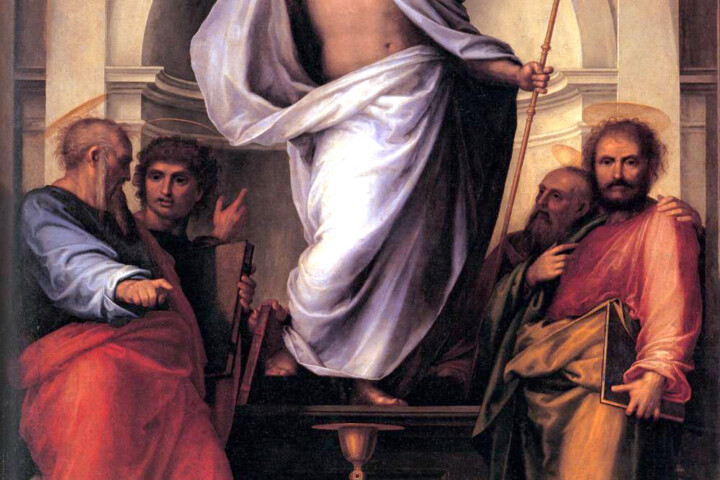
In the Glorious Light of Easter, Alleluia!
Set your minds on things that are above, not on things that are on earth, for you have died, and your life is hidden with Christ in God. When Christ who is your life is revealed, then you also will be revealed with him in glory (Col. 3:3-4). The Resurrection of Our Lord and Saviour[…]Continue reading→
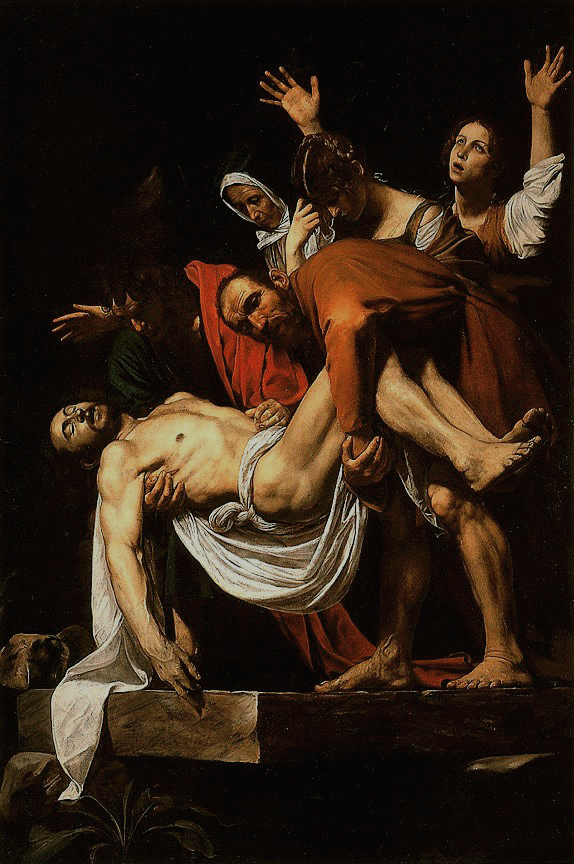
An Ancient Homily for Holy Saturday
The time between Good Friday and Easter Sunday is one of waiting, in silence, as the world wonders – anticipates – what will happen, after the death of Christ. We re-live this time each year in the anamnesis of our liturgy, and in turn look forward to the glorious re-creation of all things at the[…]Continue reading→
Europe’s Long Descent
(As we meditate on this day on Christ’s burial, and His descent into hell, it is fitting to ponder here with contributor Peter Marcus how the world seems to be heading there as well. The difference is that, although God cannot ‘redeem’ hell, nor those therein, He can and did redeem the world. There is[…]Continue reading→