
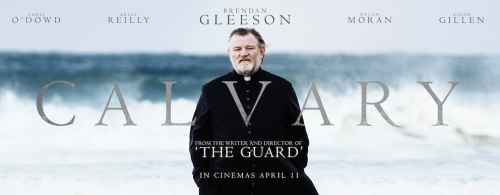
Calvary: A Film Review
Directed by John Michael McDonagh
Written by John Michael McDonagh
In the credits at the end of Calvary (2014), interspersed among the endless lists of names, are still shots of sites significant for the story line: a booth in the town pub, a table in a café, a split rock, the beach—but now they are empty because the priest has been murdered. He’s no longer present, and his absence is felt. A similar effect is produced in the sequence immediately after the murder. The camera shows us, one by one, the characters in the drama who are waiting, at various levels of awareness, for the priest to come to them, but he won’t be arriving. Something irreplaceable has been lost.
The priest wears a cassock. At one point, the wealthy, cynical financier, Michael Fitzgerald, asks him why, without receiving an answer. But he is here speaking for the viewers of the film, who know that no priest nowadays goes about in a cassock, and few even wear a Roman collar. This old-fashioned aspect of Father James points to the theme of the movie, namely, the position, the plight of the Church in contemporary Ireland. The priest represents the old Church at its best, and he offers to the people of a small-town in the west of Ireland, what the Church has to give. Most reject it, releasing on the priest the pent-up wrath accumulated over decades, at least, of abuse. It is not only the sex-scandals, although they come up again and again, but also greed and insensitivity which we would today recognize, and stigmatize, as clericalism. The curate, Father Leary, who represents that aspect of Irish Catholicism, is ridiculed, and even assaulted by parishioners. (Significantly, he leaves the priesthood because he has “doubts”; and, comically, at the end of the movie we see him puzzling over a book with “GOD” in the title.) The murder of the priest, therefore, represents the complete rejection of Catholicism, and with it, for many of the Irish, of religion itself. In the course of the film the main characters advance various substitutes for Christianity which the twenty-first century makes available: wealth, sensuality, atheism, revenge, suicide, . . . even Buddhism. Because of a personal history unusual in priests, Father James is able to meet them all without flinching, and with something of the unsettling, plain-spoken candour of the child in the fairy tale about the Emperor’s new clothes. He is in this aspect, not the Church of the past but of the future.
He had been married and only after the death of his wife had entered the seminary. The details of his past life are not provided, but his actions and speech reveal a man familiar with, and a bit weary of, the standard arguments against and criticisms of religion, specifically, of Irish Catholicism. He dismisses Frank Harte, an atheistic doctor, with a shrug and Simon, a black man from the Ivory Coast (and not Uganda or Guyana as Father Leary thinks) who invokes colonialism, with a “blah, blah, blah.” He is not cynical, but he certainly is impatient with clichés.
Eventually, however, the accumulation of accusations and actual violence threaten to crash through his seeming imperturbability. At first he had been calm, assured, unanswerable. In the harrowing opening scene, for instance, he is able to speak with a man who has entered the confessional, not to seek forgiveness but to accuse. Having been repeatedly abused as a child by a priest, he has decided to right matters by killing a “good priest,” thus at the outset identifying Catholicism itself as the source of evil rather than the failing of this or that one of its members—as Father Leary, of course, claims. As the film progresses, an adulteress and her lover mock him continually, the financier points out the greed of the Church, and the doctor disparages the sacraments: “your totems” he says to the priest on his way into the hospital to anoint a dying man. He is unshaken by these confrontations, until four incidents occur that break him, constituting what—given the title of the movie—we may designate as his Gethsemane. The first is the burning of his church, watched without concern by the main actors of the drama. Then his much-loved dog, Bruno, is killed. Thirdly, while he is chatting with a girl as they walk along a country road, her father snatches her away, with a vulgarity that categorizes all priests as pedophiles. And finally, when he has gone to the pub to drown his griefs as he prepares to quit the town and his vocation, the doctor confronts him with the grimmest possible instance of the suffering of an innocent child. The priest breaks under the strain, shoots up the pub—with a gun that figures significantly in the plot—and is battered with a baseball bat by the (Buddhist) publican.
Like Christ in the garden of Gethsemane, he is comforted in his agony by an angel: “And there appeared to him an angel from heaven, strengthening him.”[1] He meets her in the Sligo airport, on his way to Dublin, a French woman whose husband he had anointed in the hospital. She is now bringing her husband’s body to his native Italy for burial. This accidental encounter parallels an earlier conversation between them, about the nature of faith, its strength and persistence when it is authentic and its fragility when not. Her grief is still intense, but she tells the priest that, nevertheless, she will continue on. It suffices. Strengthened, he drives back to the village and, one by one, encounters his pitiable “flock” on his way to the beach to keep his appointment with the assassin. He is not moved by resignation or despair but by a pastoral compulsion to reach out to a severely damaged man as he had to the others. The climax is dramatic and wonderfully well written, especially in the intense emotion, even agony, experienced by the murderer himself. Nevertheless, the Church/religion is ultimately rejected as inadequate: the priest is shot.
The close of the movie takes place in the prison when Fiona, the priest’s daughter, comes to visit her father’s murderer. Two earlier moments will come into the viewer’s mind at this point. The first is the priest’s visit to Freddy Joyce, who had assaulted, murdered and eaten several young women, an ultimate in horror that goes far beyond any other. (There is a strain of black, very black humour running through the film.) People are shocked that a priest would consort with such a monster, but the encounter is important to the deranged young man, in that some sort of recognition of guilt and desire for forgiveness is realized. Forgiveness comes up again in a dialogue between the priest and Fiona, who has come to visit. Her resentment for having been, seemingly, abandoned when he left for the seminary and the distress of her recent attempted suicide are overcome, and later confirmed by the telephone after her return to London, minutes before the priest’s death. The reconciliation scene is, as she says, “corny, . . . but I like it.” In the course of the earlier conversation, she had asked her dad—who she sometimes calls “Father”—about virtue. He replies that forgiveness has been somewhat neglected. In the final prison scene, Fiona’s quiet, unflinching gaze and the killer’s, equally silent and eloquent, suggest that a step has been taken in that direction.
Fiona is not the only one to have appreciated the priest: an old American ex-patriot, an author living on an offshore island, is also affirmed, although the priest does not bring him the gun he had asked for; the financier, immediately before the murder, comes to the priest for comfort and advice, which, alas, he will never receive; and even the male prostitute, seemingly unreachable, is shown in the final sequence in an attitude of utter desolation. The implication is that, with the disappearance of the priest, i.e., of the Church, these needs will not be met.
The movie, Calvary, stops at Calvary, with only the silence of the final scene pregnant with possibilities. What might happen on the third day remains to be seen.
Addendum:
I have mentioned the gallows humour of the film. Another element that distracted me was the Americanisation of the culture. Where in the Irish world would a bartender have obtained a baseball bat? The language, too, with its unrelenting coarseness (including that of the priest) seems more in keeping with New York than Ireland. In fact, Leo, the male prostitute, speaks throughout with the vocabulary and accent of a Chicago thug.
Daniel Callam, C.S.B., A Catholic Goes to the Movies (Justin Press, Ottawa: 2017). Used with permission. The book may be purchased directly from the press at www.justinpress.ca or,in Toronto, at Book City, 384 Danforth Avenue (at the Chester subway stop) or Book City, 1430 Yonge Street (south of Saint Clair Avenue).
[1] Luke 22:43. This verse is omitted in some modern editions of the Bible because it is not present in early manuscripts. But its having figured in the Church’s life for centuries—it is found, e.g., in the Vulgate—warrants respect and makes it a legitimate source for an important scene in Calvary.
A Closed, Unsustainable, Descending Loop
As a follow-up to my thoughts on Payette’s payout, here be a stark image of where are here in Canada. As the graph shows in, well, graphic terms, since 2025, the public sector has contributed to 95.5% of economic growth. The private sector – which funds the public sector, or is supposed to – has[…]Continue reading→
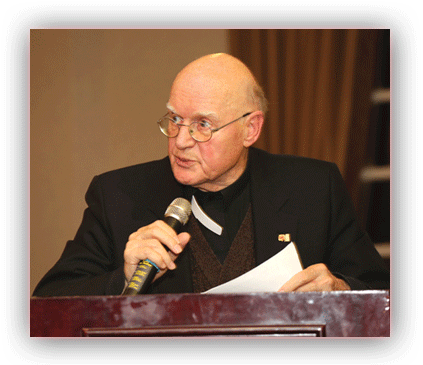
Remembering Father Alphonse de Valk
(Today marks the sixth anniversary of the death of Father Alphonse de Valk, C.S.B., a faithful, courageous and indefatigable Basilian priest, pro-life-and-family apostle, and the founder of Catholic Insight magazine. Here is what we wrote those on his entering into eternity five years ago, as we continue to remember him in our prayers and thoughts)[…]Continue reading→
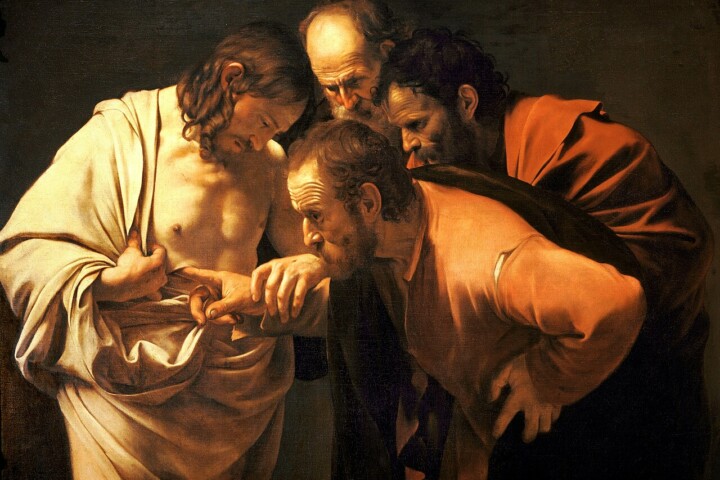
Divine Mercy Sunday – An Echo of Every Mass
Reach out your hand and put it in my side. Do not doubt but believe’… ‘My Lord and my God!’ (Jn. 20:18)). Today is Divine Mercy Sunday, and as we celebrate the end of the Easter Octave, we contemplate the wounded side of our Saviour, the Church’s source of life. On Good Friday in the[…]Continue reading→
Pope Leo and a Rosary for Peace
Pope Leo XIV has asked Catholics across the world to join him in a Rosary for peace today, at 18:00 Rome time (6 pm), which would be noon from where I write (EST). If you are able, whether at that time or another, and in whatever way you pray, to join in intercession with the[…]Continue reading→
Payette’s Payout
I was glancing through some headlines, and noticed a mention of Julie Payette – engineer and astronaut and sometime the Queen’s representative in Canada – which brought back vague memories. She was appointed Governor-General by Justin Trudeau in 2017. Ms. Payette resigned in 2021, amidst claims that she created a ‘toxic work environment’, with allegations[…]Continue reading→
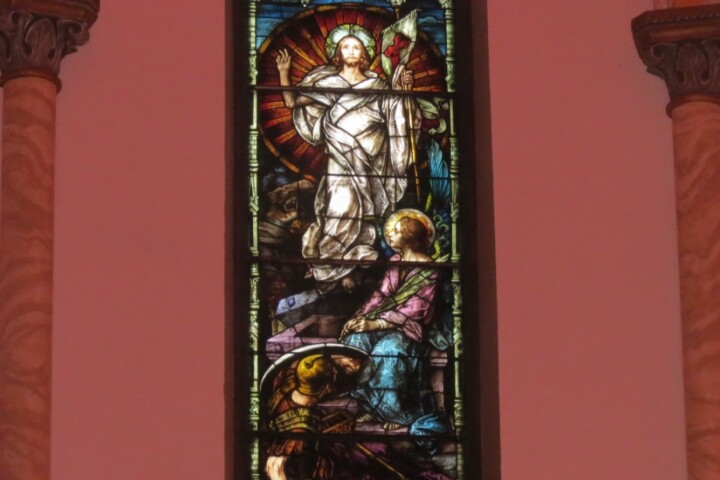
Your Easter Prayer
Happy Easter Lord Jesus Christ. It’s Easter day and we smile In the Lord’s in gentle light and His tomb is bare the stone is rolled A story new that must be told And Lord Jesus Christ We love you it’s so true and Lord Jesus Christ has risen From his sleep and the Promises[…]Continue reading→
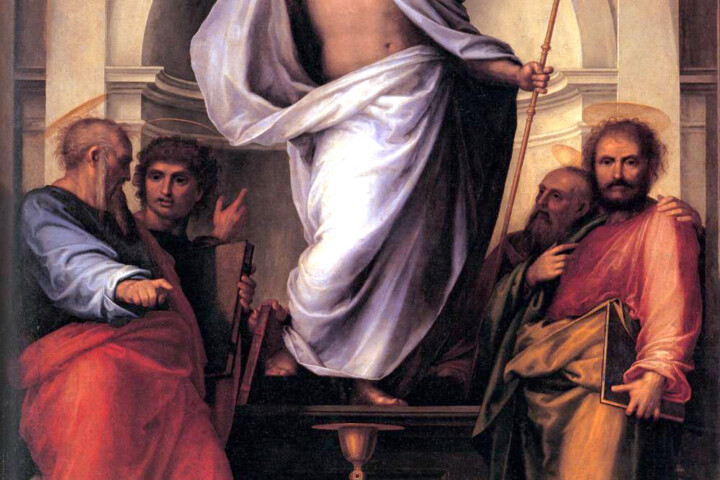
In the Glorious Light of Easter, Alleluia!
Set your minds on things that are above, not on things that are on earth, for you have died, and your life is hidden with Christ in God. When Christ who is your life is revealed, then you also will be revealed with him in glory (Col. 3:3-4). The Resurrection of Our Lord and Saviour[…]Continue reading→
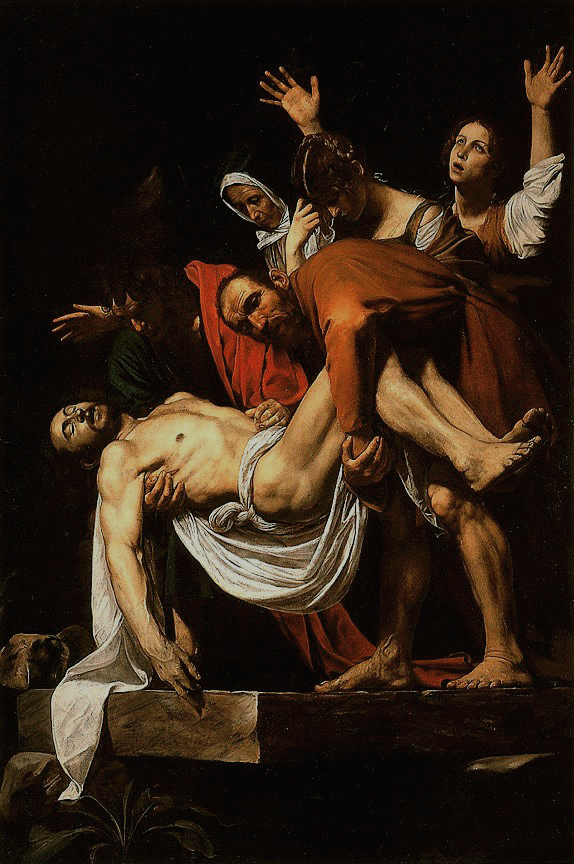
An Ancient Homily for Holy Saturday
The time between Good Friday and Easter Sunday is one of waiting, in silence, as the world wonders – anticipates – what will happen, after the death of Christ. We re-live this time each year in the anamnesis of our liturgy, and in turn look forward to the glorious re-creation of all things at the[…]Continue reading→
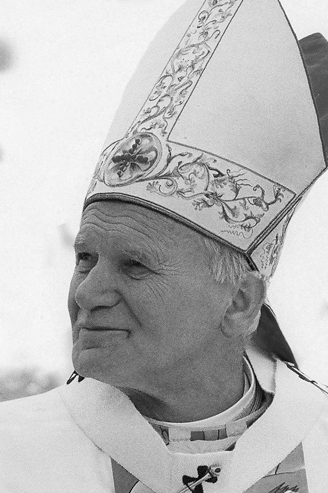
Pope Saint John Paul II’s First Good Friday Homily
ADDRESS OF HIS HOLINESS JOHN PAUL II AT THE CONCLUSION OF THE STATIONS OF THE CROSS AT THE COLOSSEUM Good Friday, 13 April 1979 When we make the Way of the Cross from one station to the next, in spirit we are always at the spot wherethis journey had its “historical” place: where it[…]Continue reading→
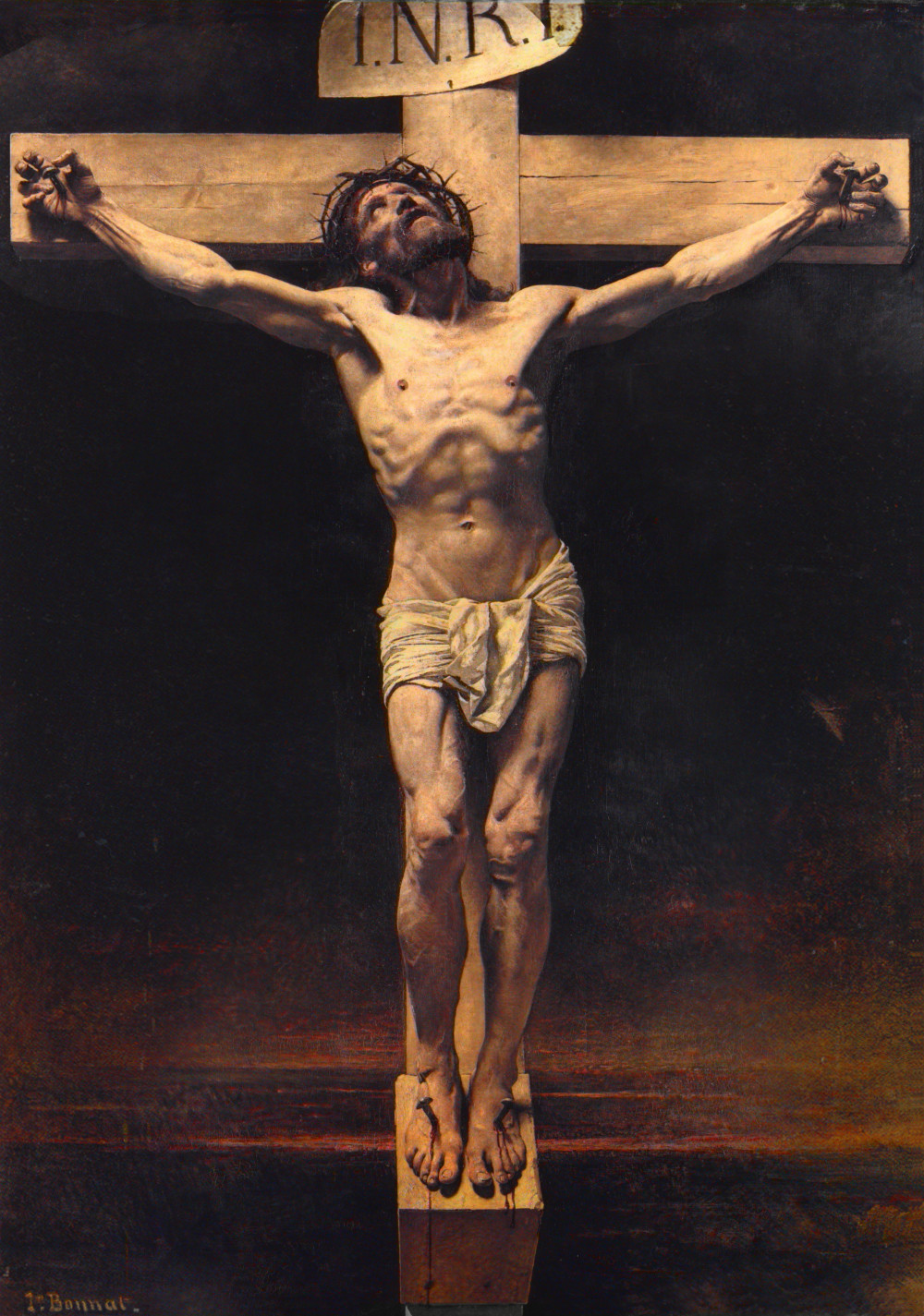
A Meditation for Good Friday: How To Undo the Effects of Sin?
Cardinal Newman, now Saint John Henry Newman, was a towering figure of nineteenth-century Catholicism who is almost universally admired. I say “almost” because not everyone likes him. I knew a priest once, Arthur Caulkins, who has become disenchanted with Newman. As an undergraduate Arthur had been enamoured of Newman, and this interest continued when he[…]Continue reading→