
The Paradox of Freedom in Christ
Veritas vos Liberabit– the Truth Will Set You Free (John 8:32).
What does it mean to be free? Freedom is an objective good, and a universal desire. We want to be free. Indeed, we were created for it. Our neighbours to the immediate south proudly proclaim their right to “life, liberty, and the pursuit of happiness”. Employees dream of “Freedom 55”: to retire at age 55 is to be set free. Great Big Sea sings, “I want to be consequence-free”, and go on to explain: “I could really use to lose my Catholic conscience, ‘cause I’m getting sick of feeling guilty all the time.” Is freedom from consequences, freedom from guilt, truly to be free? In our increasingly secular world, freedom is now the main excuse for some of the greatest evils. Personal “freedoms” are viciously defended: today we must be at liberty to marry whomever we choose, or to not marry, to kill our offspring before birth, or to kill ourselves. To argue against these supposed “rights”, is seen as directly contradicting human freedom.
This is not the thinking of the Church. The Catechism clearly states the opposite path to true freedom: “The more one does what is good, the freer one becomes. There is no true freedom except in the service of what is good and just. The choice to disobey and do evil is an abuse of freedom and leads to ‘the slavery of sin’” (CCC 1733). Human acts, which the Catechism defines as “acts that are freely chosen in consequence of a judgment of conscience,” have moral value: they are either good or evil (CCC 1749). To freely choose evil acts is to limit your own freedom, to make yourself a slave to sin. Only by choosing the good can a person be fully free.
Sadly, even faithful Catholics who hold fast to these teachings of the Church can fall into a worldly way of thinking about freedom. Recently a friend whose life is centred on Christ and His Church gave a talk in which he stated in passing that to live as a single person is to “have more freedom”. I believe he meant that a single person in the world has fewer obligations towards others compared to a person who has a spouse and children, or a parish, or a superior and religious community. I agree that next to a married couple, a priest, or a religious or consecrated person, to be single is to be more independent, perhaps more self-directed or self-determined. It is true that I, as a single person, am “free” to decide my own schedule and activities without spouse and children, or superior and horarium. I eat what and when I wish, sleep when I feel like it, pending other obligations, and it is entirely my decision where I spend my energy. But is being self-determined the same thing as being free? It is easy to equate the two.
True freedom is not merely to be able to do our will. As mentioned, we must will and choose that which is good. True freedom, therefore, is really to be able to do God’s Will over ours. For this reason, it is those who choose for themselves a life of self-direction and singleness, without the benefit of stable bonds or serious obligations, who are less certain of doing God’s will, and therefore less free. A married person who lays down his life for the other is freely giving of himself for the good of the other. Pope Saint John Paul II frequently echoed the words of the Second Vatican Council: that man only finds himself by making a sincere gift of himself (Gaudium et Spes, 24).
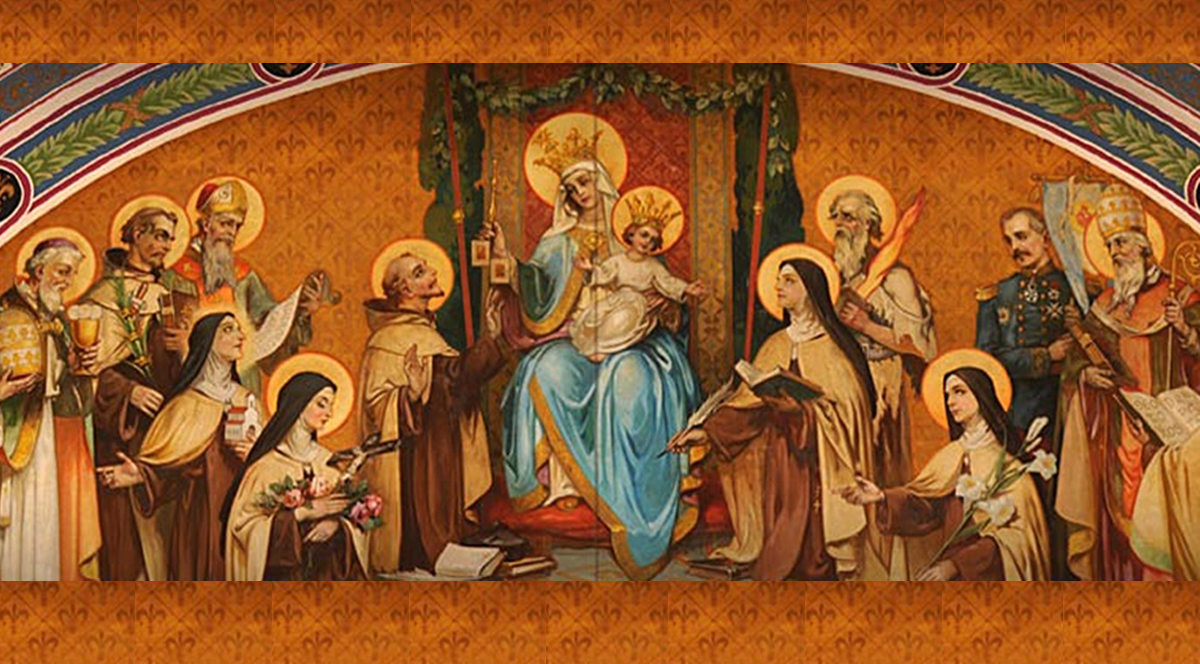
Marriage frees us to love as Christ loves the Church, but more extreme is the radical living out of the evangelical counsels in consecrated religious life. The world sees this state of life as the most constrained, and the least free. To live under obedience is to daily submit to the will of another (and a sinner, no less!) in both great and small ways. A diocesan priest promises obedience to his bishop, but this does not go as far as the obedience of the public vow made by a religious, where minute details of daily life are submitted to the superior’s authority. Here, too, the Church, in the Decree on Religious Life from the Second Vatican Council, takes a consistent and counter-cultural stance:
“religious show humble obedience to their superiors in accord with the norms of rule and constitution… let them bring to the execution of commands and to the discharge of assignments entrusted to them the resources of their minds and wills, and their gifts of nature and grace. Lived in this manner, religious obedience will not diminish the dignity of the human person but will rather lead it to maturity in consequence of that enlarged freedom which belongs to the sons of God” (Perfectae Caritatis, 14).
Mature obedience is liberating. The Vatican II Constitution on the Church, Lumen Gentium, describes the benefit of the vows:
“…[the consecrated person] intends, by the profession of the evangelical counsels in the Church, to free himself from those obstacles which might draw him away from the fervour of charity and the perfection of divine worship… This consecration gains in perfection since by virtue of firmer and steadier bonds it serves as a better symbol of the unbreakable link between Christ and His Spouse, the Church” (44).
Documents which came after the Second Vatican Council were even more specific about the connection between the vow of obedience and the freedom it brings about:
“…the obedience to which you committed yourselves by consecrating yourselves without reserve to God through the profession of the evangelical counsels is a particular expression of interior freedom, just as the definitive expression of Christ’s freedom was His obedience ‘unto death’: ‘I lay down my life, that I may take it up again. No one takes it from me, but I lay it down of my own accord’” (Redemptionis Donum, 13).
This emphasis on interior freedom is crucial. Our minds and wills, when placed in submission to the Lord’s perfect Will, lead us closer to Him, and it is the Lord who ultimately frees us. While discerning with a religious community and entering fully into their process of formation, I had the immense privilege of living the vows, though I had not professed them. The command of my superior became the literal command and will of the Lord for me, and by giving myself in this way to Christ, who is the Truth who sets us free, I found myself doing greater things than I would have chosen to do myself, and all the while learning to rely on the grace present through my obedience.
It is only in Heaven that we will be perfectly free, when we will no longer be restricted by our concupiscence, our slavery to sin. The Israelites were granted their freedom when they passed through the Red Sea, out of slavery in Egypt, and eventually into the land promised to them in the Covenant. Today Christians are granted freedom when we pass through the waters of baptism, dying and rising with Christ, being made new creations, and receiving His new life and grace. To be free is to be filled with grace, as was Mary. Indeed, she possessed the greatest freedom because she was best able to follow the Will of God. She unhesitatingly gave up her own will to embrace His. In this Easter season, may we live as our Lady did, choosing freely to proclaim along with her, “Let it be done to me according to your word.” Here is freedom in its essence.

Saint Kateri , Canada’s Protectress
This was the title given to Saint Kateri Tekakwitha, by Pope Benedict XVI, when he canonized her on October 28th, 2012, along with six others, in Saint Peter’ Square (she had been beatified by Pope John Paul II back in 1980). With Saint Joseph as our protector, along with the Canadian martyrs, we seem to[…]Continue reading→
A Closed, Unsustainable, Descending Loop
As a follow-up to my thoughts on Payette’s payout, here be a stark image of where are here in Canada. As the graph shows in, well, graphic terms, since 2025, the public sector has contributed to 95.5% of economic growth. The private sector – which funds the public sector, or is supposed to – has[…]Continue reading→

Remembering Father Alphonse de Valk
(Today marks the sixth anniversary of the death of Father Alphonse de Valk, C.S.B., a faithful, courageous and indefatigable Basilian priest, pro-life-and-family apostle, and the founder of Catholic Insight magazine. Here is what we wrote those on his entering into eternity five years ago, as we continue to remember him in our prayers and thoughts)[…]Continue reading→

My Name is Bernadette
April 16th is a propitious day, for besides the anniversary of Father de Valk’s death, who founded Catholic Insight in its print form decades ago, and the commemoration of the ‘two Benedicts’, mentioned in accompanying posts, today we also recall Saint Bernadette Soubirous, the young visionary to whom the Virgin Mary appeared numerous times at[…]Continue reading→

Canonizing Sister Faustina and Divine Mercy
HOMILY OF THE HOLY FATHER MASS IN ST PETER’S SQUARE FOR THE CANONIZATION OF SR MARY FAUSTINA KOWALSKA Sunday, 30 April 2000 1. “Confitemini Domino quoniam bonus, quoniam in saeculum misericordia eius”; “Give thanks to the Lord for he is good; his steadfast love endures for ever” (Ps 118: 1). So the Church sings on the Octave of[…]Continue reading→

Divine Mercy Sunday – An Echo of Every Mass
Reach out your hand and put it in my side. Do not doubt but believe’… ‘My Lord and my God!’ (Jn. 20:18)). Today is Divine Mercy Sunday, and as we celebrate the end of the Easter Octave, we contemplate the wounded side of our Saviour, the Church’s source of life. On Good Friday in the[…]Continue reading→
Pope Leo and a Rosary for Peace
Pope Leo XIV has asked Catholics across the world to join him in a Rosary for peace today, at 18:00 Rome time (6 pm), which would be noon from where I write (EST). If you are able, whether at that time or another, and in whatever way you pray, to join in intercession with the[…]Continue reading→
Payette’s Payout
I was glancing through some headlines, and noticed a mention of Julie Payette – engineer and astronaut and sometime the Queen’s representative in Canada – which brought back vague memories. She was appointed Governor-General by Justin Trudeau in 2017. Ms. Payette resigned in 2021, amidst claims that she created a ‘toxic work environment’, with allegations[…]Continue reading→

First Holy Communion: Sermon from May 16, 1943
Here is a sermon from the good old days by +Rev. Msgr. Vincent Nicholas Foy (August 14, 1915 – March 13, 2017), from 1943. Readers may recall that Pope Saint Pius X, by the decree Quam Singulari in 1910, lowered the customary age of reception of Holy Communion – after the rigours of the plague[…]Continue reading→
Your Easter Prayer
Happy Easter Lord Jesus Christ. It’s Easter day and we smile In the Lord’s in gentle light and His tomb is bare the stone is rolled A story new that must be told And Lord Jesus Christ We love you it’s so true and Lord Jesus Christ has risen From his sleep and the Promises[…]Continue reading→