
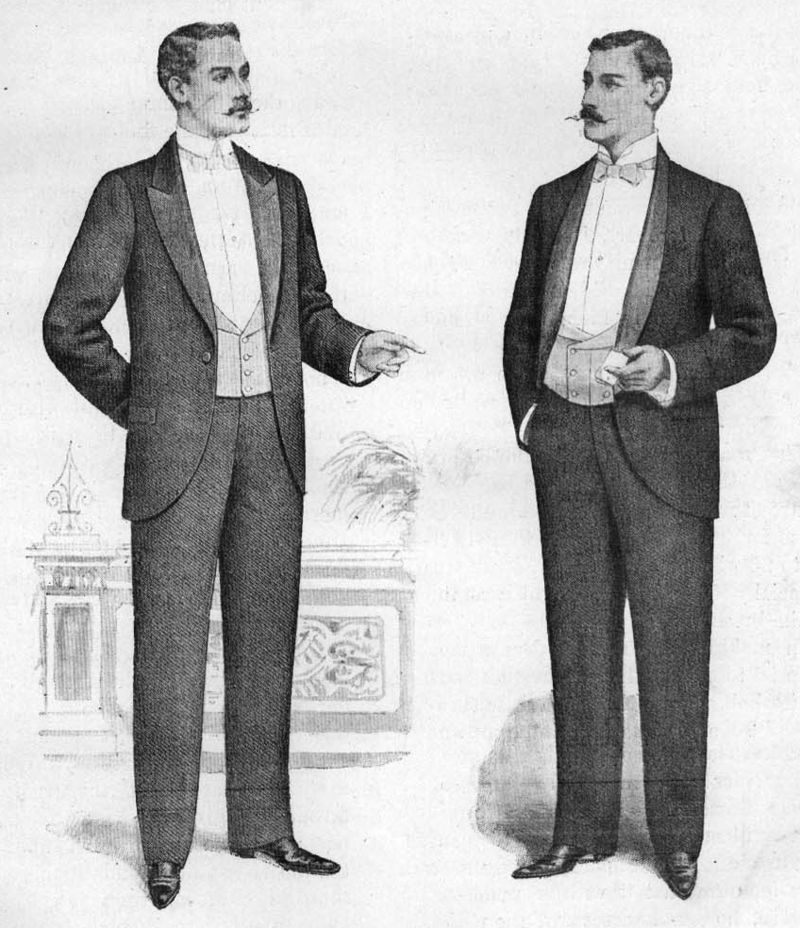
Evening Wear and the New Evangelization
There are not a great number of occasions to which I get to wear a tuxedo, but when I was asked by a friend to accompany her to the opera I thought it would be a necessity. My tuxedo cost a grand total of twenty-five dollars at a second hand store, was in pristine condition when I found it, and could not have been tailored to be a more perfect fit. And although I only get to wear it one or two times a year it has become one of the most important parts of my wardrobe because of my trip to the opera. At the time of this episode, I was a fourth year university student and my school’s theater department was handing out left-over tickets to a performance at the Four Seasons in Toronto. I had never been to the opera before, nor do I speak Italian, so as such the title, composer and majority of the plot escape my memory. However, the event remains vivid.
Being a naive university student – having studied the historical periods in which operas were composed, watched movies in which going to the opera was a thing people did, and having nothing more exciting to do that weekend – we decided that this was an important event. Convincing some others to join our expedition into the world of high art, the plan was to dress for a night in the big city, take the inter-city bus to Toronto, and pretend like we belonged.
As we traveled down the Queen Elizabeth Way on a crowded ‘Go’ bus, I was obviously the only person wearing a tuxedo. I consoled myself with imaginary conversations whereby I explained to the other gawking passengers that we were going to the opera. I was told that the Four Seasons was Canada’s big theatrical stage, so I had pieced an image in my head that this venue would be like great Royal Opera House in London or the Metropolitan in New York. Thus one can imagine my disappointment when we finally arrived at the Four Seasons and it was more similar to an Apple store. As we wandered into the gigantic glass cube I quickly realized that I was the only person wearing a tuxedo.
I found no consolation in my imagination this time – a relaxed business casual attire was clearly the norm. Nevertheless, we filed into our seats and began to enjoy the performance. Soon enough intermission was upon us and a drink seemed to be in order. However, in looking past the lines of comfortably dressed folks to the price list I saw that the cheapest item listed was a nine dollar glass of wine. Accordingly, a friend and I did the only sensible thing and took to the streets to enjoy the flask of whiskey which had been prepared for such distressing circumstances.
By the time we had returned from our refreshment the crowds were still in the lobbies, many with a glass of house wine in hand. The alternate hands of the peckish were occupied by what was clearly the cheapest comestible on the menu – a chocolate ice cream bar on a stick. Needless to say, I realized at this point, surrounded by the high society of our time nibbling their Haagen-Dazs and sipping red wine, that the opera was not what I expected.
Only a century ago, a man in a tuxedo would have appeared bizarrely underdressed for such a cultural event. So how is it that I, a poor university student with a twenty-five dollar used tux, managed to be the best dressed that day? When speaking to the laity on how to dress, St. Francis de Sales says: “I would have my devout persons, whether men or women, the best dressed of the company, but with the least pomp and affection,… adorned with good taste, propriety and dignity.” Although I admire and cherish these wise words, where does that leave ‘devout persons’ in a world where a used suit at the opera makes you conspicuously pompous amongst a sea of denim?
In wiser days, St. Francis de Sales wrote that the efforts of evangelization, “that is, the proclamation of Christ by word and testimony of life,” (CCC, 905) worked to convince men to leave behind the appeals of a worldly life and to seek the consolations of eternal life. It may seem easy to conclude upon an initial assessment of the present state of affairs that our culture is descending into depravity at an unprecedented rate, giving cause for much lamenting and despair. However, in the tide of my embarrassment that evening I did learn one important lesson: namely, that our modern world is actually quite bad at being worldly. Hence, I should like to suggest that the sins of today are not those coldly committed by a world gone rogue, but rather those performed by an ignorant group of amateurs that don’t quite know what they’re doing.
St. Augustine of Hippo once commented that “grace builds on nature.” Accordingly then, we are pressed in our present day to ask, “How do we proclaim Christ and a life of grace to the world when the world seems wholly unfamiliar with itself?” Gluttony has been pushed aside for dieting fads, unwholesome revelry substituted for some sedating screen, rash actions for lazy inaction, and vanity in appearance for a “do I really have to get out of pajamas” disposition. When one looks closely at the state of the times they’ll see that the sins of today are not enjoying the world too much, but rather not enjoying the world enough. The new evangelization, therefore, must begin by proclaiming the world to the world, before proclaiming Christ to the world. That is, restoring the foundation of man’s nature so that grace may have something to take root upon. It falls to the new evangelization to teach the feast before the fast, dancing before abstaining, celebrating before secluding, and the tux before tonsure.

Saint Kateri , Canada’s Protectress
This was the title given to Saint Kateri Tekakwitha, by Pope Benedict XVI, when he canonized her on October 28th, 2012, along with six others, in Saint Peter’ Square (she had been beatified by Pope John Paul II back in 1980). With Saint Joseph as our protector, along with the Canadian martyrs, we seem to[…]Continue reading→

Remembering Father Alphonse de Valk
(Today marks the sixth anniversary of the death of Father Alphonse de Valk, C.S.B., a faithful, courageous and indefatigable Basilian priest, pro-life-and-family apostle, and the founder of Catholic Insight magazine. Here is what we wrote those on his entering into eternity five years ago, as we continue to remember him in our prayers and thoughts)[…]Continue reading→

My Name is Bernadette
April 16th is a propitious day, for besides the anniversary of Father de Valk’s death, who founded Catholic Insight in its print form decades ago, and the commemoration of the ‘two Benedicts’, mentioned in accompanying posts, today we also recall Saint Bernadette Soubirous, the young visionary to whom the Virgin Mary appeared numerous times at[…]Continue reading→
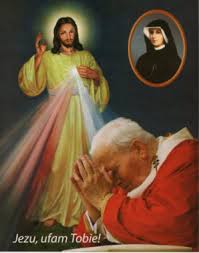
Canonizing Sister Faustina and Divine Mercy
HOMILY OF THE HOLY FATHER MASS IN ST PETER’S SQUARE FOR THE CANONIZATION OF SR MARY FAUSTINA KOWALSKA Sunday, 30 April 2000 1. “Confitemini Domino quoniam bonus, quoniam in saeculum misericordia eius”; “Give thanks to the Lord for he is good; his steadfast love endures for ever” (Ps 118: 1). So the Church sings on the Octave of[…]Continue reading→

Divine Mercy Sunday – An Echo of Every Mass
Reach out your hand and put it in my side. Do not doubt but believe’… ‘My Lord and my God!’ (Jn. 20:18)). Today is Divine Mercy Sunday, and as we celebrate the end of the Easter Octave, we contemplate the wounded side of our Saviour, the Church’s source of life. On Good Friday in the[…]Continue reading→

Saint Stanislaus of Szczepanów
We celebrate Saint Stanislaus today (+ April 11, 1079), in light of this Easter Octave, a bishop and martyr who accepted the episcopacy only at the direct order of Pope Alexander II. He proved a wise and courageous leader of his flock, put to death by his own king, Boleslaus, for rebuking the monarch’s ‘immoral[…]Continue reading→
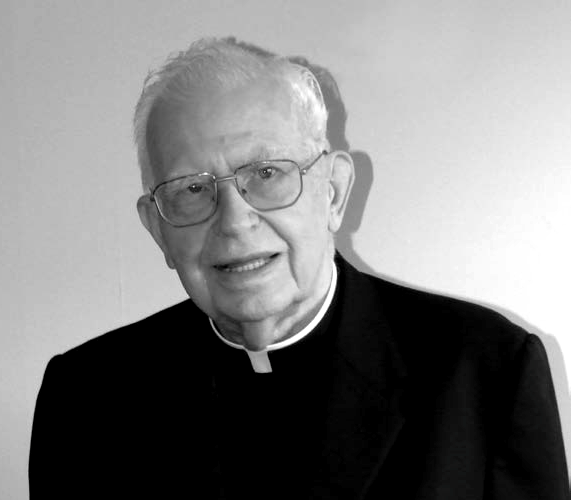
First Holy Communion: Sermon from May 16, 1943
Here is a sermon from the good old days by +Rev. Msgr. Vincent Nicholas Foy (August 14, 1915 – March 13, 2017), from 1943. Readers may recall that Pope Saint Pius X, by the decree Quam Singulari in 1910, lowered the customary age of reception of Holy Communion – after the rigours of the plague[…]Continue reading→
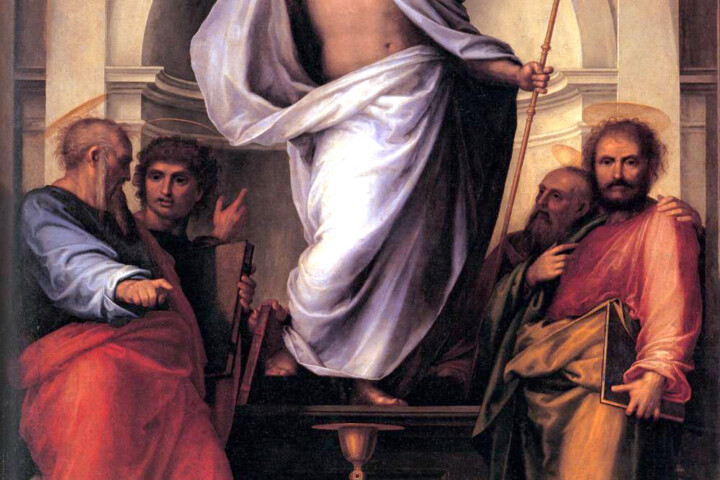
In the Glorious Light of Easter, Alleluia!
Set your minds on things that are above, not on things that are on earth, for you have died, and your life is hidden with Christ in God. When Christ who is your life is revealed, then you also will be revealed with him in glory (Col. 3:3-4). The Resurrection of Our Lord and Saviour[…]Continue reading→
An Ancient Homily for Holy Saturday
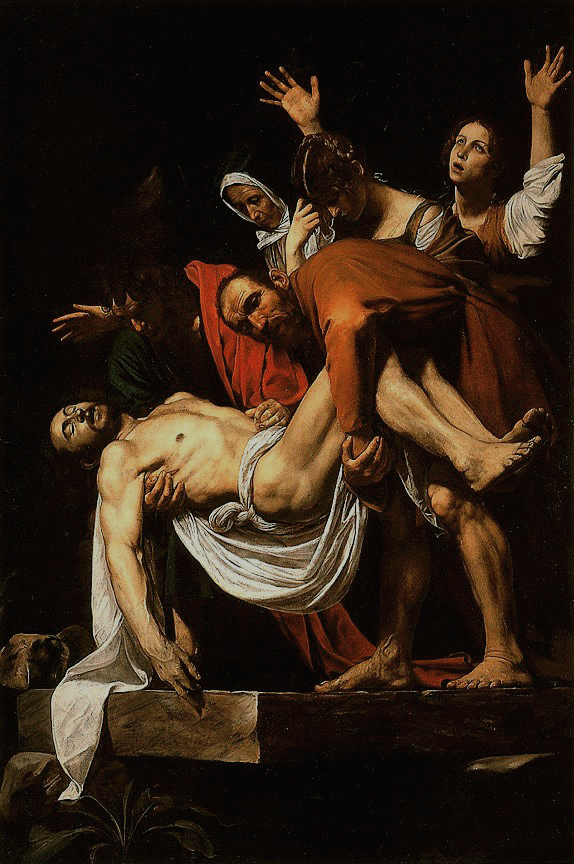
The time between Good Friday and Easter Sunday is one of waiting, in silence, as the world wonders – anticipates – what will happen, after the death of Christ. We re-live this time each year in the anamnesis of our liturgy, and in turn look forward to the glorious re-creation of all things at the[…]Continue reading→
Europe’s Long Descent
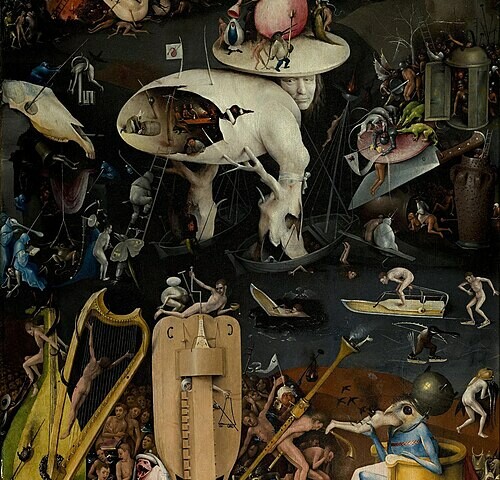
(As we meditate on this day on Christ’s burial, and His descent into hell, it is fitting to ponder here with contributor Peter Marcus how the world seems to be heading there as well. The difference is that, although God cannot ‘redeem’ hell, nor those therein, He can and did redeem the world. There is[…]Continue reading→