
Human Words and the Divine Word
Speaking to her beloved Romeo, Juliet says, “What’s in a name? That which we call a rose, by any other word would smell as sweet.” In this famous Shakespearean line, Juliet poetically testifies to the conventionality of human names. That is, human words, whether written or spoken, signify what they signify thanks to our common consent. In this respect, our words, considered as signs, differ essentially from things such as smoke and a fever. For it is by nature, and not by human consent, that smoke signals the fire which gives rise to it. And, of course, something similar must be said about a fever and the cause which it signifies.
The reality that our words are significant by convention, and not by nature, is what explains why there can be (and it is also part of the explanation of why there indeed are) many human languages. As diverse as our languages are, and as different as the words belonging to these languages may be, all our spoken words still have this in common — they all signify. But what do they signify? In his On Interpretation, Aristotle perspicaciously observes that spoken words, of whatever language, immediately signify various concepts which we hold in our intellects and, through the mediation of these concepts, these same words also signify individual things in the world around us. Thus, the word “dog” immediately signifies canine nature as understood and, through the mediation of this understood nature, this same word also signifies Fido, Rex, Rover, and all other such individuals.
Following Aristotle’s insight, St. Thomas Aquinas calls the concepts signified by our spoken words, “interior words” or “words of the heart,” and the spoken words which signify them, “exterior words” or “words of the voice.” Now just as our exterior words are posterior to and dependent on our interior ones, so our interior words are posterior to and dependent on the created universe in which we live. For our intellects are initially like “blank slates” and it is only through becoming acquainted with the sensible beings in the world around us that we form our many interior words of the natures of these sensible beings.
In contrast to our interior words, there is one interior Word which is naturally prior to and independent from everything created, even the whole of creation. This Word is none other than God the Son, the second Person of the Blessed Trinity. Unlike our interior words which are created, finite, and human, the Word which is in God the Father is uncreated, infinite, and divine. Further, every human being requires many hundreds of interior words to have even an imperfect intellectual grasp of created things. On the other hand, St. Thomas teaches that, “because God understands Himself and all things by one act, His one Word is expressive not only of the Father, but also of creatures.” This is to say that in His one eternal act of perfectly understanding Himself, and through perfectly understanding Himself also perfectly understanding all creatures, God has begotten or generated, from all eternity, one interior Word. The Word of God, who is coeternal and consubstantial with God the Father, is the perfect intellectual expression of the Father and of all creatures whatsoever.
Although the Word of God does not depend in any way on the created universe, everything in the created universe wholly depends on Him. Thus, after teaching that, “In the beginning was the Word, and the Word was with God, and the Word was God” (John 1:1), St. John writes, “All things were made through Him and without Him was made nothing which was made” (John 1:3). In a similar vein, St. Paul teaches that, “…in Him were created all things in heaven and earth, the visible and the invisible, whether thrones or dominions or principalities or powers; all things were created through Him and for Him. He is before all things, and in Him all things remain in being” (Colossians 1:16-17). From these scriptural texts we see that all creatures, including our interior and exterior words, depend on the divine Word not only to come into existence, but also to remain in existence.
These truths show that the very natures of all creatures are measured and determined by the eternal Word of God. Indeed, it is no exaggeration to state that every creature, from the highest angel down to the lowliest element, is what it is to the extent that it conforms to its eternal archetype in the divine Word. But we saw above that our interior words are measured and determined by the creatures in the world around us. For our interior words are formed based on what is given to us in our sense experience. Consequently, the more we form interior words based on the world around us, the more our intellects are measured and determined by the Word of God. In fact, the more we conform our intellects to the creatures which God has made, the more our intellects are conformed and likened to the creative and sustaining uncreated Word of God.
On Christmas and during the Christmas Season we rejoice in the birth of our Lord Jesus Christ, the eternal Word made flesh. With great love for us the divine Word deigned to become man, to be born of the Blessed Virgin, and to instruct us with our own human words. With great mercy towards us the very Word who created and sustains the universe became man to save us from our sins, to repair our weak and wounded nature by his wisdom and grace, and to conform us to Himself. The eternal Word conforms us to Himself not only by perfecting us intellectually, but also, and more importantly, by imparting to us the great gift of sanctifying grace that we might be coheirs with Him to eternal life.

Remembering Father Alphonse de Valk
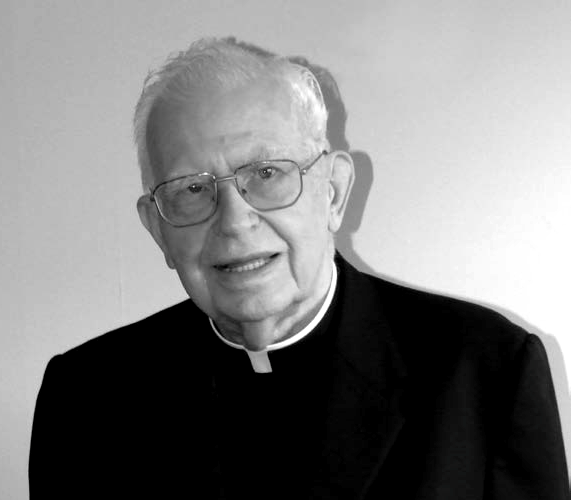
(Today marks the sixth anniversary of the death of Father Alphonse de Valk, C.S.B., a faithful, courageous and indefatigable Basilian priest, pro-life-and-family apostle, and the founder of Catholic Insight magazine. Here is what we wrote those on his entering into eternity five years ago, as we continue to remember him in our prayers and thoughts)[…]Continue reading→
Divine Mercy Sunday – An Echo of Every Mass
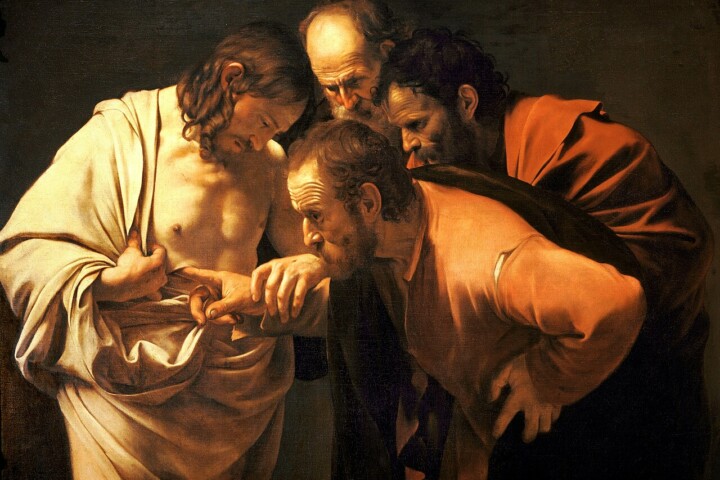
Reach out your hand and put it in my side. Do not doubt but believe’… ‘My Lord and my God!’ (Jn. 20:18)). Today is Divine Mercy Sunday, and as we celebrate the end of the Easter Octave, we contemplate the wounded side of our Saviour, the Church’s source of life. On Good Friday in the[…]Continue reading→

Saint Stanislaus of Szczepanów
We celebrate Saint Stanislaus today (+ April 11, 1079), in light of this Easter Octave, a bishop and martyr who accepted the episcopacy only at the direct order of Pope Alexander II. He proved a wise and courageous leader of his flock, put to death by his own king, Boleslaus, for rebuking the monarch’s ‘immoral[…]Continue reading→
First Holy Communion: Sermon from May 16, 1943
Here is a sermon from the good old days by +Rev. Msgr. Vincent Nicholas Foy (August 14, 1915 – March 13, 2017), from 1943. Readers may recall that Pope Saint Pius X, by the decree Quam Singulari in 1910, lowered the customary age of reception of Holy Communion – after the rigours of the plague[…]Continue reading→
In the Glorious Light of Easter, Alleluia!
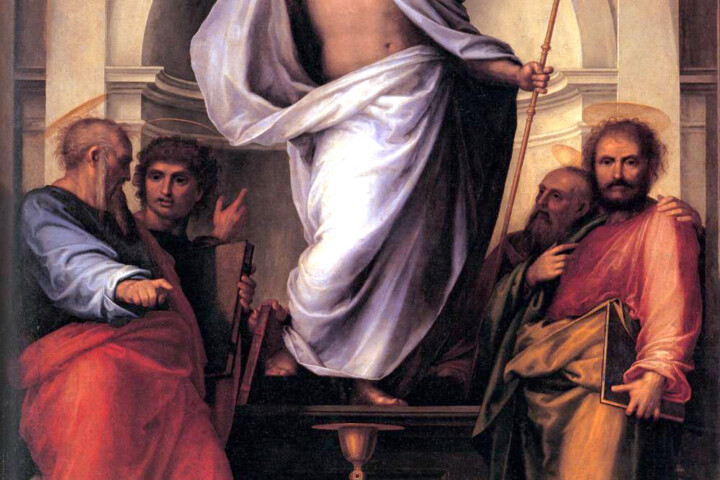
Set your minds on things that are above, not on things that are on earth, for you have died, and your life is hidden with Christ in God. When Christ who is your life is revealed, then you also will be revealed with him in glory (Col. 3:3-4). The Resurrection of Our Lord and Saviour[…]Continue reading→
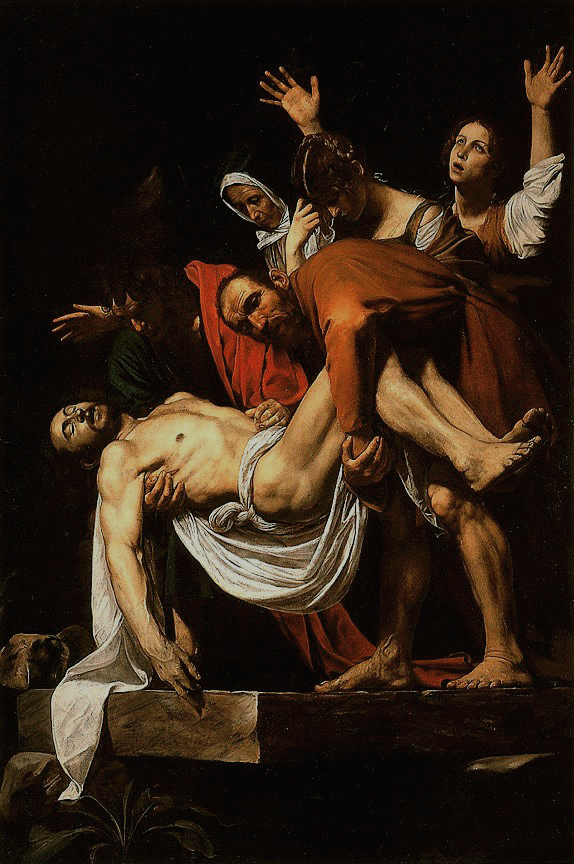
An Ancient Homily for Holy Saturday
The time between Good Friday and Easter Sunday is one of waiting, in silence, as the world wonders – anticipates – what will happen, after the death of Christ. We re-live this time each year in the anamnesis of our liturgy, and in turn look forward to the glorious re-creation of all things at the[…]Continue reading→
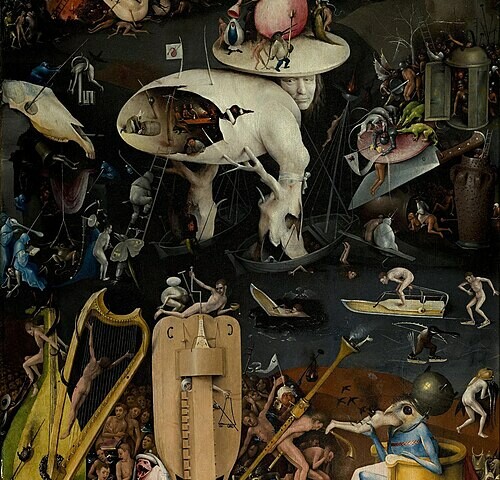
Europe’s Long Descent
(As we meditate on this day on Christ’s burial, and His descent into hell, it is fitting to ponder here with contributor Peter Marcus how the world seems to be heading there as well. The difference is that, although God cannot ‘redeem’ hell, nor those therein, He can and did redeem the world. There is[…]Continue reading→
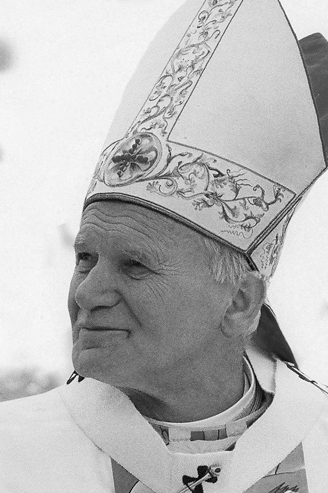
Pope Saint John Paul II’s First Good Friday Homily
ADDRESS OF HIS HOLINESS JOHN PAUL II AT THE CONCLUSION OF THE STATIONS OF THE CROSS AT THE COLOSSEUM Good Friday, 13 April 1979 When we make the Way of the Cross from one station to the next, in spirit we are always at the spot wherethis journey had its “historical” place: where it[…]Continue reading→
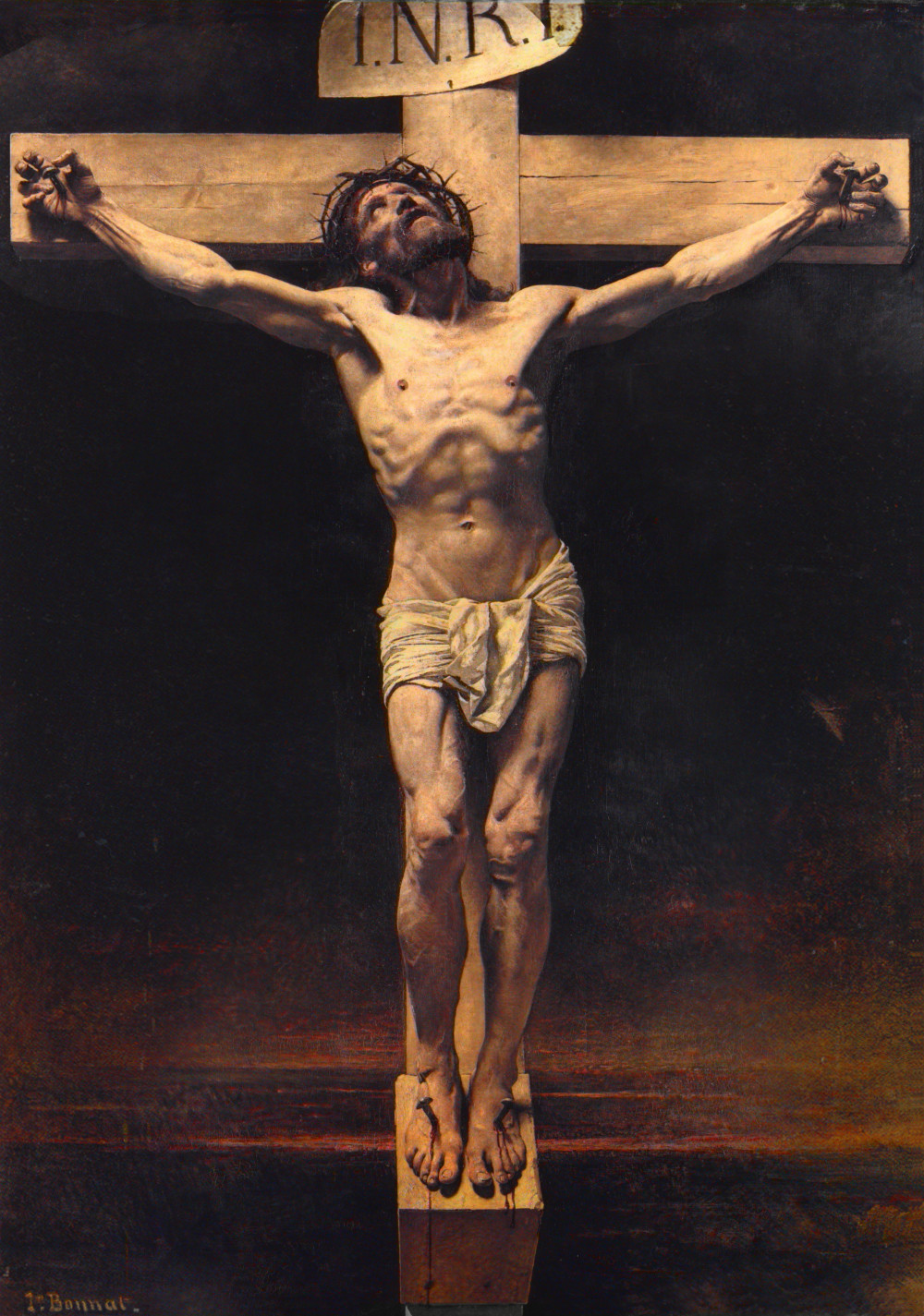
A Meditation for Good Friday: How To Undo the Effects of Sin?
Cardinal Newman, now Saint John Henry Newman, was a towering figure of nineteenth-century Catholicism who is almost universally admired. I say “almost” because not everyone likes him. I knew a priest once, Arthur Caulkins, who has become disenchanted with Newman. As an undergraduate Arthur had been enamoured of Newman, and this interest continued when he[…]Continue reading→
Pope Benedict’s Last Holy Thursday Homily
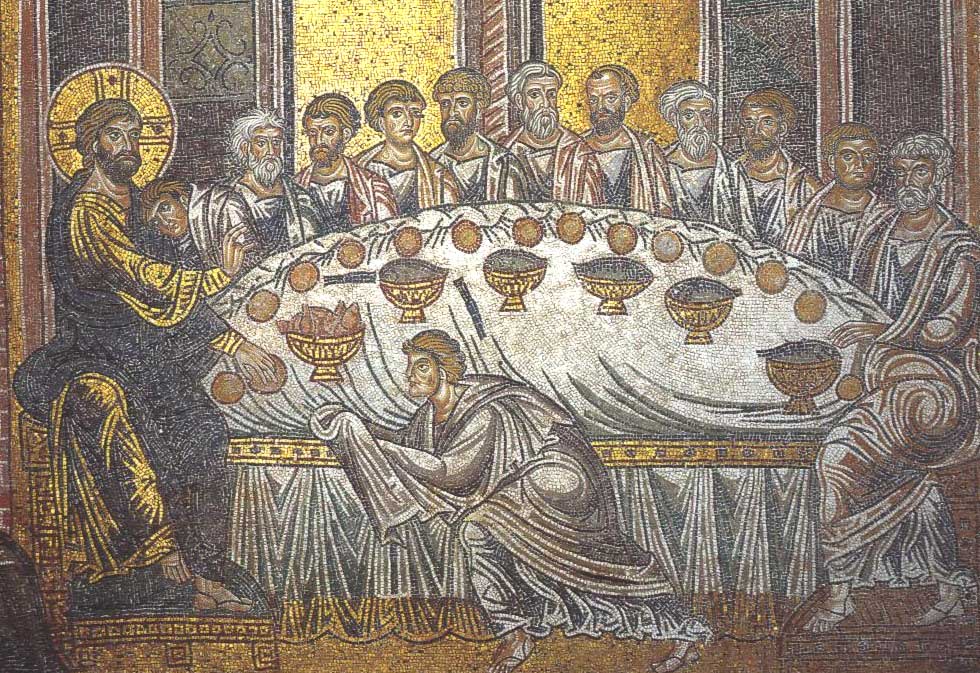
MASS OF THE LORD’S SUPPER HOMILY OF HIS HOLINESS BENEDICT XVI Basilica of St John Lateran Holy Thursday, 5 April 2012 Photo Gallery (Video) Dear Brothers and Sisters! Holy Thursday is not only the day of the institution of the Most Holy Eucharist, whose splendour bathes all else and in some ways draws it to[…]Continue reading→