
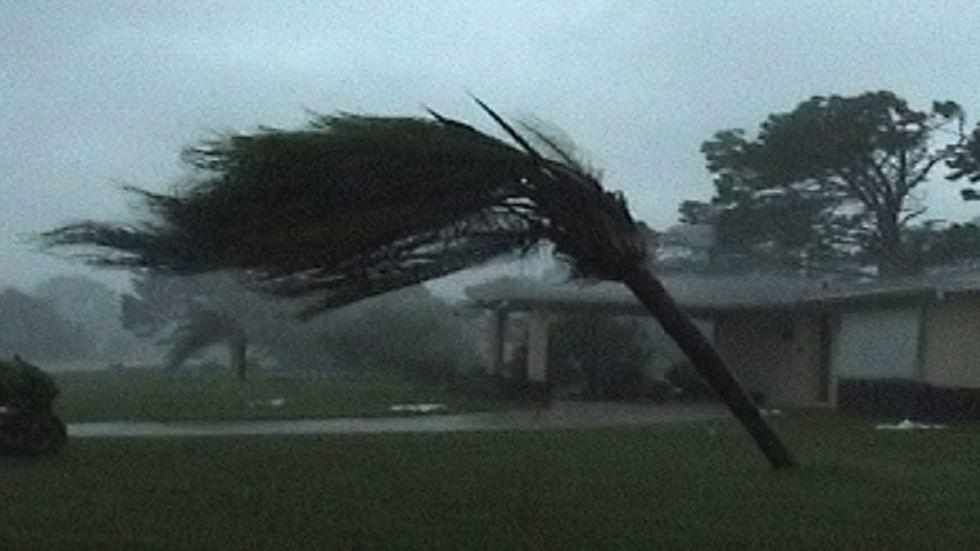
Rough Weather
(Below is a column from our archives, which pertains to some of the ‘rough weather’ tht has been visited upon many people of late. What Carolynne Estis says of Oklahama a few years ago, pertains even more so to the Caribbean Islands, Houston, Mexico…Editor)
In the past week, there has been a lot of rough weather. The worst of it, or at least the worst that has gotten major news coverage, seems to be the tornado in Oklahoma City, Oklahoma.
Oklahoma City is certainly not a place where tornadoes are a new thing. It hasn’t even been a decade since the town hit so badly this week was destroyed by another tornado. Even accounting for this familiarity, however, there is something pretty impressive in the way that the people in this city reacted to some thirteen hundred homes being damaged. There were a surprising number of people who brushed off the fact that they were standing in front of a pile of rubble that was once their home, stating instead that the most important thing was that they were alive. There were so many who were certain that they would have their town built back up within the next year. Moreover, what they said is probably true. Moore, Oklahoma probably will be rebuilt faster than one might think humanly possible. Their reaction to this disaster was pretty amazing.
C. S. Lewis wrote that pain is like a megaphone. Pain demands attention. It cannot be ignored. A catastrophe causes pain. It demands a reaction. The reactions in their incredible variety are the fascinating part. The way that the people involved react to the situation can have quite an impact on how others perceive them.
An interesting example of people dealing with disasters can be found in Charles Dickens’ The Life and Adventures of Nicholas Nickleby. It is, between curious descriptions and curiouser conversations, almost entirely a story of disasters and reactions. Nicholas Nickleby’s father finds out that he lost all his money and reacts with despair. He gives up and dies of a broken heart. Nicholas’s uncle consistently reacts in a manner that immediately satisfies his whims, but which ultimately become his destruction. Smike, neglected and tormented, simply endures the agonies of his life with superhuman patience. Nicholas himself, being the hero, reacts with swift, decisive action.
There are all those characters reacting to all of the bad things that Dickens decided to throw at them, but there is only one hero, only one guy who the reader really, really has to root for. G. K. Chesterton wrote of Nicholas, “He has no psychology; he has not even any particular character.” Nobody loves Nicholas Nickleby because he offers great insight into the human character, or because he overcomes some personal flaw and saves the world, or because he is marvelously witty or clever. All we really have to go on is the way in which he reacts to the bad stuff that he runs into. The reader gets to like him simply because, as Chesterton so tidily sums it up:
[Nicholas] takes a situation as assistant to a Yorkshire schoolmaster; he sees an act of tyranny of which he strongly disapproves; he cries out “Stop!” in a voice that makes the rafters ring; he thrashes the schoolmaster within an inch of his life; he throws the schoolmaster away like an old cigar, and he goes away. The modern intellect is positively prostrated and flattened by this rapid and romantic way of righting wrongs.
The manner in which a person responds to pain or disaster is surprisingly important. Nicholas’ actions are not always wise. Chesterton goes so far as to call him “a somewhat chivalrous young donkey.” The appeal is not necessarily that he does exactly the right thing, but that in moments of crisis, he figures out what he believes to be the best and most expedient route to settling the problem.
Obviously, I am not saying that thrashing any available wrongdoer within an inch of his life is the way to go. It’s usually a pretty bad idea. However, there is often something admirable in simply taking action, in doing what needs to be done without waiting for backup or government funds or your evil uncle’s help. Life is full of disasters that cannot be controlled or avoided. In the end, though, the disaster tends to be largely forgotten. The thing that people go on remembering is the reaction to it, and that is the one thing that ordinary people can control.

Remembering Father Alphonse de Valk
(Today marks the sixth anniversary of the death of Father Alphonse de Valk, C.S.B., a faithful, courageous and indefatigable Basilian priest, pro-life-and-family apostle, and the founder of Catholic Insight magazine. Here is what we wrote those on his entering into eternity five years ago, as we continue to remember him in our prayers and thoughts)[…]Continue reading→

Divine Mercy Sunday – An Echo of Every Mass
Reach out your hand and put it in my side. Do not doubt but believe’… ‘My Lord and my God!’ (Jn. 20:18)). Today is Divine Mercy Sunday, and as we celebrate the end of the Easter Octave, we contemplate the wounded side of our Saviour, the Church’s source of life. On Good Friday in the[…]Continue reading→

Saint Stanislaus of Szczepanów
We celebrate Saint Stanislaus today (+ April 11, 1079), in light of this Easter Octave, a bishop and martyr who accepted the episcopacy only at the direct order of Pope Alexander II. He proved a wise and courageous leader of his flock, put to death by his own king, Boleslaus, for rebuking the monarch’s ‘immoral[…]Continue reading→

First Holy Communion: Sermon from May 16, 1943
Here is a sermon from the good old days by +Rev. Msgr. Vincent Nicholas Foy (August 14, 1915 – March 13, 2017), from 1943. Readers may recall that Pope Saint Pius X, by the decree Quam Singulari in 1910, lowered the customary age of reception of Holy Communion – after the rigours of the plague[…]Continue reading→

In the Glorious Light of Easter, Alleluia!
Set your minds on things that are above, not on things that are on earth, for you have died, and your life is hidden with Christ in God. When Christ who is your life is revealed, then you also will be revealed with him in glory (Col. 3:3-4). The Resurrection of Our Lord and Saviour[…]Continue reading→

An Ancient Homily for Holy Saturday
The time between Good Friday and Easter Sunday is one of waiting, in silence, as the world wonders – anticipates – what will happen, after the death of Christ. We re-live this time each year in the anamnesis of our liturgy, and in turn look forward to the glorious re-creation of all things at the[…]Continue reading→

Europe’s Long Descent
(As we meditate on this day on Christ’s burial, and His descent into hell, it is fitting to ponder here with contributor Peter Marcus how the world seems to be heading there as well. The difference is that, although God cannot ‘redeem’ hell, nor those therein, He can and did redeem the world. There is[…]Continue reading→
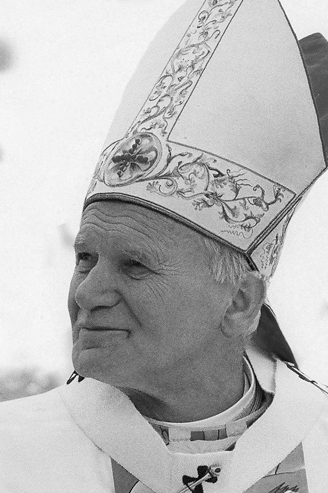
Pope Saint John Paul II’s First Good Friday Homily
ADDRESS OF HIS HOLINESS JOHN PAUL II AT THE CONCLUSION OF THE STATIONS OF THE CROSS AT THE COLOSSEUM Good Friday, 13 April 1979 When we make the Way of the Cross from one station to the next, in spirit we are always at the spot wherethis journey had its “historical” place: where it[…]Continue reading→
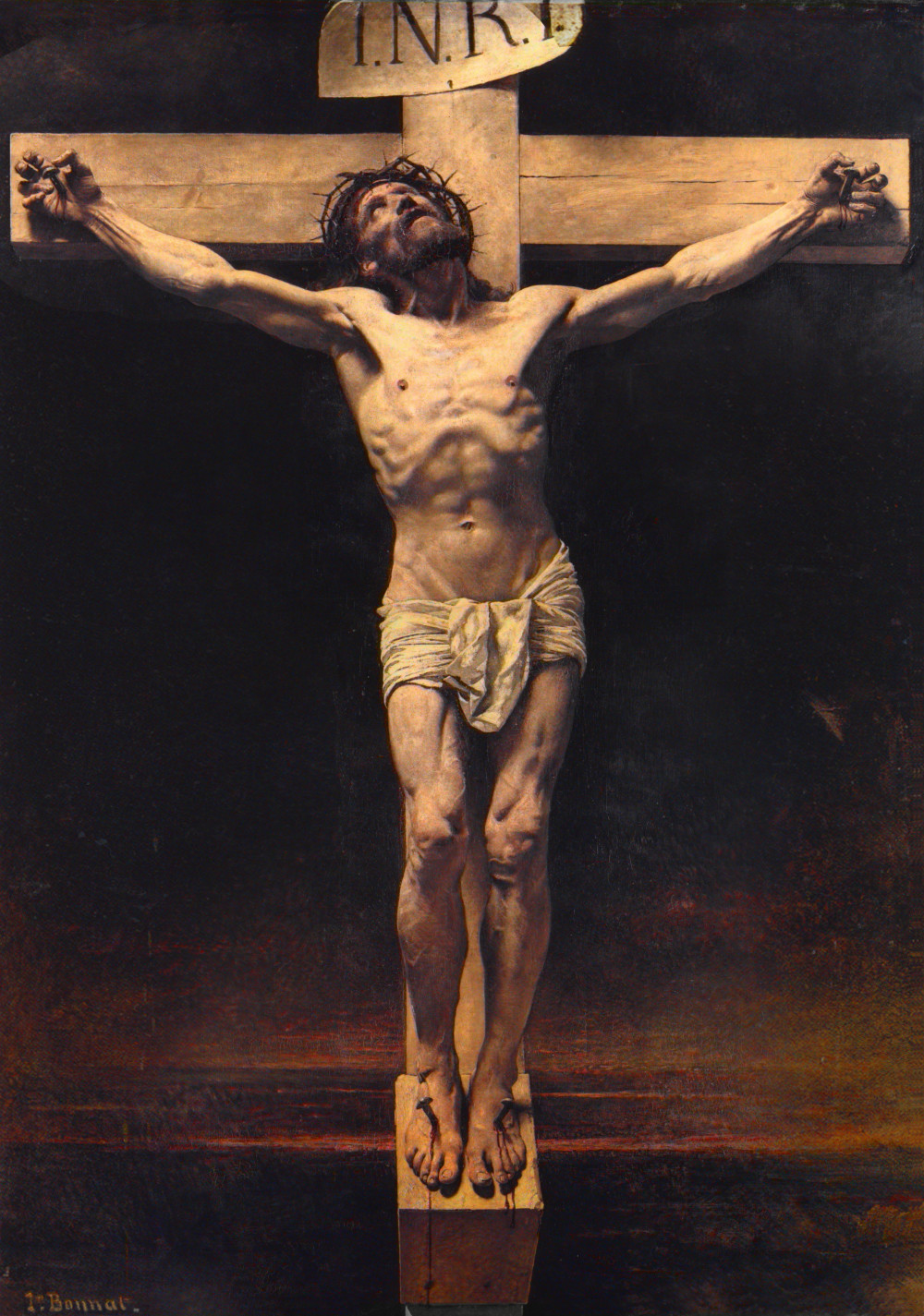
A Meditation for Good Friday: How To Undo the Effects of Sin?
Cardinal Newman, now Saint John Henry Newman, was a towering figure of nineteenth-century Catholicism who is almost universally admired. I say “almost” because not everyone likes him. I knew a priest once, Arthur Caulkins, who has become disenchanted with Newman. As an undergraduate Arthur had been enamoured of Newman, and this interest continued when he[…]Continue reading→
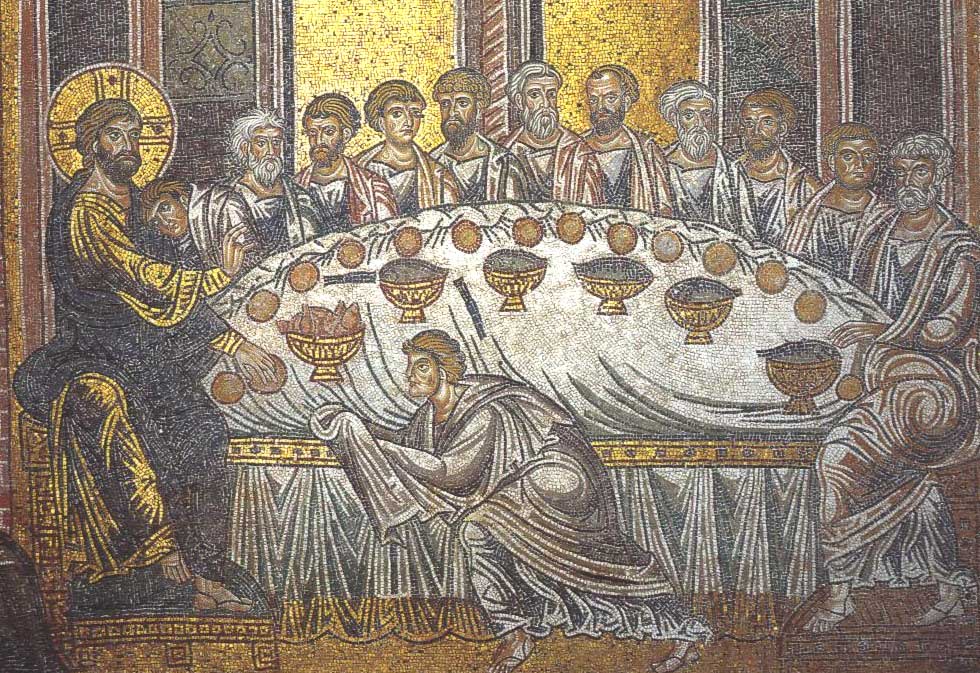
Pope Benedict’s Last Holy Thursday Homily
MASS OF THE LORD’S SUPPER HOMILY OF HIS HOLINESS BENEDICT XVI Basilica of St John Lateran Holy Thursday, 5 April 2012 Photo Gallery (Video) Dear Brothers and Sisters! Holy Thursday is not only the day of the institution of the Most Holy Eucharist, whose splendour bathes all else and in some ways draws it to[…]Continue reading→