
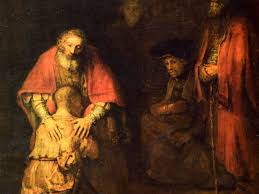
Speaking the Lingo of the Millennials: Social and Religious Justice
Many members of the Millennial generation are strongly concerned with social justice. They are die-hard Democrats (or NDPers, in the Canadian context), and leftism is virtually their religion. To say that one supports Donald Trump is equivalent, for them, to saying that one worships the devil. Except that it’s worse, because they don’t believe in the devil.
Their righteous do-goodism can be irritating, but it does contain some truth. The motivating virtue of this world-view is, of course, justice. Justice to women, justice to racial minorities, justice to people with same-sex attraction, and so on.
It occurs to me that in order to reach this generation, we have to speak the language of justice, but in a new way. We can acknowledge the necessity of justice in general, and of social justice in particular. But we can also challenge them to think of justice beyond the context with which they tend to associate it. There is justice to other people, but there is also justice to a higher power, the God who created all of us. Take the analogy of a family: It’s important for brothers and sisters to be just towards one another—to be fair in their dealings with their siblings. But they also owe a debt of justice towards their parents (and vice-versa, naturally, but we won’t deal with that here.). This justice will largely take the form of gratitude. Parents sacrifice a great deal to give their children life and the means to make life enjoyable; it is only just that children acknowledge this sacrifice and thank their parents for it when the occasion calls for it.
I’ll give you a personal example. A few days ago, my son Eric bought a talking stuffed toy version of Captain Underpants (I know, I know). He delighted in this toy, which he purchased with some gift money from a relative. Sadly, the toy got lost when we stopped at a restaurant during our road trip to Iowa. No amount of searching could turn it up. So the next morning, my husband rose early and hit the department stores in search of a replacement. He tried one after another without success, until he finally found one that carried it. He returned across the store parking lot, triumphantly holding up the misshapen sac of stuffing (whose automated declaration, “Fear not! This planet is safe under my watchful eye!” somehow didn’t make me feel any safer). When we entrusted the toy into Eric’s eager arms, we prompted Eric to say a big thank-you, which he did quite genuinely. The point is that it was only right that Eric thank his father, and if he hadn’t done so, we would have felt the injustice of that.
The same is true in our relationship with God the Father. God has given us everything—even the very fact of existence. If justice can be defined as giving others what is due to them, we can never actually fulfill the demands of justice towards God; but it’s right to try. It is fitting that we give God what we can, which is our respect, and devotion, and gratitude. St. Thomas Aquinas says that the virtue of religion is “a part of justice” (II. II. q. 81. a. 4). We might even call this virtue “religious justice.”
The irony is that by loving God we open ourselves to receiving His abundant love more fully, which does far more for us than we could ever do for Him. Nevertheless, worshipping God is still the right thing to do, and we should do it.
There is a drawback to this argument, which is that if a person doesn’t believe in God to begin with, he is not going to be convinced that worshipping Him is just. If the person is honest, however, he will at least acknowledge that, because of the debt we owe to God if He does exist, we can’t be content to rest in a passive agnosticism that ignores the question of God altogether. We must seek to discover whether or not there is a God; and if we find that there is One, it is only just that we should worship Him.

Remembering Father Alphonse de Valk
(Today marks the sixth anniversary of the death of Father Alphonse de Valk, C.S.B., a faithful, courageous and indefatigable Basilian priest, pro-life-and-family apostle, and the founder of Catholic Insight magazine. Here is what we wrote those on his entering into eternity five years ago, as we continue to remember him in our prayers and thoughts)[…]Continue reading→

Divine Mercy Sunday – An Echo of Every Mass
Reach out your hand and put it in my side. Do not doubt but believe’… ‘My Lord and my God!’ (Jn. 20:18)). Today is Divine Mercy Sunday, and as we celebrate the end of the Easter Octave, we contemplate the wounded side of our Saviour, the Church’s source of life. On Good Friday in the[…]Continue reading→

Saint Stanislaus of Szczepanów
We celebrate Saint Stanislaus today (+ April 11, 1079), in light of this Easter Octave, a bishop and martyr who accepted the episcopacy only at the direct order of Pope Alexander II. He proved a wise and courageous leader of his flock, put to death by his own king, Boleslaus, for rebuking the monarch’s ‘immoral[…]Continue reading→
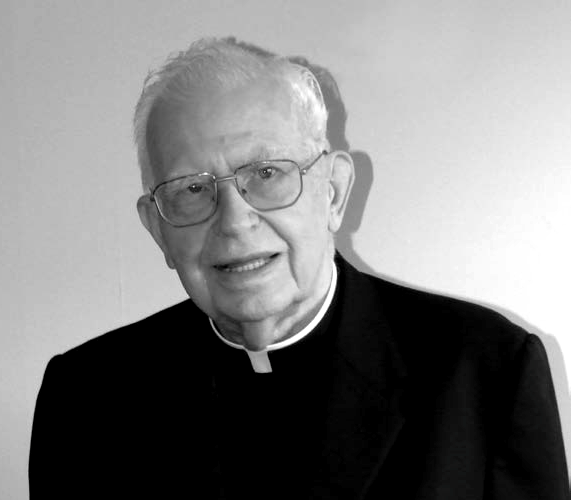
First Holy Communion: Sermon from May 16, 1943
Here is a sermon from the good old days by +Rev. Msgr. Vincent Nicholas Foy (August 14, 1915 – March 13, 2017), from 1943. Readers may recall that Pope Saint Pius X, by the decree Quam Singulari in 1910, lowered the customary age of reception of Holy Communion – after the rigours of the plague[…]Continue reading→
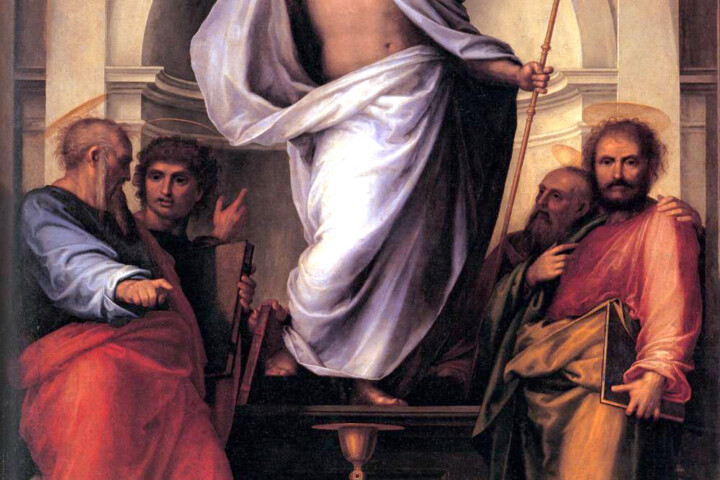
In the Glorious Light of Easter, Alleluia!
Set your minds on things that are above, not on things that are on earth, for you have died, and your life is hidden with Christ in God. When Christ who is your life is revealed, then you also will be revealed with him in glory (Col. 3:3-4). The Resurrection of Our Lord and Saviour[…]Continue reading→
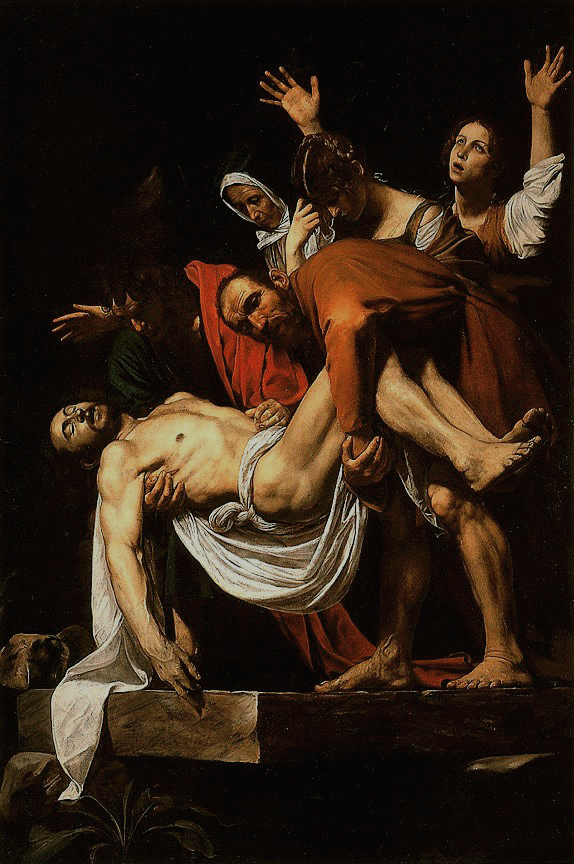
An Ancient Homily for Holy Saturday
The time between Good Friday and Easter Sunday is one of waiting, in silence, as the world wonders – anticipates – what will happen, after the death of Christ. We re-live this time each year in the anamnesis of our liturgy, and in turn look forward to the glorious re-creation of all things at the[…]Continue reading→
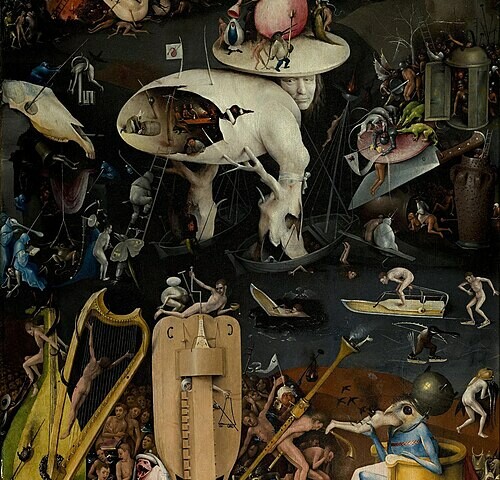
Europe’s Long Descent
(As we meditate on this day on Christ’s burial, and His descent into hell, it is fitting to ponder here with contributor Peter Marcus how the world seems to be heading there as well. The difference is that, although God cannot ‘redeem’ hell, nor those therein, He can and did redeem the world. There is[…]Continue reading→
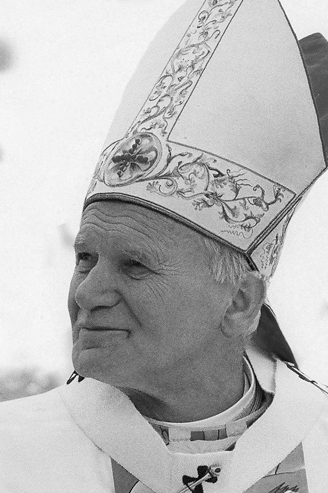
Pope Saint John Paul II’s First Good Friday Homily
ADDRESS OF HIS HOLINESS JOHN PAUL II AT THE CONCLUSION OF THE STATIONS OF THE CROSS AT THE COLOSSEUM Good Friday, 13 April 1979 When we make the Way of the Cross from one station to the next, in spirit we are always at the spot wherethis journey had its “historical” place: where it[…]Continue reading→
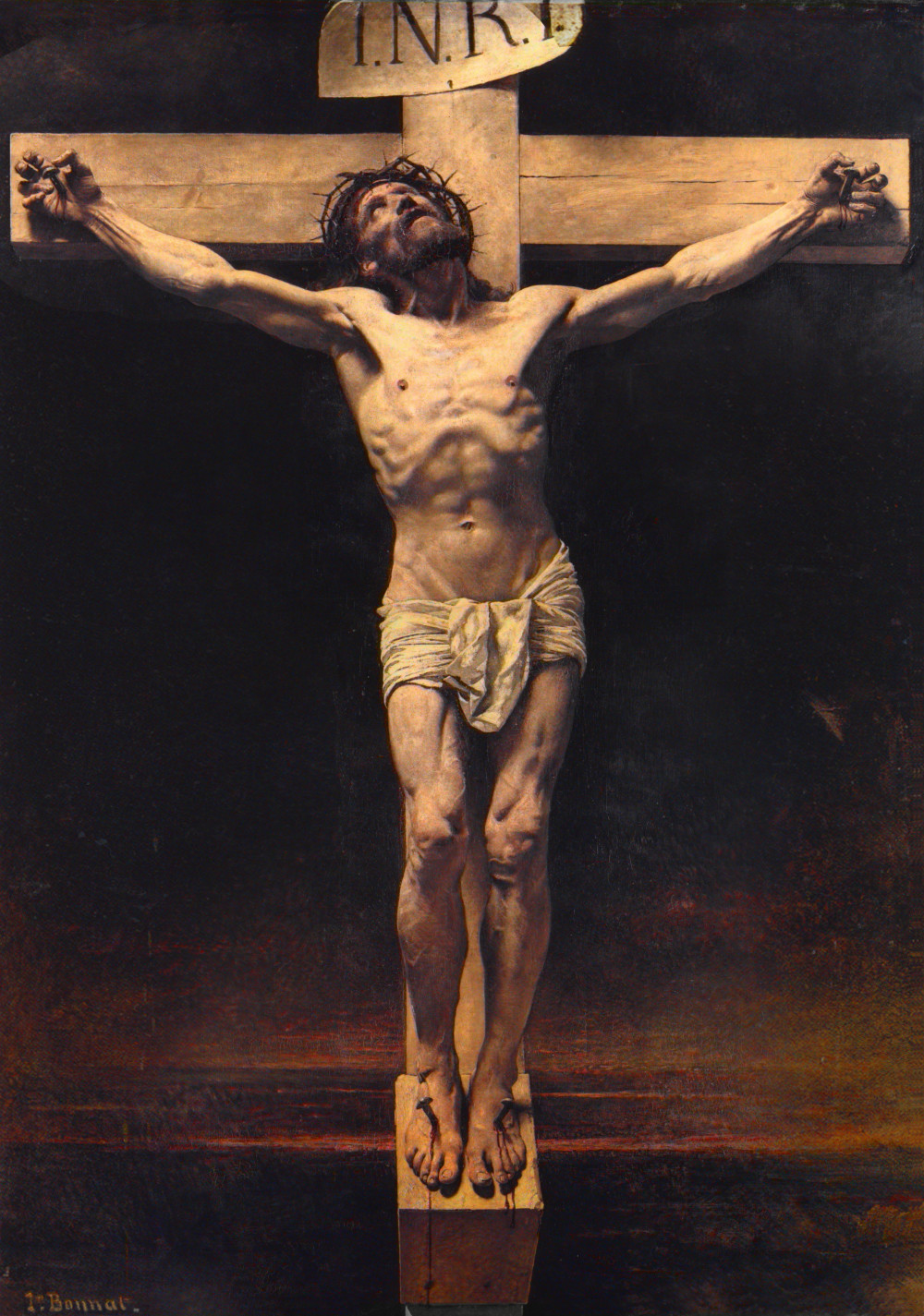
A Meditation for Good Friday: How To Undo the Effects of Sin?
Cardinal Newman, now Saint John Henry Newman, was a towering figure of nineteenth-century Catholicism who is almost universally admired. I say “almost” because not everyone likes him. I knew a priest once, Arthur Caulkins, who has become disenchanted with Newman. As an undergraduate Arthur had been enamoured of Newman, and this interest continued when he[…]Continue reading→
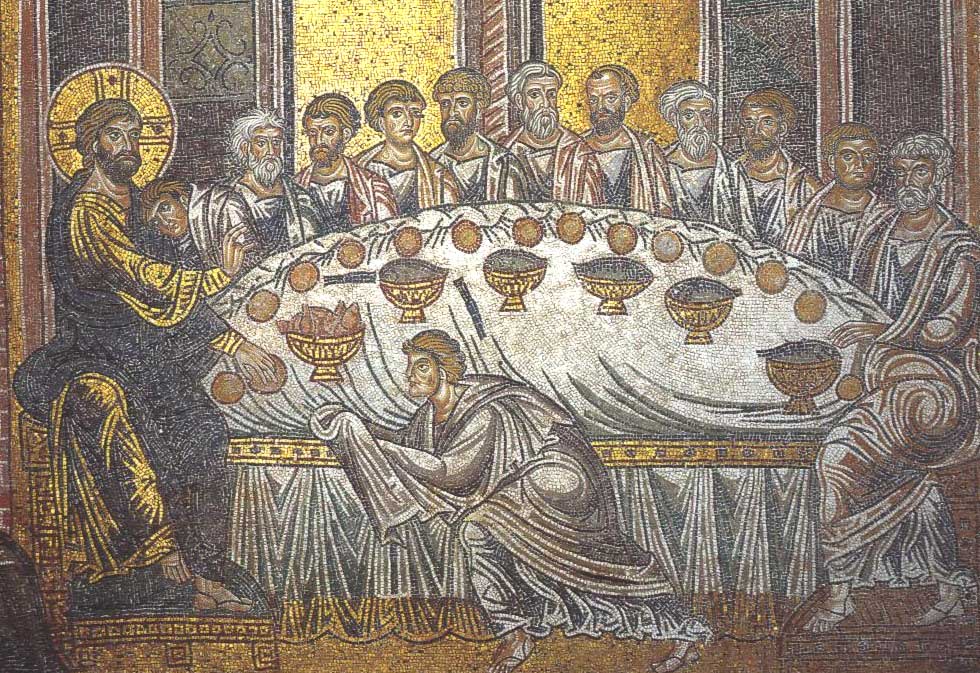
Pope Benedict’s Last Holy Thursday Homily
MASS OF THE LORD’S SUPPER HOMILY OF HIS HOLINESS BENEDICT XVI Basilica of St John Lateran Holy Thursday, 5 April 2012 Photo Gallery (Video) Dear Brothers and Sisters! Holy Thursday is not only the day of the institution of the Most Holy Eucharist, whose splendour bathes all else and in some ways draws it to[…]Continue reading→