
The Ethics of Artificial Intelligence
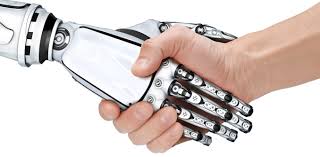
As a mathematician, my field of research rarely brings me into contact with controversial ethical topics. However, recent developments in the area of Artificial Intelligence (AI) threaten to alter the neutrality of my profession. AI refers to complex computer algorithms designed to act or mimic human behaviors such as learning or pattern recognition.
Like most technical buzzwords, AI has received more hype in recent years than it deserves (modern society is notorious for overplaying new technologies). Nonetheless, AI is a powerful new tool that will change the way humans learn, work and play. The technology also raises a host of ethical questions: “Can consciousness be replicated?”, “Do computers have the same rational capacity as humans?”, etc… As the field of AI develops, the faithful will look to the Church to provide clarity regarding this new technology. While the Church’s teaching will potentially strike controversy, it will ultimately be a light in the darkness for those who are seeking answers to the age-old question of what it means to be human in a fast changing technological world.
In early December, the Vatican hosted a conference entitled “Power and Limits of Artificial Intelligence” which brought together technical experts to discuss the emerging area of Artificial Intelligence. Members included the renowned author Stephen Hawking, as well as executives from Google, Facebook and other leading companies in AI development. The conference sought clarification of some of the ethical issues connected with new technologies that can replicate or even exceed human performance. In the words of the Conference, “Major research is underway in areas that define us as humans, such as language, symbol processing, one-shot learning, self-evaluation, confidence judgment, program induction, conceiving goals, and integrating existing modules into an overarching, multi-purpose intelligent architecture.”
A key topic the conference tackled was that of computers replacing humans in the workforce. Computers have been around for some time now, and the notion of automation is nothing new. For example, economies of scale make manufacturing cars at giant factories with cutting edge robots much more profitable than the traditional method of by-hand production. What is new is the idea that robots will replace not only so-called blue-collar jobs, but white-collar ones as well.
A study conducted by Citi and Oxford, released January 2016, predicts that 47% of jobs in the U.S. will be replaced by computer automation. Other countries will be hit harder, however, with a projected 87% of jobs being replaced in Ethiopia, 77% in China and 65% in Argentina. Rome is concerned about the humanitarian impact this loss of jobs will have on society. In the words of the Conference, “Unless channeled for public benefit, AI will soon raise important concerns for the economy and the stability of society. We are living in a drastic transition period where millions of jobs are being lost to computerized devices, with a resulting increase in income disparity and knowledge gaps. With AI in the hands of companies, the revenues of intelligence may no longer be redistributed equitably. With AI in the military, we may witness a new and costly arm race. While intelligent assistants may benefit adults and children alike, they also carry risks because their impact on the developing brain is unknown, and because people may lose motivation in areas where AI is superior.”
The Conference acknowledged deeper philosophical issues related to AI, but claimed that the technology is still nowhere near creating a computer replicating human rational functions. As Yann LeCun the first director of AI research at Facebook said, “Frankly these are questions that we are not worried about right now because we just don’t have the technology that’s anywhere near the kind of power that’s required. So these are philosophical discussions but not immediate problems.” For believers, some questions are easy to answer. Can a computer program be created with the same dignity as a person? The answer is no. Man is created in the image of God, and no snazzy algorithm will be able to truly replace the soul of man.
AI promises to be an incredibly useful tool that, if used properly, can enhance our lives tremendously. As the Conference stated in its closing remarks, “The value functions that AI is asked to optimize require special attention, as they may have unexpected biases or inhuman consequences. Just like crash tests for transportation, the passing of ethical and safety tests, evaluating for instance social impact or racial prejudice, could become a prerequisite to the release of AI software.” Ultimately, like any technological tool, AI is neutral; it is up to the human users to decide if it will be a force for good or for evil.
Apart from being a practicing Catholic, Patrick has a Bachelor’s in Mathematics from the University of New Mexico, and is a Master’s of Science candidate with a concentration in Statistics also at UNM. Patrick is a grant reader, and has taught introductory statistics. He also has professional experience in software development and computer modeling

Saint Kateri , Canada’s Protectress
This was the title given to Saint Kateri Tekakwitha, by Pope Benedict XVI, when he canonized her on October 28th, 2012, along with six others, in Saint Peter’ Square (she had been beatified by Pope John Paul II back in 1980). With Saint Joseph as our protector, along with the Canadian martyrs, we seem to[…]Continue reading→

Remembering Father Alphonse de Valk
(Today marks the sixth anniversary of the death of Father Alphonse de Valk, C.S.B., a faithful, courageous and indefatigable Basilian priest, pro-life-and-family apostle, and the founder of Catholic Insight magazine. Here is what we wrote those on his entering into eternity five years ago, as we continue to remember him in our prayers and thoughts)[…]Continue reading→

My Name is Bernadette
April 16th is a propitious day, for besides the anniversary of Father de Valk’s death, who founded Catholic Insight in its print form decades ago, and the commemoration of the ‘two Benedicts’, mentioned in accompanying posts, today we also recall Saint Bernadette Soubirous, the young visionary to whom the Virgin Mary appeared numerous times at[…]Continue reading→

Canonizing Sister Faustina and Divine Mercy
HOMILY OF THE HOLY FATHER MASS IN ST PETER’S SQUARE FOR THE CANONIZATION OF SR MARY FAUSTINA KOWALSKA Sunday, 30 April 2000 1. “Confitemini Domino quoniam bonus, quoniam in saeculum misericordia eius”; “Give thanks to the Lord for he is good; his steadfast love endures for ever” (Ps 118: 1). So the Church sings on the Octave of[…]Continue reading→

Divine Mercy Sunday – An Echo of Every Mass
Reach out your hand and put it in my side. Do not doubt but believe’… ‘My Lord and my God!’ (Jn. 20:18)). Today is Divine Mercy Sunday, and as we celebrate the end of the Easter Octave, we contemplate the wounded side of our Saviour, the Church’s source of life. On Good Friday in the[…]Continue reading→

Saint Stanislaus of Szczepanów
We celebrate Saint Stanislaus today (+ April 11, 1079), in light of this Easter Octave, a bishop and martyr who accepted the episcopacy only at the direct order of Pope Alexander II. He proved a wise and courageous leader of his flock, put to death by his own king, Boleslaus, for rebuking the monarch’s ‘immoral[…]Continue reading→

First Holy Communion: Sermon from May 16, 1943
Here is a sermon from the good old days by +Rev. Msgr. Vincent Nicholas Foy (August 14, 1915 – March 13, 2017), from 1943. Readers may recall that Pope Saint Pius X, by the decree Quam Singulari in 1910, lowered the customary age of reception of Holy Communion – after the rigours of the plague[…]Continue reading→

In the Glorious Light of Easter, Alleluia!
Set your minds on things that are above, not on things that are on earth, for you have died, and your life is hidden with Christ in God. When Christ who is your life is revealed, then you also will be revealed with him in glory (Col. 3:3-4). The Resurrection of Our Lord and Saviour[…]Continue reading→

An Ancient Homily for Holy Saturday
The time between Good Friday and Easter Sunday is one of waiting, in silence, as the world wonders – anticipates – what will happen, after the death of Christ. We re-live this time each year in the anamnesis of our liturgy, and in turn look forward to the glorious re-creation of all things at the[…]Continue reading→

Europe’s Long Descent
(As we meditate on this day on Christ’s burial, and His descent into hell, it is fitting to ponder here with contributor Peter Marcus how the world seems to be heading there as well. The difference is that, although God cannot ‘redeem’ hell, nor those therein, He can and did redeem the world. There is[…]Continue reading→